Nnenna Onuoha
Directing
Known For

In the court of the Memory Guardians, a trial ensues about what to do with the statue of the Kneeling Woman, following her defacement in Zehlendorf and relocation to the Zitadelle Museum in Spandau. While one counsel advocates that the statue be publicly displayed in the Zitadelle Spandau Museum to caution against “left-wing extremism”, another argues that she should be kept in the more private Schaudepot indefinitely to educate about difficult history. Yet another argues for her to be destroyed, given the racist beliefs of her creator, the violence against her and the messiness of contextualising all this Black pain for a public.
The Memory Guardians

A group of friends reminisce about their Ghanaian high school’s exchange trip to Jackson, Mississippi a decade earlier. The more they remember, the uncannier it becomes.
The A-Team

In the Schloss Friedrichsfelde–a picturesque, neoclassical pleasure palace in North East Berlin–the ghosts of history begin to make themselves seen. Summoned by a syncretic Afro-Caribbean prayer ceremony, embodied spirits emerge and usher us through the halls of former “Rosenfelde Palace.” Sold from Groß Friedrichsburg along the Gold Coast, these ghosts of history fill the Schloss Friedrichsfelde—built in part with the profits from their enslavement.
Rosenfelde
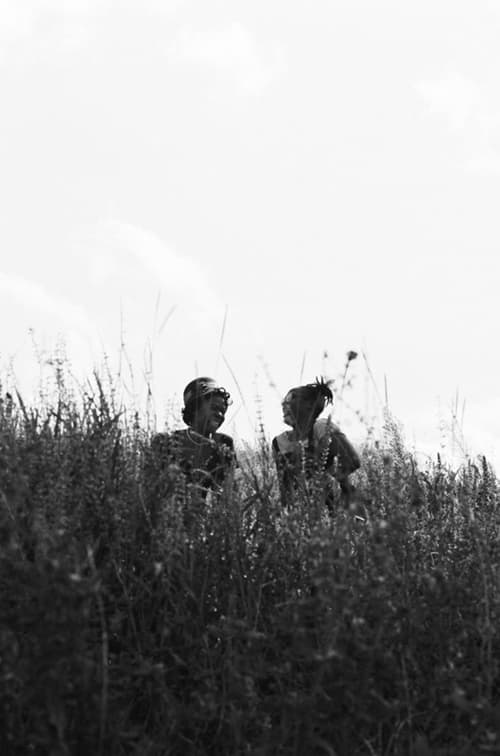
When The Great Erasure interrupts her reading of Dove’s story, The Black Girl goes in search of the author. After the Feminist Bookseller and Africanist Professor do not help her, she turns to The Revisionists, in whose cyberarchive she is able to locate Dove and the two spend an afternoon together. Told in the style of a ciné-roman, the film is an homage to Shaw and Dove’s “Adventure” novellas.
The Adventures of the Black Girl in Her Search for Mabel Dove

For a generation of south-eastern Nigerians, photos of their childhoods, though absent from family albums, are omnipresent in humanitarian archives.
Baby Picture
Nnenna Onuoha's essayistic video work Entwicklungsland — Revisited (2025) engages with the 1975 BBC educational film Developing Country Ghana: Life in the City. Through conversations with the protagonists portrayed at the time and their current perspectives on the historical film material, a multi-layered reflection on representation, memory and postcolonial image politics emerges.
Entwicklungsland — Revisited

Three Afrodescendent women living in Berlin go through their wash day routines and rituals. As they care for their hair: choosing products, washing, detangling, braiding, cutting, dyeing etc. they discuss how their relationship to it has changed over the years.