FEEL IT.STREAM
Henri Jeanson

Henri Jeanson

Writing

Biography

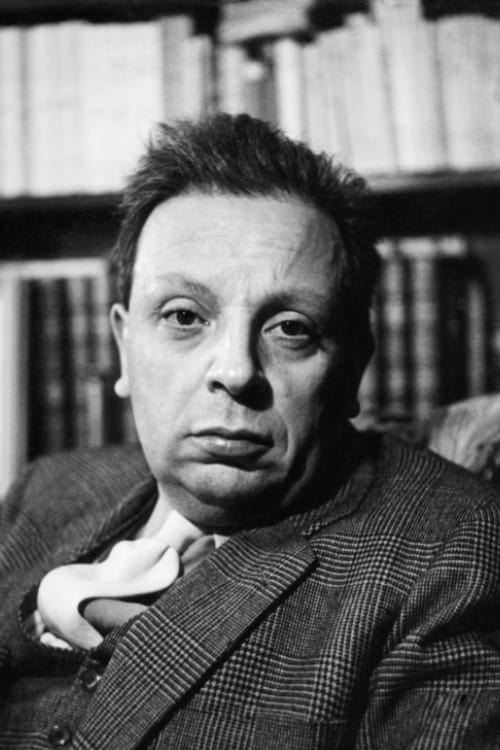
Henri Jules Louis Jeanson (6 March 1900 in Paris – 6 November 1970 in Équemauville) was a French writer and journalist. He was a "satrap" in the "College of 'Pataphysics". Jeanson was born on 6 March 1900 in Paris. His father was a teacher. Before becoming a journalist, he had several casual jobs, including being depicted as a soldier on a good-luck card for a postcard seller, belying his future pacifism. In 1917, he started work for La Bataille, newspaper of the Confédération générale du travail. Noted for his strong writing, he was a journalist throughout the 1920s, with intervening stints as reporter, interviewer and film critic. He was distinguished by the potency of his style and a taste for polemic. Jeanson worked for several papers including the Journal du peuple, Hommes du Jour and the Canard enchaîné, where he defended complete pacifism. He resigned from the Canard enchaîné in 1937, in solidarity with Jean Galtier-Boissière. He was sentenced to 18 months in prison in July 1939, for publishing an article in Solidarité internationale antifasciste, a periodical founded in November 1938 by Louis Lecoin, in which he congratulated Herschel Grynszpan for his assassination of Ernst vom Rath, an official of the German embassy in Paris. He was arrested in November 1939, at which time he had already joined his regiment in Meaux, for articles which had appeared in March and August 1939, and for having signed Louis Lecoin's tract "Paix immédiate". On 20 December 1939, he was sentenced by a military tribunal to five years in prison for "calling for disobedience within the ranks". Jeanson was in prison for his pacifist writings, and this only a few days before the German army marched into Paris. His freedom was obtained by the lawyer and minister César Campinchi. He remained in Paris and in August 1940 was given the chief editorship of Aujourd'hui, an "independent" newspaper. The first issue went out on 10 September 1940. In November 1940, the German authorities pressured him to take a public position against the Jews and in favour of the politics of collaboration with the Vichy regime. Jeanson resigned and went back to prison. He was freed a few months later after the intervention of his friend Gaston Bergery, a neo-radical who had turned to the collaborationists through ultra-pacifism. From that point on he was banned from the press and the cinema, and worked secretly, writing film dialogues without putting his name to them. With Pierre Bénard, Jeanson participated in the development of secret pamphlets, and just missed being re-arrested in 1942. He continued to lie low until the liberation of France. His story is said to illustrate the contradictions and compromises of absolute pacifism: the willingness to seek an understanding with Germany to avoid war, transforming, after France's defeat, into a desire for proper coexistence, even offering to serve the Germans. The newspaper Aujourd'hui was far from being innocent in its hunting down those allegedly responsible for France's defeat, resorting to the "clean sweep of the broom" myth in its Anglophobia. The paper entered into resonance with Marshal Philippe Pétain's narrative, and took the direction of German propaganda. ... Source: Article "Henri Jeanson" from Wikipedia in English, licensed under CC-BY-SA 3.0.
Known For

Cinépanorama
8.7

No description available.

Cinépanorama

1956
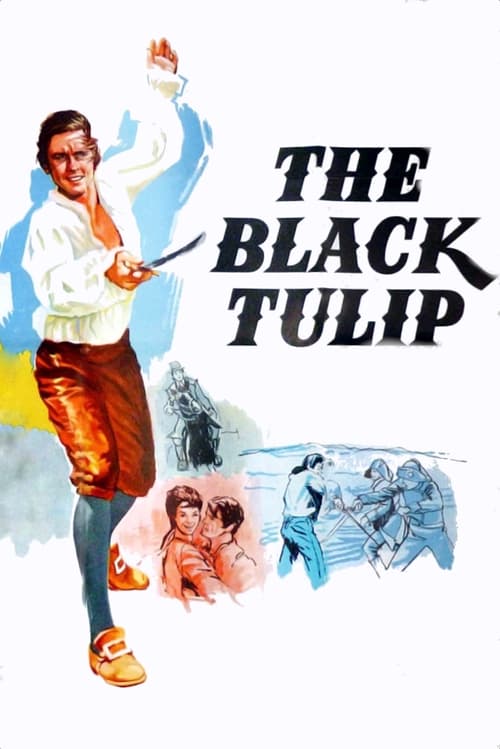
The Black Tulip
6.3

Aristocrat Guillaume de Saint Preux leads a double life as a masked bandit known as the Black Tulip. The Black Tulip only robs rich aristocrats, so the local peasants regard him as a hero. Baron La Mouche is convinced Guillaume is the Tulip. During a robbery, he scars the Tulip's face, and hopes to use this to expose Guillaume, but Guillaume is one step ahead.

The Black Tulip

1964
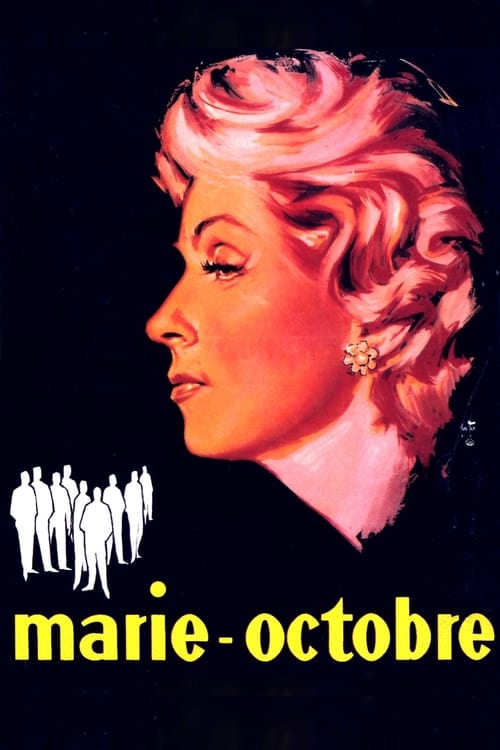
Marie-Octobre
7.3

A group of ex-resistance fighters are brought together by Marie-Octobre, the code name of Marie-Helene Dumoulin. The former members of the network have carried on with their lives after the war, but this evening they are going to have to live again a fateful night – the night their leader was killed. He had been betrayed, his name given to the Germans. The search for the traitor puts each personality in the spotlight – and also that of the killed leader, Castille.

Marie-Octobre

1959
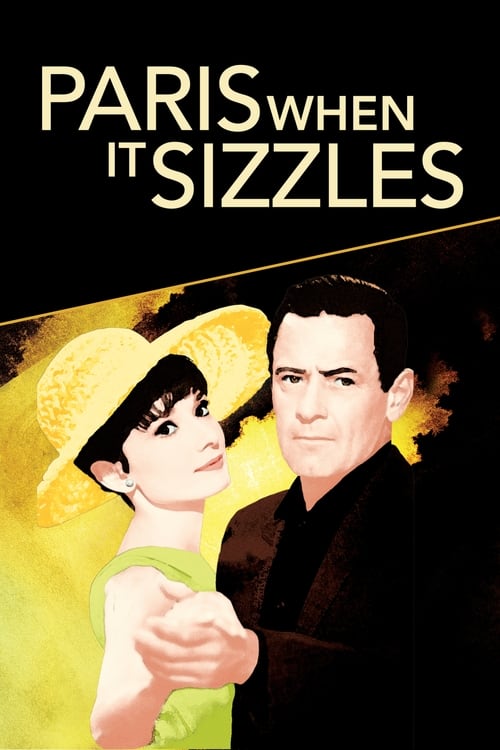
Paris When It Sizzles
6.3

Hollywood producer Alexander Meyerheimer has hired drunken writer Richard Benson to write his latest movie. Benson has been in Paris supposedly working on the script for months, but instead has spent the time living it up. Benson now has just two days to the deadline and thus hires a temporary secretary, Gabrielle Simpson, to help him finish on time.

Paris When It Sizzles

1964
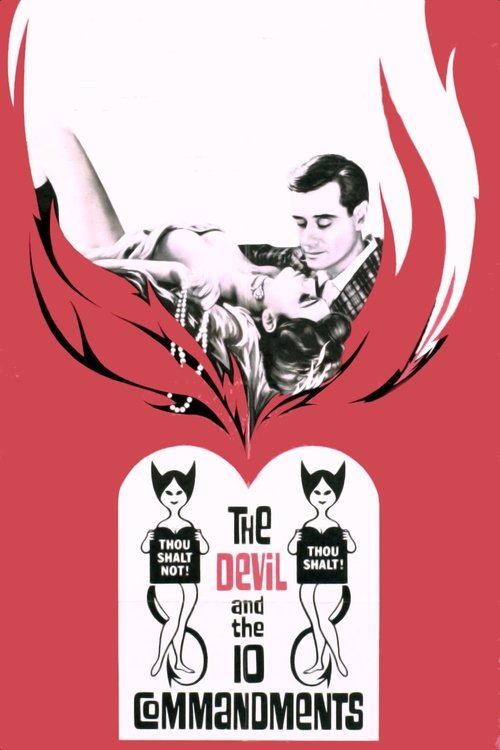
The Devil and the Ten Commandments
5.7

The film consists of seven roughly 15 minute episodes, each showing what will happen if one or more of the Ten Commandments will be broken: Jérome Chambard is warned that he will lose his job if he continues to swear; Françoise Beaufort enamored of a stripper calls on her only to find her married to a janitor who doesn't know what kind of dancing his wife performs; Denis, a Jesuit novice, leaves the order to avenge his sister's suicide, which was provoked by Garigny, who seduced her into prostitution and drug addiction; Philip buys a necklace for Micheline though he is bored with her; a young man find out that his real mother is not Madeleine, but actress Clarisse Ardant; Didier Marin, cashier of a bank, was fired by his boss; the Devil appears as a serpent for Jérome Chambard and the bishop are eating.

The Devil and the Ten Commandments

1962
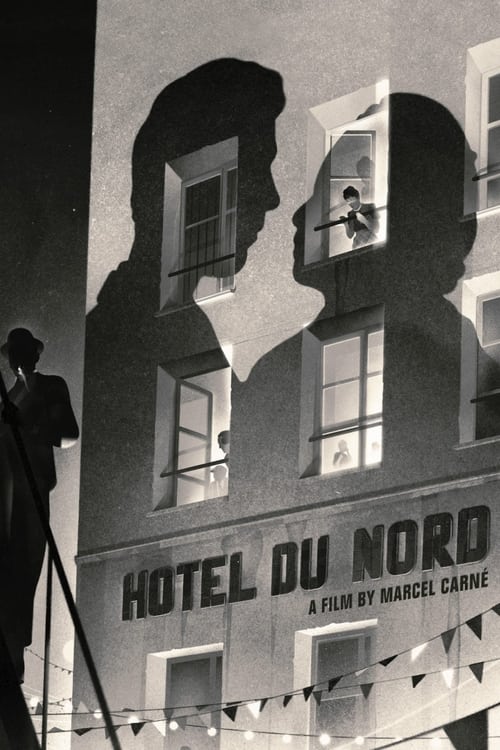
Hôtel du Nord
7.2

On the meandering Canal St. Martin, at the Parisian Hôtel du Nord, a nearly fatal gunshot separates a dejected young couple. But, amid a sad but beautiful panorama of lively characters, love has the final say. Can life be a fairy tale?

Hôtel du Nord

1938
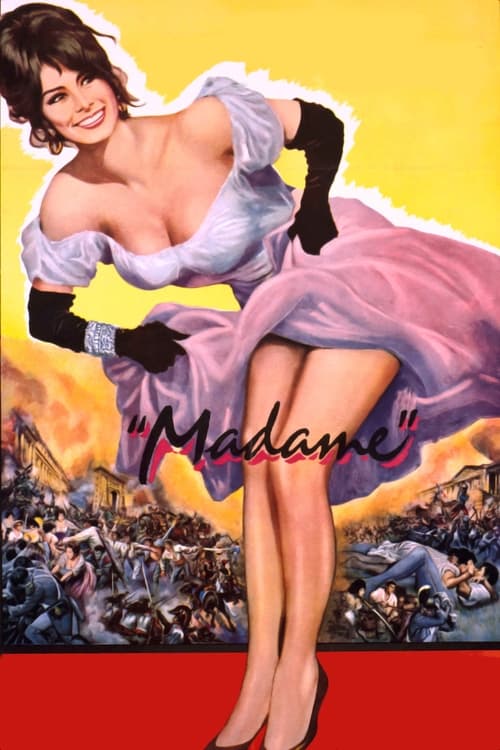
Madame
5.8

Catherine Hubscher, who washes the shirts of young Napoleon and other soldiers fighting the Revolution, falls in love with Sergeant Lefebvre. Circumstances bring Lefebvre a noble title and even more -- Napoleon decides to make him the local ruler over a large territorial fiefdom. But trouble brews when Madame Sans-Gene, now elevated to the nobility along with her man -- cannot keep her frank observations under control.

Madame

1961
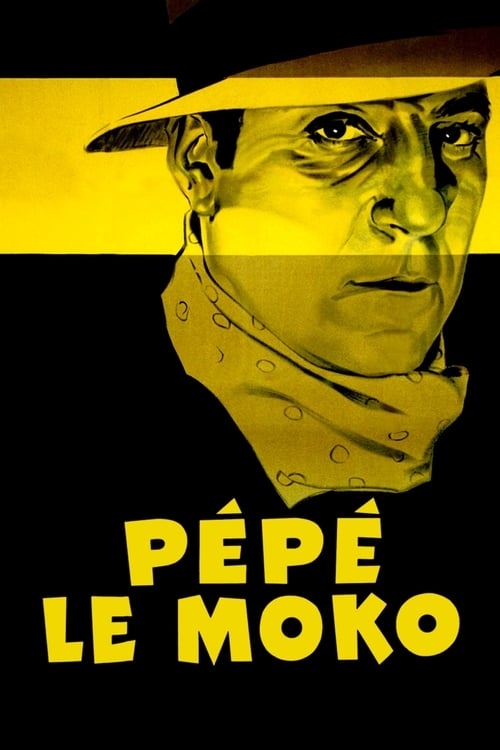
Pépé le Moko
7.2

Pépé le Moko, one of France's most wanted criminals, hides out in the Casbah section of Algiers. He knows police will be waiting for him if he tries to leave the city. When Pépé meets Gaby, a gorgeous woman from Paris who is lost in the Casbah, he falls for her.

Pépé le Moko

1937
Angel and Sinner
5.4

During the stagecoach trip of a frightened group of inhabitants of Rouen, Elisabeth Rousset, known as "Boule de Suif", renders these people a signal service, but comes up against their stupidity and their sufficiency. A little later, Boule de Suif assassinates the formidable Prussian lieutenant whom his friends had nicknamed Fifi and who shamelessly displayed his taste for pillage and his sadistic tendencies.

Angel and Sinner

1945
The Moment of Truth
6.0

After attending to a suicidal young man, Dr Richard learns that his wife has been unfaithful for years. This comes as a shock after 10 years of supposedly happy marriage. Back home, he demands answers from Madeleine. A long night of explanations ensues.

The Moment of Truth

1952
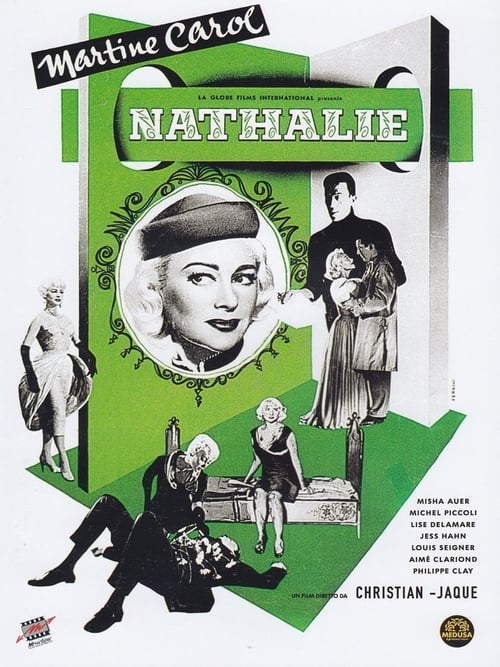
Nathalie
6.6

Haute Couture model in Paris becomes involved in the activities of two rival jewel thief gangs.

Nathalie

1957
Daughters of Destiny
4.6

Three stories, very different in space and time. Lysistrata, a dancer from ancient times, Jeanne d'Arc, medieval warrior and Elisabeth, American war widow who comes on pilgrimage in Italy.

Daughters of Destiny

1954
Operation Caviar
5.3

Bank accountant Thomas Lieven is forced to work as a triple agent for the British, the French and the Nazis.

Operation Caviar

1961
The Damned
5.9

A group of Nazis and sympathizers board a submarine bound for South America in the hopes of finding shelter.

The Damned

1947
Paris in August
7.3

A man is alone in Paris during the month of August while his woman and children go on vacation. He meets a young English girl posing as a model who came to Paris for a shoot.

Paris in August

1966
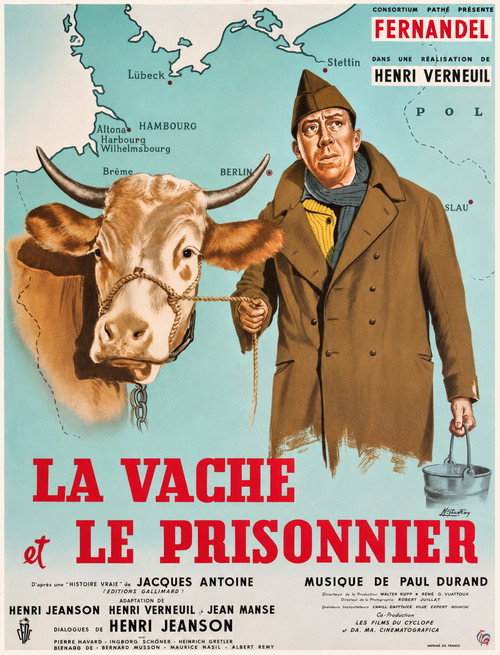
The Cow and I
6.7

In 1942, a French prisonner of war in Germany decide to escape to France using a cow hold by a lunge as a decoy. He cross all Germany in this way.

The Cow and I

1959
Madame du Barry
6.0

The daughter of a seamstress, Jeanne Bécu could hardly imagine she would later become one of the most influential women of the Kingdom of France...

Madame du Barry

1954
Lost Souvenirs
5.5

Suppose lost and found objects could talk... But they can! At least four of them... : -A statuette of Osiris remembers how two ex-lovers, a model and a good for nothing who claimed to be an Egyptologist, met again one Christmas Eve. -A violin has things to say about Raoul, a humble policeman who lost Solange, a widowed grocer he loved, to a god-dam seducing busker also named Raoul. -A scarf was witness to an eerie romance between a young madman and girl he had saved from suicide. -A funeral wreath lets us know how it caused a young woman to believe her lover dead. After having told their respective story, the objects return to their customary stillness.

Lost Souvenirs

1950
Don't Tempt the Devil
6.2

A lovely young nurse finds herself framed for the murder of a hospital patient who died after she administered an injection.

Don't Tempt the Devil

1963
Le Majordome
7.5

Léopold, valet de chambre to the avocat général Maître de Royssac, starts studying the penal code and, during his leave, becomes a judge in a "middle" court. His decisions are recognized as final. Léopold falls in love with Agnès, engaged to the two-faced Doctor Ventoux, who becomes "Le chat" when he plays the gangster. Léopold will help "Le chat" pull off the heist of the century, if he remains free to court Agnès. "Le Chat" doesn't play along. A fight breaks out between Léopold's gang and "Le Chat's" gang. The law must prevail.

Le Majordome

1965