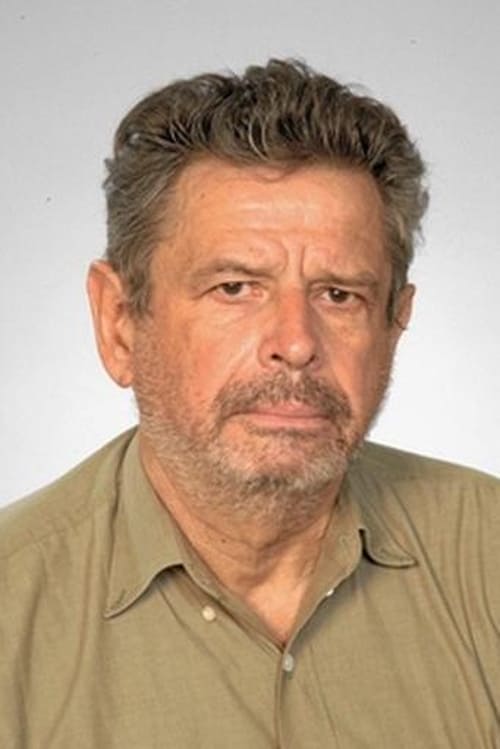
László Szabó
Acting
Biography
László Szabó (born 24 March 1936) is a Hungarian actor, film director and screenwriter. Since 1952, he has appeared in more than 120 films. These include seven films that have been screened at the Cannes Film Festival. He was born to Béla Szabó and Margit Gulyás. Between 1954-1956 he was a student at the Budapest University of Technology , during which he performed in an amateur theater group. He applied to the Theater and Film Academy as an actor, but was not accepted. He left the country in the fall of 1956 and went to Paris . Like the French new wavers, he also visited Henri Langlois ' "liberty university of film history" at the Cinématheque, watched the film series, met and talked to the directors who presented their films, and while writing in the "cahiers", interviewed Buster Keaton together with Jacques Rivette . He and a friend dropped by on the set of Chabrol (Cousins), from whom he immediately received a one-sentence role. And in his next film, Locked with the Key , a longer one. After that, Godard gave him the role of the interrogator in The Little Soldier , which was followed by other roles in more recent Godard films. He is the favorite character actor of all the directors of the new wave, everyone has a role for him, they entrust him with strange, boho characters, who always have some disturbing and annoying ulterior motives. He also took a liking to directing, and made two new-wave French films. Truffaut wrote an appreciative review of the amusing film noir The White Gloves of the Devil . Zig-Zig was played by the new wave's favorite anti-star actress, Bernadette Lafont , and a cool star, Catherine Deneuve . This is also where the self-confidence and sardonic pungency of the new wavers can be felt. Like all actor-directors, he brought out the best in his actresses, skillfully mixing dark humor and tenderness. In the meantime, from the end of the 1960s he appeared in Hungarian films, and after many character roles, he got the lead role from Zsolt Kézdi-Kovács : Miklós Dibusz, the big snooty, sumák organizer, The nice neighbor . His first and so far the only Hungarian-French direction was based on Nándor Gion's novel: Sortűz for a Black Buffalo , and his first and so far only Hungarian direction: The Man Who Slept During the Day
Known For

Successful surgeon Tomas leaves Prague for an operation, meets a young photographer named Tereza, and brings her back with him. Tereza is surprised to learn that Tomas is already having an affair with the bohemian Sabina, but when the Soviet invasion occurs, all three flee to Switzerland. Sabina begins an affair, Tom continues womanizing, and Tereza, disgusted, returns to Czechoslovakia. Realizing his mistake, Tomas decides to chase after her.
The Unbearable Lightness of Being

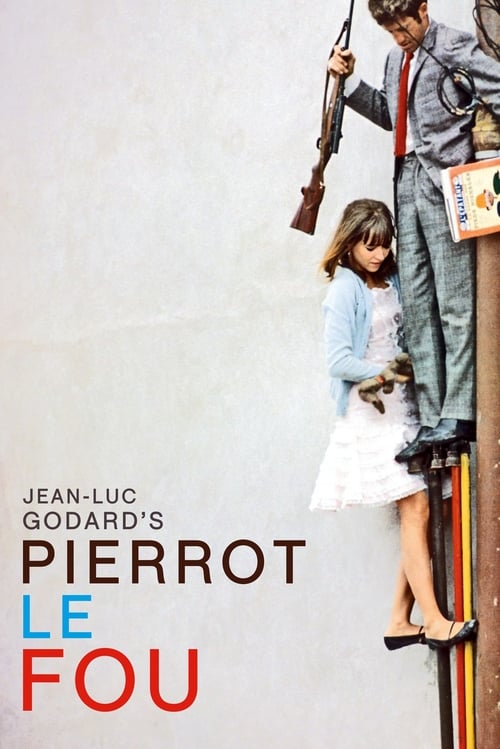
Pierrot escapes his boring society and travels from Paris to the Mediterranean Sea with Marianne, a girl chased by hit-men from Algeria. They lead an unorthodox life, always on the run.
Pierrot le Fou

Twelve episodic tales in the life of a Parisian woman and her slow descent into prostitution.
Vivre Sa Vie

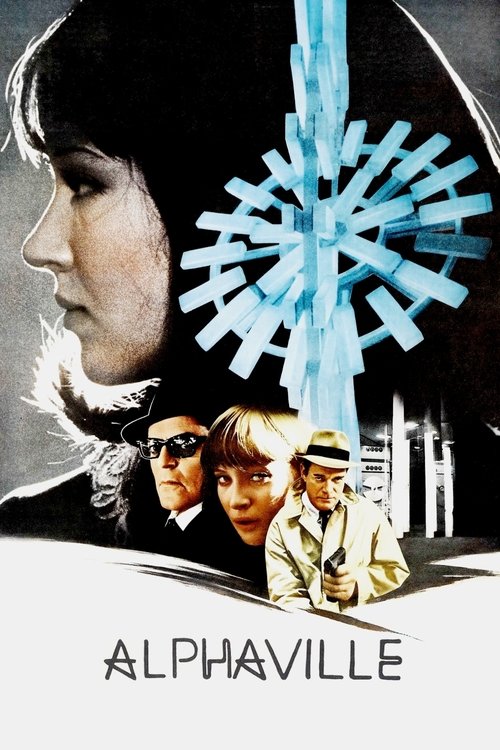
Lemmy Caution is on a mission to eliminate Professor Von Braun, the creator of a malevolent computer that rules the city of Alphaville. Befriended by the scientist’s daughter Natasha, Lemmy must unravel the mysteries of the strictly logical Alpha 60 and teach Natasha the meaning of the word “love.”
Alphaville

A supposedly idyllic weekend trip to the countryside turns into a never-ending nightmare of traffic jams, revolution, cannibalism and murder as French bourgeois society starts to collapse under the weight of its own consumer preoccupations.
Weekend

Five swindle stories, taking place in five international cities: Tokyo, Japan ("Fumiko's Five Benefactors" by Hiromichi Horikawa); Amsterdam, The Netherlands ("A River of Diamonds" by Roman Polanski); Naples, Italy ("The Road Map" by Ugo Gregoretti); Paris, France ("The Man Who Sold the Eiffel Tower" by Claude Chabrol); and Marrakesh, Morocco ("The Confidence Man" by Jean-Luc Godard). Godard's segment was not included in the original French cinema release, and Polanski's segment was not included on the 2016 home disc release.
The World's Most Beautiful Swindlers

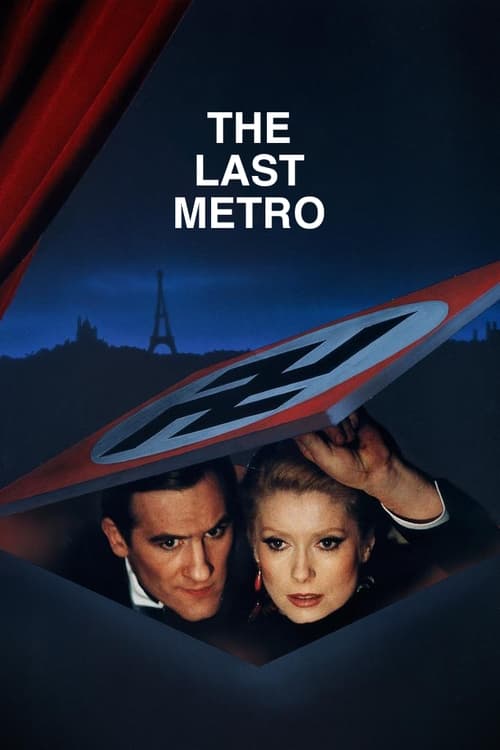
In occupied Paris, an actress wed to a Jewish theater owner must keep him hidden from the Nazis while doing both of their jobs.
The Last Metro

A Jewish girl in 19th century London dreams of becoming a stage actress.
Esther Kahn

Tsar Alexandre II meets a young student, Katia. He understands that he loves her and try to send her away but they end up seeing each other again and becomes his mistress. With the help of Katia, Alexandre prepares a liberal constitution, but these reforms make him hostile to the more privileged subjects without satirising the revolutionaries against the regime.
Katia

The story of a woman that remained distracted for a long time from her life, from the passions that made her feel alive. The importance of true love is compared with the material value of diamonds. Only one truly lasts forever. She's got to find the thing that values most for her, the thing that gives psychical stability and real happiness again to her life.
Place Vendôme

A former hero of the French anti-Nazi resistance is approached by old comrades to lead a financially struggling liberal newspaper. Initially reluctant, she takes on the challenge, mortgaging her house to keep it afloat. As conservative forces intensify their opposition, she is eventually forced to sell the paper, seeing it as a personal failure.
Judith Therpauve

Just as the disheveled and alcoholic filmmaker Ismaël embarks on a difficult new film project, his life is sent into a tailspin. His wife Carlotta, presumed dead for 20 years, come crashing back into his life creating chaos in his work and his current romantic relationship with the starry-eyed astronomer Sylvia.
Ismael's Ghosts

When Peter, Margaux's American writer husband, leaves Paris in a funk and heads home, she finds herself the single parent of two near teens. She also gets a new assignment at work: to find, sign, and promote new rock singers. She discovers a duo, Jeremy and Michel, and jump-starts their music careers. Jeremy is attracted to the older Margaux, asserts himself with her, befriends her children, and neglects Michel and their music. The kids go to New York to be with their father Peter, freeing Margaux to respond to Jeremy. Does that relationship have any future? And what of the musical duo?
Paroles et musique

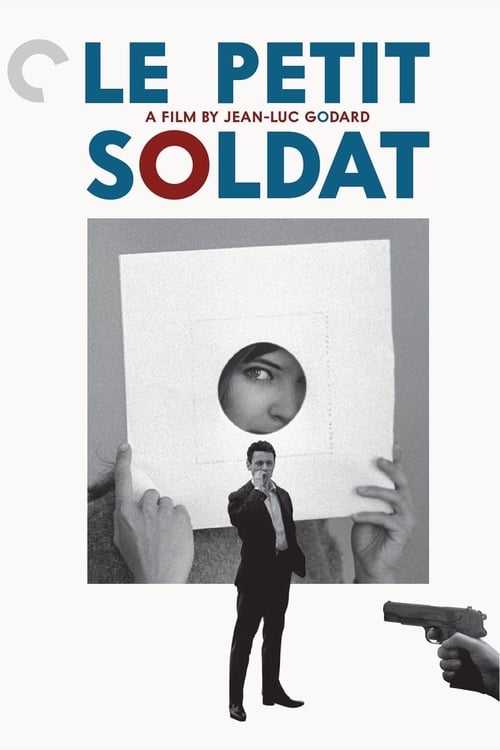
Despite his lack of political convictions, photojournalist Bruno Forestier is roped into a paramilitary group waging a shadow war in Geneva against the Algerian independence movement.
Le Petit Soldat

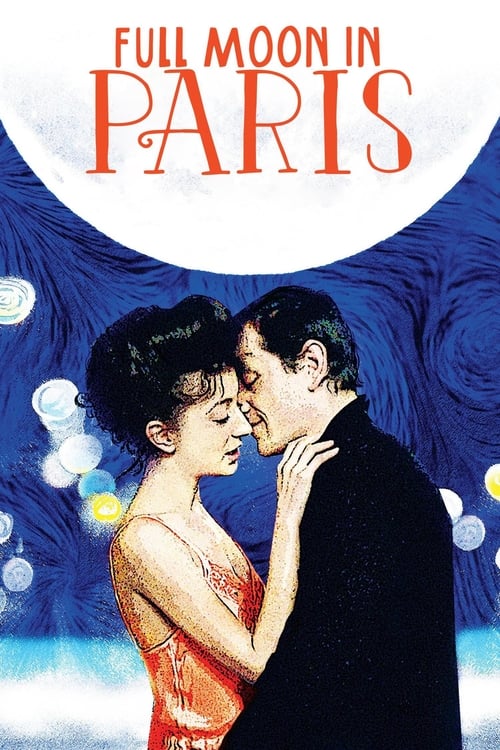
Feeling suffocated by a possessive boyfriend, work and suburban life, a young woman starts spending the weekends in her Paris apartment in order to reclaim some of her lost freedom.
Full Moon in Paris

While shooting a film, the director becomes interested in the unfolding struggle of a young factory worker that has been laid off by a boss who did not like her union activities.
Godard's Passion

Two women work as entertainers and prostitutes to raise enough money for their dream home.
Zig Zig

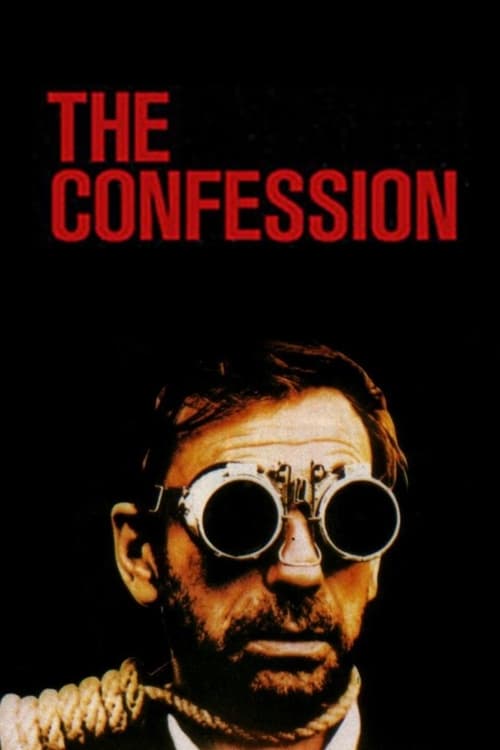
In 1950s communist Czechoslovakia, a government minister, a war veteran long a loyal party man, leads a relatively comfortable life with his wife. However, he soon finds himself under surveillance, then under arrest. Unclear what his offense is, agents for the totalitarian regime interrogate and torture him, aiming to use their unending power to gain a false confession for these supposed crimes against the state.
The Confession

Cinématon is a 156-hour long experimental film by French director Gérard Courant. It was the longest film ever released until 2011. Composed over 36 years from 1978 until 2006, it consists of a series of over 2,821 silent vignettes (cinématons), each 3 minutes and 25 seconds long, of various celebrities, artists, journalists and friends of the director, each doing whatever they want for the allotted time. Subjects of the film include directors Barbet Schroeder, Nagisa Oshima, Volker Schlöndorff, Ken Loach, Benjamin Cuq, Youssef Chahine, Wim Wenders, Joseph Losey, Jean-Luc Godard, Samuel Fuller and Terry Gilliam, chess grandmaster Joël Lautier, and actors Roberto Benigni, Stéphane Audran, Julie Delpy and Lesley Chatterley. Gilliam is featured eating a 100-franc note, while Fuller smokes a cigar. Courant's favourite subject was a 7-month-old baby. The film was screened in its then-entirety in Avignon in November 2009 and was screened in Redondo Beach, CA on April 9, 2010.
Cinématon

A man's story parallels Hitler's rise. Austrian Klaus Schneider, wounded in World War I, recovers in the care of Dr. Emil Bettleheim. Bettleheim discovers that Schneider possesses powers of empathy and of clairvoyance, such that could aid suicidal patients. After the war, with one friend as his manager and another as his lover, Schneider changes his name to Eric Jan Hanussen and goes to Berlin, as a hypnotist and clairvoyant performing in halls and theaters. He always speaks the truth, which brings him to the attention of powerful Nazis. He predicts their rise (good propaganda for them) and their violence (not so good). He's in pain and at risk. What is Hanussen's future?