Malcolm Guy
Production
Known For

Each day, thousands of people leave countries like the Philippines to seek work abroad. They work as nannies, domestics, clerks and labourers for low wages and with few rights. What little money they earn they send home to their families. This contribution to their country’s economy has prompted the Philippine government to call these contract workers “modern day heroes.” But that’s only half the story.
Modern Heroes Modern Slaves

Most of the goods we consume are transported by sea on ships where working conditions recall those of the galley ships of another age. Turbulent Waters tells the story of these seafarers – equivalent to 21st century galley slaves – and of the turbulent seas they inhabit in a world of corporate globalisation.
Turbulent Waters
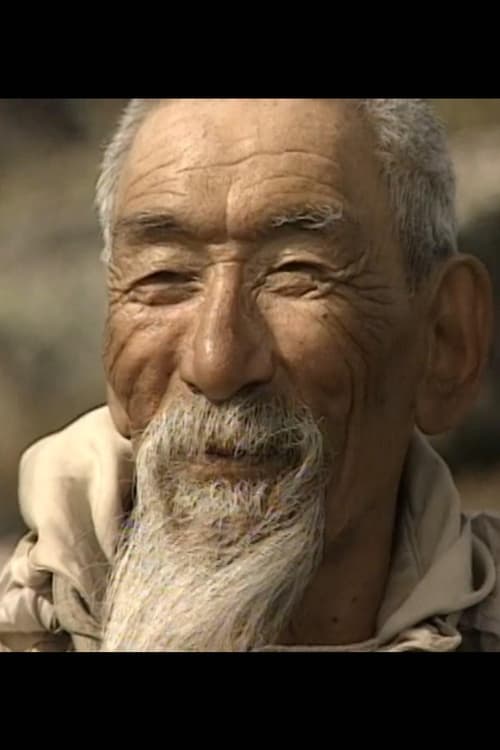
In this feature-length documentary, three generations of the Caribou Inuit family come together to tell the story of their journey as Canada's last nomads. From the independent life of hunting on the Keewatin tundra to taking the reins of the new territory of Nunavut on April 1, 1999, we see it all. The film is the result of a close collaboration between Ole Gjerstad, a southern Canadian, and Martin Kreelak, an Inuk. It's Martin's family that we follow, as the story is told through his own voice, through those of the Elders, and through those of the teens and young adults who were born in the settlements and form the first generation of those growing up with satellite TV and a permanent home.
Amarok's Song - The Journey to Nunavut

Fleeing their war-torn homeland, forty thousand Algerians come to Montreal, Quebec in the 1990’s. Many are refused refugee status and are not allowed to study or work normally. Years go by, children are born and Canada becomes home. Then comes 911. Deportations begin.
Bledi, This is Our Home

Three Filipino families struggle to rebuild their lives in Canada after years of separation. The third part of a trilogy on the impact of labour migration, including Brown Women Blond Babies and Modern Heroes Modern Slaves.Every year thousands of women enter Canada as domestic servants, the majority of them from the Philippines. Leaving their own children and families behind, they can spend many isolated years cooking, cleaning and caring for others. Sending much of their wages back home, they dream of the day their families can join them.
When Strangers Re-Unite
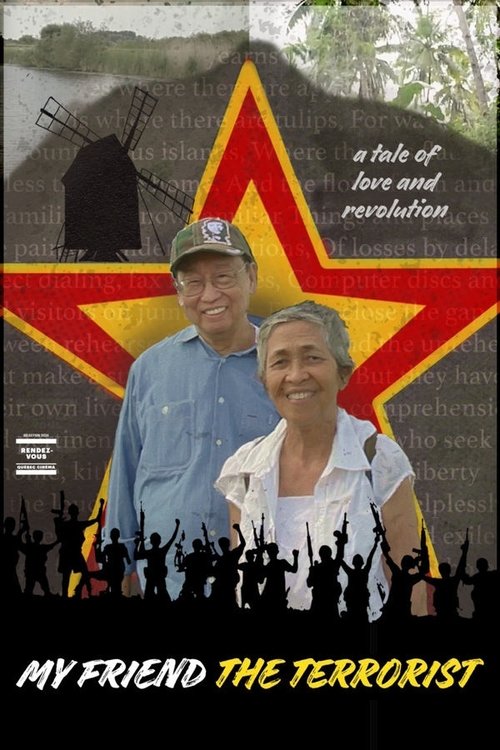
For the first 25 years of his adult life Jose Maria Sison was known to various degrees as the Fidel Castro, Mao Zedong, and Che Guevara of the Philippines. For the last 35 years of his life he has been living in exile, 10,000 km away from the bustle, the intrigue, the bribery and the squalor of Manila, in the tranquil medieval city of Utrecht, the Netherlands. In the 1960s Jose Maria Sison founded the Communist Party of the Philippines (CPP) and the CPP’s guerrilla-military arm, the New People’s Army (NPA), among other noble and nefarious activities that led to his Philippine passport being revoked in 1987. To the US State Department, the Philippine government, and some European authorities, Sison is a certified terrorist. With his wife Julieta de Lima (84) he lives a hand-to-mouth Spartan existence and yet they are the most charming couple. This is their love story: their love for each other, their love of country, and the love of many of their compatriots for them.
My Friend the Terrorist, A Tale of Love and Revolution
In the 1960s Jose Maria Sison founded the Communist Party of the Philippines (CPP) and the CPP’s guerrilla-military arm, the New People’s Army (NPA), among other noble and nefarious activities that led to his Philippine passport being revoked in 1987. To the US State Department, the Philippine government, and some European authorities, Sison is a certified terrorist. With his wife Julie (84) he lives a hand-to-mouth Spartan existence and yet they are the most charming couple. This is their love story: their love for each other, their love of country, and the love of many of their compatriots for them.
My Friend the Terrorist

Thousands of women leave their homes and families in the Philippines every year to work abroad as domestics. Thousands have made their way to Canada, forming part of “the Third World in our living rooms.”