FEEL IT.STREAM
Georges Conchon

Georges Conchon

Writing

Biography

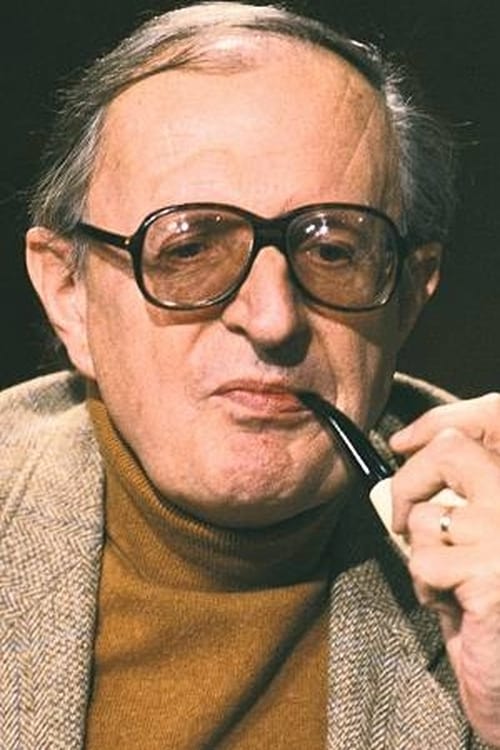
Georges Conchon (9 May 1925 in St. Avitus (Puy-de-Dôme) – 29 July 1990) was a French writer and screenwriter. He grew up in a family of teachers, and after graduating in philosophy, passed the support of the parliamentary and between the Assembly French Union where he was division head from 1952 to 1958. He began writing, while traveling extensively, notably in Africa. He became secretary in 1960 debates in the Senate until 1980. He was journalist and novelist, he began his career as a scriptwriter in 1967. His first published novel will be Les Grandes Lessives in 1953, followed by Chemins écartés. He is then hired by Pierre Lazareff to France-Soir as a journalist. This experience led to L'État sauvage, which earned him the Prix Goncourt in 1964. Before the Goncourt, he had received the Fénéon in 1956, then the Booksellers prize in 1960 for La Corrida de la victoire. As a screenwriter, his record is brilliant, including L'Horizon (directed by Jacques Rouffio 1967), Sept Morts sur ordonnance (J. Rouffio 1976), La Victoire en chantant (Jean-Jacques Annaud 1976), Judith Therpauve (Patrice Chéreau, 1978), La Banquière (Francis Girod 1980). It also works in television, directing A2 on a collection of films and with the launch of the series Châteauvallon. Some of his books were made into movies, including The Savage State and Le sucre by Jacques Rouffio. His last film collaboration scenario has been devoted to the history of the famous assassin of the nineteenth century, Lacenaire. Directed by Francis Girod, the film was released in theaters in 1990. He was Chevalier de la Legion of Honour and an Officer of the Order of Merit and Arts and Letters, and was politically active at PSU and then the Socialist Party. Source: Article "Georges Conchon" from Wikipedia in English, licensed under CC-BY-SA 3.0.
Known For

Champs-Elysées
6.8

No description available.

Champs-Elysées

1982
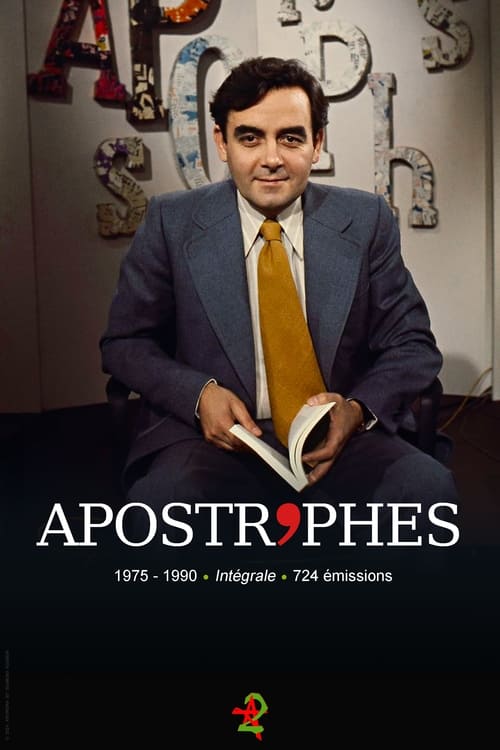
Apostrophes
8.5

Apostrophes was a live, weekly, literary, prime-time, talk show on French television created and hosted by Bernard Pivot. It ran for fifteen years (724 episodes) from January 10, 1975, to June 22, 1990, and was one of the most watched shows on French television (around 6 million regular viewers). It was broadcast on Friday nights on the channel France 2 (which was called "Antenne 2" from 1975 to 1992). The hourlong show was devoted to books, authors and literature. The format varied between one-on-one interviews with a single author and open discussions between four or five authors.

Apostrophes

1975
Les Rendez-vous du dimanche
6.0

A talk show presented by Michel Drucker

Les Rendez-vous du dimanche

1975
No image
6.0

No description available.

Samedi soir

1971
30 millions d'amis
6.2

No description available.

30 millions d'amis

1976
Châteauvallon
6.2

No description available.

Châteauvallon

1985
Radetzky March
5.9

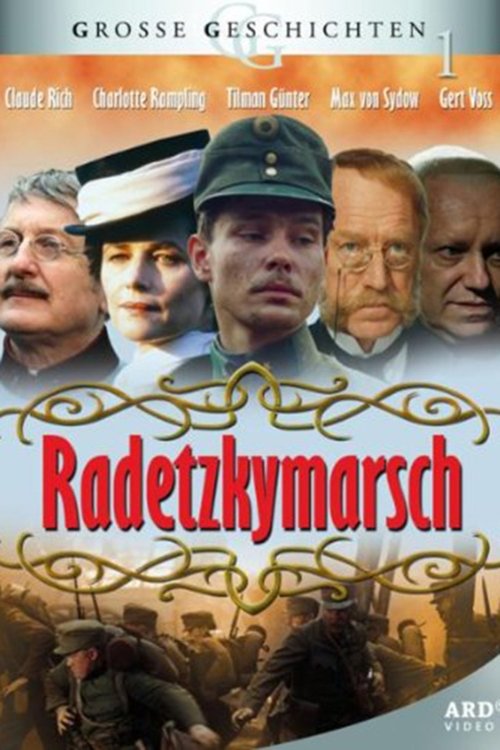
At the battle of Solferino Joseph von Trotta, a lieutenant in the Slovenian infantry, is wounded while saving the life of the young Austrian Emperor Franz-Joseph I. The Emperor rewards him by elevating him in society to a position quite out of keeping with his social rank, and which entirely alienates him from his farming background: Joseph gets promoted to the rank of captain, and is made a member of the nobility. Years later Joseph von Trotta accidentally finds a description of the battle that changed his life in a text-book belonging to his son Franz. Enraged at the over-emotional, patriotic and sentimental way in which the Emperor's rescue at the hands of "the Hero of Solferino" is depicted, he lodges a complaint at the Imperial Court.

Radetzky March

1995
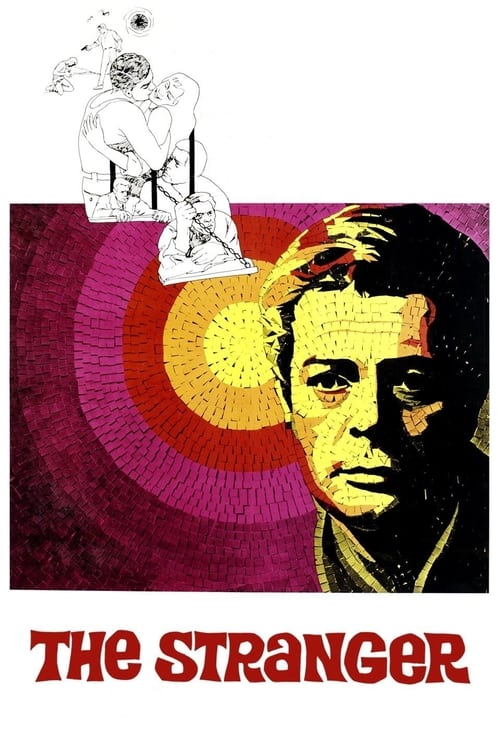
The Stranger
6.8

Meursault is a man who feels utterly isolated from everyone and everything around him. This alienation results in sudden, inexplicable bursts of violence, culminating in murder.

The Stranger

1967
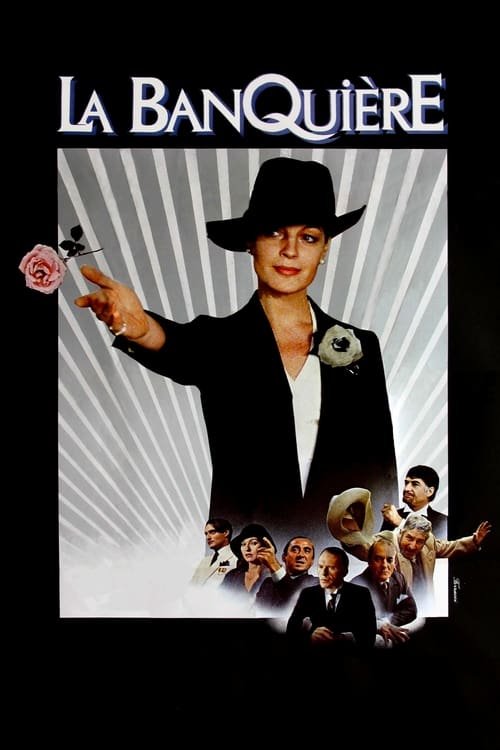
The Lady Banker
5.3

Ambitious Emma Eckhert successfully makes her way into a world previously reserved for men: that of high finance. She quickly becomes popular with small savers, but leads a scandalous life that will cost her.

The Lady Banker

1980
Rene the Cane
4.5

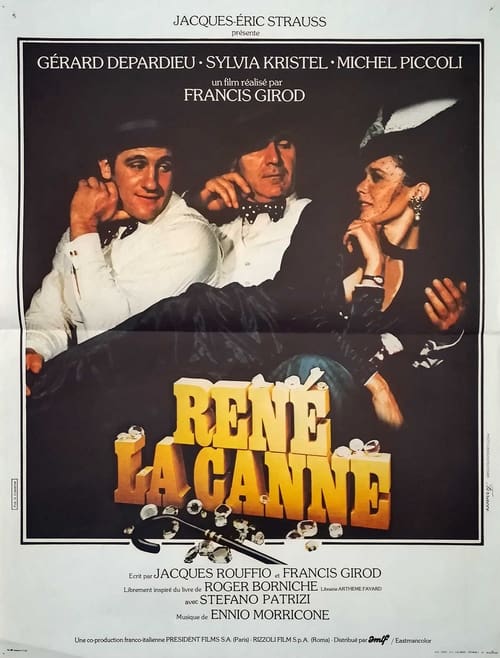
"René la Canne" was the second collaboration between Francis Girod and Ennio Morricone, coming after "Le Trio Infernal" (1974) and before "La Banquière" (1980). His film is an adaptation of a story by Roger Borniche about the gangster René Girier and relates the fantastic adventures of a flamboyant mobster (René/Gérard Depardieu) and a maverick police inspector (Fernand la Sournoise/Michel Piccoli), through the 1940s.

Rene the Cane

1977
Judith Therpauve
6.5

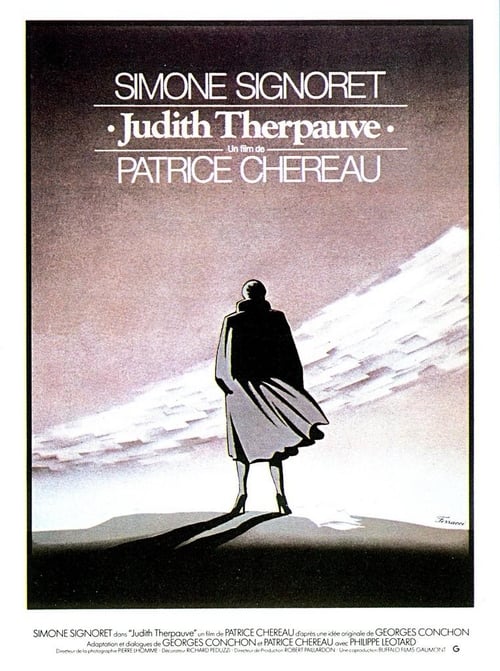
A former hero of the French anti-Nazi resistance is approached by old comrades to lead a financially struggling liberal newspaper. Initially reluctant, she takes on the challenge, mortgaging her house to keep it afloat. As conservative forces intensify their opposition, she is eventually forced to sell the paper, seeing it as a personal failure.

Judith Therpauve

1978
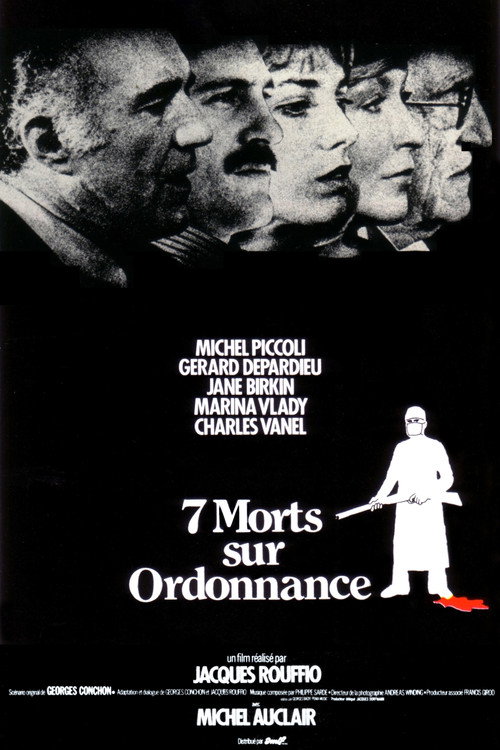
Seven Deaths by Prescription
6.1

Dr. Brézé and his sons, all surgeons with limited abilities fight any competition on their sector with all means.

Seven Deaths by Prescription

1975
Black and White in Color
6.4

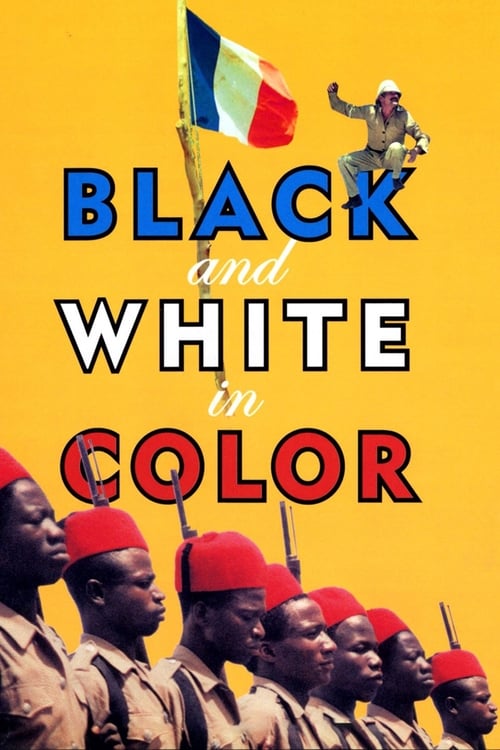
French colonists in Africa, several months behind in the news, find themselves at war with their German neighbors. Deciding that they must do their proper duty and fight the Germans, they promptly conscript the local native population. Issuing them boots and rifles, the French attempt to make "proper" soldiers out of the Africans. A young, idealistic French geographer seems to be the only rational person in the town, and he takes over control of the "war" after several bungles on the part of the others.

Black and White in Color

1976
The Elegant Criminal
6.1

On 9 January 1836, Pierre Lacenaire goes to the guillotine, a murderer and a thief. He gives Allard, a police inspector, his life story, written while awaiting execution. He also asks Allard to care for Hermine, a lass to whom he has been guardian for more than ten years. In flashbacks, from the prison as Lacenaire writes, from Allard's study as he and Hermine read, and from other readers' memory after the book is published, we see Lacenaire's childhood as he stands up to bullies, including priests, his youthful thieving, his first murder, his brief army career, his seduction of a princess, and his affair with Avril, a young man who dies beside him.

The Elegant Criminal

1990
Horizon
5.5

Antonin is a young French soldier who returns home from World War I to recover from his wounds. When he falls in love with a young widow, Antonin questions his role in battle and contemplates desertion as he recalls the horrors of war. He is pressured by his patriotic father to honor his military commitment even if it means he will die.

Horizon

1967
My Brother-in-law Killed My Sister
4.6

Two members of the French Academy agree to help the attractive young veterinarian Esther investigate the suspicious death of her sister. Esther is convinced her brother-in-law is responsible, but soon it becomes apparent that those responsible are linked to the very highest echelons of power in the Vatican.

My Brother-in-law Killed My Sister

1986
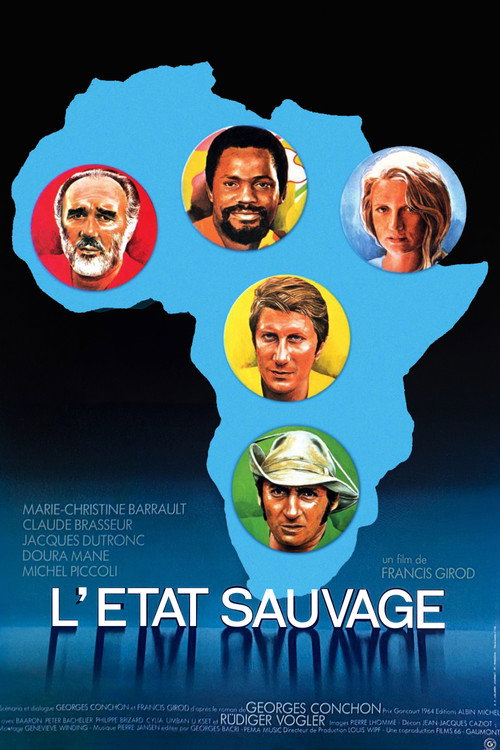
The Savage State
6.3

L'Etat Sauvage is based on the novel by Georges Conchon which won the highly esteemed Prix de Goncourt. The story chronicles the mindless racism of both the departing French colonial overlords and the emergent black Africans in a newly emerging African state. Laurence (Marie-Christine Barrault) suffers the outrage of her white acquaintances, including her former lover Gravenoir (Claude Brasseur) and her ex-husband Avit (Jacques Dutronc), for her affair with Patrice Doumbe (Doura Mane), an official in the new government. He in turn is ridiculed by his fellow cabinet ministers for stepping out with a white woman. The vilification escalates to such a point that Patrice is brutally murdered, and Laurence barely escapes the country alive, with the help of her ex-husband Avit.

The Savage State

1978
A Business of Men
6.2

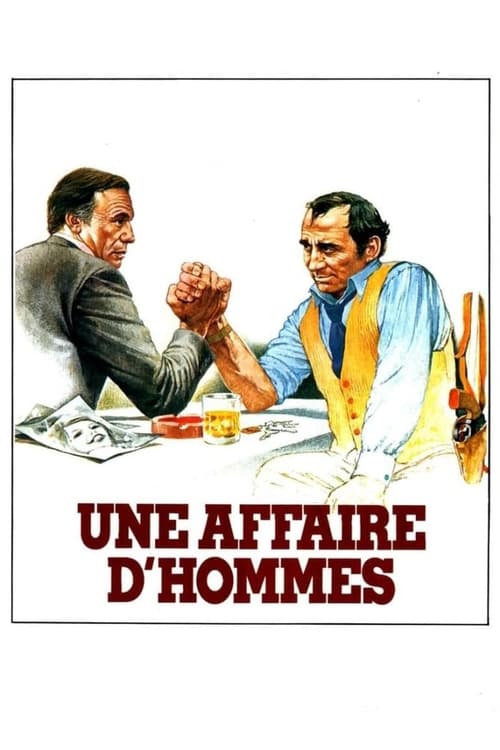
Two friends, Commissioner Servolle and real estate developer Faguet, see their friendship tested by the investigation carried out following the murder of Faguet's wife.

A Business of Men

1981
Sugar
6.7

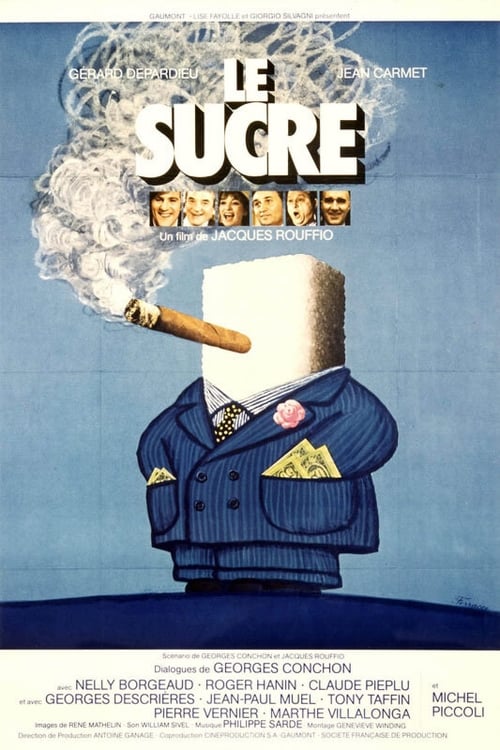
Civil servant Adrien Courtois comes to Paris in order to make his money bear fruits.

Sugar

1978
Rain over Santiago
6.5

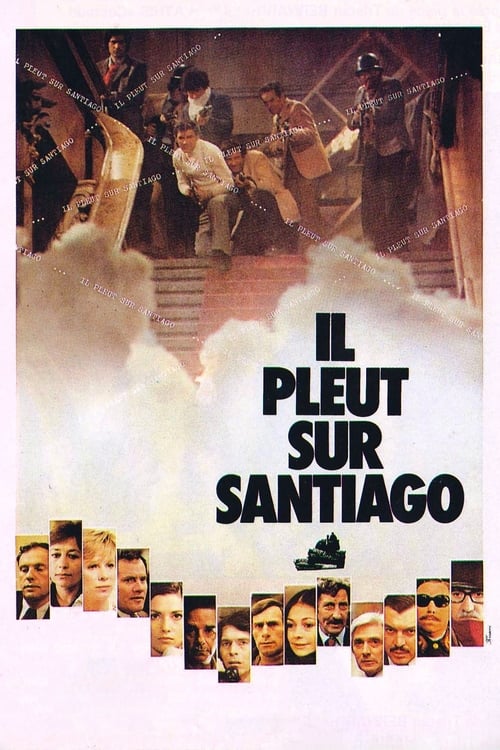
A semi-fictional account on the fatidic September 11, 1973, when the military commanded by General Pinochet took over the power from socialist president Salvador Allende, initiating a dictatorship that lasted until 1988 causing the deaths and disappearances of many people.

Rain over Santiago

1975