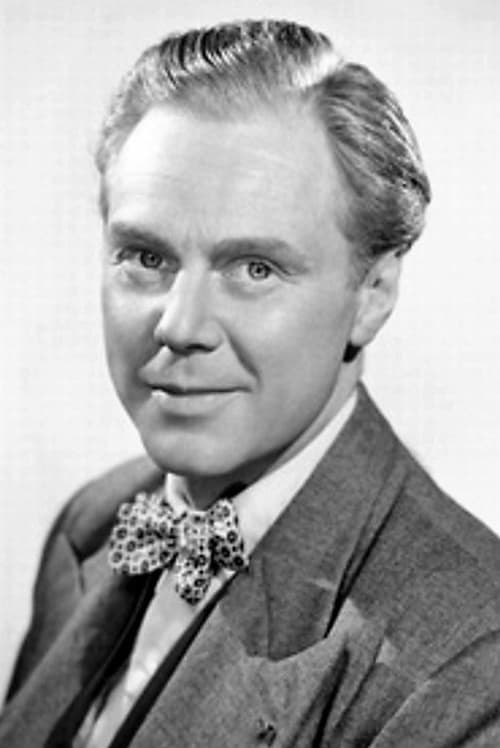
Marius Goring
Acting
Biography
Marius Re Goring CBE FRSL (May 23, 1912 – September 30, 1998) was an English stage and screen actor. He is the son of Dr Charles Buckman Goring, a renowned physician and criminologist, and Kate Winifred (née MacDonald), a former suffragette and talented pianist. Marius Goring was educated at The Perse School, Cambridge, England and at universities in Frankfurt, Munich, Vienna and Paris (The Sorbonne) where he perfected his French and German - he became fluent in both languages. He studied for the stage under Harcourt Williams at the Old Vic dramatic school, London. His first stage appearance was a fairy at the ADC Theatre, Cambridge in 1925 at the age of twelve in "Crossings: A Fairy Play" the only play written by Walter De La Mare. His first London appearance was at the Rudolph Steiner Hall in December 1927 as Harlequin in one of Jean Sterling McKinlay’s Children’s Matinees. He performed regularly at the Old Vic and Sadler's Wells in the 1930s and later toured France and Germany. He played Macbeth, Romeo, Trip in School for Scandal and the Chorus in Henry V with Laurence Olivier amongst others. His first West End appearance was at the Shaftesbury Theatre in May 1934 in The Voysey Inheritance. He joined the army in July 1940 but was seconded the following year to the BBC where he became supervisor of productions for its German Service. He made regular propaganda broadcasts to Germany. Most of his radio propaganda work was done under the alias Charles Richardson (using his father’s first name and his grandmother’s maiden name) as the name Goring wasn't too popular during the war (Hermann Göring was the commander-in-chief of the Luftwaffe). In 1941 he was married for the second time to the renowned German Jewish actress Lucie Mannheim who had to flee Germany in 1934 after the Nazis came to power. They worked together on stage and in films and television many times over the following years. He was a founder member of British Equity in 1929, being on its council for decades from 1949 and was elected its vice president three times. He had a contentious relationship with the union from the 1970s, taking them to court on a number of issues, the last of which he lost in the High Court and was nearly bankrupted by the court costs. Marius was made a Fellow of the Royal Society of Literature in 1979 and appointed Commander of the Order of the British Empire (CBE) in 1991. He died from stomach cancer in 1998 aged 86 at his home in Rushlake Green, East Sussex, survived by his third wife, Prudence FitzGerald, a television producer/director who had directed him in 18 episodes of The Expert and his only child, a daughter from his first marriage, Phyllida.
Known For

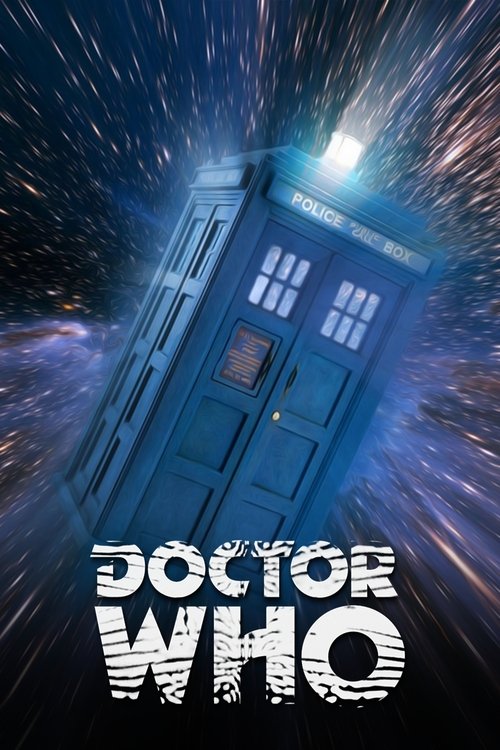
The adventures of The Doctor, a time-traveling humanoid alien known as a Time Lord. He explores the universe in his TARDIS, a sentient time-traveling spaceship. Its exterior appears as a blue British police box, which was a common sight in Britain in 1963 when the series first aired. Along with a succession of companions, The Doctor faces a variety of foes while working to save civilizations, help ordinary people, and right many wrongs.
Doctor Who

A British television anthology of stories, often with sinister and wryly comedic undertones, and a twist at the end. With early episodes written and presented by Roald Dahl, the series featured a plethora of big name guest stars.
Tales of the Unexpected

Omnibus was an arts-based BBC television documentary series, broadcast mainly on BBC1 in the United Kingdom. The programme was the successor to the long-running arts-based series 'Monitor'. It ran from 1967 until 2003, usually being transmitted on Sunday evenings. During its 35-year history, the programme won 12 Bafta awards. Among the series' best remembered documentaries are Cracked Actor, a profile of David Bowie, and Rene Magritte, a graduate film by David Wheatley, 'Madonna: Behind the American dream', a film produced by Nadia Hagger, and a profile of the British film director Ridley Scott. For a season in 1982, the series was in a magazine format presented by Barry Norman. The series was replaced by 'Imagine' hosted by Alan Yentob.
Omnibus

An anthology series of television plays which aired on BBC1 from October 1964 to May 1970. The plays were usually written for television, although adaptations from other sources also featured.
The Wednesday Play

Sunday Night Theatre was a long-running series of televised live television plays screened by BBC Television from early 1950 until 1959. The productions for the first five years or so of the run were re-staged live the following Thursday, partly because of technical limitations in this era, and the theatrical basis of early television drama. Some of the earliest collaborations between Rudolph Cartier and Nigel Neale were produced for this series, including Arrow to the Heart and Nineteen Eighty-Four. The Sunday night drama slot was subsequently renamed The Sunday-Night Play which ran for four seasons between 1960 and 1963. ITV transmitted its own unrelated run of Sunday Night Theatre between 1971 and 1974.
Sunday Night Theatre

BBC series based on the novels by Georges Simenon which starred Rupert Davies as Inspector Maigret, a French police detective who preferred to watch and listen in order to solve crimes. The series ran from 1960-63 on British television.
Maigret

No description available.
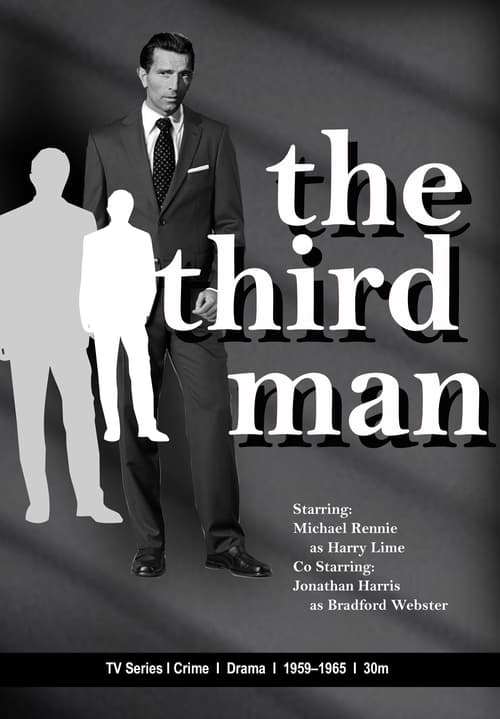
The Third Man

An anthology of short plays shown on BBC Television between 1965 and 1973, used in part at least as a training ground for new writers, on account of its short length, and which therefore attracted many writers who later became well known.
Thirty-Minute Theatre

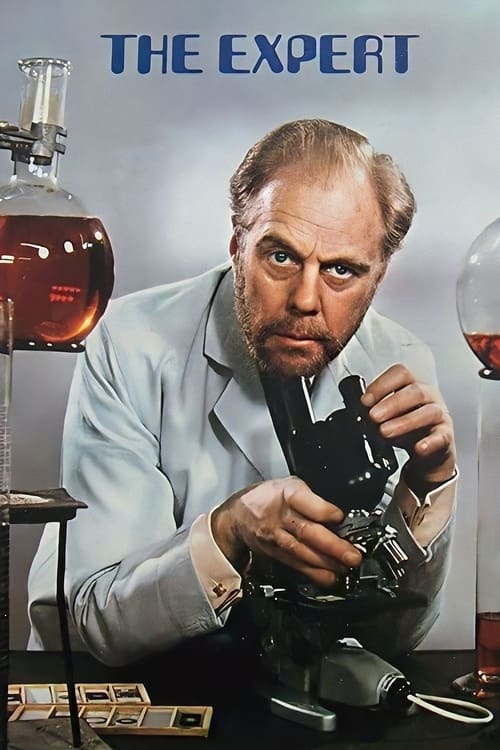
The Expert is a British television series produced by the BBC between 1968 and 1976. The series starred Marius Goring as Dr. John Hardy, a pathologist working for the Home Office and was essentially a police procedural drama, with Hardy bringing his forensic knowledge to solve various cases. The Expert was created and produced by Gerard Glaister. The series was also one of the first BBC dramas to be made in colour, and throughout its four series had numerous high quality guest appearances by actors such as John Carson, Peter Copley, Rachel Kempson, Peter Vaughan, Clive Swift, Geoffrey Palmer, Peter Barkworth, Jean Marsh, Ray Brooks, George Sewell, Anthony Valentine, Bernard Lee, Lee Montague, Geoffrey Bayldon, Mike Pratt, Edward Fox, André Morell, Brian Blessed, Nigel Stock, Philip Madoc and Warren Clarke.
The Expert
Drama 61-67 is anthology drama series which took a different title, based on year of transmission, each year. It alternated with Armchair Theatre from ABC in the Sunday evening slot. The series was described at the time as epitomising ATV drama.
Drama 61-67

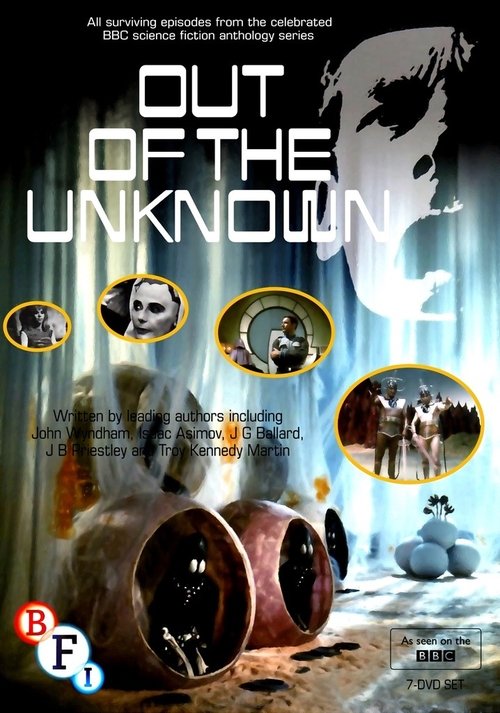
Out of the Unknown is a British television science fiction anthology drama series, produced by the BBC and broadcast on BBC2 in four series between 1965 and 1971. Each episode was a dramatisation of a science fiction short story; some were created for the series, but most were adaptations of already published stories. The first three years were exclusively science fiction, but that genre was abandoned in the final year in favour of horror and fantasy. A number of episodes were wiped during the early 1970s, as was standard procedure at the time.
Out of the Unknown

A UK anthology series of single plays from major playwrights old and new. It ran from 1955 to 1974, producing about five hundred ninety-minute episodes from Granada Television. Season 1 also incorporates the Plays from the 'H.M. Tennant Globe Theatre' series, some of which were incorporated and labelled in listings as official Play of the Week episodes and some of which were played in place of Play of the Week episodes in alternative ITV regions. All 8 plays have been incorporated into this entry for convenience.
ITV Play of the Week
The global adventures of Ken Franklin, ace operative of the William J. Burns Detective Agency, qualify as a pop-culture curio if only for star Arthur---later Art---Fleming, who hosted the original `Jeopardy!'
International Detective
BBC anthology drama series that ran over four seasons and replaced the previous BBC Sunday Night Theatre series.
Sunday-Night Play

Berlin, Germany, 1935. The day Karl Weiss, a Jewish painter, and Inga Helms, a Christian woman, marry, is the one in which both of them and the entire Weiss family are caught up in the maelstrom of the Nazi regime, the storms of World War II and the horrors of the criminal Final Solution, the Holocaust, the Shoah; while Erik Dorf, an ambitious lawyer, undertakes his fall into hell at the hands of the sinister Reinhard Heydrich.
Holocaust

"Fall of Eagles" is a 13-part British television drama aired by the BBC in 1974. The series portrays historical events from 1848 to 1918, dealing with the collapse of the ruling dynasties of Austria-Hungary (the Habsburgs), Germany (the Hohenzollerns) and Russia (the Romanovs).
Fall of Eagles

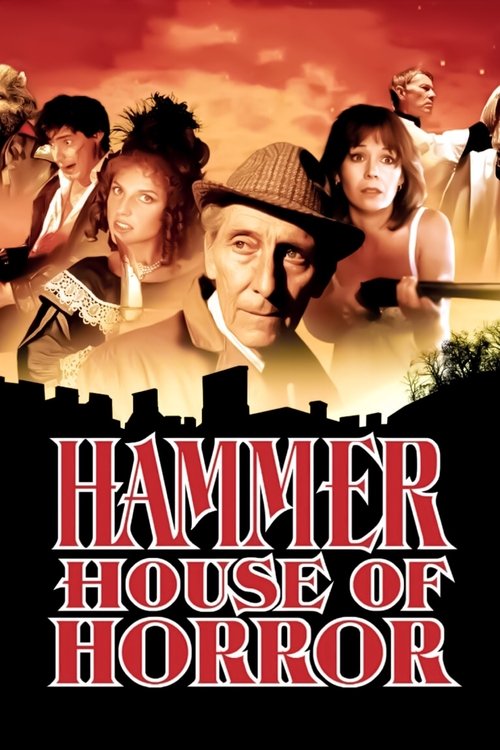
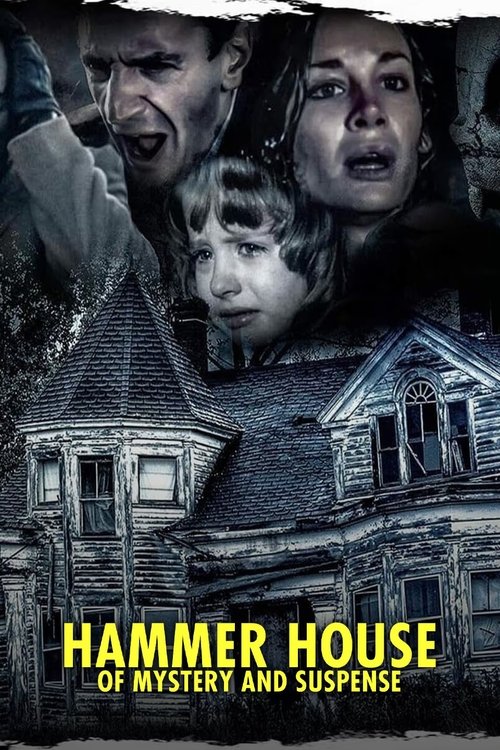
A short-lived anthology television series from Hammer Studios. Though similar in format to the 1980 series Hammer House of Horror, the Mystery and Suspense series had feature-length episodes, usually running around 70 minutes without commercials. Co-produced by Hammer Studios with 20th Century Fox Television, it is known in the United States as Fox Mystery Theater. Unlike 1980's Hammer House of Horror, all episodes feature American actors as either the leads or in key roles. It first broadcast in the UK on ITV in 1984, though was not simulcast and was shown in different timeslots throughout the various regions.
Hammer House of Mystery and Suspense

You Are There is an American historical educational television and radio series broadcast over the CBS Radio and CBS Television networks.
You Are There

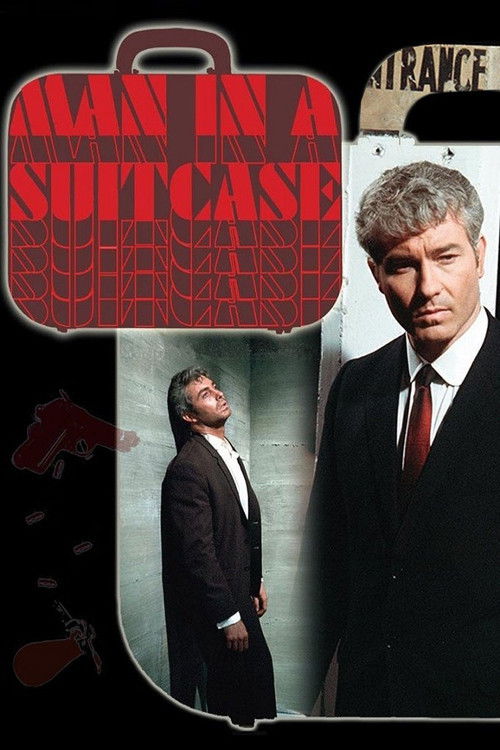
Accused of treason, a former U.S. intelligence officer based in London tries to clear his name, taking on freelance jobs around Europe as he searches for answers.
Man in a Suitcase

Each self-contained episode features a different kind of horror, varying from witches, werewolves, ghosts, devil worship and voodoo, but also includes non-supernatural themes such as cannibalism, confinement and serial killers.