Pierre Bertin
Acting
Biography
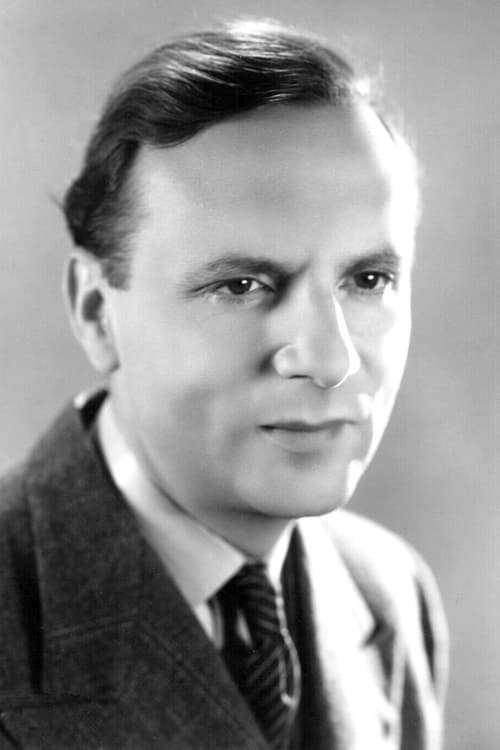
Pierre Victor Théophile Bertin (24 October 1891 – 13 May 1984) was a French stage and film actor. In 1948, he starred in the film The Lame Devil under Sacha Guitry. He was the librettist of the opéra-comique La Gageure imprévue after Sedaine with music by Henri Sauguet, first performed at the Paris, Opéra-Comique in 1944, and for the radio opera Les Deux Rendez-vous (after Nerval) by Claude Arrieu first broadcast in 1951. Pierre Bertin was born in Lille and died in Paris. Source: Article "Pierre Bertin" from Wikipedia in English, licensed under CC-BY-SA 3.0.

Known For

A talk show presented by Michel Drucker
Les Rendez-vous du dimanche

No description available.
Discorama
No description available.
Samedi soir

Two men, fortyish, worn out by their wives, abandon everything to go and live in the back of beyond. There they meet a truculent priest, a boozer, Émile who recalls them to life's simple pleasures. Calm is what they want. But soon their example inspires thousands of disorientated males...
Femmes Fatales

During World War II, two French civilians and a downed British Bomber Crew set out from Paris to cross the demarcation line between Nazi-occupied Northern France and the South. From there they will be able to escape to England. First, they must avoid German troops – and the consequences of their own blunders.
Don't Look Now... We're Being Shot At!

From Bonaparte to Casanova, history is cast in the light of famous escapes from various European countries.
the famous escapes

A famous poet in postwar Paris, scorned by the Left Bank youth, is in love with both his wife Eurydice and a mysterious princess. Seeking inspiration, the poet becomes obsessed and follows the princess from the world of the living to the land of the dead.
Orpheus

Meursault is a man who feels utterly isolated from everyone and everything around him. This alienation results in sudden, inexplicable bursts of violence, culminating in murder.
The Stranger

Remy Germain is a doctor in a French town who becomes the focus of a vicious smear campaign, as letters accusing him of having an affair and performing unlawful abortions are mailed to village leaders. The mysterious writer, who signs each letter as "Le Corbeau" (The Raven) soon targets the whole town, exposing everyone's dark secrets.
Le Corbeau

An aging gangster, Fernand Naudin is hoping for a quiet retirement when he suddenly inherits a fortune from an old friend, a former gangster supremo known as the Mexican. If he is ambivalent about his new found wealth, Fernand is positively nonplussed to discover that he has also inherited his benefactor’s daughter, Patricia. Unfortunately, not only does Fernand have to put up with the thoroughly modern Patricia and her nauseating boyfriend, but he also had to contend with the Mexican’s trigger-happy former employees, who are determined to make a claim.
Crooks in Clover

The film consists of three novels. The film begins with the fact that the Bernard Blier hero removes a lantern from the entrance to a brothel. The second part is about how the lantern and jewelery were stolen from a young baroness. And in the third part the hero of Louis de Funes hangs a lantern at the entrance to his house.
How to Keep the Red Lamp Burning

This drama about the Carmelite order of nuns is set during the French Revolution. A young woman seeks refuge with the Carmelites because she is terrified of dying during the upheaval. The longer she associates with the nuns the more she is transformed by their faith and devotion.
The Dialogue of the Carmelites

The struggles of a small business owner come to light in this film by director André Cayatte. The proprietor of a fabric shop, M. Baudu faces stiff competition when a department store moves in across the street, the first of its kind in 1860s Paris. On top of the stresses associated with the rival retailer, Baudu’s niece and two nephews take up residence with him after recently being orphaned. The niece, Denise Baudu, sees the writing on the wall for her uncle’s business so she takes a job as a shop girl with his competitor and despite her success the decision does not register well with the family.
Shop Girls of Paris

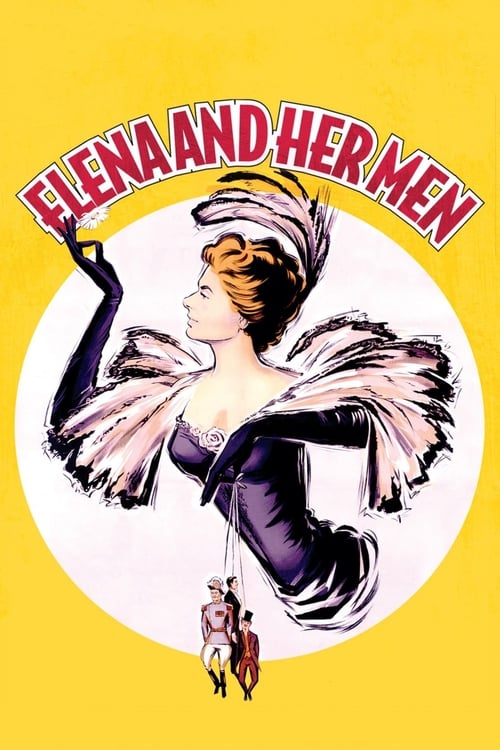
Set amid the military maneuvers and Quatorze Juillet carnivals of turn-of-the-century France, Jean Renoir’s delirious romantic comedy Elena and her Men stars a radiant Ingrid Bergman as a beautiful, but impoverished, Polish princess who drives men of all stations to fits of desperate love. When Elena elicits the fascination of a famous general, she finds herself at the center of romantic machinations and political scheming, with the hearts of several men—as well as the future of France—in her hands.
Elena and Her Men

Saint-Maurice, an ordinary peaceful village, lived healthily so much so that the local doctor's practice was scant. But that was before Dr. Parpalaid retired and was replaced by a charlatan by the name of Knock. A real genius this one, for he soon managed to persuade everyone that they were ill. And not only didn't they resent him but they even loved their physician, who made a fortune and brought prosperity to the village by turning it into a big hospital.
Dr. Knock

Paris, the middle of the XIX century. Young Marius Petipa is going on a long journey to St. Petersburg, where he is invited to become the first dancer. He doesn't know that his life will develop both happily and dramatically, and his work will be the glory and pride of Russian ballet.
Nights of Farewell

The adventurer Jeanne de Valois-Saint-Rémy, descendant (by the left hand) of the king of France Henri II, and who claims to be "Countess de la Motte", imagines a tortuous plan to steal a magnificent diamond necklace that the queen Marie-Antoinette refused to buy from the jewelers Boehmer and Bassange.
Queen's Necklace

The film is a 125-minute, black-and-white biography of French priest and diplomat Charles Maurice de Talleyrand-Périgord (1754–1838), who served for 50 years under five different French regimes: the Absolute Monarchy, the Revolution, the Consulate, the Empire, and the Constitutional Monarchy. Its title comes from one of the main historical nicknames for Talleyrand, that he shares with demon king Asmodeus and English poet Lord Byron.
The Devil Who Limped

Four Parisian women navigate the world of romance and daily life looking to fulfill their dreams.
Les Bonnes Femmes

A husband who has just cheated on his wife returns home in the early morning, puzzled. He finds there, without knowing it, the lover of his wife, to whom he confesses his infidelity.