
Jean-Claude Droyer
Acting
Biography
Jean-Claude Droyer, born in 1947, is a climber and mountaineer, a mountain guide, and a former member of the Groupe de Haute Montagne (GHM). A pioneer of free climbing in France, he trained at the climbing schools of Fontainebleau and Saussois and distinguished himself in 1965 by solo climbing the Pentecôte route at Glandasse. Since 1974, he has been a spokesperson for free climbing and Anglo-Saxon ethics, attracting some enmity for his sometimes "forceful" methods (unscrewing routes without consultation). Upon returning from a trip (a meeting organized by the British Mountaineering Council in 1973) to climb in Wales with British climbers, he realized that on the other side of the Channel, the Super Gratton was a unanimous favorite. In France, climbing was still practiced with heavy-duty ropes, with lugged Vibram soles, and smooth-rubber climbing shoes were only used in Fontainebleau. Jean-Claude Droyer, a great advocate of free climbing, created the event in 1975 by climbing the newly constructed Montparnasse Tower. To achieve this challenge, he brought a pair of Super Grattons with him. The shoes provided him with all the grip he needed to complete the ascent of the Montparnasse Tower with his climbing partner, and photos of the achievement were seen around the world. Following the attacks of Jean-Claude Droyer, Laurent Jacob, and Jean-Pierre Bouvier, the end of the 1970s marked a turning point in climbing on the Saussois cliffs. The goal was to free up aid routes by climbing with minimal protection and removing pitons. Other pitons protecting falls were instead preserved and sealed with mortar, and classic aid routes were gradually refined and freed up. Frictions broke out with mountaineers—nicknamed "randonno-pitonneurs"—who wanted to keep the pitons for the nail puller and the original equipment. But the tenacious defenders of free climbing, led by Jean-Claude Droyer, held firm. Droyer quickly began freeing old artificial routes, first on cliffs, opening the first 6bs in 1976, then the first 6cs and the first French 7a at Saussois in 1977. In the mountains, he made the first solo ascent of the American Direct on the west face of Les Drus in 1971, the east face of Grand Capucin, where he was forced to leave nine aid points (1977), and the north faces of Cima Grande (1978) and Cima Ouest (1979). Subsequently, he devoted himself increasingly to rock climbing. In 1980, he joined the team of climbing shoe manufacturer EB as a technical advisor for the development of new climbing shoes. In 1982, with his technical assistance, a second legendary product, the Maestria shoe, was launched. Its success stemmed from its new, thick 7 mm sole, made for the first time from resin rubber. In 1986, he published the book "Escalade, les plus belles falaises d'Europe de l'Ouest" (Climbing, the Most Beautiful Cliffs in Western Europe), published by Denoël.
Known For
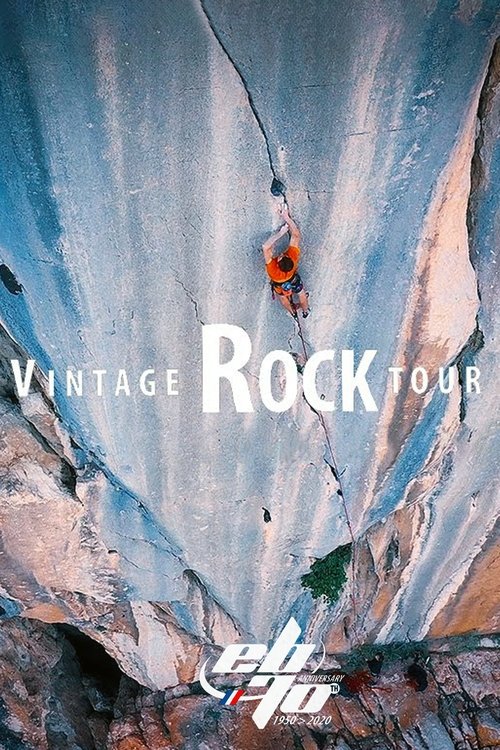
For the 70th anniversary of the EB climbing shoe brand, French climber Seb Bouin decided to tour France of the climbing routes that have marked the history of our sport. From 7a to 9a, the Vintage Rock Tour is a project that was born from the desire to rediscover historic climbing sites, the evolution of climbing styles but above all to be able to meet the actors who made the history of our sport. This is what Seb Bouin offers you, with major climbing sites revisited in the company of those who wrote their pages.
Vintage Rock Tour
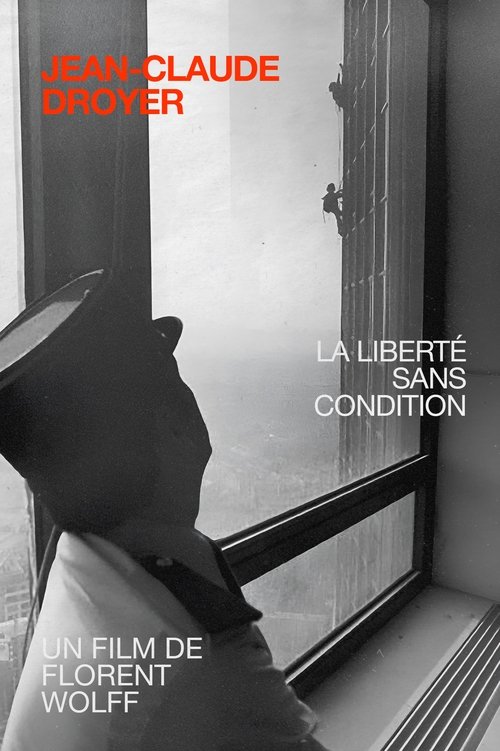
Portrait of Jean-Claude Droyer, a famous French climber and mountain guide. He is known for having participated in the rise of free climbing in France in the late 1970s. Trained at the climbing schools of Fontainebleau and Saussois, he distinguished himself in 1965 by solo climbing the Pentecôte route at Glandasse. He also made first ascents in the Verdon Gorges, winter ascents in the Prealps and the Mont Blanc massif, notably in 1971 the first solo ascent of the Directe Américaine on the west face of the Drus. The film was selected for the "Les Écrans Documentaires" festival in 2004.
Jean Claude Droyer, Unconditional Freedom
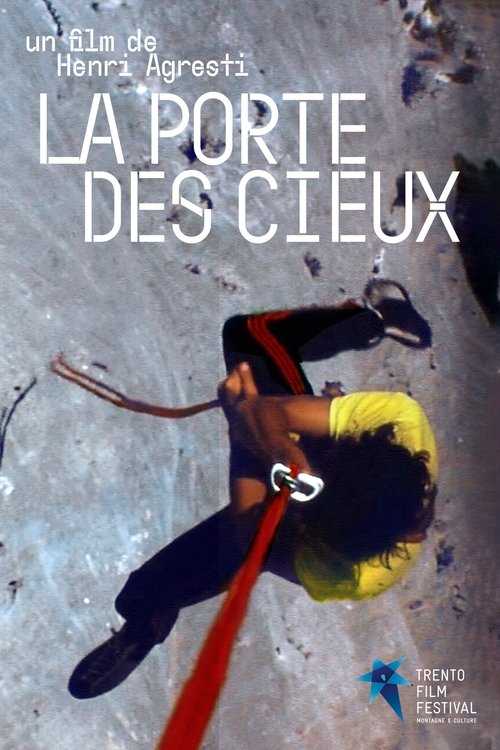
A legendary film in the history of rock climbing in the Verdon Gorges, shot in 16mm between the autumn of 1978 and the spring of 1979 by Henri Agresti, a high mountain guide. For the first time, acrobatic shots were taken on the walls of the Verdon. We rediscover a whole generation of pioneers on routes like Dingomaniaque, Triomphe d'Eros, Péril rouge, Luna Bong, Pichenibule or Necronomicon, routes which, like Dingomanique or Triomphe d'Eros, had just been opened. We witnessed a major turning point in the style and possibilities of rock climbing at the end of the 1970s: anchors sealed by drilling used as belaying and no longer as aids, new equipment: climbing shoes and chalk, harnesses and figure eights. Henri Agresti's unfinished and silent film, lasting around fifty minutes, was presented in the form of a nine-minute fragment at the Trento Film Festival in 1981.
The Gate of Heaven
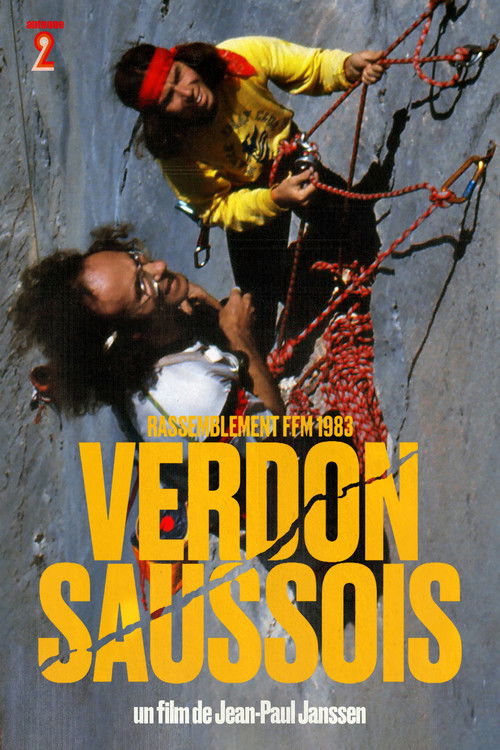
In 1983, the French Mountain Federation (FFM) organized a landmark climbing gathering in Saussois and the Verdon, bringing together generations of the greatest climbers of the time, including Patrick Edlinger, Jean-Claude Droyer, Jerry Moffatt, Jean-Claude Droyer, Robert Paragot, Lucien Bérardini, Ron Fawcett, Jean-Pierre Bouvier, and other major figures. This event symbolized the emergence of modern sport climbing as a practice in its own right in France, with the liberation of legendary routes and the rise of freestyle climbing, notably under the leadership of Droyer and Edlinger. This gathering was a key moment in the dissemination of the freestyle ethic and the evolution of grading, while Saussois and the Verdon were at the forefront of high difficulty in the world.