Acting
Tatort is a long-running German/Austrian/Swiss crime television series set in various parts of these countries. The show is broadcast on the channels of ARD in Germany, ORF in Austria and SF1 in Switzerland.
The young Bavarian princess Elisabeth, who all call Sissi, goes with her mother and older sister Néné to Austria where Néné will be wed to an emperor named Franz Joseph, Yet unexpectedly Franz runs into Sissi while out fishing and they fall in love.
The single farmer Christian is highly sought after by the young, marriage-minded women of the area, but so far he has successfully evaded all matchmaking attempts. Last time, the somewhat bawdy country women Vroni and Petronella were offered to him as potential wives at the marriage market, but this time too he firmly rejected them. However, these young ladies feel personally attacked by his rejection and are now plotting revenge. To do so, they first need to get close to Christian, so Vroni and Petronella disguise themselves as a pig-suckling girl and a stable boy, respectively, and go to Christian's farm looking for work.
This Hungarian musical comedy (English title: Spring Parade) was produced by Joseph Pasternak, who later remade the picture in Hollywood as a Deanna Durbin vehicle. The original 1934 version stars Franciska Gaal as a Hungarian serving girl who heads to Vienna to visit a relative. Stopping over at an outdoor carnival, Gaal is told by a fortune teller that she will enjoy a happy marriage with a handsome and wealthy stranger. Later on, she finds herself at a fancy dress ball, where a good-looking aristocrat, assuming that our heroine is a countess masquerading as a peasant, falls in love with her. Delighted that the fortune-teller's prophecy seems to be coming true, Gaal finds herself in a dilemma when she falls in love with poverty-stricken soldier Wolf Albach Retty. But things turn out OK when Retty, the regimental drummer, composes a hit song which brings him fame and fortune, thereby neatly fulfilling that prophecy.
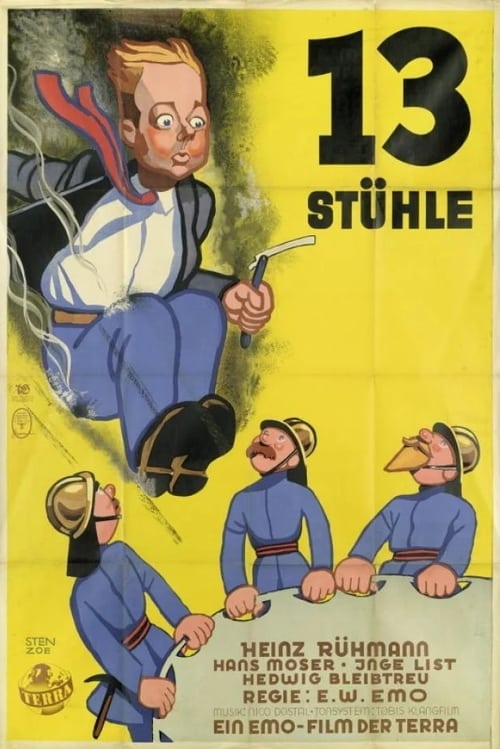
A classical art junk dealer and an almost bankrupt hairdresser who unexpectedly makes an inheritance go hunting behind thirteen chairs from which of a 100,000 DM contains which the rich aunt has hidden there.
Lilli, daughter of a large family, finds job at a jewelry shop, and is taken to Montecarlo by her boss to, under a false identity, make the jewels appeal to rich customers.Only they are stolen,seemingly by the young man she has fallen for..
No description available.
The young ice skating talent, Liesl, lands a part in a new Revue at the Palast Theatre simply because she is confused with someone else. In reality, the roll was to be awarded to Lu Panther, the untalented girlfriend of the theatre's owner, Wildner. After a series of accidents and little disasters, Wildner shuts down the theatre before the Revue can take place. But the Revue's director, Ernst Eder, decides shortly thereafter to present the Revue on an ice skating rink belonging to Liesl's uncle. After a successful run, at first at the Wiener Prater, the performers move on to Spain, Hungary, and a night club with a Jazz orchestra. The Revue becomes a huge success ... and, of course, Ernst and Liesl end up together, too.
Prince Alexander loves the commoner Vera and defies his uncle the Tzar as well as his peers by arranging his wedding. But Vera leaves him because she does not want to be the cause of him spending the rest of his life as a social outcast.
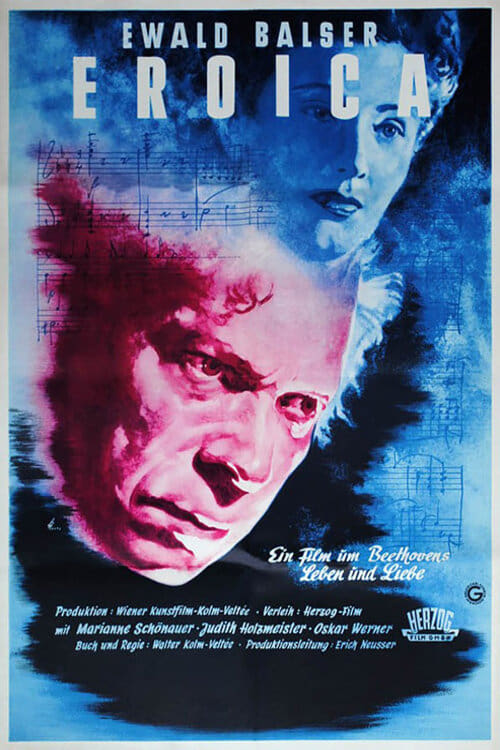
Biopic about Ludwig van Beethoven.
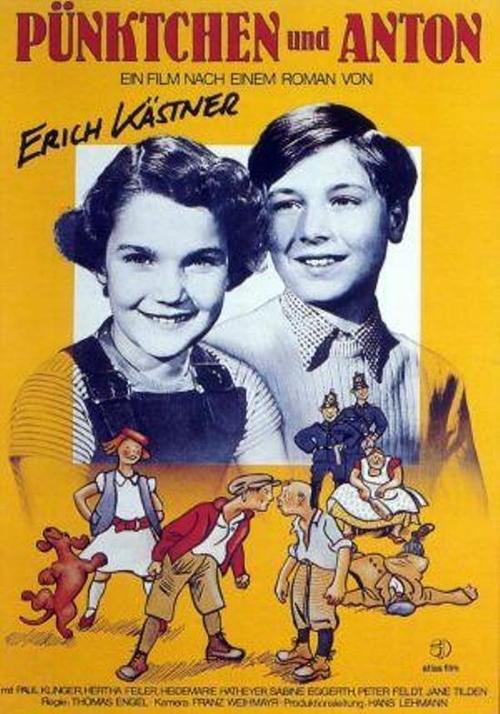
Despite their social differences Luise, called Pünktchen, a girl from rich parentage befriends Anton, a boy who has to earn his own money in order to afford life for his sick mother and himself. Together they undergo different adventures, even preventing a theft in Pünktchens home
In hell, equipped with the latest technological advances, the devils watch the happiness of a Viennese revue singer and her sculptor fiancé on a television screen. Some representatives are sent to Earth to seduce the singer and thus undermine the couple's love, but this soon leads to rebellion among the devilish emissaries, who want to emigrate.
In Alt-Köstendorf in the Salzburg region, the dean, known as Seelenbräu, and the brewer Hochleithner, known in the village as Leibesbräu, are fighting for supremacy. As their nicknames suggest, Leibesbräu is primarily concerned with the physical well-being of the villagers, while Seelenbräu cares deeply about the faith of his congregation. This leads to repeated clashes between the two men, who could perhaps be described as stubborn. When Hochleitner's niece Clementine leaves the convent and wants to stay at home, a new dispute flares up between Seelenbräu and Leibesbräu.
As Fraulein Leander prepares for opening night, her life is thrown into turmoil by a variety of romantic misadventures. But she manages to show up on stage at the appointed time, scoring a huge success.
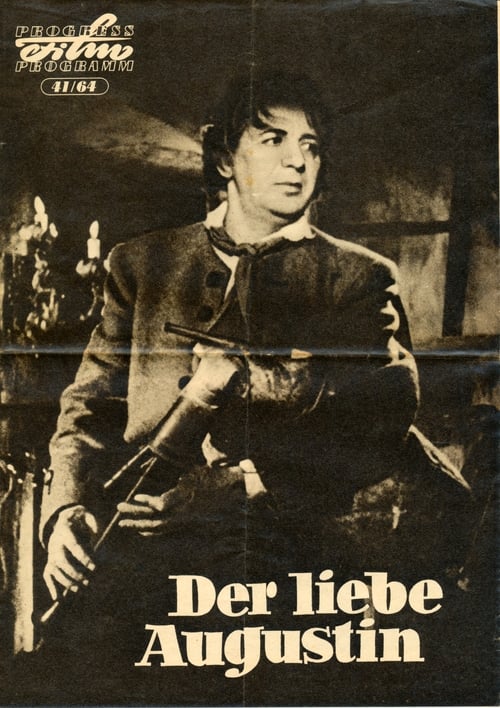
Vienna, sometime around 1680: Augustin makes fun of Leopold I mistress and in doing so, stirs up the passions of the people against the luxury-enjoying rulers, who neglect their people. He is arrested and sent to prison. When the plague breaks out, he manages to get out of prison, but accidentally ends up in a mass grave for victims of the plague
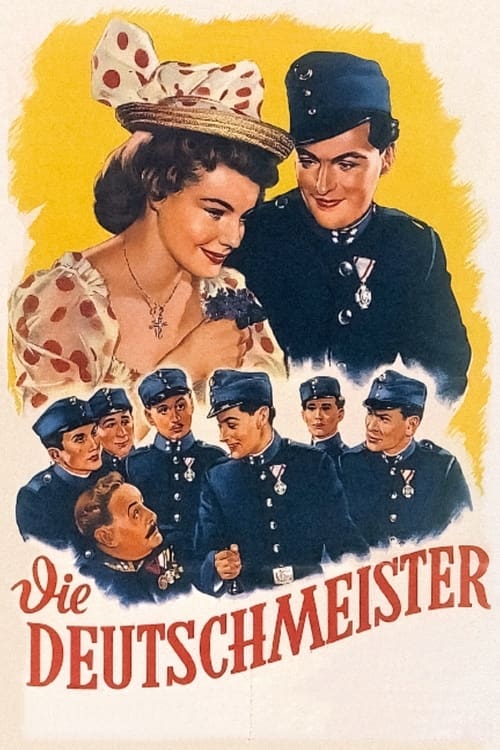
Young Stanzi who is visiting Vienna helps a young corporal and musician to become famous for his marching song "Die Deutschmeister".