Sylvie
Acting
Biography
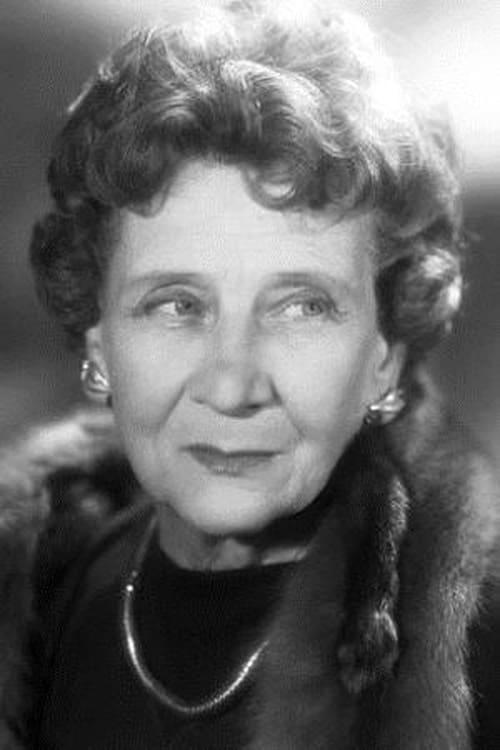
Louise Pauline Mainguené, known as Sylvie (3 January 1883 – 5 January 1970), was a French actress. The daughter of a sailor and a teacher, Sylvie entered an acting conservatory where she won a class comedy award unanimously. She started her professional career in 1903 and she earned her first success with The Old Heidelberg. She first appeared in French silent films. She was an actress known for Don Camillo (1952), The Shameless Old Lady (1965), and Le Corbeau (1943). She was born on 3 January 1883 in Paris and died on 5 January 1970 in Compiègne, France. She won the first National Society of Film Critics Award for Best Actress in 1966 for her performance in The Shameless Old Lady. Source: Article "Sylvie (actress)" from Wikipedia in English, licensed under CC-BY-SA 3.0.
Known For

No description available.
Cinépanorama

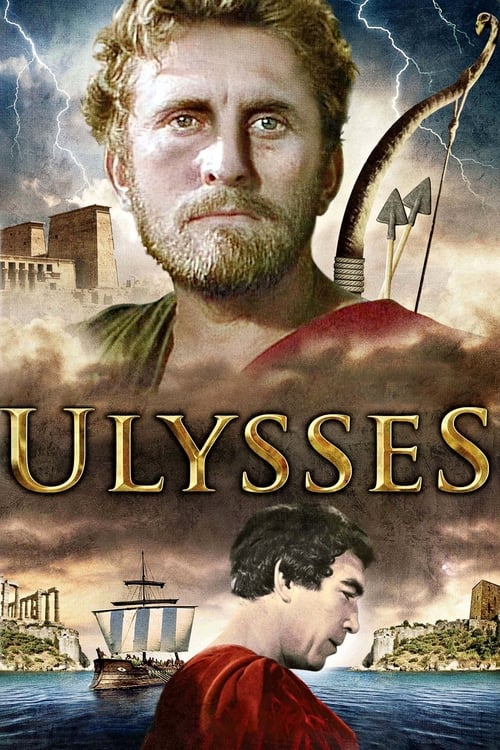
A movie adaptation of Homer's second epic, that talks about Ulysses' efforts to return to his home after the end of ten years of war.
Ulysses

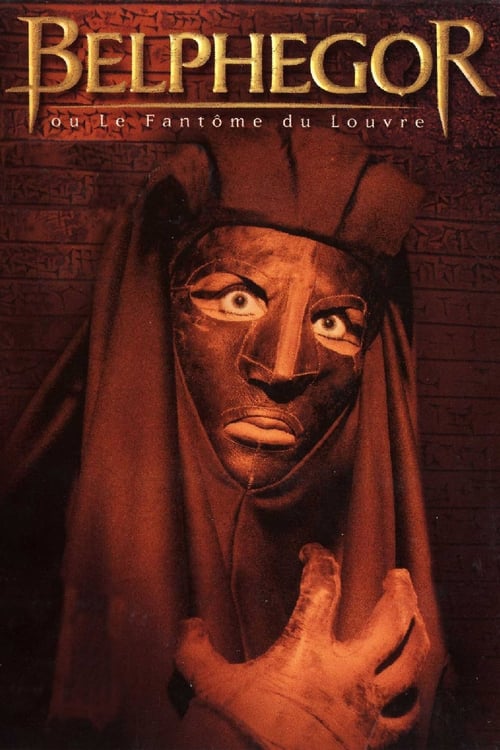
Four episodes chronicle a mysterious phantom who appears in the Musée du Louvre in Paris at night. Neither guards nor police are able to make an arrest. But a curious young man tries to break the ice and discover what drives the creature and its activities.
Belphegor, or The Phantom of the Louvre

Remy Germain is a doctor in a French town who becomes the focus of a vicious smear campaign, as letters accusing him of having an affair and performing unlawful abortions are mailed to village leaders. The mysterious writer, who signs each letter as "Le Corbeau" (The Raven) soon targets the whole town, exposing everyone's dark secrets.
Le Corbeau

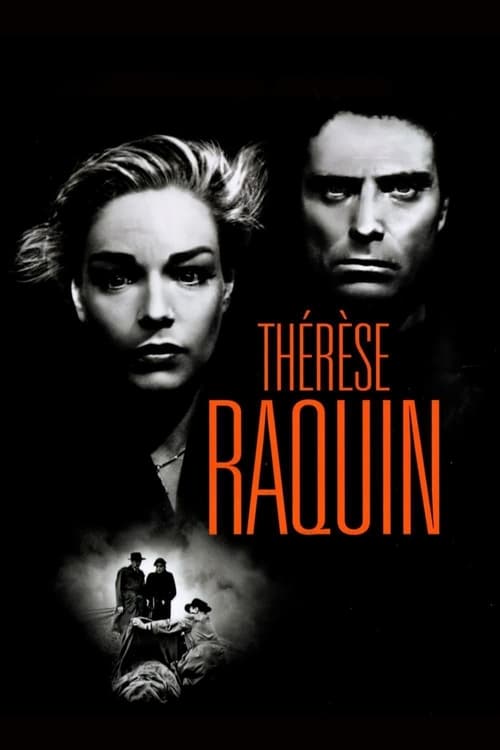
Star-crossed lovers Thérèse and Laurent think they've gotten away with murder after Thérèse's weakling husband "falls" from a speeding train. But when forced to contend with a blackmailer's demands and the mute accusations of Thérèse's mother-in-law, it's only a matter of time before the law, their passion or blind chance trips them up.
Thérèse Raquin

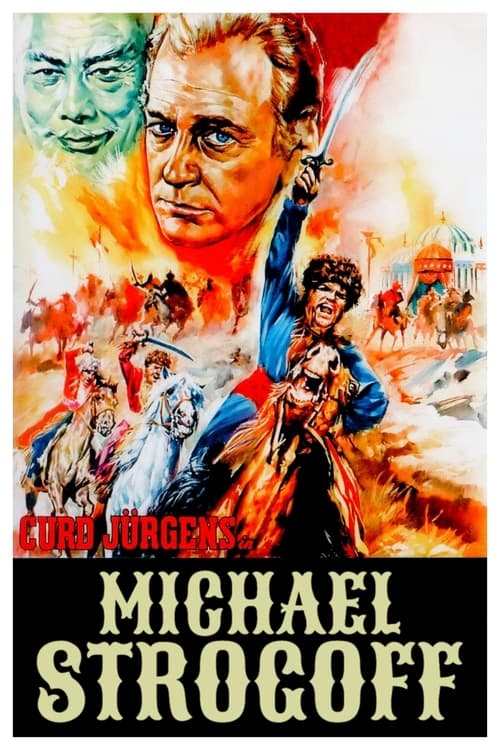
When Emir Feofar Khan, leader of the Tartar hordes, takes up arms and invades the steppes of Eastern Siberia, Czar Alexander II of Russia entrusts the brave officer Michael Strogoff with a dangerous mission.
Michael Strogoff

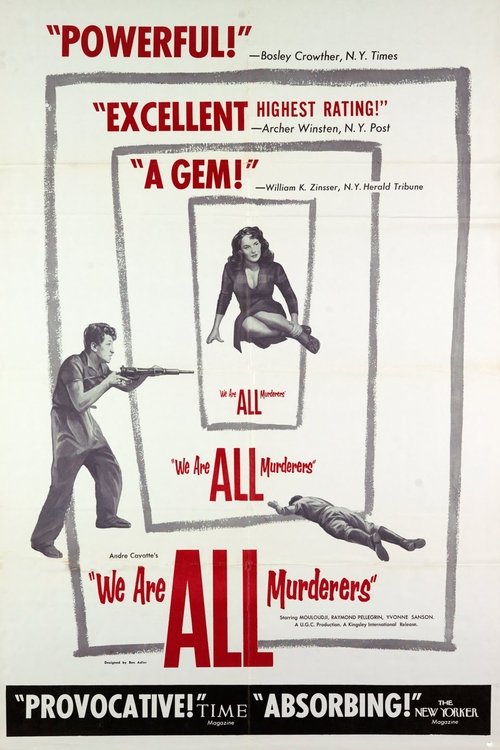
Originally titled Nous Sommes Tout des Assassins, We Are All Murderers was directed by Andre Cayette, a former lawyer who detested France's execution system. Charles Spaak's screenplay makes no attempt to launder the four principal characters (Marcel Mouloudji, Raymond Pellegrin, Antoinine Balpetre, Julien Verdeir): never mind the motivations, these are all hardened murderers. Still, the film condemns the sadistic ritual through which these four men are brought to the guillotine. In France, the policy is to never tell the condemned man when the execution will occur--and then to show up without warning and drag the victim kicking and screaming to his doom, without any opportunity to make peace with himself or his Maker. By the end of this harrowing film, the audience feels as dehumanized as the four "protagonists." We Are All Murderers was roundly roasted by the French law enforcement establishment, but it won a special jury prize at the 1952 Cannes Film Festival.
We Are All Murderers

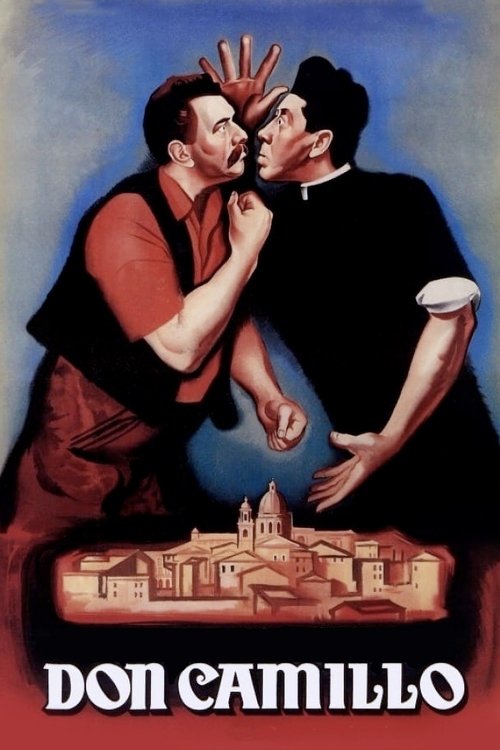
In a village of the Po valley where the earth is hard and life miserly, the priest and the communist mayor are always fighting to be the head of the community. If in secret, they admired and liked each other, politics still divided them as it is dividing the country. And when the mayor wants his "People's House"; the priest wants his "Garden City" for the poor. Division exist between the richest and the poorest, the pious and the atheists and even between lovers. But if the people are hard as the country, they are good in the bottom of there heart.
The Little World of Don Camillo

Muichkine, a young Russian prince, returns home to St. Petersburg from a mental institution, determined to spread decency and kindness in the harsh and cruel world. He becomes betrothed to an innocent young girl while trying to save a less-innocent woman from her own travail, but jealousy and his own naivete conjoin to bring about unimaginable tragedy.
The Idiot

Enrico is a struggling journalist in the Rome of 1945. He receives a phone call informing him that his younger brother Lorenzo has died. Enrico recalls their long and difficult relationship; he was brought up by their poor but warm-hearted grandmother, Lorenzo was raised as a gentleman by a wealthy local aristocrat. Reunited in the Florence of the 1930s, Enrico becomes his spoilt brother's keeper, forever haunted by a sense of guilty responsibility towards a man he both hates and loves.
Family Diary

A well-off young woman decides to become a nun, joining a convent that rehabilitates female prisoners. Through their program, she meets a woman named Thérèse who refuses any help because she says she was innocent of the crime she was convicted for. After being released from prison, Thérèse murders the actual perpetrator of the crime and comes to seek sanctuary in the convent.
Angels of Sin

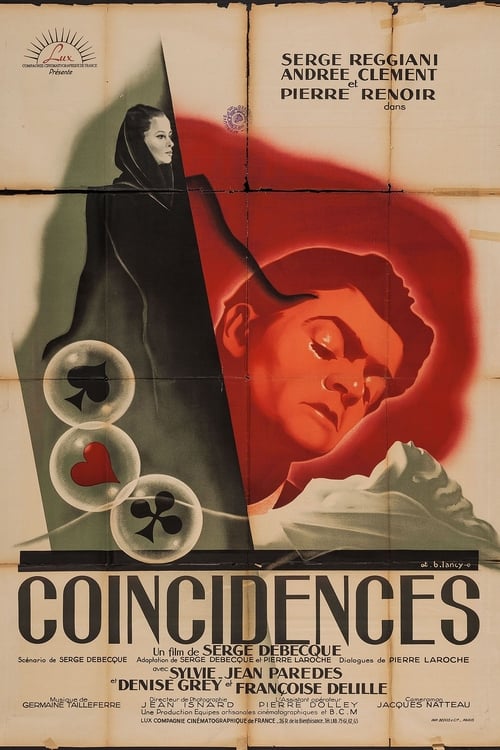
A rich girl is in love with her father-in-law 's librarian. The wealthy man wants her to marry a military man but she's not prepared to accept it. She rebels and marries the poor guy. This young man has a cousin, who seems secretly in love with him but in fact we 'll never know what she feels. This mysterious sad woman, always dressed in black, gives her relative a strange box which seems to be a bad luck charm. The hand of fate seems on the newlyweds now:the husband involuntarily causes a car crash: his wife is killed.
Coïncidences

The novelist Loïc Limousin knew the turbulent past of Marie-Martine and he extracted the material for a novel from which the young girl risks paying the price. After the drama that had thrown her in prison, she met a brave boy ready to make his life with her. Will the scandal separate them?
Marie-Martine

Fates of multiple otherwise disconnected characters intertwine miraculously under the sky of Paris. And it all happens in one day.
Under the Paris Sky

"Thieves We Are" - In flashback, the audience learns why 104-year-old Amedee steals the watch belonging to the town mayor. The story develops into a history of the watch-thievery business, told in anecdotal fashion.
Les Truands

1938, France, Paris, at the Superior Conservatory of Dramatic Art ("Conservatoire Supérieur d'Art Dramatique"). The first-year entrance exams are in full swing. Many applicants, few accepted. Isabelle (Janine Darcey) is one of the few chosen. She joins former students from the second and third years, including François (Claude Dauphin) and Cécilia (Odette Joyeux). They attend the drama class run by Professor Lambertin (Louis Jouvet). The young people, passionate and eager to become comedians, clash in tumultuous love affairs, because by dint of acting, they imagine that life is a farce. François, for example, is in love with Isabelle, who also loves him, but is pursued by Cecilia, his former mistress... "Put art in your life and life in your art!"
The Curtain Rises

Aged penniless actors are living in a old people's home. They always talk about their past glory or failures. One day Raphael Saint-Clair comes; he has been a famous actor and had a lot of love affairs. Passions come back, and jealousies... A bitter film about aging, failure and the entertainment.
The End of the Day

After the death of her husband, Christine realizes she has possibly wasted her life by marrying him instead of the man towards whom, in her youth, she had a stronger inclination. To overcome these dreary thoughts, she decides to find out about him and the other men who danced with her during a ball that was a turning point in her life, many years ago. She pays a visit to those forgotten acquaintances one after the other; Christine is not only surprised to see how they have fared, but also discovers the impact she had, unknowingly, on the feelings and the destiny of these persons.
Life Dances On

Jules is a shepherd who lives a humble and solitary life in rural Provence. From time to time, he is visited by a lonely widow, Fine, who longs to be his wife. One day, Jules comes across an unexploded bomb lying on the ground in open countryside. After a few foolhardy attempts to set the bomb off, Jules makes a surprising discovery. It is filled with thousands of bank notes…
Croesus

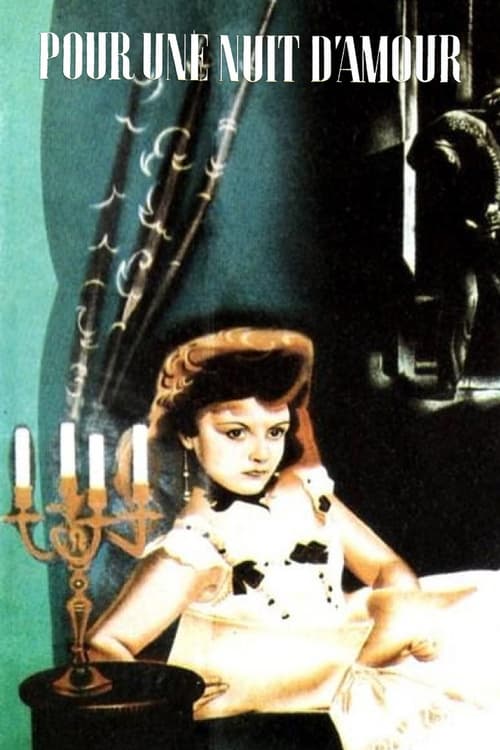
Thérèse kills her lover during the very night of her wedding to the count of Vétheul. To gain a night with her, a modest local worker agrees to bury the body.