
Wolfgang Tillmans
Directing
Biography
Wolfgang Tillmans is a German photographer. His diverse body of work is distinguished by observation of his surroundings and an ongoing investigation of the photographic medium’s foundations.
Known For
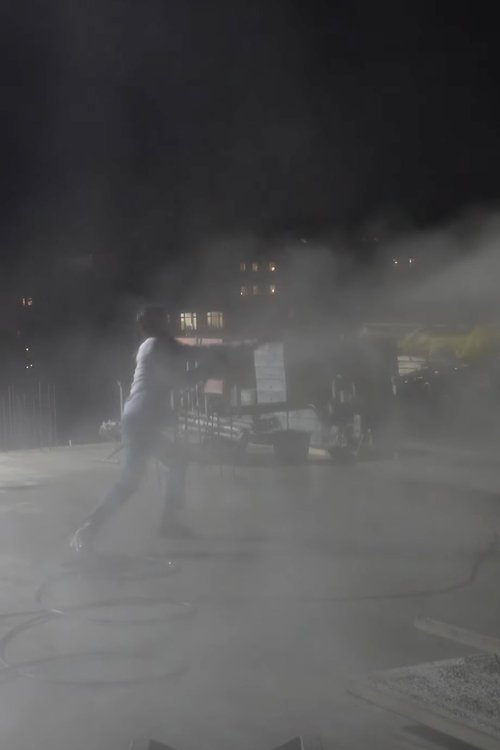
The film opens on a set of lights, arranged on a table, that throw colored shapes across the wall of a darkened room. This is followed by a range of subjects, mostly shot with an unmoving camera: hermit crabs on a beach, strips of paper arranged on the bed of a scanning photocopier, bare feet moving among metal rods on roughly poured concrete, the city of Los Angeles at different times of day, someone playfully maneuvering a power washer, a disco ball casting confettilike reflections, bodies touching, a worker at a construction site, and light on the surface of water, abstracted by darkness. [Overview Courtesy of MoMA]
Moon in Earthlight
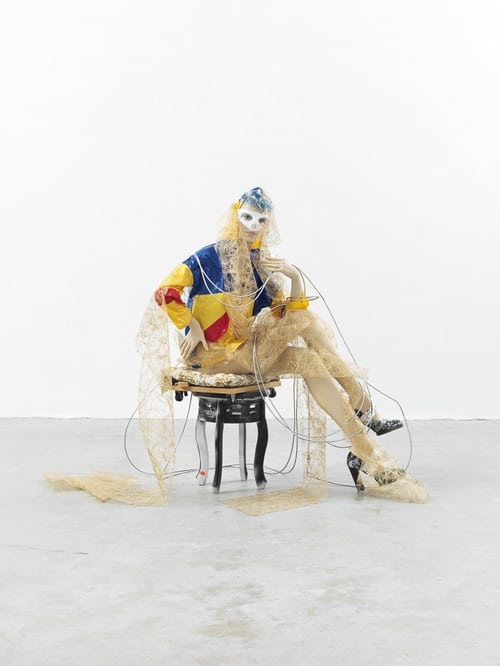
MoMA documentary on sculptor Isa Genzken.
This Is Isa Genzken
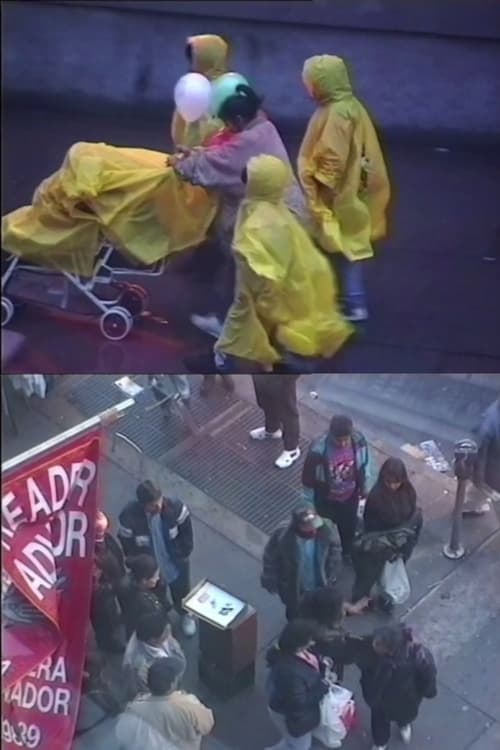
Like a modern version of Hitchcock’s Rear Window,14th Street was filmed over the course of several weeks, always from the same vantage point of the artist’s second floor apartment window onto the street life. This rarely seen video is a fascinating document of a New York now long gone. The sound is from the street naturally mixed with the music playing in the room.
14th Street
No description available.
Time Flows All Over
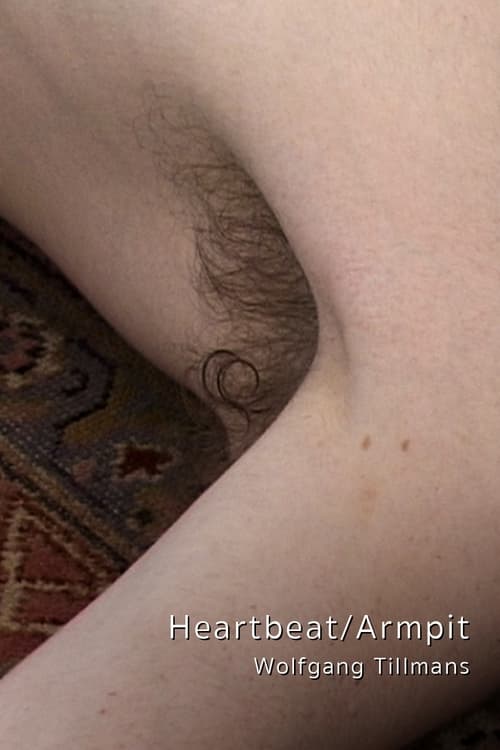
Heartbeat/Armpit (2003) is a looped digital video just under two and a half minutes long and with no sound, a rare format in Tillmans’s artistic world. At first glance, this piece with its stringent composition and seeming calm seems to resemble a photograph. What we see is a cropped section of an angled overhead shot of a young man lying bare chested on a carpet.On closer inspection minimal movements can be discerned within this harmonious composition. These minute movements attest to the fact that he is alive: we intuit his breath and heartbeat from the fact that his chest rises and falls gently, and the artery in his neck pulsates.
Heartbeat/Armpit
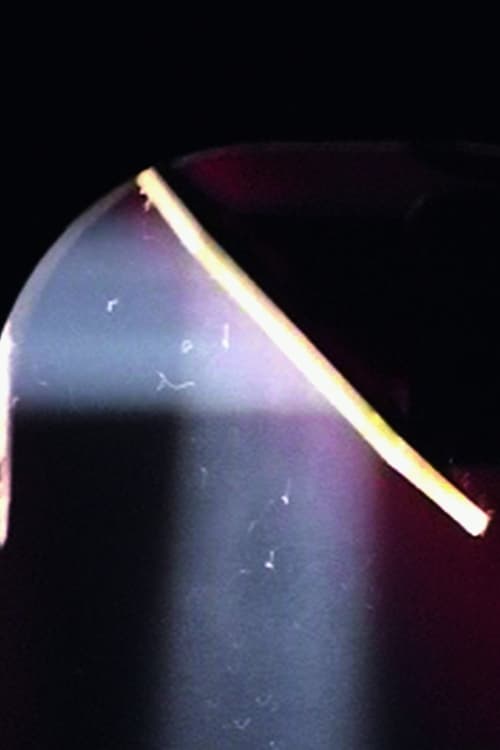
In Lights (Body), flashing lights in a busy nightclub are accompanied by the hypnotic dance beat "Don't Be Light (The Hacker Remix)," by the French duo Air. The ravers are out of sight, but specks of dust rising from their clothes and skin are visible in close-up shots of the beams of light. Like Tillmans's earliest photographs of nightclubs, the work presents the dance floor as a site of liberation and resistance, generated through experiments in representation and collective assembly. As Tillmans has noted, it is also "the venue for extreme beautiful abstraction." [Overview Courtesy of MoMA]
Lights (Body)

Peas boil in effervescent spume. An unintelligible preacher is heard from off-screen.
Peas

A celestial body vibrates.
Seeing the Scintillation of Sirius
The installation hovers across the back of a digital 4k screen, a usually hidden infrastructure Wolfgang Tillmans has dotted with found fragments such as seashells and postage stamps
Travelling Camera
Released months after the outbreak of COVID-19 in 2020 but filmed the year before the pandemic, this music video shows footage of an empty nightclub at the end of a night. Despite the energy of the neon lights and dance music, the scene conveys a sense of solitude and confinement — reminders of the isolation many people experienced during the COVID-era lockdowns. Notions of absence and presence and our boundness in the here and now are underlined by the song's lyrics.
Can't Escape into Space

A leg flexes.
Einbein (leg)

Wolfgang Tillmans performs an absolute bop in this combination of two videos recorded in Tehran and Los Angeles.
Instrument
Projected shapes of all colours interact through movement and sound.
Tired Car Alarm
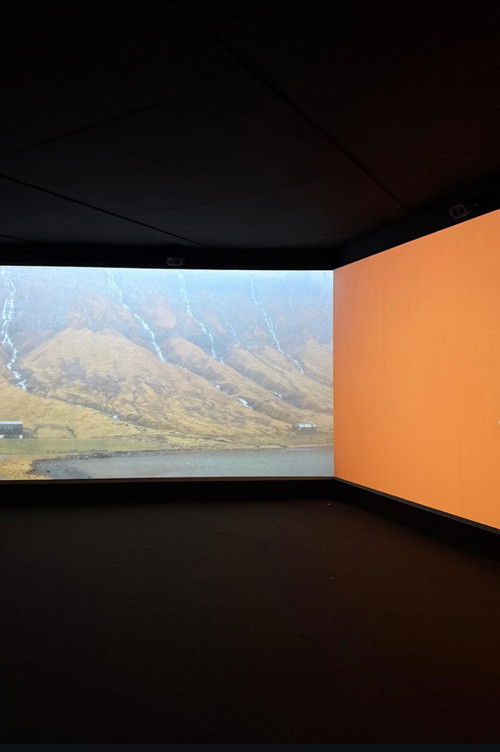
Video installation, two-channel. Commissioned by Fundação Bienal de São Paulo for the 36th Bienal.
Watching a Minute for a Minute
One of Wolfgang Tillmans' first video works.
video feedback, slowed down
The short film shows a blooming wild carrot plant moving to the sound of a kalimba played by the director himself.
Wild Carrot

"Wind of Change" is a video work by Wolfgang Tillmans that features street musicians playing the 1990 song of the same name in front of the Brandenburg Gate in Berlin. In the video, the musicians are captured in a candid, observational style, typical of Tillmans' photographic approach. The song itself, a power ballad by the Scorpions, became an anthem associated with the fall of the Berlin Wall and the end of the Cold War, making the video a poignant reflection on that historical moment and its continuing resonance