Subhashish Panigrahi
Directing
Biography
Subhashish Panigrahi is a documentary filmmaker, researcher and long-time open culture advocate. Apart from leading strategy, programs and communities for international civil society organizations such as Wikimedia, Mozilla and Internet Society, he has produced and directed several documentaries with a primary focus on indigenous and endangered languages over a decade. In 2019 he was awarded the Yoti Digital Identity Fellowship for researching the impact of the Indian biometric ID on marginalized communities. His year-long research resulted in the 2021 documentary "MarginalizedAadhaar" highlighting how access to information in India's Adivasi (indigenous) groups lead to the exclusion of basic public services.
Known For

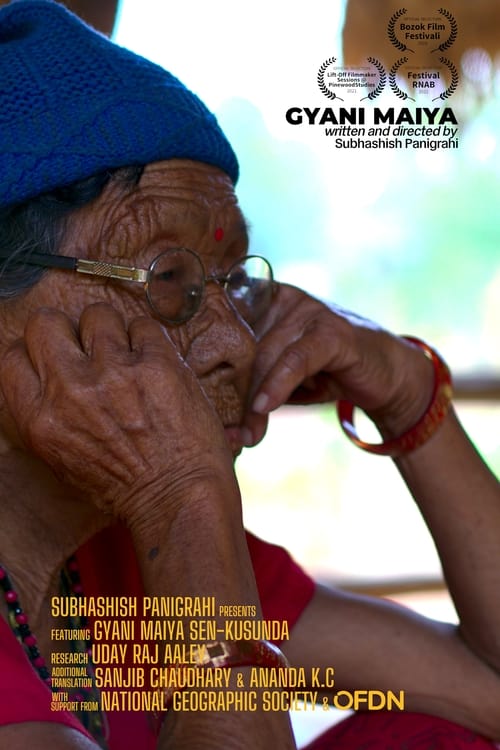
“We left our language and started speaking others’. The girls have got married and have left for the villages. Boys are getting married in villages. It should be taught to children”. — Gyani Maiya Sen-Kusunda The Gi Mihaq (also known as Kusunda) was a semi-nomadic hunter and gatherer community that settled in villages around the mid-western Nepalese district of Dang. They have long lost their native language Mihaq (Kusunda), to acculturation and other barriers to active use. The community also lost their 83-year-old elder Gyani Maiya Sen-Kusunda in 2020, the most and the only known fluent Kusunda speaker then. Filmed in Kulmor in the Dang District in 2018, this openly-licensed documentary is a memoir of Sen-Kusunda in her own words and a biography of her people who were forced to leave their language and cultural identity. Kusunda is being revived by Kamala Sen Khatri, Sen-Kusunda’s younger sister, and Uday Raj Aaley, a local researcher who is the key interviewer for this film.
Gyani Maiya

A rural village never wanted to be a city’s landfill or a distant blur in Reels but rather home to new imaginations. Bringing Down a Mountain dissects the intersecting themes of access, abolition and caste through the experiences of residents of a rural village and that of a hyper-urban city. The film follows the village residents’ dreams—of mobile data, digital payment and relief from menial work. What happens when the landfill is full, and dreams want to break free?
Bringing Down a Mountain

The Volunteer Archivists tells the story of Srujanika, a volunteer-led collective in the Indian state of Odisha that archived some of the rarest printer publications published in the last 200 years. The archive — Odia Bibhaba — now houses over 10,000 books and hundreds of magazines, newspapers, and dictionaries that otherwise would have been lost forever due to collective negligence and the poor state of digitization by the state archives.
The Volunteer Archivists

Musamoni Panigrahi (1920s–2017), fondly called “Nani Ma” by her neighbours, appears in the centre of this first film in the Baleswari dialect of India's Odia language. The story revolves around folklore and folk songs narrated by Nani Ma. Born in the 1920s in pre-independent rural India in a coastal village in the Balasore district of Odisha, she never got to go beyond the first few days of school. The film is an alternate history of a society broken through colonization, Brahminical patriarchy and a post-famine (Orissa famine of 1866, killing nearly 5 million people, one-third of the population), and the dominance of formal writing over spoken tongues. Three academics -- Damayanti Beshra, PhD (recipient of India’s fourth civilian award, “Padma Shri”), Panchanan Mohanty, PhD (noted linguist), and Laxmikanta Tripathy, PhD, DLitt (anthropologist and author) -- also appear in the film to provide contextual commentary on patriarchy, oral history and the sociolinguistic diversity.