Acting
Spanning the years between the Bolshevik Revolution and 1930, this Negri vehicle focuses on an exiled Russian noblewoman who has lost track of her daughter and of a young officer she pined for.Until she finds them both again and together.
Salem 1692. The young Abigail, seduced and abandoned by John Proctor, accuses John's wife of being a witch in revenge. A series of tragic trials soon befall Salem as fear and suspicion blur the lines of reality.
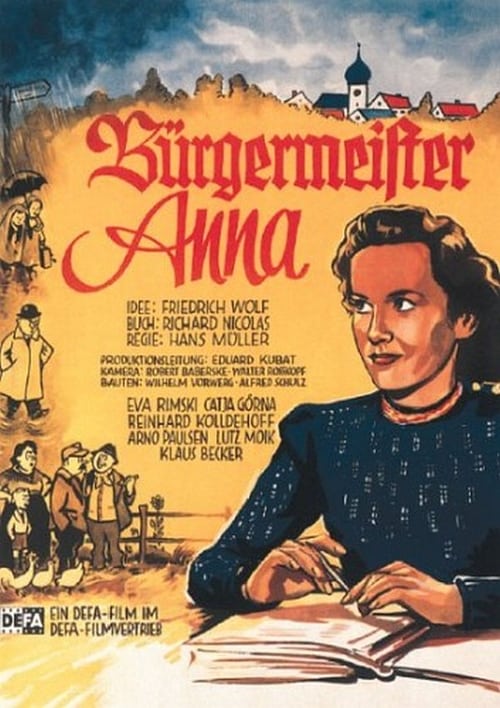
A novelty in German post-war history: a young woman becomes mayor in a village. She is efficient and enjoys respect, but soon enough two villagers disagree with her work. In her predecessor, a prominent farmer, she has a bitter enemy. But even her boyhood friend, who wants to marry her as he returns home from captivity, can not accept that his future wife holds such an office.
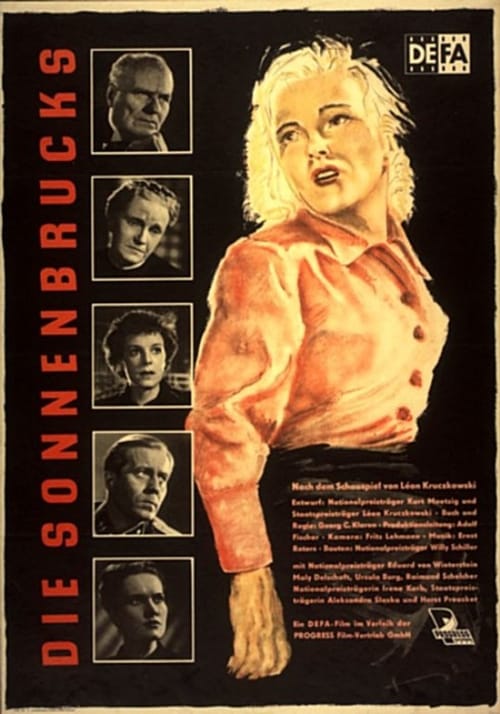
Professor Sonnenbruck is a scientist who is not particularly interested in politics. Even the meeting in 1943 with his former assistant Peters does not change him. He does not betray Peters, who has escaped from a concentration camp, but that is already enough for him. But after the war Sonnenrbruck gets into a conflict of conscience. He thought that science was finally free of politics again only to find the opposite happening at his university in Göttingen. A medical congress in the GDR brings him together with Peters, who is working on a major research contract there. Sonnenbruck decides to visit Peters.
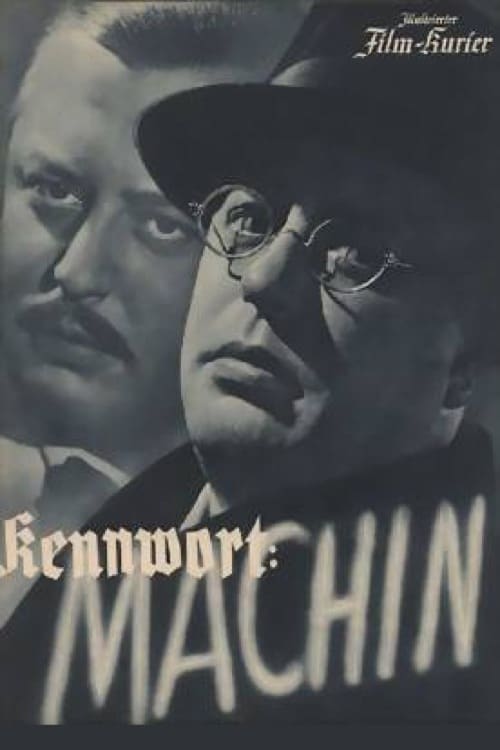
The cashier, Jürgen Borb, has already worked for 10 years at Dadag in Hamburg and is an example for customer service and company loyalty. His professionalism are matched by the trust of his employers, who, while relating to him in an acceptable manner professionally, desire no closer contact with him outside of the workplace. When Borb suddenly disappears one day, Dadag's directors and Borb's colleagues are surprised. They become even more surprised when they soon discover that Borb has embezzled well over a million marks from the firm. His stepsister, Mette, doesn't believe that her stepbrother is an embezzler. In the meantime, she has fallen in love with a criminal investigator, who, she believes, is simply exploiting her affections to get to Borb. Then one day, the criminal investigator finds a body in the cellar of a house Borb rented under a false name and this man created a phony ID card for Borb, identifying him as a resident of a South American country.
This film is set in a medieval mill town in the Harz mountains. The greedy and brutal millman and his accomplices, the castle steward and the mayor, set fire to a forest mill that the farmers used for processing their grain. Without their mill, the farmers must now rely on the millman's services. When the farmhand Anna uncovers the millman’s crimes, he swiftly detains her and a young miller, Jörg. The forest spirits have a different plan, however, and they free the young couple with the charge to rebuild the ruined forest mill and turn things around for the villagers.
The sawmill owner Ramin disappears from one day to the next. Concerned, his family learns from the bank that he wrote a check to an agent named Frisch. He supposedly wanted to use it to buy a good. However, that did not happen. When Ramin's body is found, the police stumble upon Ursula von Tweel, who knew the dead man.
Two dubious characters disguise themselves as Holmes and Watson to gain attention and end up chasing counterfeiters and stolen stamps.
This is the directorial debut of Artur Pohl and tells the story of war refugees as they try to settle in a small town in Germany.
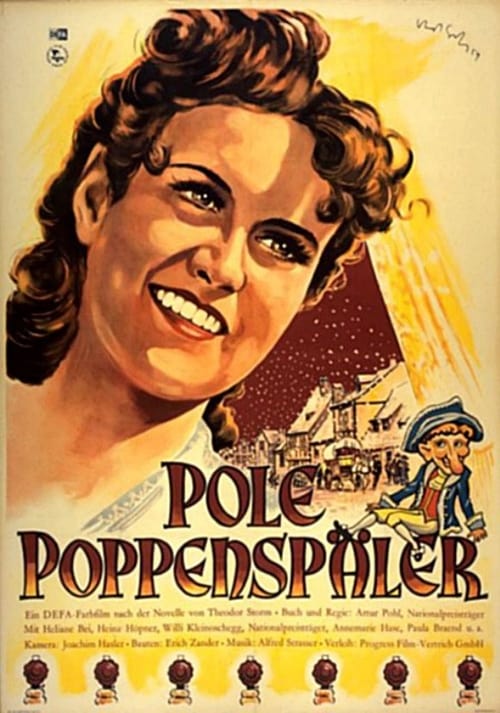
On his travels, Paul, a journeyman from northern Germany, runs into a childhood friend, Lisei, a puppeteer's daughter. They fall in love and get married. Together with Lisei's father, the young couple moves to Paul's hometown. Although Paul himself is accepted - even respected - by the stuck-up and snooty citizens, the young woman is rejected by the town dwellers, who are imbued with class arrogance. Paul stands up for his wife but the scorn and abuse heaped on her weigh heavily upon him.
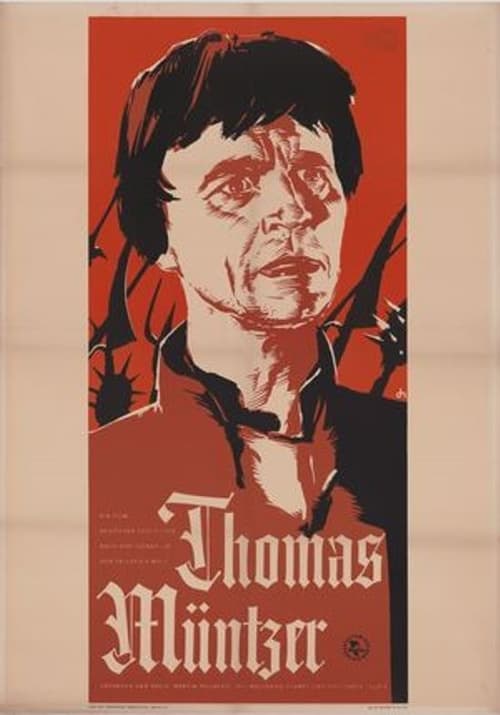
In 1523, young Thomas Müntzer arrives with his wife Ottilie in the Thuringian village Allstedt to assume the rectorate. As a follower of Luther′s teachings, he finds in the Bible not only reasons for clerical, but also for secular reforms. But when Luther turns away from the rural population after a discord with Müntzer, it is Müntzer who becomes the peoples′ spokesman. He is forced to go to Southern Germany, where he convenes with revolting farmers. But his way leads him back to Thuringia. In 1525, he and Heinrich Pfeiffer form the centre of the Thuringian peasant uprising in Mühlhausen, but their success is diminished by the fact that peasants and craftsmen don′t seem to be able to work together. In Frankenhausen, Müntzer becomes the leader of a peasants′ army that is set to fighting the ruler′s army – and sustains a devastating loss. Müntzer is arrested and sentenced to death by decapitation for his insurgency.
New teacher Heider takes up his post with great enthusiasm. His unconventional ideas meet with incomprehension and mistrust from the old head teacher Ruppert. When a boy has an accident on a school trip, the children blame Heider. The parents turn against him and he is suspended from his job. But Ruppert has come to respect the new boy. He does not believe he is to blame. Meanwhile, the children are preparing the next mischief. They want to blow up a ruin with explosives found in the forest. Heider is able to prevent this at the last minute. He is rehabilitated and everyone happily awaits his return to school.
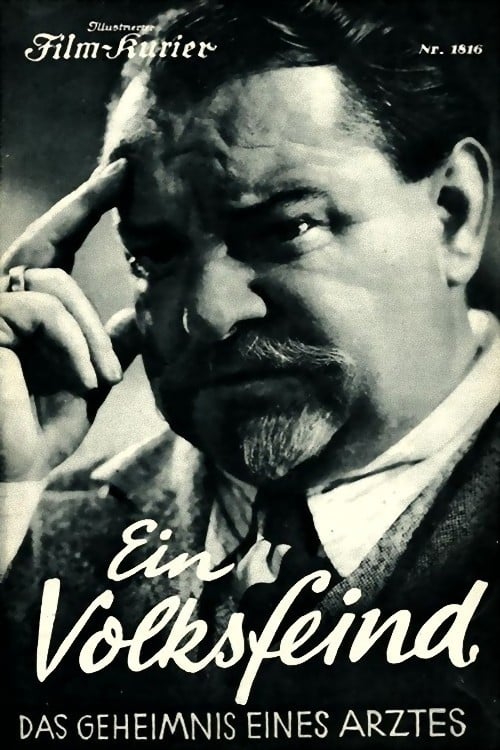
Before the First World War, Dr. Hans Stockmann had a practice in a small town. His powerhungry brother is the mayor of Bad Trimburg, which has developed into a respectable resort. Dr. Stockmann is called in to become the town’s chief physician. He considers the sanitary conditions to be intolerable and insists on a clean-up. His ambitious brother and all those who, till now, have profited well from the corner cutting, are, of course, against that for financial reasons. The doctor is condemned from all sides and the conflict escalates.
Sabine Heitmann, the young boss for the shipping company Heitmann, has become friends with Michael, the First Officer and Helmsman of the ship, the "Sabine Heitmann". He only knows Sabine by her first name and doesn't know that she's the boss. When he discovers the fact, however, he gets pissed and refuses to accept his promotion to Captain. Then the shipping company gets a lucrative offer: In a competition with another shipping company, they need to reach Baltimore in 18 days and pick up some freight. Whoever can move their rear ends faster, gets the very profitable contract from an American firm (correct me if I'm wrong, but didn't this sort of thing sink the Titanic?). Together with Michael, Sabine comes up with a plan, which should have them win the contest. The upshot? She wins back his heart and he becomes Captain.
Henriette Lange lives only for the theater in Berlin around 1900. Her grandfather, however, has no understanding for this. He is a prompter and knows all about the hustle and bustle of the theater. Her friend, the chorus girl Liesbeth, is heartbroken because the revue star Vera Schreyvogel has his eye on her boyfriend Hans Reuter. But Liesbeth soon consoles herself with someone else, and Mrs. Schreyvogel is quickly forgotten. For Hans Reuter too, because he now loves Henriette. Liesbeth is dismissed without notice because she has fallen out with Mrs. Schreyvogel, and Henriette now has to sing her part. Her dream finally comes true. As she sings blissfully, she sees the Schreyvogel hugging her Hans in the background. She gets stuck in the middle of the song - her career is over! But not with love: she has conquered her Hans forever.
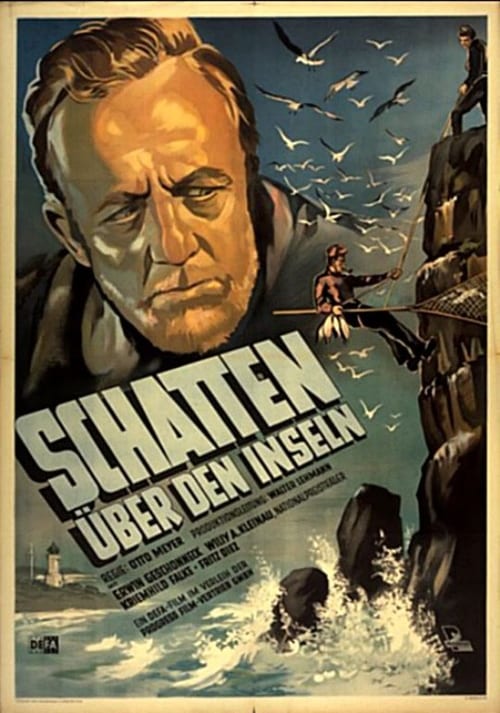
On the Faroe Islands, people eke out a meagre existence by catching birds. Merchant Brause pays them little and does a good business. This comes under threat when Dr. Sten Horn suspects that the dangerous annual plague, which kills dozens of inhabitants, is transmitted by birds. Brause forces the people to work anyway and conceals the telegram from the Copenhagen research institute that confirms Horn's suspicions. Horn, supported by his cousin Arne, enlightens the islanders and the greedy Brause can only flee.
About how the British broke the Brazilian monopoly on natural rubber. The storyline suggests a complex relation between adventure, military conquest and imperialism.
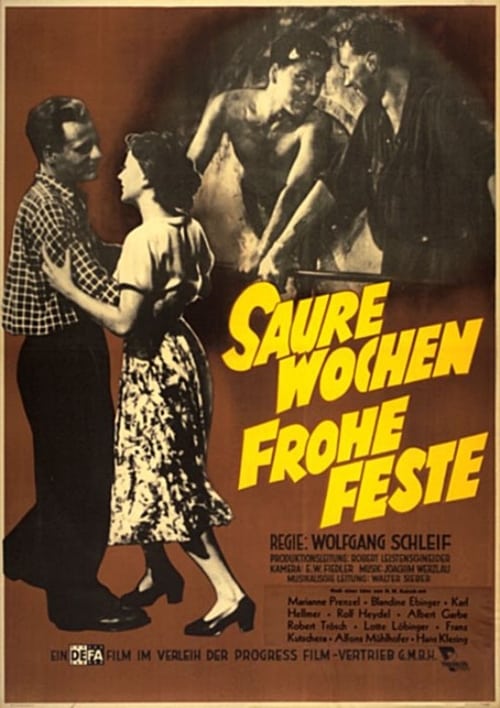
A theater competition breaks out on the occasion of the four-year anniversary celebrations at the Hennigsberg power plant. The old hands want to perform the kitschy musical comedy "Gärtnerliesl". The youngsters are against it and are planning their own program with which they want to skewer events from the plant in a cabaret style. But first, everyone has to work together on a turbine breakdown. On the day of the festival, the "Gärtnerliesl" fails with timpani and trumpets, while the youth's program is met with great applause, which the rivals join in with.
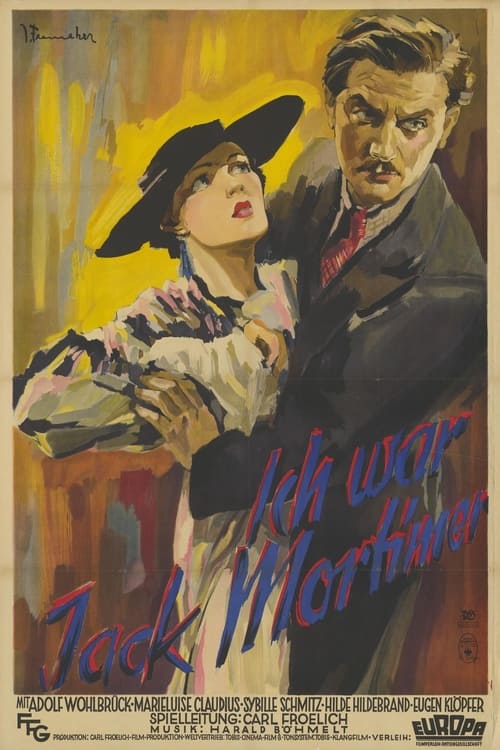
The jealous star conductor Montemayor knows that his beautiful younger wife, Winifred, is cheating on him with an American named Jack Mortimer. After the concert rehearsal, he takes a taxi to the train station, sees Mortimer and shoots him at an intersection from the backseat of his taxi. The shot is not heard during the traffic noise. The taxi driver, Sponer, sitting in his car with the now-dead Mortimer, goes into a panic.
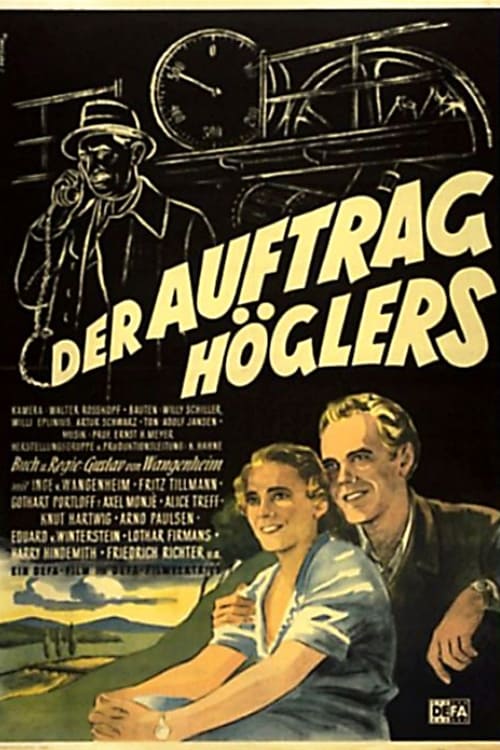
The Luisin ridge is divided not only by the river, but also by the zone boundary. The old CEO Högler still lives in the west, the eastern part has been expropriated and is managed by the chief engineer Dr. Tellen. He is working on a new steel production process that Högler absolutely needs. Högler's means to achieve his goal are bribery, espionage and slander. Trade union member Maria Steinitz almost becomes a victim of slander. However, the intrigue is exposed and Hogler's criminal intentions are thwarted. At a large production meeting, the old people's controller Hufland exposes the true culprits. Maria and Fritz Rottmann, a trade unionist from Munich, who have known each other since the days of the anti-fascist resistance, embrace each other.