Robert Motherwell
Acting
Known For
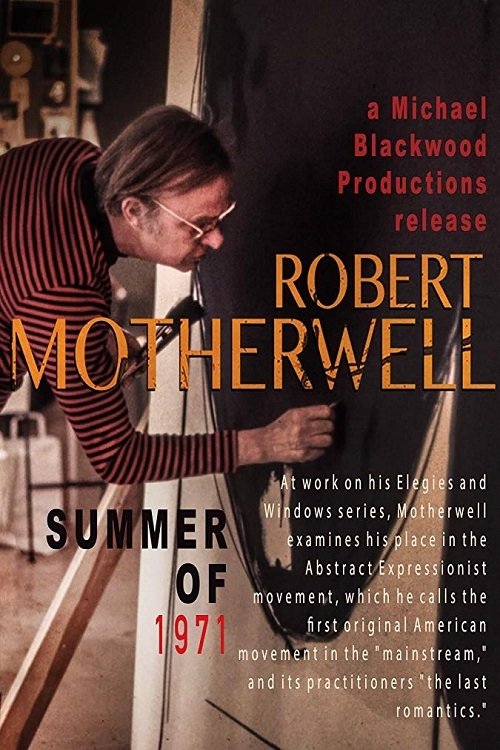
At work on his Elegies and Windows series, Motherwell examines his place in the Abstract Expressionist movement, which he calls the first original American movement in the "mainstream," and its practitioners "the last romantics." He distinguishes between his large paintings and his intimate papier collée. Motherwell recollects the state of American art in the 1940s and the impact of European emigré painters on the younger generation of emerging artists. He discusses the significance of collage, or papier collée, as an artist's medium and explains how he first became involved with this process. Motherwell offers his interpretations of earlier directions in art and his response to the object oriented painting that emerged in America in the 1960s. A unique document of one of the founding members of the New York School. He died in 1991.
Robert Motherwell: Summer of 1971
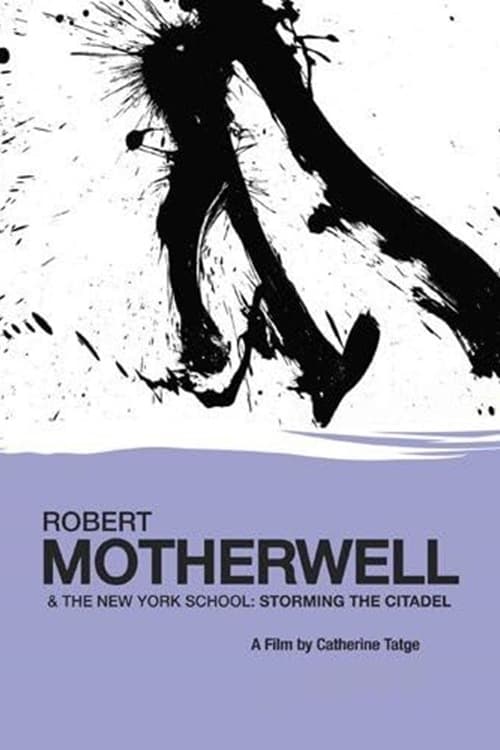
Made shortly before Robert Motherwell’s death in 1991, is an exploration of the Abstract Expressionist movement and a portrait of one of its last survivors. Having come to New York in the early 1940s, Motherwell found himself on the battleground of American art. He and a group of painters set out to change the face of American painting. The film charts this epic battle led by Jackson Pollock, Willem de Kooning, Mark Rothko, Franz Kline, and Robert Motherwell, who endeavored to make American painting equal to painting elsewhere and, in the process, shifted the center of modern art from Paris to New York.
Robert Motherwell and the New York School: Storming the Citadel
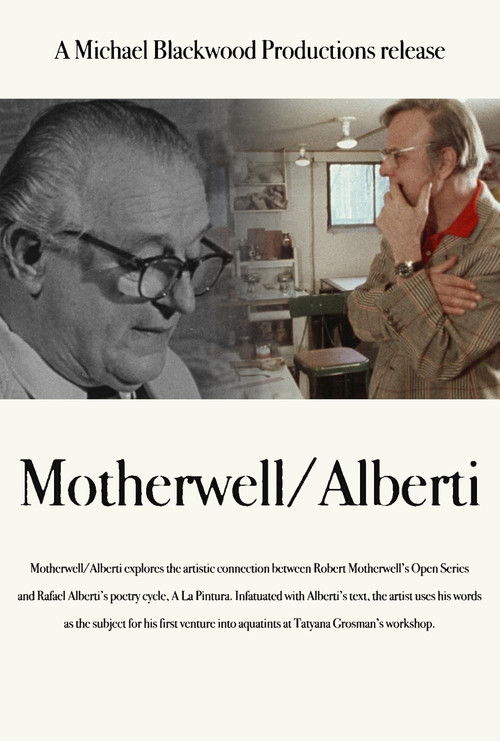
Motherwell/Alberti explores the artistic connection between Robert Motherwell's Open Series and Rafael Alberti's poetry cycle, A La Pintura. Infatuated with Alberti's text, Motherwell uses his words as the subject for his first venture into aquatints at Tatyana Grosman's printmaking workshop. Historic footage shows Alberti, the last member of the Garcia Lorca generation, reading his poetry aloud. His poetic themes voice an homage to painting, which Motherwell's set of abstract "windows" delicately complements.