Danielle Dean
Directing
Known For
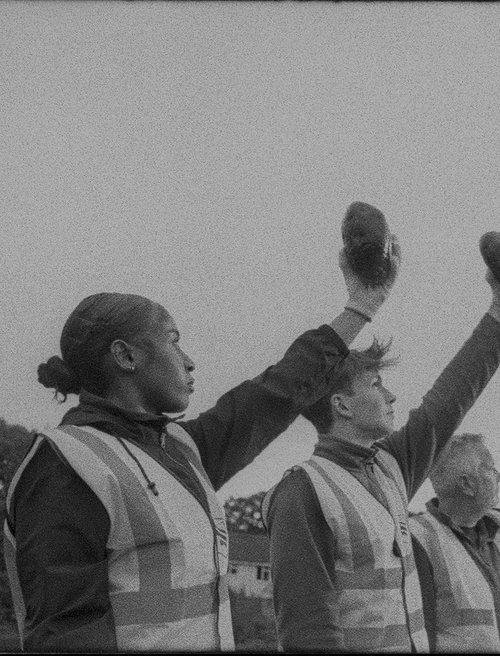
Hemel is an intimate portrait of Hemel Hempstead, where Danielle Dean was raised, and unfolds as a personal essay on the town’s history as a planned community under the New Towns Act of 1946. Filmed in 16mm with an ensemble of non-actors and family, Hemel blurs fiction and documentary and to considers the race, class, and labour dynamics of a small English town in the post-Brexit context.
Hemel

Dean extrapolated landscape images from 1920s Ford advertisements, leaving out the cars to focus on their representations of place and nature. She made the animation using a digital version of a multiplane camera technique employed in early Disney films to create an immersive and 3D illusion by separating two-dimensional images. This technique was itself inspired by Ford’s assembly line; Dean uses it to explore historical depictions of the American dream, exaggerating the subject matter’s fantastical style. [Overview courtesy of the Whitney Museum of American Art]
Long Low Line (Fordland)

White leads us through the indigenous plants of the Taranaki forest, Aotearoa (New Zealand), before the landscape dissolves in a mysterious whitewash. This ecosystem was largely destroyed in the 19th century when British colonial settlers cleared the forest to introduce dairy farming. Dean invites us to consider the effects of colonialism within human-made climate change. The animation loops and the forest returns, hopeful of renewal and showing the resistance of Mãori communities.