FEEL IT.STREAM
Jacques Villeret

Jacques Villeret

Acting

Biography

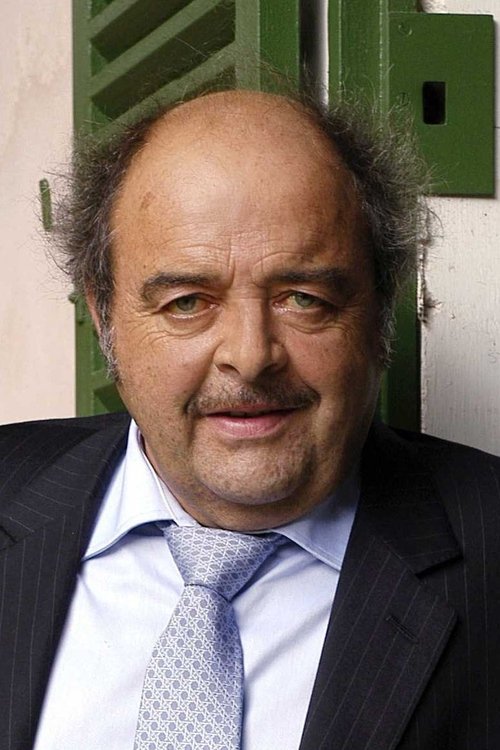
Jacques Villeret (6 February 1951 – 28 January 2005) was a French actor, best known internationally for his role as François Pignon in the comedy Le Dîner de Cons. During his career, he earned many awards including the prestigious medal and title of Chevalier de la Légion d'Honneur. Villeret was born Jacky Boufroura in Loches, Indre-et-Loire, France, to an Algerian father and a French mother. He studied at the Conservatoire de Paris (CNSAD) in the same class as Louis Seigner, the grandfather of Emmanuelle Seigner and Mathilde Seigner. While he was most famous for his role as François Pignon in Le Dîner de Cons; both on the stage and in the film, his other celebrated roles included the extra terrestrial in La soupe aux choux, the autistic Mo in L'été en pente douce, and marshal Ludwig von Apfelstrudel in Papy fait de la résistance. At the time of making the film Un aller simple directed by Laurent Heynemann – a film about integration and racism and the clash of generations – he said that watching the young actors in the film, Barbara Schulz and Lorant Deutsch, reminded him of the insouciance he had had as a young man with his friends at the Conservatoire. When his career was at its height, with the success of Le Dîner de Cons, everything collapsed in a tragedy mirroring the plot of the film. Villeret separated from his wife and suffered an enormous financial downfall due to tax issues, plunging him into depression. Villeret turned to alcohol for comfort, and became an alcoholic. He isolated himself and hid away for long periods. He later said: Alcohol is a friend, but a friend who means you harm. Villeret's love of his profession helped to bring his career back from the brink. In an interview in 2001 he spoke of his admiration for performers like Johnny Hallyday and Jacques Brel for their level of commitment, and quoted the author Louis-Ferdinand Céline: When I write, I put my balls on the table. In 1979 Villeret married Irina Tarassov, an actress and writer. They separated in 1998. Tassarov wrote about their life together in her book Un jour, tout ira bien. (One day, everything will go well). In 2002 Villeret met Seny, a Senegalese-French widow descended through her grandfather, Mor Diarra N'Dao, from a long line of Sérès nobles of the ancient Kingdom of Saloum, and they fell instantly and deeply in love. They were partners for three years, and she was about to move to Paris to be with him when he died in Évreux in January 2005 of a liver haemorrhage. Seny wrote a memoir of their life together, Jacques Villeret, mon bébé blanc, which was published in Paris by Le Cherche Midi in 2005. Source: Article "Jacques Villeret" from Wikipedia in English, licensed under CC-BY-SA 3.0.


Known For

Champs-Elysées
6.8

No description available.

Champs-Elysées

1982
Vivement dimanche
3.6

No description available.

Vivement dimanche

1998
Midi Première
9.0

Midi Première is a French variety show presented by Danièle Gilbert, directed by Jacques Pierre and broadcast from January 6, 1975 until January 1, 1982 on TF1. The program was generally broadcast between 12:15 p.m. and 12:55 p.m., then giving way to the 1:00 p.m. TV news. However, the broadcast schedule could change, depending on the guests, and the setting where the recording of the program was shot. Certain performances by artists who have become cult like the one where Ringo jostles with a demonstrator in interpretation (1977), that of Dalida with the title There is always a song with the soundtrack that does not start, twice, at the right speed (1978), Claude François and his Clodettes, who, in the provinces, are unable to join "the set" in order to interpret his song, the latter being taken by the crowd of delirious fans (summer 1977) . The group Supertramp performed there with the title "Dreamer" on March 8, 1975.

Midi Première

1975
Sacrée soirée
5.7

No description available.

Sacrée soirée

1987
Les Rendez-vous du dimanche
6.0

A talk show presented by Michel Drucker

Les Rendez-vous du dimanche

1975
Spécial cinéma
9.5

Marcello Mastroianni, Isabelle Adjani, Alain Delon, Martin Scorsese, Woody Allen... the biggest stars in cinema were welcomed by Christian Defaye on his show Spécial cinéma. Between intimate confessions from actors and immersion in the world of the greatest filmmakers, Christian Defaye took viewers on a journey into the fascinating world of cinema for nearly thirty years.

Spécial cinéma

1974
Numéro un
7.5

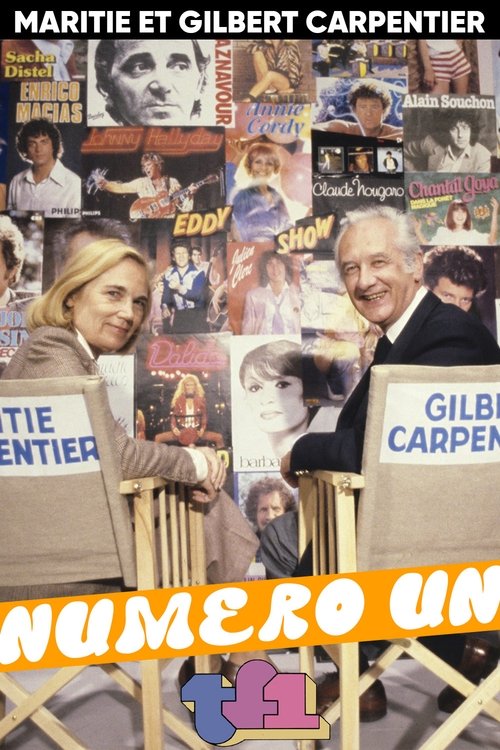
A French variety show.

Numéro un

1975
Le Grand Échiquier
8.0

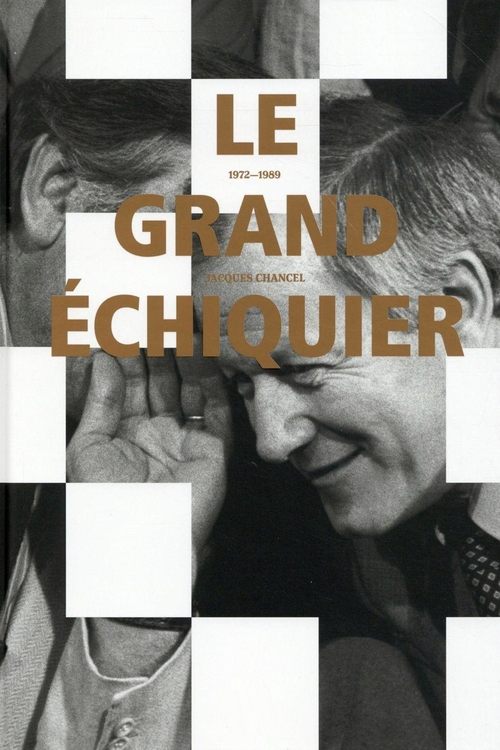
Le Grand Échiquier is a French variety television program created and presented by Jacques Chancel. It aired at 8:30 pm on the first channel of the ORTF from January 12, 1972 to July 12, 1972, then on the second color channel of the ORTF from September 1972 to December 1974, and finally on Antenne 2 from January 1975 to December 21, 1989. The program returned to France 2 on December 20, 2018 and is hosted by Anne-Sophie Lapix.

Le Grand Échiquier

1972
Discorama
8.0

No description available.

Discorama

1959
Nulle part ailleurs
6.1

No description available.

Nulle part ailleurs

1987
Il était une fois Champs-Élysées
6.6

No description available.

Il était une fois Champs-Élysées

2022
No image
N/A

No description available.

Matin Bonheur

1987
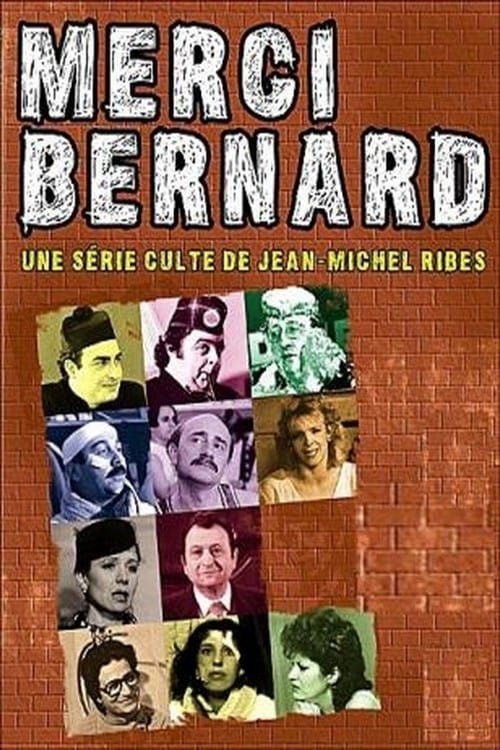
Merci Bernard
8.0

No description available.

Merci Bernard

1982
The Dinner Game
7.8

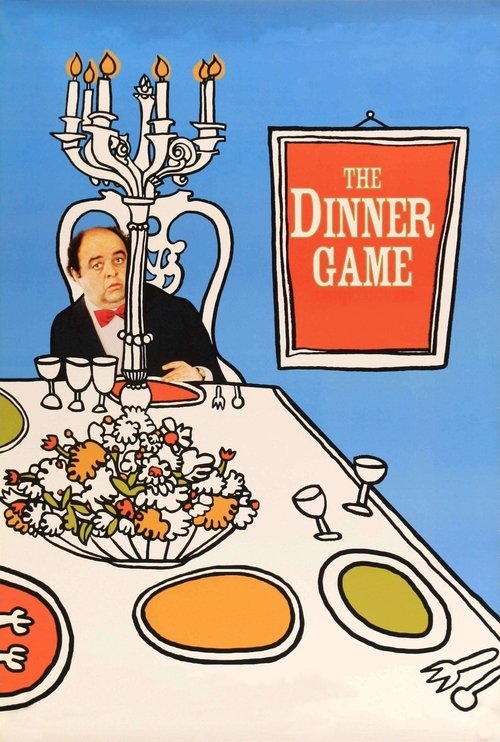
For Pierre Brochant and his friends, Wednesday is “Idiots' Day”. The idea is simple: each person has to bring along an idiot. The one who brings the most spectacular idiot wins the prize. Tonight, Brochant is ecstatic. He has found a gem. The ultimate idiot, “A world champion idiot!”. What Brochant doesn’t know is that Pignon is a real jinx, a past master in the art of bringing on catastrophes...

The Dinner Game

1998
The Cabbage Soup
6.4

Two buddy farmers are visited by aliens who like their domestic cabbage soup.

The Cabbage Soup

1981
La TV des 70's : Quand Giscard était président
7.2

In May 1974, Valéry Giscard d'Estaing became President of the Republic and wanted to bring about a new era of modernity. One of his first decisions was to break up the ORTF with the creation of three new television channels: TF1, Antenne 2 and FR3. Three new public channels but autonomous and competing. It is a race for the audience which is engaged then, and from now on the channels will make the war! This competition will give birth to a real golden age for television programs, with variety shows in the forefront. The stars of the song are going to invade the living rooms of the French for their biggest pleasure. This unedited documentary tells the story of the metamorphosis of this television of the early 1970s, between freedom of tone, scandals, political intrigues and programs that have become mythical.

La TV des 70's : Quand Giscard était président

2022
First Name: Carmen
6.0

A woman involved with a terrorist group becomes dangerously close to the police officer guarding the bank they plan to rob.

First Name: Carmen

1983
Gramps Is in the Resistance
6.9

It is 1943 in Paris. Like so many others, the Bourbelle family's home has been taken over by the Germans and they now live in their cellar. Little do they know that the son, Guy-Hubert Bourdelle, is far from being the cowardly hairdresser he pretends. He is in truth the Germans’ most feared opponent: le super-résistant!

Gramps Is in the Resistance

1983
Bolero
6.9

The film follows four families, with different nationalities (French, German, Russian and American) but with the same passion for music, from the 1930s to the 1960s. The various story lines cross each other time and again in different places and times, with their own theme scores that evolve as time passes. The main event in the film is the Second World War, which throws the stories of the four musical families together and mixes their fates. Although all characters are fictional, many of them are loosely based on historical musical icons (Édith Piaf, Josephine Baker, Herbert von Karajan, Glenn Miller, Rudolf Nureyev, etc.) The Boléro dance sequence at the end brings all the threads together.

Bolero

1981
Danton
6.8

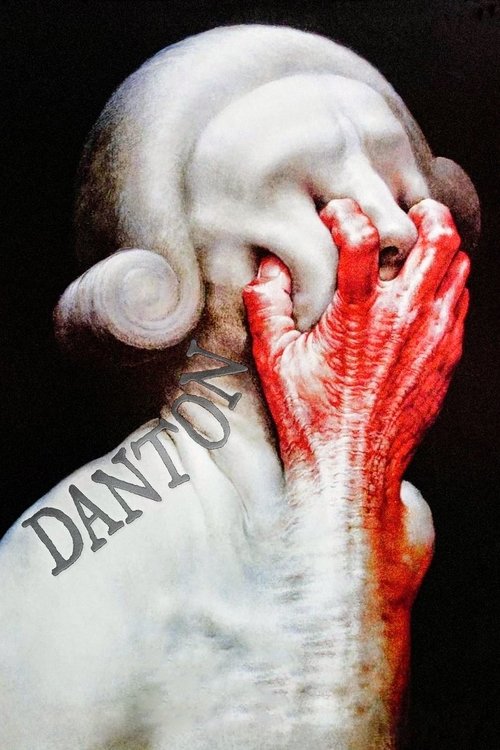
Danton and Robespierre were close friends and fought together in the French Revolution, but by 1793 Robespierre was France's ruler, determined to wipe out opposition with a series of mass executions that became known as the Reign of Terror. Danton, well known as a spokesman of the people, had been living in relative solitude in the French countryside, but he returned to Paris to challenge Robespierre's violent rule and call for the people to demand their rights. Robespierre, however, could not accept such a challenge, even from a friend and colleague, and he blocked out a plan for the capture and execution of Danton and his allies.

Danton

1983