Directing
Harems is a love story between a screen-writer and a gogo-boy, the latter being typically representative of the image of seduction in the 80's. The screenwriter leaves on a journey and asks the gogo-boy to accompany him. A scandal breaks out and the gogo-boy's antics lead to both men's meeting with the narrator. She introduces the spectator to the psychological state of the screen-writer - who is in the process of inventing a mythic character based on his lover - and befriends and helps the gogo-boy in his quest for happiness. The narrator relates the story taking place between the two men and questions the relationship between fantasy and the reality of love.
No description available.
In the fascist Italy of the thirties, many inhabitants of the little village of Borgo, forced by poverty or motivated by a sense of adventure, emigrated to the colonies of the "Italian Empire of Africa". They went seeking the Eldorado that fascist propaganda had promised them. Their dream was shattered after just a few years. The war and the fall of the regime led to the loss of the colonies, forcing them to return to Borgo having lost everything. This epic tale is revealed in the words, the written memoirs and the hundreds of photos of a few witnesses. The story unfolds in an intimacy that reveals a long silence. A colonial adventure seen from the inside.
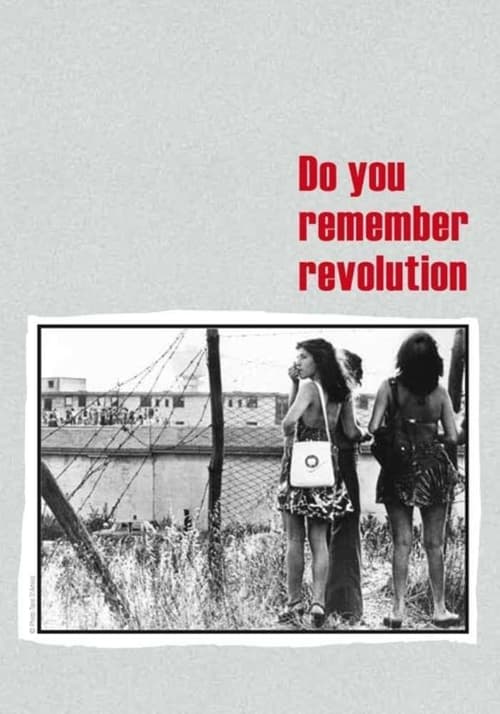
In Italy, in the mid-seventies, Adriana, Barbara, Nadia and Susanna were 20 years old when they decided to join the armed struggle and leave behind their social life and their families in order to make the revolution the center and the aim of their existence. Today they have returned after many years in prison, and they try, each one of them, to recount their own experiences. They speak about the political reasons which initially sustained them, the conflicts, the doubts, and the moments of being torn apart which market out their lives as women caught up in the vortex of war. A course of events which ended in the condemnation of the armed struggle and the pain of the lives that were destroyed – their victims’ lives and their own.
Is it possible, when you come from a family of Maghreb immigrants and you are a girl or a woman, to invent your life, to choose to leave the traditional universe, to break up with your family, without renouncing that which bases you, to the recognition of your own? Four portraits of women bear witness to a generation that lives its life through its own choices. Their mothers were illiterate but dreamed of a university education for their daughters. They invested their children with their hopes, but also with their lacks, their solitudes.
A poem in prose is written on the screen, sentence by sentence. Here goes a migrant Odyssey from yesterday to nowadays. Alongside the text, archive images, paintings and contemporary pictures answer each other.