FEEL IT.STREAM
Ariane Mnouchkine

Ariane Mnouchkine

Directing

Biography

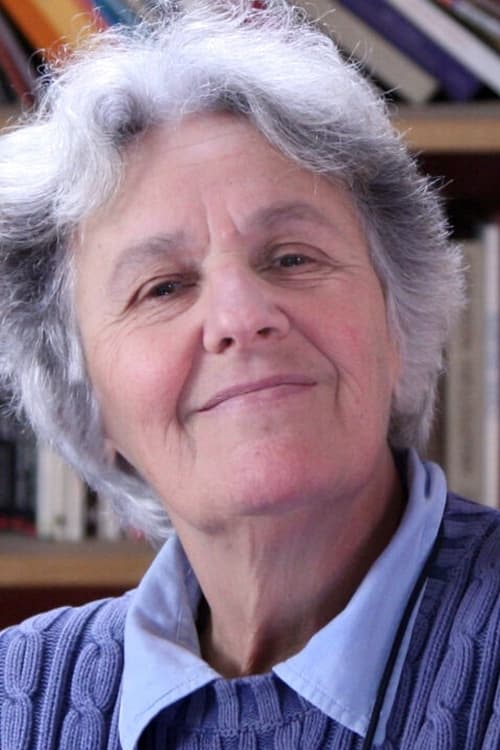
Ariane Mnouchkine (born 3 March 1939) is a French stage director. She founded the Parisian avant-garde stage ensemble Théâtre du Soleil in 1964. She wrote and directed 1789 (1974) and Molière (1978), and directed La Nuit Miraculeuse (1989). She holds a Chair of Artistic Creation at the Collège de France, an Honorary Degree in Performing Arts from the University of Rome III, awarded in 2005 and an Honorary Doctor of Letters from Oxford University, awarded 18 June 2008. Ariane Mnouchkine is the daughter of Jewish Russian film producer Alexandre Mnouchkine and June Hannen (daughter of Nicholas Hannen). Mnouchkine's paternal grandparents, Alexandre and Bronislawa Mnouchkine, were both deported from Drancy to Auschwitz on 17 December 1943, where they were both murdered. Ariane is the namesake of the production company Ariane Films that was founded by her father. Mnouchkine attended Sorbonne University in Paris, France, where she studied Literature. On a year abroad at Oxford University in England, studying English Literature, she joined the Oxford University Dramatic Society, and decided to return to her roots in theatre. She founded the ATEP (Association Théâtrale des Étudiants de Paris or Parisian Students’ Theatrical Association) in 1959 when she returned to the Sorbonne. She continued theatre studies at L'École Internationale de Théâtre Jacques Lecoq, where in 1964 she founded Théâtre du Soleil (Theatre of the Sun) with her fellow students. The theatre collective still continues to create social and political critiques of local and world cultures. Théâtre du Soleil's productions are often performed in found spaces like barns or gymnasiums because Mnouchkine does not like being confined to a typical stage. Similarly, she feels theatre cannot be restricted with the "fourth wall". When audiences enter a Mnouchkine production, they will often find the actors preparing (putting on makeup, getting into costume) right before their eyes. In 1971, Mnouchkine signed the Manifesto of the 343, publicly announcing she had an illegal abortion. Mnouchkine has developed her own works, like the political-themed 1789, as well as numerous classical texts like Molière's Don Juan or Tartuffe. Between 1981 and 1984, she translated and directed a series of William Shakespeare plays: Richard II, Twelfth Night, and Henry IV, Part 1. While she developed the shows one at a time, when she finished Henry IV, she toured the three together as a cycle of plays. Similarly, she developed Iphigenia by Euripides and the Oresteia (Agamemnon, Choephori, and The Eumenides) by Aeschylus between 1990–92. ... Source: Article "Ariane Mnouchkine" from Wikipedia in English, licensed under CC-BY-SA 3.0.

Known For

Les Rendez-vous du dimanche
6.0

A talk show presented by Michel Drucker

Les Rendez-vous du dimanche

1975
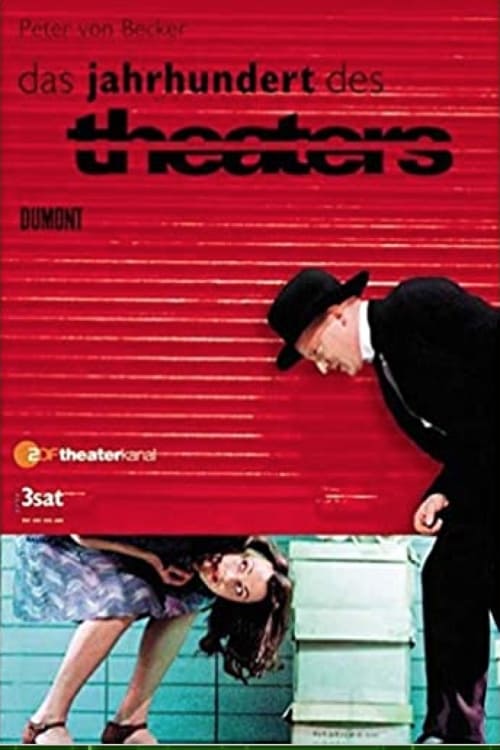
Das Jahrhundert des Theaters
9.0

"The Century of the Theater" - From the "birth of the director" to the "heroes of modernity" - an overview of the world of theater - illuminates the interaction with the history of the past hundred years is also shown.

Das Jahrhundert des Theaters

2002
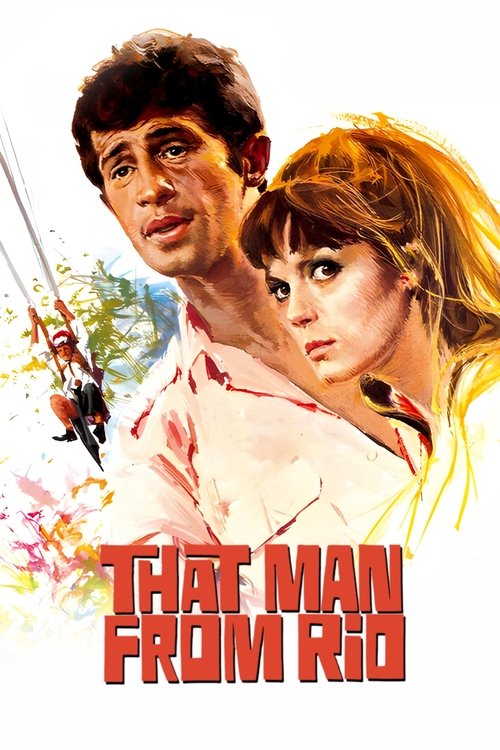
That Man from Rio
7.4

French military man Adrien Dufourquet gets an eight-day furlough to visit his fiancée, Agnès. But when he arrives in Paris, he learns that her late father's partner, museum curator Professor Catalan, has just been kidnapped by a group of Amazon tribesmen who have also stolen a priceless statue from the museum. Adrien and Agnès pursue the kidnappers to Brazil, where they learn that the statue is the key to a hidden Amazon treasure.

That Man from Rio

1964
My Son, the Hero
5.9

Krios, the youngest of the Titans, may be the least strong of the seven brothers whose strength comes from their mother, earth-goddess Gaia, but is by far the smartest, and thus their natural leader. He arrives on Crete, the kingdom of the mighty king Minos, impresses him as gladiator, gains his trust, falls in love with a mortal girl and discovers both Minos's human sacrifice-cult and a foreign conspiracy to seize power with a hidden army.

My Son, the Hero

1962
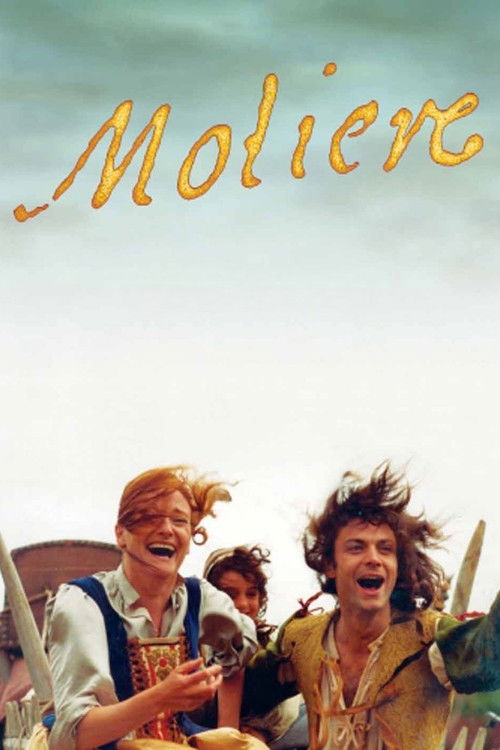
Molière
6.0

Jean-Baptiste Poquelin is raised by his father and his grandfather because his mother dies when he's still very little. He works as a handyman, studies the law at a university and travels the country as an actor before he becomes the celebrated playwright Molière who impresses firstly the Duke of Orleans and then even King Louis XIV.

Molière

1978
No image
N/A

A modern take on the 1964 French film of the same title. Plot TBA.

That Man from Rio

Resistencia Cultural
N/A

No description available.

Resistencia Cultural

2021
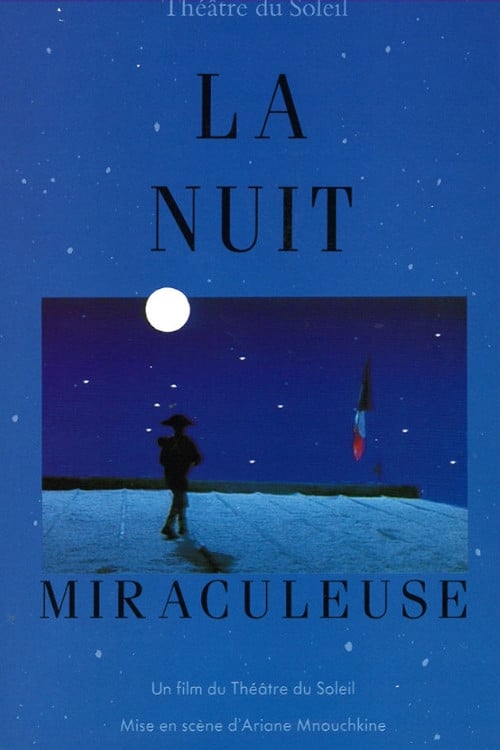
La nuit miraculeuse
7.0

To celebrate the bicentennial of the French revolution, an exposition of mannequins representing the deputies brought together in 1789 to discuss the Declaration of the rights of man, is held in the the French National Assembly. The mannequins come to life suddenly and are joined by other historical figures who fought for human rights.

La nuit miraculeuse

1989
Strehler: Il mago dei prodigi
N/A

An eulogy to Giorgio Strehler, the first real director in the italian theatre. He was a master, knowing all aspects of the show, from the set techniques up to narrative influences. The documentary tells the personal life and the artistic career: it starts from that Christmas day in 1997, when the news broadcasts opened with the news of Strehler's death, to summarize the story of the Piccolo Teatro, the first municipal theatre in Italy.

Strehler: Il mago dei prodigi

2017
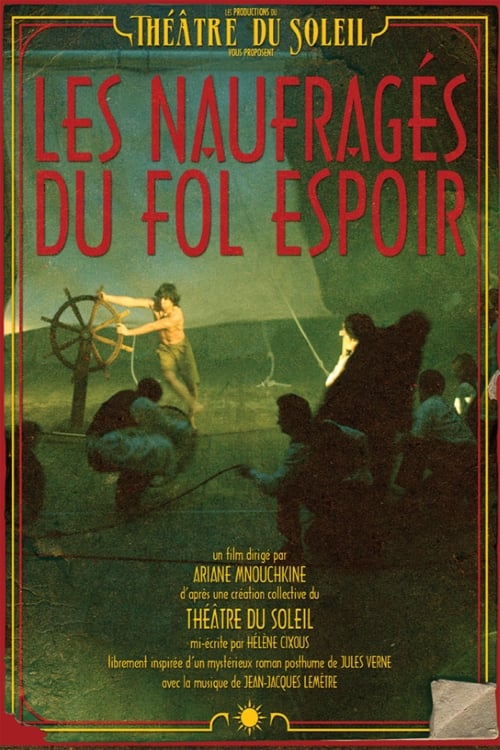
The Castaways of the Fol Espoir
6.0

A film-crew in the early twentieth century, the cabaret known as ‘Le Fol Espoir’ has been transformed into an amateur soundstage. The motion picture tells the story of a ship and its passengers – from the famous opera singer down to the petty criminal. The film is an optimistic political fable intended to educate the masses. There’s comedy aplenty – slapstick punches, custard pies and gags reminiscent of Buster Keaton and Fatty Arbuckle; there’s adventure, high drama moments of great bravura , and passionate love stories. The filming begins on June 28th 1914, the day of the Archiduke Franz Ferdinand’s assassination in Sarajevo, the gunpowder that sets Europe alight. It ends with news of another assassination – that of Jean Jaures on July 31st followed by the general conscription of August 1st, heralded by church bells across France. The allegory of the shipwreck is filmed at breakneck pace during the last five weeks before war breaks out.

The Castaways of the Fol Espoir

2014
The Flood Drummers
10.0

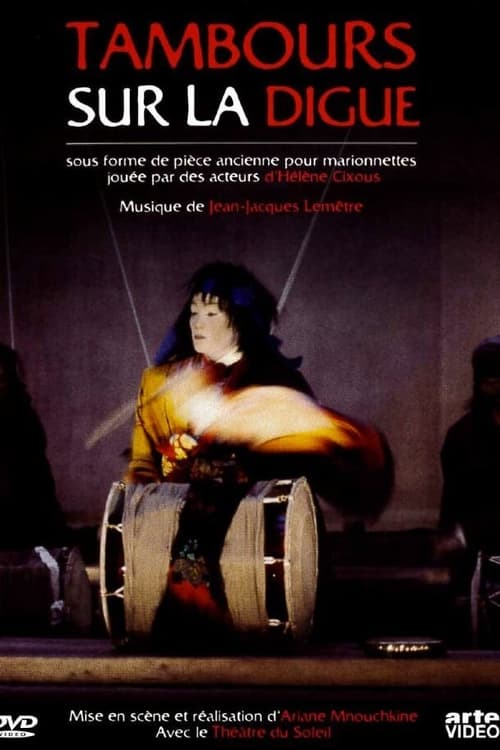
Based on the play by Hélène Cixous, filmed in 2002, Tambours sur la Digue is a story written by Hélène Cixous based on an ancient Asian fable about who shall be saved during a flood and presented by live actors as puppets and puppeteers, evoking the theatrical traditions of Japanese Noh and bunraku.

The Flood Drummers

2003
L'école en actes
N/A

No description available.

L'école en actes

2024
1789
7.1

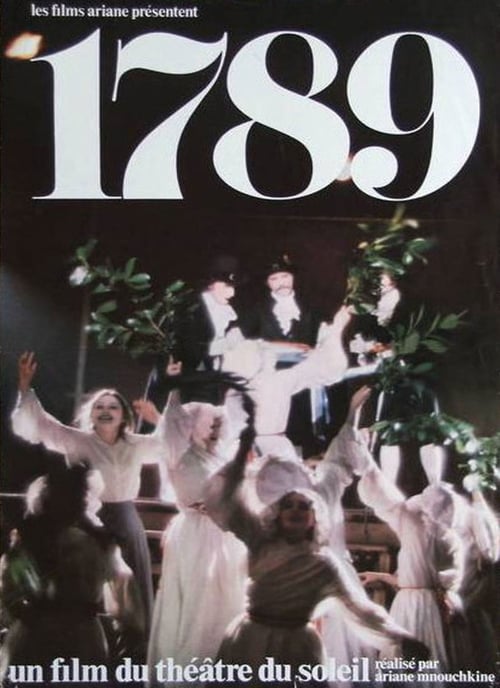
Recording of the play 1789, a collective creation by Théâtre du Soleil at La Cartoucherie de Vincennes in 1970, edited from several shows.

1789

1974
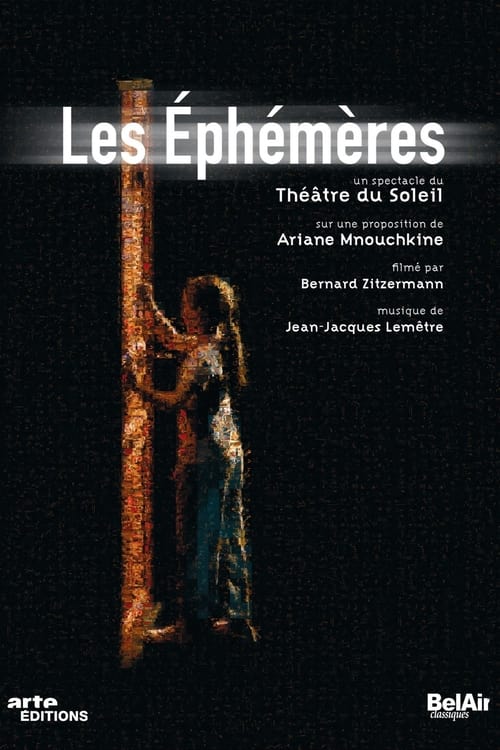
Les Éphémères
N/A

No description available.

Les Éphémères

2008
Au Soleil même la nuit
N/A

This is a film about the rehearsing of Molière's 'Tartuffe' in 1995. Working handheld or with a stand for up to 12 hours a day, cameraman Eric Darmon became so much part of the landscape that he had a totally free hand in documenting the play's gestation, complete with director Ariane Mnouchkine's instructions, urgings and moments of uncertainty. Every action, decision, and all the tensions, elation, gaffes and bouts of craziness were filmed as they happened. And then along came editor Catherine Vilpoux, faced with 580 hours of rushes and a titanic exercise in viewing, sorting, selecting and assembling. Gradually the film took shape a shape that reflects the Théâtre du Soleil's commitment to finding the right theatrical form. Ultimately, is this a film about stage directing? About a troupe of actors? About the way actors work? About how an actor is born? About the learning process? The teaching process? The theatre? Life? Probably all of that. And an unparalleled work of its kind.

Au Soleil même la nuit

2012
Kyiv Theater, An Island of Hope
N/A

February 2022. Russia invades Ukraine, a war that brings back dark memories and tragic lessons from World War II. Ariane Mnouchkine, the founder of the Théâtre du Soleil who was born when war was declared in 1939, was in shock. For her, going with part of her troop to Ukraine is above all a message of solidarity and gratitude towards this people of resistance who are fighting both for their freedom but also for that of Europe. The desire of Ariane Mnouchkine and her actors is to find with Ukrainian artists, beyond differences of language and culture, a common and universal language: that of theater.

Kyiv Theater, An Island of Hope

2024
Ariane Mnouchkine - L'aventure du Théâtre du Soleil
N/A

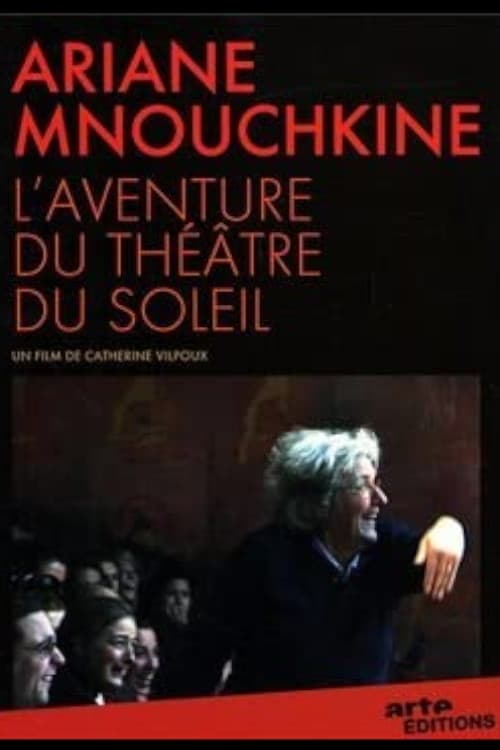
In this film, Catherine Vilpoux recounts Ariane Mnouchkine’s iconic artistic journey: her inspirations, her dreams for the theatre, her love of cinema, her unique and extraordinary bond with audiences. Extensive archival material – much of which has never been seen before – together with extracts from performances and rehearsals, as well as interviews and coverage of various tours and travels, reveal an in-depth portrait of the Théâtre du Soleil, and its artistic and political commitment both in France and internationally, for which it was awarded the International Ibsen Award in September 2009. Everyone who has seen one of Ariane Mnouchkine’s productions at the Théatre du Soleil in Paris leaves with the feeling of having been part of a tale of enchantment. A tale that is larger than life but at the same time reveals life.

Ariane Mnouchkine - L'aventure du Théâtre du Soleil

2009
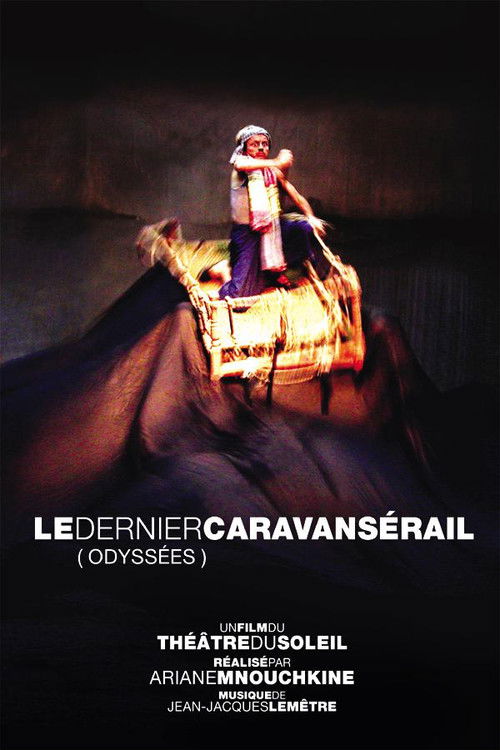
Le dernier caravansérail (Odyssées)
N/A

Le Dernier Caravanserail (Odyssées) is a series of stories, scraps of destinies, bits of the lives of men and women – of those "refugees", "illegals" and "migrants" who term themselves, with greater dignity, "travellers". This is a veritable ocean of time-battered odysseys, sometimes heroic, sometimes commonplace, and always dramatic. Initially a work for the theatre, Le Dernier Caravanserail (Odyssées) is now a film. A whole new artistic adventure using the cinema to bring even greater depth to the virtually inexhaustible original material, and intended above all to keep the promise made to those whose stories we are telling: to give them a hearing.

Le dernier caravansérail (Odyssées)

2006
Lepage au Soleil: The origin of Kanata
N/A

In the spring of 2016, for the first time in 54 years, Ariane Mnouchkine entrusts her troupe, the Théâtre du Soleil, to another director. Robert Lepage then embarks on the creation of Kanata, a work that imagines the meeting of Europeans with First Nations people in Canada over two centuries. Lepage au Soleil: The origin of Kanata shows how, the 36 comedians from 11 different countries, discover in their own stories astonishing resonance with those of the natives. How, inspired by the cosmopolitanism of comedians, Robert Lepage tries to get them to talk about their own stories through those of the natives. The documentary plunges into the heart of a theatrical creation in search of universality turned upside down by a media scandal even before its premiere.

Lepage au Soleil: The origin of Kanata

2019
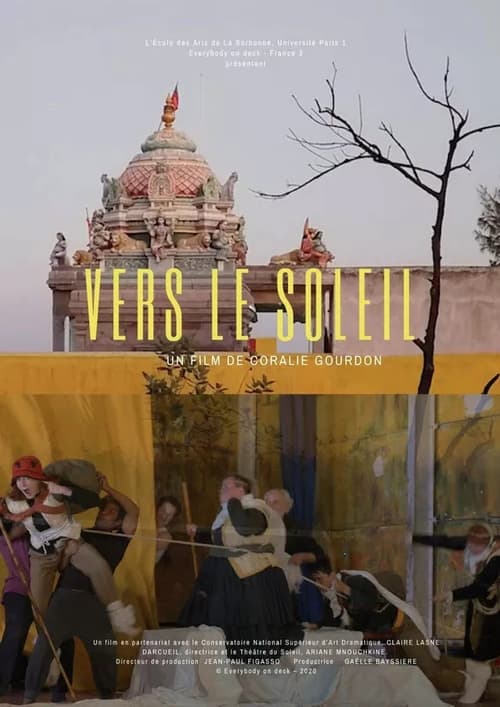
Vers le Soleil
N/A

No description available.

Vers le Soleil

2021