FEEL IT.STREAM
Serge Gainsbourg

Serge Gainsbourg

Acting

Biography

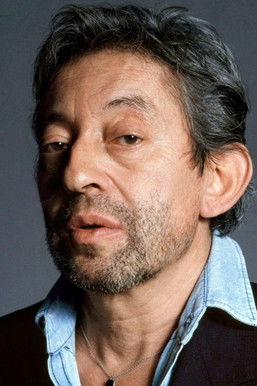
Serge Gainsbourg (born Lucien Ginsburg; 2 April 1928 – 2 March 1991) was a French singer-songwriter, actor, composer, and director. Regarded as one of the most important figures in French pop, he was renowned for often provocative releases which caused uproar in France, dividing public opinion. His artistic output ranged from his early work in jazz, chanson, and yé-yé to later efforts in rock, zouk, funk, reggae, and electronica. Gainsbourg's varied musical style and individuality make him difficult to categorise, although his legacy has been firmly established and he is often regarded as one of the world's most influential popular musicians. Gainsbourg wrote over 550 songs, which have been covered more than 1,000 times by diverse artists. His lyrical works incorporated wordplay, with humorous, bizarre, provocative, sexual, satirical or subversive overtones. Since his death from a second heart attack in 1991, Gainsbourg's music has reached legendary stature in France. While controversial in his lifetime, he has become one of France's best-loved public figures. He has also gained a cult following across the world with chart success in the United Kingdom and Belgium with "Je t'aime... moi non plus" and "Bonnie and Clyde", respectively. Serge Gainsbourg was born in Paris on 2 April 1928, in the maternity ward of the Hôtel-Dieu de Paris on the Île de la Cité. He was the son of Russian Jewish immigrants, Joseph and Olga Ginsburg. Born Brucha Goda Besman (nicknamed Olia/Olga) in Feodosiya in 1894, Serge's mother was a mezzo-soprano singer. Serge's father Joseph was born in Constantinople in the Ottoman Empire of Ukrainian Jewish heritage in 1896. Originally interested in painting, he entered the Petrograd Conservatory and then the Moscow Conservatory to study music, becoming a classically trained pianist. He came to Crimea, where he met and married Olga in 1918. The couple fled Odessa for Paris via Georgia and then Istanbul in the years following the Russian Revolution. The couple arrived in Marseille in 1921, settling in Paris near Olga's brother, who worked for the Louis Dreyfus Bank. Joseph became a piano performer at bars, casinos, and cabarets, while Olga sang at the Conservatoire Rachmaninoff. Serge and his twin sister Liliane had an elder brother Marcel, born in 1922, who died at sixteen months of pneumonia. They also had an older sister Jacqueline, born in 1926. The family lived in the working-class districts of Paris, first at 35 Rue de la Chine in the 20th arrondissement, and then at 11 Rue Chaptal in the 9th arrondissement. They obtained French nationality in 1932. Joseph taught Serge and Liliane to play the piano. At age 12, Serge enrolled at the École Normale de Musique de Paris. Gainsbourg's childhood was profoundly affected by the occupation of France by Germany during World War II. The identifying yellow star that Jews were required to wear haunted Gainsbourg; in later years he was able to transmute this memory into creative inspiration. Early in the summer of 1941, the family temporarily sought refuge in the commune of Courgenard in the Sarthe department, at a place called "La Bassetière," with Baptiste and Irma Dumur. ... Source: Article "Serge Gainsbourg" from Wikipedia in English, licensed under CC-BY-SA.

Known For

Champs-Elysées
6.8

No description available.

Champs-Elysées

1982
Vivement dimanche
3.6

No description available.

Vivement dimanche

1998
Midi Première
9.0

Midi Première is a French variety show presented by Danièle Gilbert, directed by Jacques Pierre and broadcast from January 6, 1975 until January 1, 1982 on TF1. The program was generally broadcast between 12:15 p.m. and 12:55 p.m., then giving way to the 1:00 p.m. TV news. However, the broadcast schedule could change, depending on the guests, and the setting where the recording of the program was shot. Certain performances by artists who have become cult like the one where Ringo jostles with a demonstrator in interpretation (1977), that of Dalida with the title There is always a song with the soundtrack that does not start, twice, at the right speed (1978), Claude François and his Clodettes, who, in the provinces, are unable to join "the set" in order to interpret his song, the latter being taken by the crowd of delirious fans (summer 1977) . The group Supertramp performed there with the title "Dreamer" on March 8, 1975.

Midi Première

1975
Apostrophes
8.5

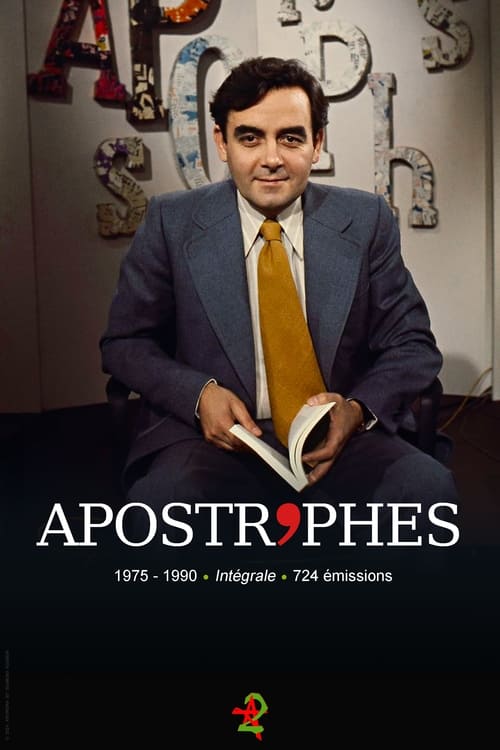
Apostrophes was a live, weekly, literary, prime-time, talk show on French television created and hosted by Bernard Pivot. It ran for fifteen years (724 episodes) from January 10, 1975, to June 22, 1990, and was one of the most watched shows on French television (around 6 million regular viewers). It was broadcast on Friday nights on the channel France 2 (which was called "Antenne 2" from 1975 to 1992). The hourlong show was devoted to books, authors and literature. The format varied between one-on-one interviews with a single author and open discussions between four or five authors.

Apostrophes

1975
Sacrée soirée
5.7

No description available.

Sacrée soirée

1987
No image
7.3

No description available.

Die Drehscheibe

1964
Les Rendez-vous du dimanche
6.0

A talk show presented by Michel Drucker

Les Rendez-vous du dimanche

1975
Spécial cinéma
9.5

Marcello Mastroianni, Isabelle Adjani, Alain Delon, Martin Scorsese, Woody Allen... the biggest stars in cinema were welcomed by Christian Defaye on his show Spécial cinéma. Between intimate confessions from actors and immersion in the world of the greatest filmmakers, Christian Defaye took viewers on a journey into the fascinating world of cinema for nearly thirty years.

Spécial cinéma

1974
Numéro un
7.5

A French variety show.

Numéro un

1975
Le Grand Échiquier
8.0

Le Grand Échiquier is a French variety television program created and presented by Jacques Chancel. It aired at 8:30 pm on the first channel of the ORTF from January 12, 1972 to July 12, 1972, then on the second color channel of the ORTF from September 1972 to December 1974, and finally on Antenne 2 from January 1975 to December 21, 1989. The program returned to France 2 on December 20, 2018 and is hosted by Anne-Sophie Lapix.

Le Grand Échiquier

1972
No image
6.0

No description available.

Midi trente

1972
La semaine des 4 Julie
2.0

No description available.

La semaine des 4 Julie

2020
No image
4.7

The BBC's flagship cinema review TV program featuring reviews of new releases, news items and interviews. The title of the program changes each year to incorporate the year of broadcast.

Film '72

1971
Discorama
8.0

No description available.

Discorama

1959
Nulle part ailleurs
6.1

No description available.

Nulle part ailleurs

1987
Victoires de la musique
3.3

No description available.

Victoires de la musique

1985
No image
6.0

No description available.

Samedi soir

1971
30 millions d'amis
6.2

No description available.

30 millions d'amis

1976
Il était une fois Champs-Élysées
6.6

No description available.

Il était une fois Champs-Élysées

2022
No image
6.0

No description available.

Please Turn the Page

1977