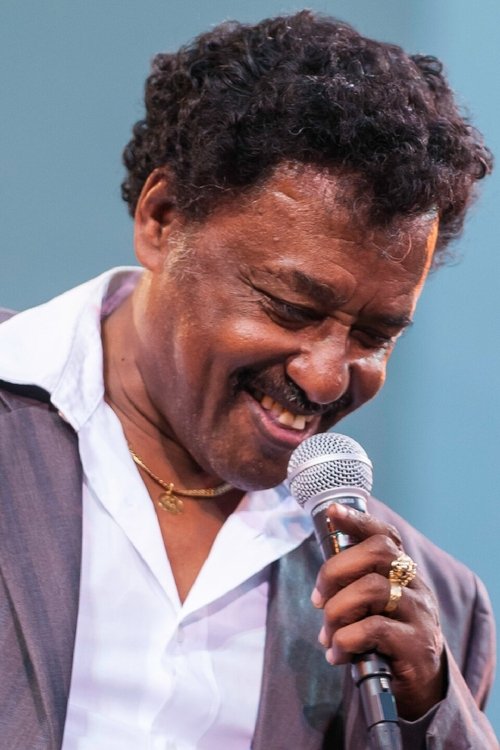
Alemayehu Eshete
Acting
Biography
Alemayehu was born in June 1941 in Addis Ababa, where his father worked as a taxi driver. Alemayehu talent was recognized by Colonel Retta Demeqe, who invited the young singer to perform with Addis Ababa's famous Police Orchestra. He had his first hit "Seul" in 1961 before moving on to found the Alem-Girma Band with Girma Beyene. Over the course of 15 years, Alemayehu released some 30 singles until the arrival of the communist junta Derg. Alemayehu continued working as a musician under the Derg and was once ordered to perform in Korean for Kim Il-sung. Alemayehu gained fame in Europe and the Americas with the release of Buda Musique's Ethiopiques series of compilations on compact disc. Ethiopiques Volume 9 is devoted entirely to recordings of his earlier music, and Volume 22 covers his career between 1972 and 1974. Other songs have also appeared on Volumes 3, 8, 10, and 13 or the series. In 2008, Alemayehu toured the United States with fellow Ethiopian singer Mahmoud Ahmed, backed by Boston's 10-piece Either/Orchestra." - Wikipedia
Known For

First aired on TV on the BBC Two on 29 September 1989, this second episode of the documentary series "Under African Skies", a grand project aimed at presenting the rich diversity of contemporary African music of those days and known for its unforgettable memento "A celebration of the new sounds of a continent. " traverses the nostalgic roots and the euphoric contours of Ethiopian music of the '80s.
Under African Skies: Ethiopia

The story of how the Western world was first introduced to the musical history of Ethiopia, through the `Ethiopiques' CDs and the mastermind behind them, French music journalist, Francis Falceto.
Ethiopiques: Revolt of the Soul
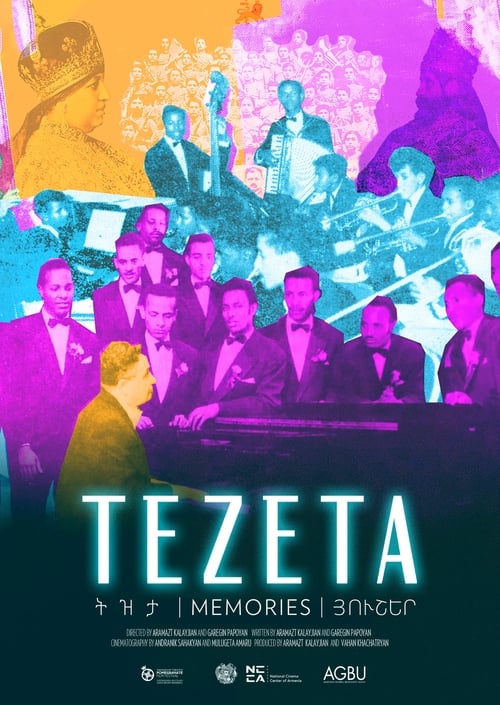
Modern Ethiopian big band orchestra music finds its unlikely origins in the royal adoption of 40 Jerusalem orphans of the Armenian Genocide by Emperor Haile Selassie. Their presence as the first royal imperial band would make way for the composed music of Ethiopia's first national anthem, the popularization of brass instruments, and in later decades, a jazz revolution that sweeps the country before descending into the throes of the communist Derg regime. Told through first-hand accounts with Ethiopian jazz greats such as Alemayehu Eshete, Mulatu Astatke, Girum Mezmur, as well as Sammy Yirga and while following Vahé, the only performing Armenian singer / musician in Addis Ababa, TEZETA opens the musical door to a light of memories of a jazz club, a beloved teacher, and a golden musical era forgotten by many.
TEZETA
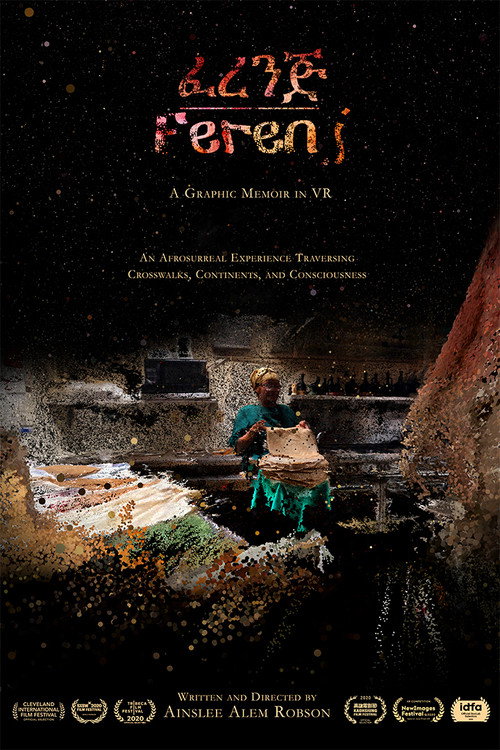
“Ferenj” is an afrosurreal dreamscape crafted from the director’s reconstructed memories questioning the meaning of home and identity as a mixed-race, Ethiopian-American growing up amidst cultural dissonance. The viewer is guided through fragments of Empress Taytu (her parents’ Ethiopian restaurant in Cleveland, OH) to the streets of Addis Ababa, Ethiopia by a speculative one-way conversation between the narrator and Empress Taytu – the restaurant personified as the historic empress. “Ferenj” harnesses photogrammetry as a tool to reclaim the 3D scanned spaces and redefine Robson’s relationship to them on her own terms.