Directing
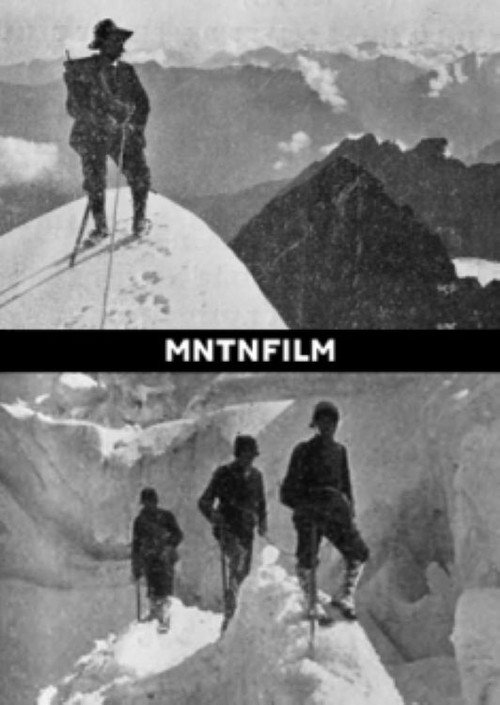
On September 28th, 1903, the Urban Mountaineering Expedition, headed by Frank Ormiston-Smith, left Zermatt to attempt the conquest of the Matterhorn. On the 29th, the conquest was completed by the filming of the panorama from the actual summit of the mountain. The film consists of 20 scenes and illustrates the whole ascent from Zermatt through the Hornli Ridge. A copy of the film was found in Zermatt in 1953 and was was erroneously attributed to Frederick Burlingham and dated 1901. Since then, the film has been widely publicized as the first mountain film under the title of 'Cervin 1901', but this is incorrect. Ormiston previously had made 'Alpine series' (1901), 'The ascent of Mont Blanc' (1902), 'Climbing the Great Schreckhorn' (1902) and 'Ascent of the Jungfrau' (1903). The pictures and descriptions of the Charles Urban Trading 1903 film catalogue show without any doubt that 'Ascent of the Matterhorn' and 'Cervin 1901' are the same film.
Alpine Series is a collection of scenes taken by Frank Ormiston-Smith in 1901 in the Alps. They were screened in different selections by the Warwich Trading Company. These scenes are, along with the scenes of a roped party in the Mer de Glace of the Lumière Brothers, the first alpine films in the history of cinema. The scenes include: Eagleswing Panorama of the Wetterhorn, Panorama of the snow peaks of the Jungfrau, Eagleswing panorama of the Mer de Glace, Crossing the Mer de Glace, Ascent of the Jungfrau, Ascending the Guggi Glacier, Climbing the Wetterhorn, Climbing the Jungfrau.
1903, cinematography by Frank Ormiston-Smith.
A great variety of the Swiss snow sports are here shown. Commencing with toboganning round a steep circular descent, and next in increasing numbers down a precipitous incline, ladies and gentlemen in singles and pairs, several carrying flags and other trophies as they whisk merrily past. Still toboganning at high speed, they next engage in many games-grab apple, tilting at the ring, cleaving the champagne bottle, &c., and in these the lady competitors, who are numerous, show up to great advantage. In the final bout, where mixed couples come down together and "dump" into a huge snow heap at great velocity, the fun is brought to a climax.
The peculiarity of this waterfall, with its narrow funnel-shaped opening, from which, on to the jagged rocks the torrent dashes, is here portrayed in all its pristine grandeur and beauty.
1904, cinematography by Frank Ormiston-Smith.
A party of tourists ascending to the peak of the Rigi find a fresh fall of snow covering the summit. They soon divided into battalions, and bombard each other with snowballs.
1909, cinematography by Frank Ormiston-Smith.
1902, cinematography by Frank Ormiston-Smith
The ascent of the Wetterhorn by Frank Ormiston-Smith accompanied by the guide Christian Bergener, Rev. H. J. Heard, Mr. E Burchell-Rodway from the Alpine Club, and the hotelier Herr Fritz Boss from Grindelwald. The film consists of 24 scenes including a final scene of the team on the summit. The film starts with the climbers and the guide leaving the Bear Hotel, at Grindelwald. Later the party arrives at the Wetterhorn Hotel, at the mountain base. They climb the Milchbach Ladders to gain the top of the glacier, cross the Seebach Platte and the upper glacier, and pass the night at the Mountain Inn. Next morning they overcome the Great Coulvu and gain the arete to finally reach the summit. Sections of the film are tinted to give the effects of dawn, sunset and rose-glow actually experienced during the climb.
1903, cinematography by Frank Ormiston-Smith
Also showing Cortina mountain and general surroundings.
A curious incident which happens in early summer when the cattle are taken to the high pastures for three months.
The stalls with their keepers and stores of laces are being inspected by English and American tourists, who no doubt takeaway with them a goodly stock of the fragile fabrics to decorate Mayfair and Long Island.
1905, featuring Eduard Spelterini, cinematography by Frank Ormiston-Smith.
This Norwegian sport is much practiced by the Swiss youth as well as the visitors to the winter resorts. Many successful jumps (the unsuccessful attempts predominating) are recorded from various close positions, so that none of the detail is lost.
1. Jaffa from the Sea. The Port of Jerusalem. 2. Through the Rocks and Surf. The Syrian boatmen shooting the narrows. 3. The Landing Stage. Showing the many shore boats at the quay. 4. A Street in Jaffa. One of the busiest towns in Palestine. 5. Camels carrying Oranges to the Quays. The details of exporting the famous Jaffa oranges. 6. The Surf. Showing the dangerous belt of rocks. 7. The Orange Boats. Syrian boatmen waiting for the oranges. 8. Loading the Oranges. Filling the boats at the wharf. 9. Camels transporting Oranges. Bringing the oranges from the groves to the quayside.
1905, cinematography by Frank Ormiston-Smith.
Austrian military detachment out for Ski practice, showing how the Ski may be used in crossing snow-covered and ice hardened surfaces with great speed and apparent ease kneeling and firing and rapidly changing into new positions. Well illustrates the value of skiing in an army under suitable conditions.