Haruka Doi
Directing
Biography
Haruka Doi was born in 1962 in Kanagawa Prefecture. She graduated from the Faculty of Fine Arts at Tokyo University of the Arts. Her filmmaking activities began when in a contemporary art class, she recorded a film of white cloth fluttering in the wind with 8mm film to fulfil a brief of "making a work with white cloth." Doi belonged to the university’s filmmaking society, where she made both solo and collaborative work and held screenings on campus. While studying at Tokyo University of the Arts, Doi also attended the ninth term of Image Forum's Imaging Research Institute. He Was Here, and You Are Here (中のあなた、今のあなた), a work created as an assignment there, won a prize at the Pia Film Festival in 1986 and in the same year won the top prize in the Turin International Young Film Festival 8mm Overseas Division. Doi participated in regular screenings of "STUDIO SWI'TZ", a video group consisting of graduates of the Image Forum affiliated video research institute, and continued to create works at a pace of around one per year. In 1989, she appeared as an actress in Akira Hoshino's feature film Senaka de Shinako. At the same time, she began making music: writing lyrics, composing songs and playing the guitar under the alias HALUKA (later HALUKA unit). Film screenings and live concerts were held at Gallery Cherubim in Ginza, Voyant Cinemathèque in Kyoto, Seibu Studio 200 in Ikebukuro, and Ikebukuro Bungeiza. In 1994, Doi released her final film, Father, burned ( 父が、燃えた) at her solo video exhibition at Kunitachi Kino Kyuhe, which included a live performance as HALUKA. Since then, she has not produced any film or video works, and has devoted herself to her music activities.
Known For

This is the director's first diary film, drawn in collaboration with a diverse cast and manga artist Yumi Enomoto. It is a serious self-documentary work with a comedic touch.
The Diary of a Woman in Limbo: Secrets I Can’t Tell My Husband
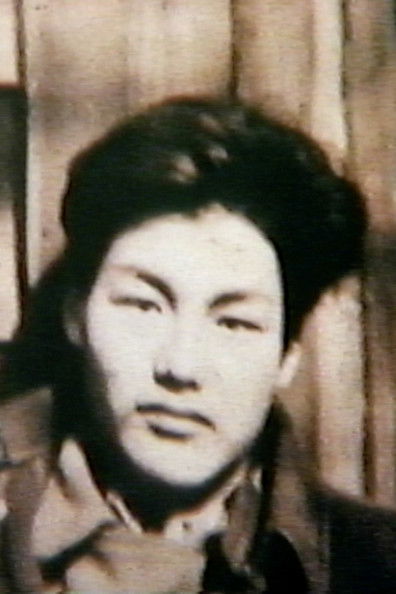
The film was born from discovering a Super 8 film shot by her deceased father during her childhood, and unfurls through a personal archive of images and reminiscences that patch together the life of this complex and reserved individual. In its quest to deconstruct the mundane, private appeal of family memories, Doi calls the film an “anti-home movie,” yet in keeping with the diaristic quality of her previous works, My father, burned paints its portrait of memory akin to a window onto a chamber or interior space, through which ambiguous emotions resonate and resound.
My Father, Burned
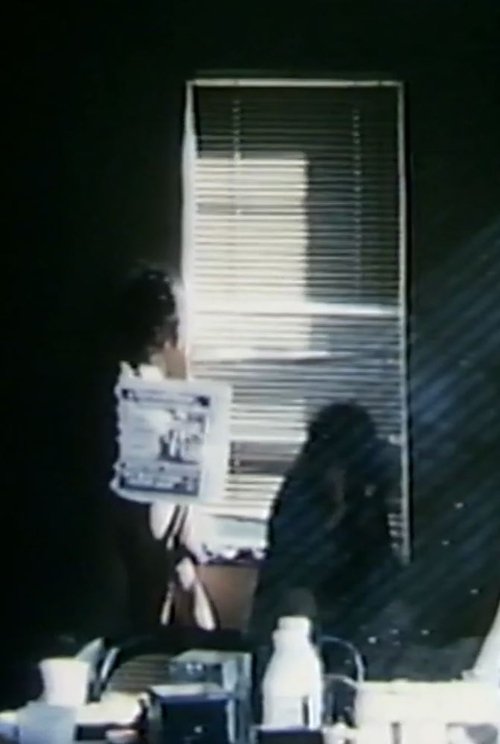
A work filmed in a room at the Washington Square Hotel in New York, created with the technique of multiple exposure. Scenes of a nude couple are overlaid with images of natural phenomena, such as blooming flowers and clouds in the sky. "The scenes of the man and woman were in filmed in the hotel room where they were staying in New York. The summer sky and clouds were shot time-lapse on the roof of a building in Nakano-ku, Tokyo, where I lived at the time. I can’t remember where the cherry blossoms were filmed, but I remember I only saw the petals on the ground rather than the flowers themselves. Three motifs taken at different locations: the activities of men and women, the hot sunshine every summer, and the cherry blossoms that bloom and fall in spring. Things that are fleeting and disappearing, but at the same time, only exist at that moment."
A Gentle Afternoon Nap
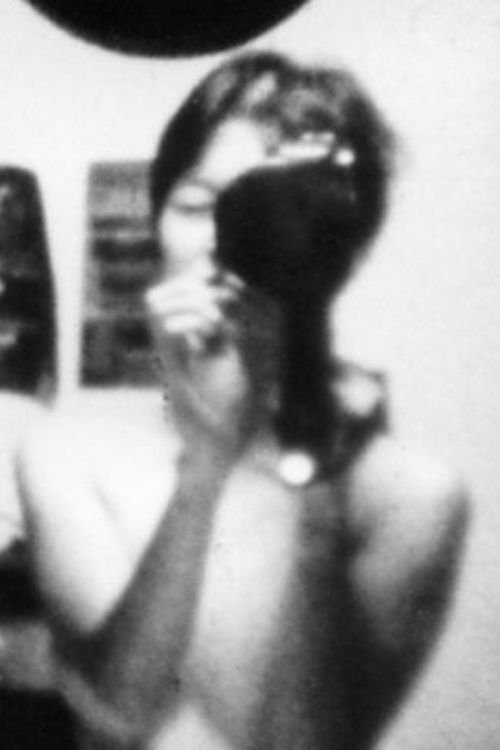
The author's inner world is revealed through her own narration, and the faceless "you inside" repeatedly crosses a crosswalk. The image leaves the screen and is projected everywhere—on the toilet, on the author's body, and on the "you of today."