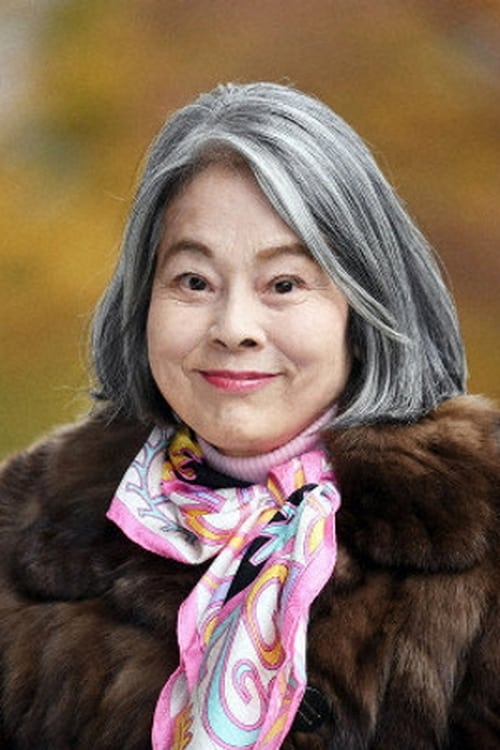
Jitsuko Yoshimura
Acting
Biography
Jitsuko Yoshimura (吉村実子 Yoshimura Jitsuko, born 18 April 1943) is a Japanese actress. She was discovered by Shohei Imamura as a newcomer and cast in the film Pigs and Battleships. She went on to appear in The Insect Woman and Onibaba. She retired from acting in 1970, but returned in 1980 and continues to work to this day.
Known For

Freelance programmer Sakagami is paralyzed in the lower half of his body and confined to a wheelchair. He sets up a company called dele.LIFE in partnership with a law firm established by his late father. At the request of clients, Sakagami works together with a freelance jack-of-all-trades Mashiba to delete all unfavorable digital records of their clients left in their computers and smartphones after they die. They are not supposed to see inside the files but when they feel something strange in the client’s death, they cannot help getting involved.
dele

While her son, Kichi, is away at war, a woman and her daughter-in-law survive by killing samurai who stray into their swamp, then selling whatever valuables they find. Both are devastated when they learn that Kichi has died, but his wife soon begins an affair with a neighbor who survived the war, Hachi. The mother disapproves and, when she can't steal Hachi for herself, tries to scare her daughter-in-law with a mysterious mask from a dead samurai.
Onibaba

Senkichi Mizuta, a pharmaceutical company employee, and Shuzo Kadokura, a war profiteer, are diametrically opposed in appearance and personality, but are best friends. Kadokura secretly loves Mizuta's wife, Tami, and both Mizuta and Tami are aware of it. The drama depicts the subtle relationship between the two men and the people around them against the backdrop of the times and customs of the early Showa period, in which both are aware of each other's love, but no one speaks of it.
A-Un

Three people from the future, who travel spiritually to the era of the Egyptian queen Cleopatra VII Philopator and her Roman lovers Julius Caesar and Mark Antony, become their closest friends as they try to unravel the nature of the plan developed in their own time by a sinister enemy.
Cleopatra: Queen of Sex

The 43th NHK Asadora about a female volleyball player who helps out the local community. Starring Azusa Watanabe.
Wakko no kin medaru

Daisuke dropped out of high school, and his motorcycle was the only thing that helped him cope with his loneliness. His parents find a new high school where he can ride his motorcycle to school, but he is forced to live in a dormitory. The students in the dormitory are all young people with bitter memories of dropping out of high school. The prefect of the dormitory is a teacher who is passionate about their physical education. The drama depicts the fierce clash between a nineteen-year-old rebellious high school student, who is torn between being an adult and a child, and the adults around him. This is Oda Yuji's first lead role in a TV drama.
Jūkyūsai

On a Tokyo dump’s shantytown edge, interwoven vignettes follow residents scraping by: a boy who “drives” an imaginary trolley, a homeless father and son designing a dream house, a young woman brutalized at home, drunks, schemers, and saints of small kindnesses. Kurosawa crafts a ragged mosaic of hardship, fantasy, and flickers of grace that keep people moving forward.
Dodes'ka-den

Struggling to elevate himself from his low caste in 17th century Japan, Miyamoto trains to become a mighty samurai warrior.
Samurai I: Musashi Miyamoto

A woman, Tome, is born to a lower class family in Japan in 1918. The title refers to an insect, repeating its mistakes, as in an infinite circle. Imamura, with this metaphor, introduces the life of Tome, who keeps trying to change her poor life.
The Insect Woman

A psychologist connects her missing brother to the strange case of a mysterious little girl believed to be Sadako reincarnated.
Sadako

A young girl named Oshin is sent to work for another family, because of her own family's financial condition. Nevertheless, the young girl lives strongly.
Oshin

Japan, February 1868. As the Tokugawa shogunate declines and the power of Emperor Meiji grows, Gonzo, a soldier of the Restoration Army, returns to Sawando, his hometown, to announce the end of tyranny.
Red Lion

In the city of Yokosuka, Kinta and his lover Haruko, both involved with yakuza, brave the post-occupation period with a goal to be together.
Pigs and Battleships

Ayako, a young woman from a rural fishing village, is sold by her family into a brothel when her father takes ill. There, she is quickly stripped of her innocence and illusions.
An Innocent Witch

A girl is kidnapped and the perpetrator roams freely. When a similar case occurs along the same road and in similar circumstances a suspect is identified leading to the accused running away and going into hiding.
The Promised Land

If You Were Young: Rage highlights the other side of post-war Japanese prosperity, focusing on the throngs of young people who missed out on the boom. We follow a group of young men that can't seem to get ahead, despite their willingness to try. Then one hits upon a plan - to work together to save for a dump truck and thus become independent contractors and be their own bosses at last. Ultimately life presents obstacles: jail for one, violence at the hands of the police for another, and a girlfriend and subsequent children for the third. An early Kinji Fukasaku gem that imports the freewheeling style of the French New Wave and the hip detachment of American noir.
If You Were Young: Rage

Years of warfare end in a Japan unified under the Tokugawa shogunate, and samurai spy Sasuke Sarutobi, tired of conflict, longs for peace. When a high-ranking spy named Tatewaki Koriyama defects from the shogun to a rival clan, however, the world of swordsmen is thrown into turmoil. After Sasuke is unwittingly drawn into the conflict, he tracks Tatewaki, while a mysterious, white-hooded figure seems to hunt them both. By tale’s end, no one is who they seemed to be, and the truth is far more personal than anyone suspected. Director Masahiro Shinoda’s Samurai Spy, filled with clan intrigue, ninja spies, and multiple double crosses, marks a bold stylistic departure from swordplay film convention.
Samurai Spy

Death-row inmate Sudo sends a letter to magazine reporter Fujii. In his letter, he states that a man named Kimura, also known as "teacher," committed numerous murders for insurance money. While checking out the story, based on Sudo's tip, Fuji becomes convinced that the letter is correct. But, a lot of time has passed from the incidents and Sudo's testimony isn't clear. Due to the persistance of Sudo, who is a former yakuza, and Fuji, the police begin to move.
The Devil's Path

After an American Navy base is annihilated by a secret weapon, Agent OSS 117 is sent to Japan to investigate the organization that's claiming responsibility, and threatening the US with another attack, if they don't pay.
O.S.S. 117: Mission to Tokyo

Toramatsu is a very enthusiastic policeman. Believing that the police should help others he is dismissed the force when his pistol is stolen while doing one of his good deeds. He saves a child from drowning, restores it to his mother, then finds that someone has run off with his gun and later uses it to kill. Then he breaks up a group of hoodlums attacking a young girl named Mieko, and the police, his former friends, deciding he has gone too far, decide to sue him. On top of this the girl gets hurt and, consequently, a child from the kindergarten where Mieko teaches is kidnapped on his way home. Impersonating a policeman he tracks down the gangsters and rescues the boy. Due to this he also uncovers a scandal which allows the police to make a long due clean up in the political world. As a reward for all of this he wins the regard of the girl but now faces a stiff prison sentence for impersonating the policeman he had been and which, at heart, he truly remains.