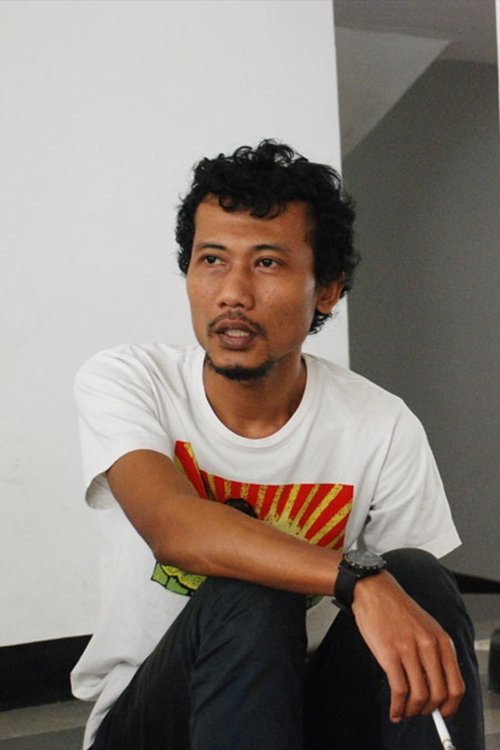
Mahardhika Yudha
Directing
Biography
Video artist, filmmaker, curator, archivist.
Known For

In 1965, Indonesian artist Amrus Natalsya was one of the many artists arrested during the violent purge of communists and their sympathisers, after the failed coup by the September 30th Movement. Natalsya was released in 1973.
Amrus Natalsya Who Recreates the Dispossessed in Twilight

This video is part of Massroom Project (2003) is a documentary video project on Jakarta. The videos consist of nine works that tells nine stories about living experiences in Jakarta. Those experiences pass on various aspects of the city such as: mass transportation, public space, marginalize traditional vendors, voice pollution in the city and survival in Jakarta. These nine works of the Massroom Project has been screened in various film festival and exhibiton in Indonesia and international. Some of the works achieve the nomination for best short filmwork at Oberhausen International Film Festival, Germany. Amongst the important festivals which screened the Massroom Project works is Indonesia Under Construction, The Netherlands; Seminar and Conference Responsibilities of Criticism 2008, USA; Insomnia 2005 - Institute of Contemporary Arts, England.
5 Seconds 10 Minutes 24 Hours

The semi-autobiographical account of a European plantation manager on Sumatra during Dutch colonial rule becomes a starting point for reflections on the structure of the plantation itself. An essay about local tobacco and rubber cultivation, the construction of skin colour as a social category and the "tropic fever” which rises slowly but inexorably, edited from archive material dating from 1890 to 1930.
Tropic Fever

Om Pius is a native Papuan from the Keerom mountains who has been living and residing with communities of various ethnicities in the coastal area of Sentani, Jayapura, since the post-Act of Free Choice in the 70s. For more than 30 years, he has been a ‘mountain man’ living with a coastal culture. The history of population displacement, violence in Papua, natural wealth, longing for the homeland, romantic past, war, hopes, and dreams, are the life stories of Om Pius which he manifests through the lottery.
Uncle Pius, ”This is my home, come the sleeping…”
This video is part of Massroom Project (2003) is a documentary video project on Jakarta. The videos consist of nine works that tells nine stories about living experiences in Jakarta. Those experiences pass on various aspects of the city such as: mass transportation, public space, marginalize traditional vendors, voice pollution in the city and survival in Jakarta. These nine works of the Massroom Project has been screened in various film festival and exhibiton in Indonesia and international. Some of the works achieve the nomination for best short filmwork at Oberhausen International Film Festival, Germany. Amongst the important festivals which screened the Massroom Project works is 15th Festival Internacional de Curtas Metragens de Sao Paulo 2004, Brasil; Tales of Two Cities: Jakarta/Canberra 2005, Australia; Seminar and Conference Responsibilities of Criticism 2008, USA.
Jakarta 24
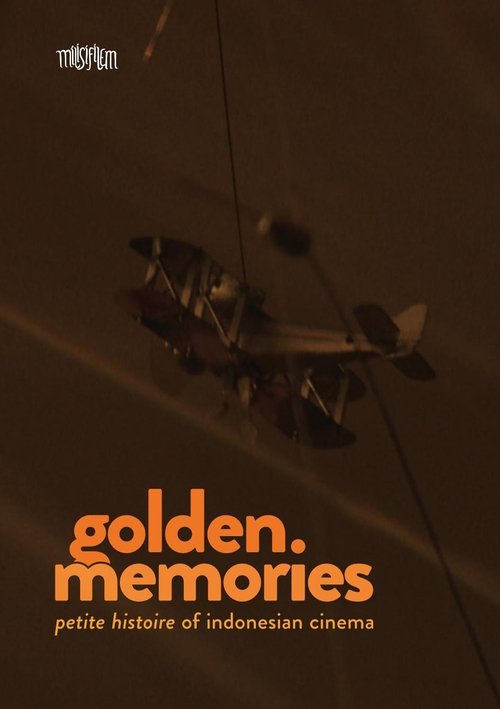
Going through a journey of three filmmakers trail tracing Indonesia’s family cinema. From Indonesia to the Netherlands and back, they met Kwee Zwan Liang Cinema and Rusdy Attamimi Cinema, to a whole other level of the journey that brought them to not only culture issues in the public cinema but also on aesthetics and the truth of family cinema from a generation to the ones to come.
Golden Memories (Petite Histoire of Indonesian Cinema)
Ronin is vegetable seller who already did his work for 20 years. every morning he meet the neighborhood and give them live just for talking and gossiping. Ronin is a witness who hear and see the "changes" and "occurances" in small communities in Jakarta. Ronin is someone who always waited by the household mothers and keepers in the neighborhood. Ronin is a place to express their annoyance. Ronin is what left in the presence of malls and supermarkets in Jakarta.
Ronin
1926 marked the Dutch and American colonial expedition to Dutch New Guinea, later documented in Matthew W. Stirling's film By Aeroplane to Pygmyland (1927). Mahardika Yudhas latest film Let's Talk About the Film Wonderen uit Pygmy-Land documents the exhibition, discussions, and informal conversations he staged in Jayapura in August 2025 to revisit the infamous expedition and its lingering repercussions in Papua, Indonesia. In this research sketch, he maps the aesthetics of colonial film and how they continue to infiltrate Indonesian cinema and interpretations of history more than a century later. Yudha reflects on how these decidedly one-sided colonial archives can be used to recuperate lost traces of Papuan heritage and form a new basis for Papuan cinema today.
Let's Talk About the Film Wonderen uit Pygmy-Land
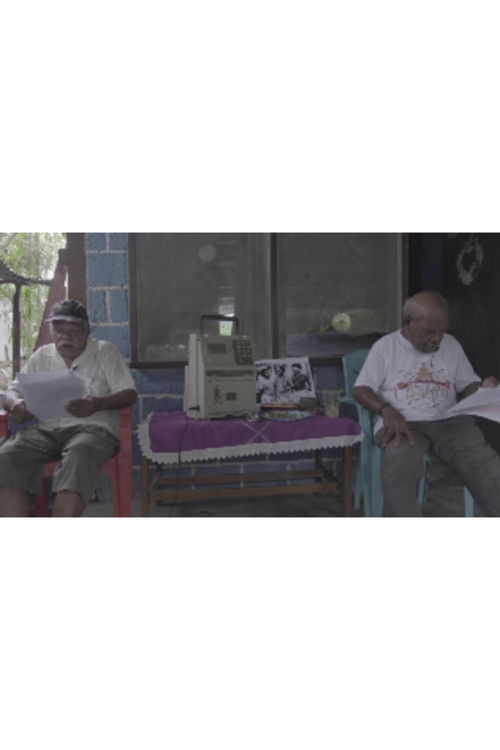
The Mambesak Group was active in Jayapura from 1978 to 1984. After the murder of Arnold Ap in 1984, the group, whose members were dominated by students from various regions in Papua, disbanded. Gradually, the ideas of Mambesak began to fade. With a cinema varite narrative style, this film tries to articulate the traces of the ideas of Arnold Ap and the Mambesak Group as mediators between their generation and the traces of their ancestors and Papuan culture.