FEEL IT.STREAM
Medhi Lallaoui

Medhi Lallaoui

Directing

Biography

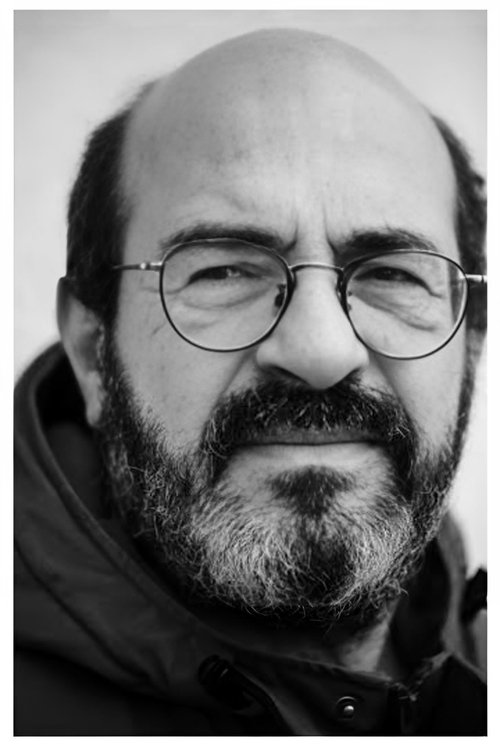
Mehdi Lallaoui (arabic : مهدي لعلاوي), born in 1956 in Argenteuil, is a Franco-Algerian writer and director whose productions have the themes of working-class memories (particularly that of Algerian immigration), urban memories and colonial memory. His father, a specialized worker (OS), participated in the peaceful demonstration of October 17, 1961 during which he was beaten and left for dead by the French police. This fact, of which he was only informed at the end of the 1970s, would structure his militant commitment thereafter. In 1983, he was one of the organizers of the first march for equality. After having passed through various union organizations (CGT, CFDT) and political organizations (PCF, PSU, LCR) of the left and extreme left, he decided to launch himself outside the traditional parties in the mid-1980s. He was notably an independent candidate in the regional elections of 1986 and the legislative elections of 19885. In 1989, he led the Black Blanc Beur associative movement in the Paris region. In 1990, he co-founded, with Samia Messaoudi and Benjamin Stora, the association In the Name of Memory. In 2010, he was a juror for the Porte Dorée Literary Prize. In May 2015, he was interviewed for the France Culture program Du grain à moudre entitled “France/Algeria: what to commemorate together? »
Known For

In the Footsteps of Frantz Fanon
10.0

Who was Frantz Fanon, the author of Wretched of the Earth and Black Skin, White Masks, this Pan-African thinker and psychiatrist engaged in anti-colonialist struggles? Born in Martinique, Frantz Fanon was not yet 20 years old when he landed, weapons in hand, on the beaches of Provence in August 1944 with thousands of soldiers from "Free France", most of whom had come from Africa, to free the country from Nazi occupation. He became a psychiatrist and ten years later joined the Algerians in their fight for independence. Died at the age of 36, he left behind a major work on the relationships of domination between the colonized and the colonizers, on the roots of racism and the emergence of a thought of a Third World in search of freedom. 60 years after his death, the film follows in the footsteps of Frantz Fanon, alongside those who knew him, to rediscover this exceptional man.

In the Footsteps of Frantz Fanon

2021Movie
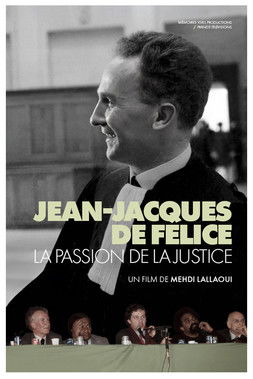
Jean-Jacques de Félice, The Passion For Justice
10.0

From the rights of minors before the juvenile court, young offenders from the neighborhoods of eastern Paris, or children of Algerian origin from the shantytowns of Nanterre, to the defense of colonized Kanaks and Polynesians; from the fight for conscientious objector status to the denunciation of torture and the death penalty, lawyer Jean-Jacques de Félice has been involved in every struggle. His pacifism knows no bounds: with organizations like Cimade, LDH, and the Louis-Lecoin Committee, he assists draft dodgers in numerous countries. These include Portuguese conscientious objectors refusing to fight in the wars in Angola and Mozambique, American deserters opposed to the Vietnam War, and Israeli objectors refusing to serve in the Occupied Territories. It is no surprise that, as early as 1971, he was one of the very first lawyers representing the farmers of the Larzac plateau.

Jean-Jacques de Félice, The Passion For Justice

2018Movie