Lu Wangping
Camera
Known For
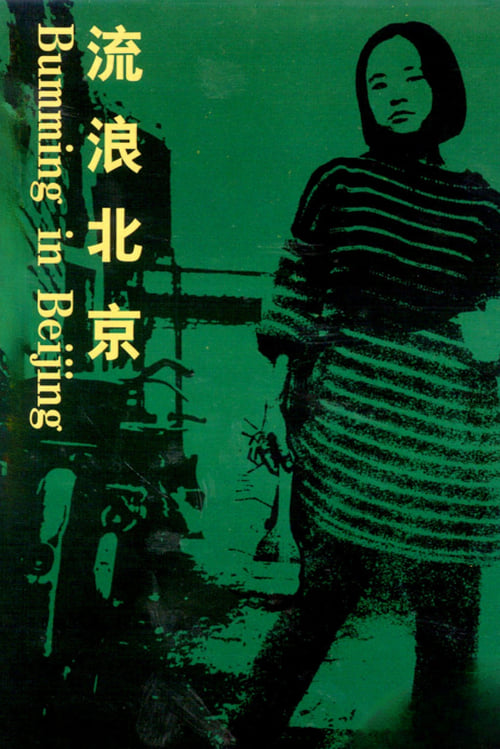
A documentary following five young artists from around China, who travelled to Beijing in the 1980s to work as freelancers, exploring their lives, careers, and what aspirations they may have for the future.
Bumming in Beijing: The Last Dreamers
Originally produced in 1988 and 1989, but blocked from being released after June 4th. A large-scale Chinese documentary series that spanned 100s of interviews in nearly 20 provinces, cities, and autonomous regions. It was completed in early 1989, and each of its parts run roughly 50 minutes. The titles of each part: Family, Fertility, Farmers, Youth, Minority, Women, Artists, Kung Fu, and Mission. The series, according to production notes written by screenwriter Zhu Xiaoyang, "reflects the life and fate of contemporary Chinese people, their behaviors, concepts, and customs; explores the influence of traditional culture and foreign cultures on modern Chinese people; and describes the joy and hard work, hardship, and perseverance, as well as exploration and yearning, of the Chinese people." Youth, Kung Fu, Artists, and Minority are the only surviving parts of this series.
The Chinese
Finalist for the 1991 Yamagata International Documentary Film Festival. The pottery produced in Penyao Village, Henan Province, is black, which is the same texture of the exquisite pottery of Longshan culture in China in 2000 BC. In the village, these black pottery basins and black pottery jars are indispensable to life. Wang Zhengcheng began to learn how to make pottery at the age of 13. He has always wanted to become an excellent craftsman like his grandfather in order to restore the glory of his family.
Penyao Village

Zho ston ཞོ་སྟོན་, pronounced ‘shodun,’ is a festival celebrated from the end of the sixth and during the seventh month of the Tibetan calendar (August). Monks of the Gelug School དགེ་ལུགས་པ་, the most famous of which is the Dalai Lama in Lhasa, were restricted to their monasteries during the previous month, supposedly to spare the lives of insects at the height of summer and, when the interdiction on movement was lifted, they would be greeted by lay people with gifts of yoghurt (zho ston means ‘yoghurt feast’). The festivities also feature the ‘sunning of Buddha’ tapestries, theatrical performances (a lce lha mo) and picnics at various public parks, including Norbu Linka, formerly the summer residence of the Dalai Lamas.
Zhoston and Tibet

Independent documentary film by Chinese director and cinematographer Lu Wangping.
The Story of Wang Laobai

The first short documentary Jiang Yue made for the Oriental Time • Living Space program, about old men swimming in Houhai, Beijing.
Three Old Men from the East
Documentary about a religious area in Yunnan and the delicate relationship between the local Party branch and the Christian church.