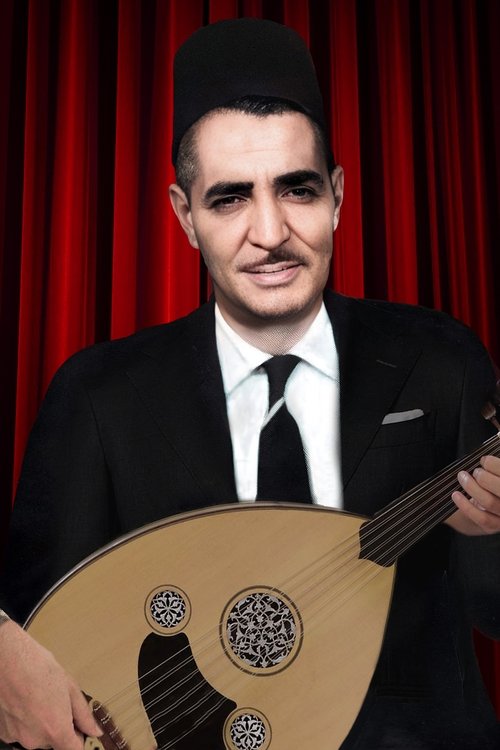
El Hadj M'hamed El Anka
Sound
Biography
El Hadj M'hamed El Anka in Arabic (الحاج محمد العنقة), real name Mohamed Idir Aït Ouarab (in Kabyle: Muḥend Yidir At Waɛrab, in Tifinagh: ⵎⵓⵃⴰⵏⴷ ⵢⵉⴷⵉⵔ ⴰⵜ ⵓⴰⵔⴰⴱ), born in the Casbah of Algiers on the 20 May 1907 in a family from Azeffoun in Greater Kabylia, is a precursor and master of Algerian chaâbi song, died on November 23, 1978. He is the father of Mustapha El Anka, Sid Ali Halo and Abdel Hadi Halo. Hadj El Anka, grew up in a house at 4 rue de Timbouctou, in Casbah of Algiers. Hadj El Anka, also nicknamed “the phoenix”, grew up in a modest family. His father, Mohamed Ben Hadj Saîd, suffering on the day of his birth, had to be replaced by a maternal relative for the declaration to the civil registry, thus a misunderstanding arose regarding the patronymic name of El Anka. He attended three schools successively from 1912 to 1918: a Koranic school at Chikh si Mohand Arezki in Bir Djebbah (1912-1914), the school of Brahim Fatah (Casbah) from 1914 to 1917, and finally the normal school of Bouzareah until 'in 1919. On the recommendation of Si Saïd Larbi, a renowned musician, playing in Mustapha Nador's orchestra in Algiers, young M'hamed obtained the privilege of attending the festivals hosted by this master whom he revered. During the month of Ramadan in 1917, the sheikh noticed the young M'hamed and his sense of rhythm, allowing him to hold the tar (drum) within his orchestra. Later, Kéhioudji (Ayad Mohamed), a half-brother of Hadj M'rizek, welcomed him as a full-time musician in the orchestra which hosted the henna ceremonies generally reserved for beginner artists. After the death of Sheikh El Nadhor (real name Saidji) in 1925 in Cherchell, his wife's hometown where he had just settled, Hadj El Anka participated in singing lessons given by Sheikh Reghai Abderrahmane ( Abderrahmane Saidi), teaching which he followed assiduously from 1927 to 1932. At the beginning of the 1930s, El Anka saw its popularity favored by the modern means of the phonograph and the radio. It was at this time that he introduced several instruments into the Medh orchestras: the banjo, the Derbouka, the piano... and above all he asked the luthier Jean Bellido to redesign his half-mandolin by lengthening the handle while enlarging the soundboard, leading to the typically Algerian mandola that we know today. In 1932, the Sultan of Morocco, Mohammed V, invited him on the occasion of the Feast of the Throne. Upon his return from Mecca in 1937, he resumed his tours in Algeria and France and renewed his training, with Mustapha Skandrani as his conductor. El Hadj El Lanka has performed nearly 360 poems (qassaid) and produced around 130 records. After more than fifty years of career, El Anka will host the last two evenings of his career until dawn, in 1976, in Cherchell, for the wedding of the grandson of his master Sheikh Mustapha Nador and, in 1977, in El-Biar, with families who were very attached to him. He died on November 23, 1978, in Algiers, and is buried in the El-Kettar cemetery in Algiers.
Known For
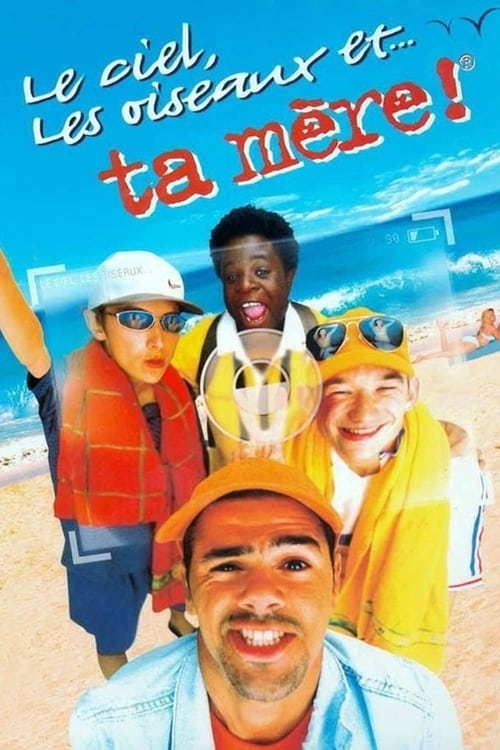
Four guys from a Paris housing project fabricate a documentary about drug dealers working in the City of Lights. When a television network falls hook, line, and sinker for the prank video, the foursome are given a free three-week vacation in the upscale resort community of Biarritz. As they interact with both locals and fellow tourists, they learn about love, friendship, racism, and the differences between the rich and the poor.
Le Ciel, les Oiseaux et... ta mère !
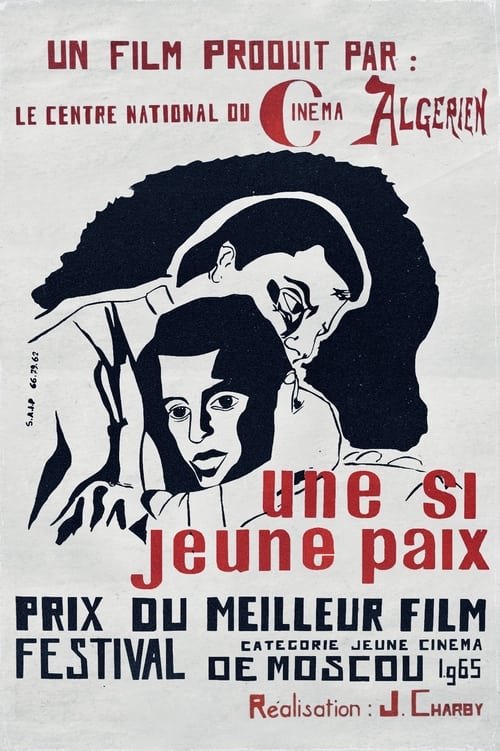
The first fictional feature film produced in Algeria after independence, this film addresses one of the most worrying problems: that of childhood. Children, freedom regained, do not yet know how to play “at peace”, they naturally play “at war”.
So Young a Peace
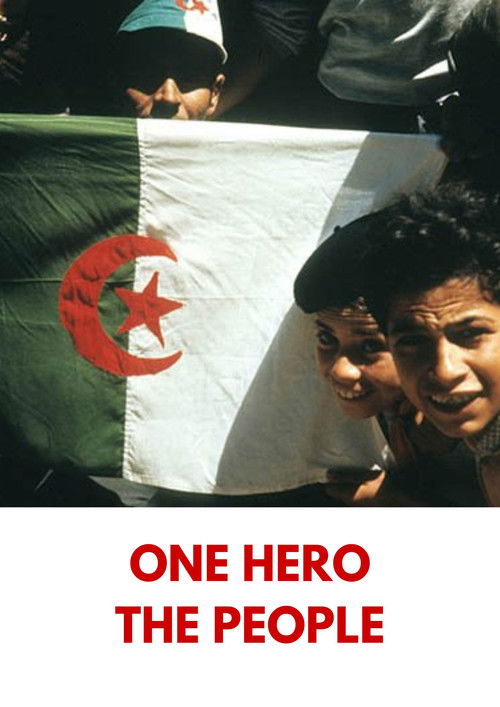
Adam Bensoltane takes us through the birth of Algerian cinema, in his native country, across the ages, exploring its evolution and its impact on the nation, politics, and the world.
One Hero, The People
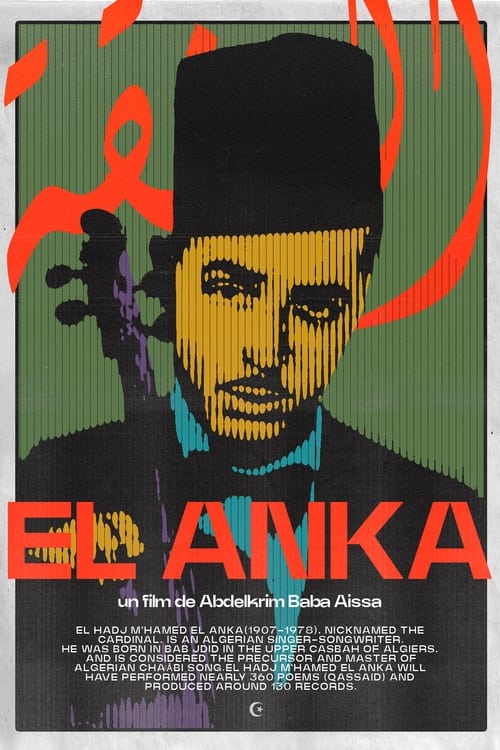
1/4 - In 1925, the young M’hamed El Anka replaced his master Nador at short notice. He realizes that he is far from mastering all the instruments of his art and begins a self-taught training program in Oud, the Arabic language, and religious singing in the hadra of Sidi Abderrahmane. 2/4 - In 1932, the young El Anka released 10 45 rpm records in Paris, including the first song from his composition "L'Exil". He is gradually “lightening” the Andalusian heritage. He made the pilgrimage to Mecca and wrote the famous song "El Mendouza". 3/4 - The 40s and 50s will confirm the maturity of the master, who consolidates the constituent elements of what is today called Chaâbi music. In the midst of the national liberation struggle, El Hadj M'hamed El Anka triumphs with the song "Youm El Djemâa". 4/4 - In 1962, El Anka sang of independence: "El hamdou lilah, mabqach listaâmar fi bledna". Activist, poet and musicologist Bachir Hadj Ali explains the artist’s exceptional style.
El Anka

This musical comedy produced in 1953 for the General Government of Algeria, features the comic trio composed of Rouiched, Mohamed Touri and Sid Ali Fernandel, accompanied by the orchestra of the master of the Algiers Chaâbi El Hadj M'hamed El Anka, the singer Fadhéla Dziria, Mustapha Skandrani on the piano. Some scenes were filmed at the Summer Palace (the current Palace of the Algerian Presidency, called the People's Palace). André Zwobada, the director, will play an important role after the independence of Algeria in 1962, in the production and preservation of the first Algerian newsreels.
The Unexpected Party
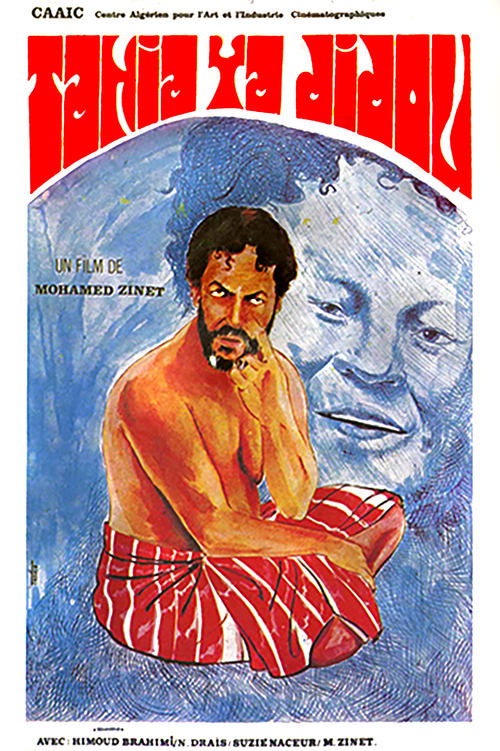
Originally commissioned by the city of Algiers to promote tourism, Mohamed Zinet’s Tahia ya Didou blends documentary with fiction to create a poetic, acerbic and rapturous portrait of the director’s native city. The camera travels freely, through the port, market, streets and cafés, capturing everyday people, some of whom recur frequently enough to seem like protagonists. The nominal plotline follows a French tourist couple’s leisurely visit to the city, the man having previously served in the army during the Algerian war. As they walk around, his comments betray his mindset’s racist colonial prejudices, while his wife reiterates asinine clichés. Their unhurried wandering is interrupted when he comes across a blind man and realises that he tortured him during his army service. The film is punctuated with punchy sequences that show a poet named Momo delivering verse as an elegy for Algiers.