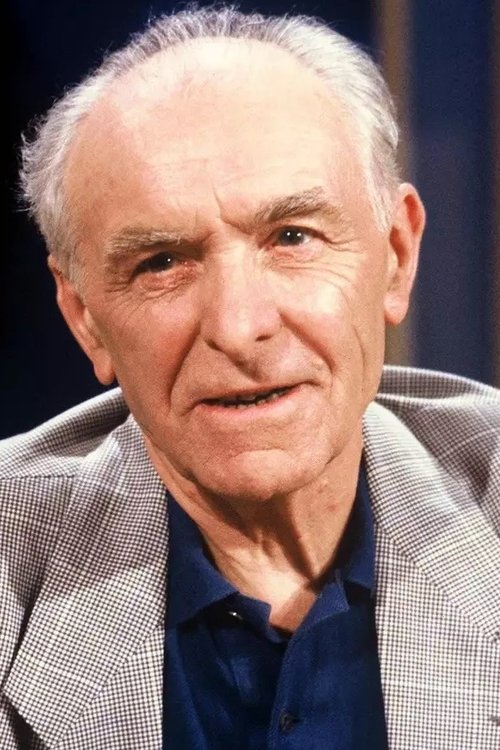
Robert Doisneau
Acting
Biography
Robert Doisneau (14 April 1912 – 1 April 1994) was a French photographer. From the 1930s, he photographed the streets of Paris. He was a champion of humanist photography and with Henri Cartier-Bresson a pioneer of photojournalism. Doisneau is known for his 1950 image Le baiser de l'hôtel de ville (The Kiss by the City Hall), a photograph of a couple kissing on a busy Parisian street. He was appointed a Chevalier (Knight) of the Legion of Honour in 1984 by then French president, François Mitterrand. Doisneau is remembered for his modest, playful, and ironic images of amusing juxtapositions, mingling social classes, and eccentrics in contemporary Paris streets and cafes. Influenced by the work of André Kertész, Eugène Atget, and Henri Cartier-Bresson, in more than twenty books of photography, he presented a charming vision of human frailty and life as a series of quiet, incongruous moments. "The marvels of daily life are so exciting; no movie director can arrange the unexpected that you find in the street." — Robert Doisneau Doisneau's work gives unusual prominence and dignity to children's street culture; returning again and again to the theme of children at play in the city, unfettered by parents. His work treats their play with seriousness and respect. Doisneau's father, a plumber, died on active service in World War I, when his son was about four. His mother died when he was seven. He then was raised by an aunt. At thirteen, he enrolled at the École Estienne, a craft school from which he graduated in 1929 with diplomas in engraving and lithography. There he had his first contact with the arts, taking classes in figure drawing and still life. When he was 16, he took up amateur photography, but was reportedly so shy that he started by photographing cobble-stones before progressing to children and then adults. At the end of the 1920s, Doisneau found work as a draughtsman (lettering artist) in the advertising industry at Atelier Ullmann (Ullmann Studio), a creative graphics studio that specialised in the pharmaceutical industry. Here he took an opportunity to change career by also acting as camera assistant in the studio and then becoming a staff photographer. In 1931, he left both the studio and advertising, taking a job as an assistant with the modernist photographer André Vigneau. In 1932, he sold his first photographic story to Excelsior magazine. In 1934, he began working as an industrial advertising photographer for the Renault car factory at Boulogne-Billancourt. Working at Renault increased Doisneau's interest in working with photography and people. Five years later, in 1939, he was dismissed because he was constantly late. He was forced to try freelance advertising, engraving, and postcard photography to earn his living. At that time, the French postcard industry was the largest in Europe, postcards served as greetings cards as well as vacation souvenirs. In 1991, he said that the years at the Renault car factory marked "the beginning of his career as a photographer and the end of his youth." In 1939, he was later hired by Charles Rado of the Rapho photographic agency and traveled throughout France in search of picture stories. This is where he took his first professional street photographs. ... Source: Article "Robert Doisneau" from Wikipedia in English, licensed under CC-BY-SA 3.0.
Known For
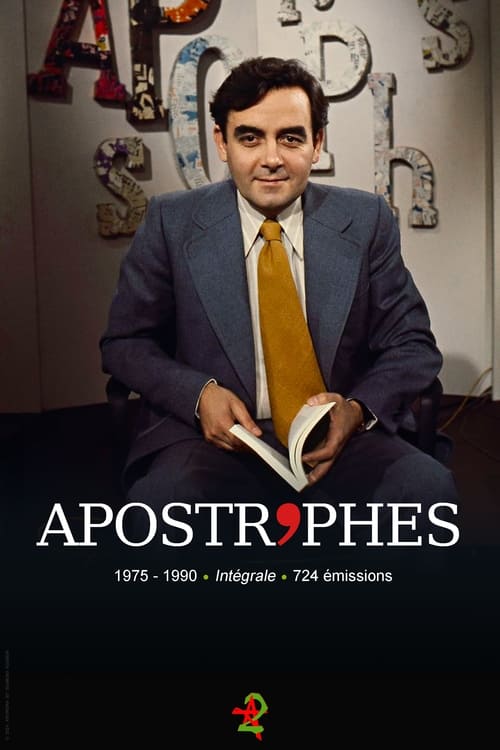
Apostrophes was a live, weekly, literary, prime-time, talk show on French television created and hosted by Bernard Pivot. It ran for fifteen years (724 episodes) from January 10, 1975, to June 22, 1990, and was one of the most watched shows on French television (around 6 million regular viewers). It was broadcast on Friday nights on the channel France 2 (which was called "Antenne 2" from 1975 to 1992). The hourlong show was devoted to books, authors and literature. The format varied between one-on-one interviews with a single author and open discussions between four or five authors.
Apostrophes
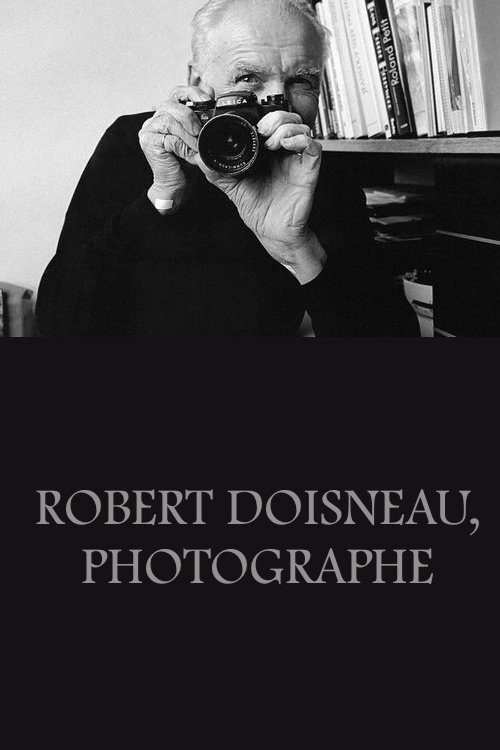
A portrait of the famous photographer, shot for his 1987 exhibition at the musée d’art et d’histoire de Saint-Denis.
Robert Doisneau, photographe
Documentary on one of 20th century greatest photographers, the French Robert Doisneau.
Bonjour Monsieur Doisneau ou Le photographe arrosé
This documentary explores the work of Robert Doisneau, and the subjects his photographs have addressed, from the workers of the Renault factories in Billancourt to Parisian lovers, from the crowds of the Liberation to the children of Gentilly, from the unknown to the famous. The voice of the photographer, speaking of his choices and memories, and a montage of sound archives seem to comment on the photographs, which several film archives put into context. A sober and fascinating presentation of the work of a great artist.