Writing
The Bambi, often called the Bambi Award and stylised as BAMBI, is a German award presented annually by Hubert Burda Media to recognize excellence in international media and television to personalities in the media, arts, culture, sports, and other fields "with vision and creativity who affected and inspired the German public that year", both domestic and foreign. First held in 1948, it is the oldest media award in Germany. The trophy is named after Felix Salten's book Bambi, A Life in the Woods and its statuettes are in the shape of the novel's titular fawn character. They were originally made of porcelain until 1958, when the organizers switched to using gold, with the casting done by the art casting workshop of Ernst Strassacker in Süßen.
No description available.
When Andreas arrives in the remote valley in the Austrian Alps, he is only about four years old - nobody knows for sure. He grows up to become a skilled farmhand and, as a young man, joins a work crew that builds one of the first mountain railroads, bringing light and noise to the valley along with electricity. He also finds the love of his life in Marie, but their happiness is short-lived. Only many years later, when Andreas embarks on his final journey, she is with him once again. And in amazement Andreas looks back at all the years that lie behind him.
Eleven-year-old Philipp, known as Lippel, travels from Passau in Bavaria to the Orient without a flying carpet: because his father, the posh chef Otto Mattenheim, is on a business trip, the new housekeeper Mrs. Jakob looks after Lippel. But she turns out to be a petty childish terror. And so Lippel escapes into an oriental dream world at night, in which his father, Mrs. Jakob and two classmates strangely appear. Lippel experiences the most amazing adventures in the Orient. His dreams help him and his classmates to chase the evil Mrs. Jakob out of the house and rescue his new friend, the street dog Muck.
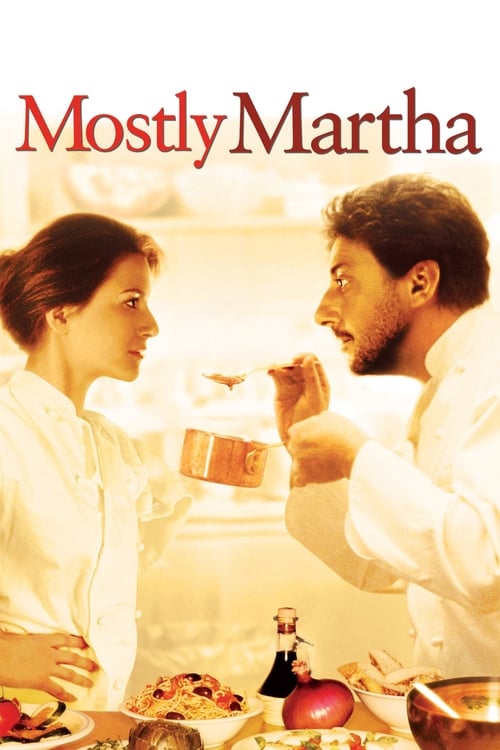
Martha is a single woman who lives for one passion: cooking. The head chef at a chic restaurant, Martha has no time for anything - or anyone - else. But Martha's solitary life is shaken when a fateful accident brings her sister's eight-year-old daughter, Lina, to her doorstep.
When a salon refuses to hire her because of her plump figure, irrepressible hair stylist Kathi plots revenge by opening her own beauty parlor next door. But when she faces a cash-flow problem, Kathi resorts to some creative means of raising capital.
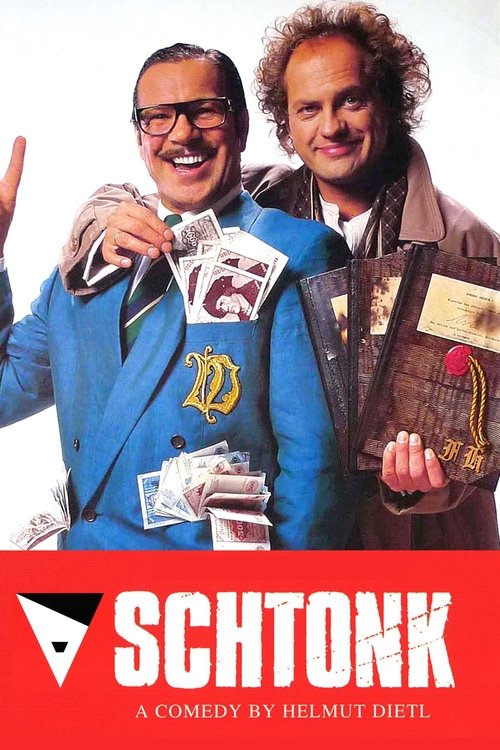
Schtonk! is a farce of the actual events of 1983, when Germany's Stern magazine published, with great fanfare, 60 volumes of the alleged diaries of Adolf Hitler – which two weeks later turned out to be entirely fake. Fritz Knobel (based on real-life forger Konrad Kujau) supports himself by faking and selling Nazi memorabilia. When Knobel writes and sells a volume of Hitler's (nonexistent) diaries, he thinks it's just another job. When sleazy journalist Hermann Willié learns of the diaries, however, he quickly realizes their potential value... and Knobel is quickly in over his head. As the pressure builds and Knobel is forced to deliver more and more volumes of the fake diaries, he finds himself acting increasingly like the man whose life he is rewriting. The film is a romping and hilarious satire, poking fun not only at the events and characters involved in the hoax (who are only thinly disguised in the film), but at the discomfort Germany has with its difficult past.
Teenage best friends Mila, Hanna and Kati play matchmaker to their teachers while helping each other through their own budding romances.
A night in the cold trade of prostitution. Blue goes out on the streets. His "working day" begins at eleven o'clock at night and ends at dawn. Then, when he has converted the money he has quickly earned back into drugs, escaped the cheated dealer and answered his pimp's questions, when he has been left alone once again with the futile hope that "someone will get him out".
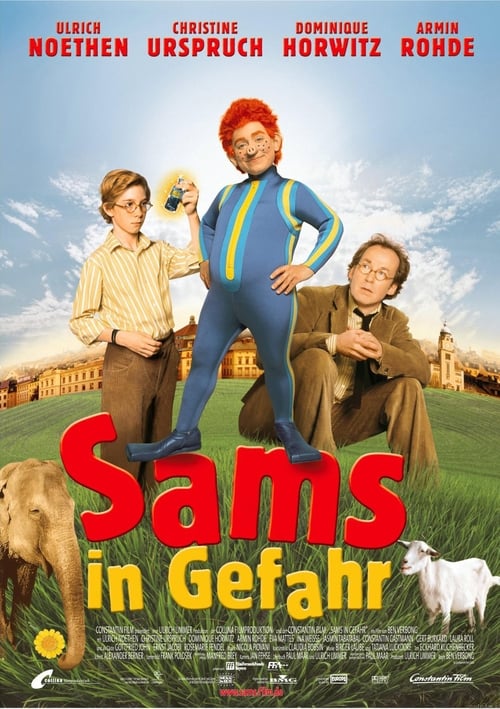
Sams in danger, it is said, when Mr. Taschenbier's son Martin brings the Sams back into the household, which, however, is kidnapped shortly afterwards by the sports teacher because of his special skills.
Somewhere in the Bavarian province the robber Hotzenplotz is up to mischief. One day he robs Kasperl's grandmother's coffee grinder. Since the goofy sergeant Dimpfelmoser sees little hope of finding the robber, Kasperl and his best friend Seppel decide to track down the robber themselves. With a ruse, they manage to find the robber's cave, but are then caught by Hotzenplotz, who sells Kasperl to the magician Zwackelmann.
Kreuzeder was once a successful commissioner, but now he rarely solves a case. After more than 20 years in the service, he just wants to retire as quickly as possible and leave everyday life in the homicide squad in Lower Bavaria behind. Kreuzeder is of the opinion that humanity is coming to an end anyway, so he prefers to get drunk in the tavern and flirt with the waitress Gerda Bichler there instead of going about his work.
One Saturday, the Slurb, a strange little creature with a proboscis nose, enters Mr. Taschenbier's life. Slurb, who immediately adopts the shy Mr. Taschenbier as his "daddy," is, however, his sheer opposite: he is cheeky and chaotic and throws his well-ordered life into sheer chaos. But when Taschenbier discovers that he can fulfill all his wishes with the help of Slurb's blue freckles, his life suddenly changes. He appeases his bad-tempered landlady, Mrs. Rotkohl, and he can finally get one over on his nasty neighbor, Mr. Lürcher. Everything could be so nice if Mr. Taschenbier didn't fall in love with his pretty colleague Mrs. März and if the Slurb didn't almost burst with jealousy...
A Yenish boy is placed in a mental hospital and experiences the Nazi euthanasia program. Aware of what was happening and attached to friends, the lad attempts to sabotage the program. The film addresses the complexities of the program director, the lives of the child victims, and the struggles of the child protagonist. More than five thousand children died in the Nazi euthanasia program.
Katrin and Jürgen spend their holidays in Corsica. Katrin is in her mid-thirties, working as a tracer at Jürgen’s company who suddenly remembers he’s married – but not with Kathrin. So they decide to end their vacation earlier than they had planned. Virtually a second before they start to drive back to the airport, Katrin takes her belongings out of Jürgen’s car again and lets him go. Now being alone for the remaining days of her vacation, Katrin finds herself more and more bewildered by the things that happened to her.
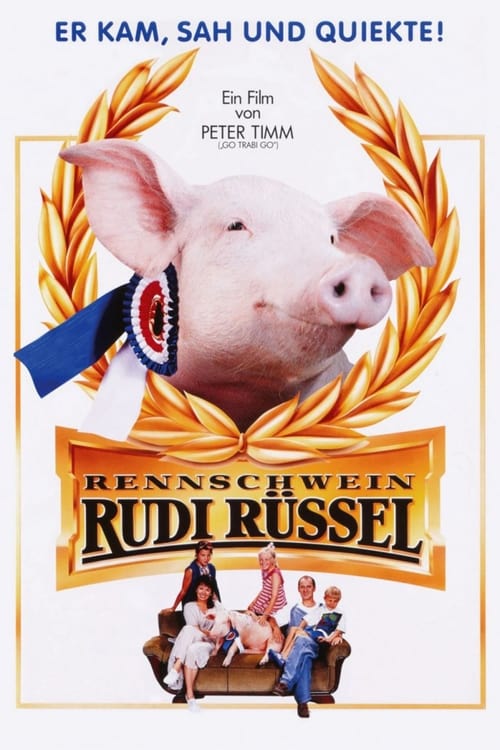
Flat-dwelling urban family win a pig in a raffle, and decide to keep it. They lose their flat (no pets allowed) but eventually Rudi the pig makes good.
Sometimes everything could be so much simpler. A man and a woman meet for the first time in a strange apartment. The power is out, it's pitch black...