Acting
No description available.
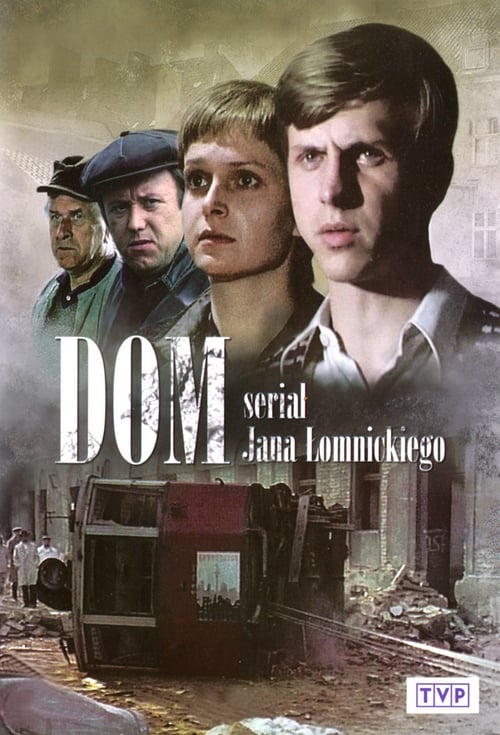
The story of the residents of a tenement house on Złota Street in Warsaw from 1945 to 1980.
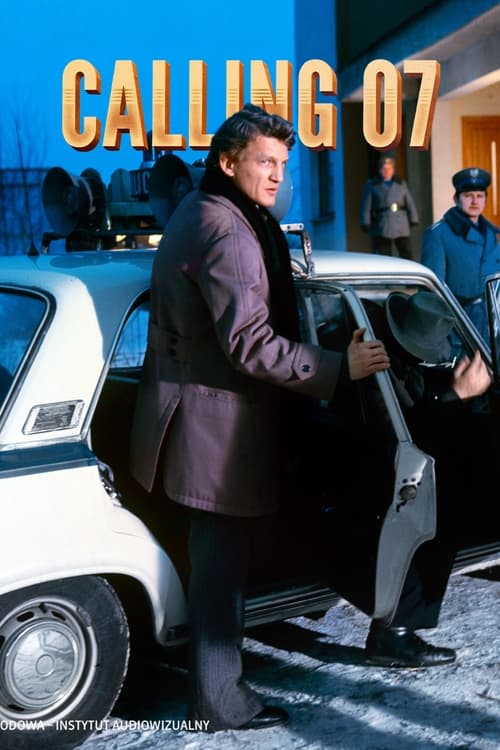
The series centres around the investigations of Police Lieutenant Sławomir Borewicz. Each episode features a different case being solved by Borewicz.
Janna is a German-Polish collaboration television series.
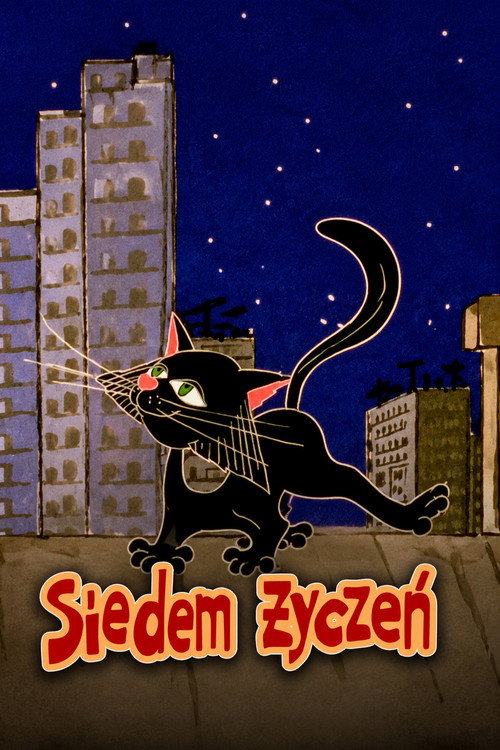
A young boy rescues a black cat, Rademenes, who can talk and who in turn gives the boy seven wishes. But it turns out that with each wish there come a lot of problems.
An odd couple of old people lead their simple lives close to nature. The man is an amateur constructor and his goal now is to build a small river dam to produce electricity for his country house.
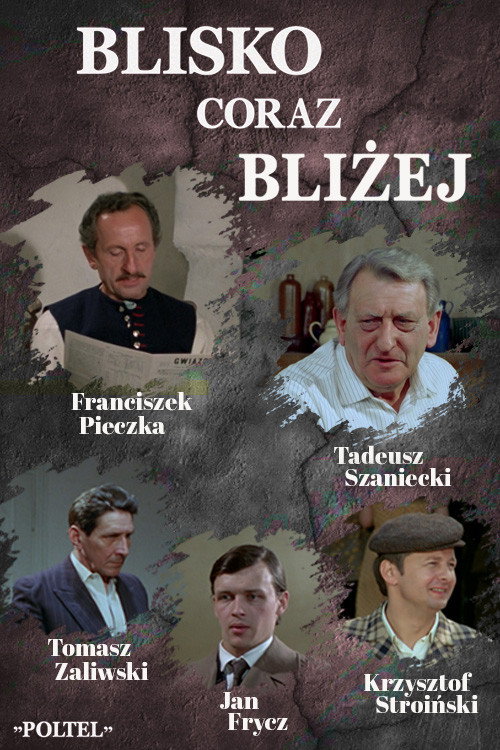
The story stretches from 1863 to 1945. Its main characters are representatives of the Pasternik family, who live in the fictional village of Wielowice near Pszczyna. The protagonist of the first three episodes is Franciszek Pasternik, the following parts tell about the fate of his many children and even more grandchildren. The viewer follows their history against the backdrop of great changes and historical events that influenced the lives of Silesian Poles. So there is the Kulturkampf, Prussian rugi, the revolution of 1905, World War I and the Silesian Uprisings.
Ryszard Ochódzki receives a special assignment for UB - infiltrating the "Solidarity" party branch in Suwałki. His arriving there coincides with the imposition of martial law on Poland.
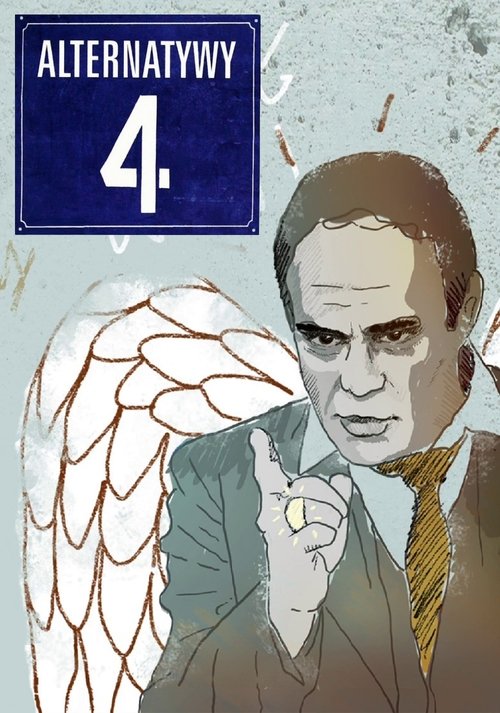
4 Alternative Street was a Polish comedy TV show that was finished in 1983 and aired in 1986 due to censorship. Many famous Polish actors appeared in the series. The filming location used in the mini series was a residential complex which is still in existence at 3 Grzegorzewska Street in Warsaw, Poland. The series was a satire to the communist rule in Poland, spoken in a way that it passed through communist censorship office.
Michał, a mature man and father, is full of bitterness, regret, and longing for unfulfilled youthful dreams of true love. He reminisces about all his past lovers. With his first, Asia, he went on a seaside camping trip. He was 19 at the time, and she was two years younger. Despite his unambiguous advances, the girl resisted for a long time. Eventually, however, she gave in. For Michał, it was the proverbial pebble that caused an avalanche.
It is a bitter story about a middle-aged man, who hates his life and other people, including himself. Adam Miauczynski, the character known from director Marek Koterski's previous films, is a 49 year-old teacher, who reads poetry during school lessons and later goes home swearing and calling his neighbours' names. The worst pain for him is the next 5 minutes of living. He doesn't accept himself and even everyday contacts with others cause his aggression. Though constantly dreaming of a romantic love, he is not bold enough to make his dreams come true. The desperate Miauczynski personalizes our own fears and obsessions, which have become so visible recently.
Second half of September 1939. Lt. Brejer, along with a detachment of his sappers, receives orders to blow up the bridge. The promised explosives do not arrive. So Brejer gets the order to withdraw and reunite with the rest of the division. Along the way, suffering hunger and discomfort along with his soldiers, he joins various divisions, collects survivors and fights. From a German prisoner of war, he finally learns that the Soviets have entered Poland. Finally, he and his men manage to reach his home unit, but that unit has just surrendered to the Germans.
Józef comes to his hometown on the anniversary of the murder of his father - a peasant activist, and explores the circumstances of his death.
The story takes place in the second half of the 1950s. A young journalist wants to establish himself in his profession and sort out his personal life, but he is unable to distance himself from the grim events he witnesses. He manages to get a job at a popular newspaper. The editor-in-chief sends him to a village near Warsaw, which is to be absorbed by the city, to write a report on the civilizational changes taking place there. The journalist learns the story of a young prisoner awaiting execution on death row and becomes involved in the convict's case.
Young Poland period in Kraków before WWI. Young doctor Edward comes back from Paris and meets his friends belonging to artistic bohema.