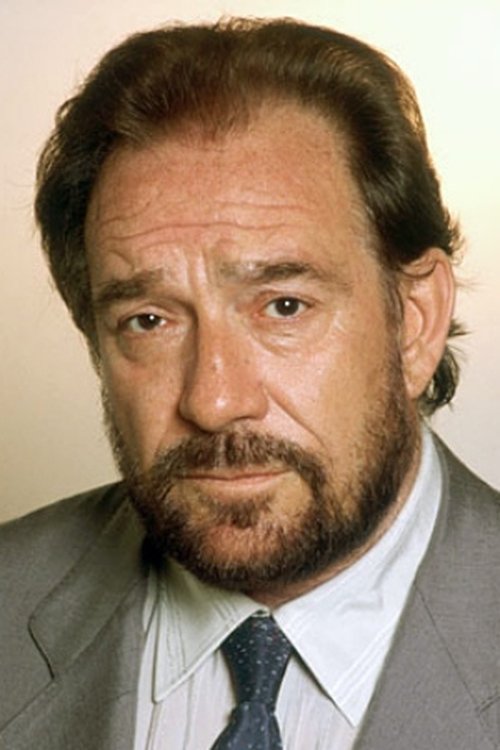
Ugo Tognazzi
Acting
Biography
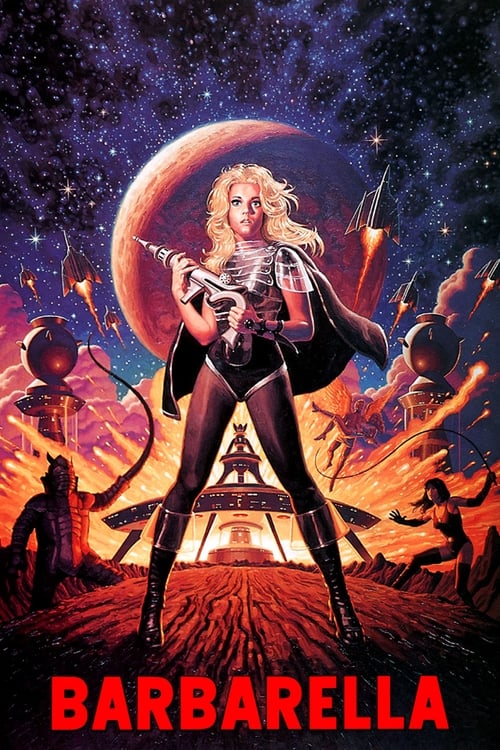
Ottavio "Ugo" Tognazzi (23 March 1922 – 27 October 1990) was an Italian actor, director, and screenwriter. He is considered one of the most important faces of Italian comedy together with Vittorio Gassman, Nino Manfredi, Marcello Mastroianni, and Alberto Sordi. Tognazzi was born in Cremona, in northern Italy but spent his youth in various localities as his father was a travelling clerk for an insurance company. After his return to his native city in 1936, he worked in a cured meats production plant where he achieved the position of accountant. During World War II, he was inducted into the Army and returned home after the Armistice of 8 September 1943, and joined the Black Brigades for a while. His passion for theater and acting dates from his early years, and also during the conflict he organized shows for his fellow soldiers. In 1945, he moved to Milan, where he was enrolled in the theatrical company led by Wanda Osiris. A few years later, he formed his own successful musical revue company. In 1950, Tognazzi made his cinematic debut in The Cadets of Gascony directed by Mario Mattoli. The following year, he met Raimondo Vianello, with whom he formed a successful comedy duo for the new-born RAI TV (1954–1960). Their shows, sometimes containing satirical material, were among the first to be censored on Italian television. After the successful role in The Fascist (Il Federale) (1961), directed by Luciano Salce, Tognazzi became one of the most renowned characters of the so-called Commedia all'Italiana (Italian comedy style). He worked with all the main directors of Italian cinema, including Mario Monicelli (My Friends), Marco Ferreri (La Grande Bouffe), Carlo Lizzani (La vita agra), Dino Risi, Pier Paolo Pasolini (Pigsty), Ettore Scola, Alberto Lattuada, Nanni Loy, Pupi Avati and others. Tognazzi also directed some of his films, including the 1967 film The Seventh Floor. The film was entered into the 17th Berlin International Film Festival. He was a well-known actor in Italy, and starred in several important international films, which brought him fame in other parts of the world. Roger Vadim cast Tognazzi as Mark Hand, the Catchman, in Barbarella (1968). He rescues Barbarella (Jane Fonda) from the biting dolls she encounters, and after her rescue, he requests payment by asking her to make love with him (the "old-fashioned" way, not the psycho-cardiopathic way of their future). In 1981, he won the Best Male Actor Award at the Cannes Film Festival for Tragedy of a Ridiculous Man, directed by Bernardo Bertolucci. While he worked primarily in Italian cinema, Tognazzi is perhaps best remembered for his role as Renato Baldi, the gay owner of a St. Tropez nightclub, in the 1978 French comedy La Cage aux Folles which became the highest grossing foreign film ever released in the U.S. Tognazzi had various relationships during his life, being married to actresses Margarete Robsahm and later Franca Bettoia. He had four children from three different women: his sons Ricky Tognazzi (b. 1955) and Gianmarco Tognazzi (b. 1967) are actors; another son, Thomas Robsahm (b. 1964), is a Norwegian film director and producer; his daughter, Maria Sole Tognazzi (b. 1971), is also a film director. ... Source: Article "Ugo Tognazzi" from Wikipedia in English, licensed under CC-BY-SA.
Known For

No description available.
Sacrée soirée

A talk show presented by Michel Drucker
Les Rendez-vous du dimanche

Marcello Mastroianni, Isabelle Adjani, Alain Delon, Martin Scorsese, Woody Allen... the biggest stars in cinema were welcomed by Christian Defaye on his show Spécial cinéma. Between intimate confessions from actors and immersion in the world of the greatest filmmakers, Christian Defaye took viewers on a journey into the fascinating world of cinema for nearly thirty years.
Spécial cinéma

Le Grand Échiquier is a French variety television program created and presented by Jacques Chancel. It aired at 8:30 pm on the first channel of the ORTF from January 12, 1972 to July 12, 1972, then on the second color channel of the ORTF from September 1972 to December 1974, and finally on Antenne 2 from January 1975 to December 21, 1989. The program returned to France 2 on December 20, 2018 and is hosted by Anne-Sophie Lapix.
Le Grand Échiquier
No description available.
Midi trente

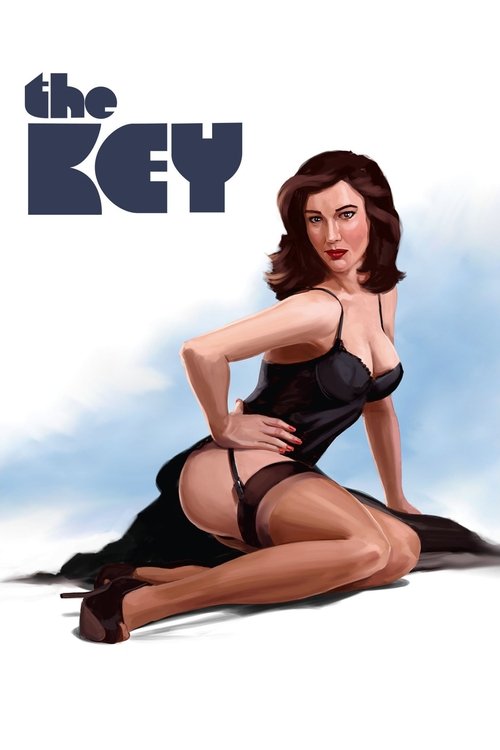
In 1940s Venice, after twenty years' marriage, retired art critic Nino Rolfe and his younger wife Teresa feel their passion waning. To help her shed her inhibitions and rekindle their relationship, the professor records his sexual fantasies in a diary.
The Key

In the far future, a highly sexual woman is tasked with finding and stopping the evil Durand-Durand. Along the way she encounters various unusual people.
Barbarella

A modest Neapolitan man meets a young woman with excessive hairiness. He exhibits her at fairs and marries her. It is after marriage that he receives a tempting offer from a French manager.
The Ape Woman

This time the "amici" (friends) are just four: Necchi, Meandri, Mascetti and Sassaroli. Nevertheless they are older they still love to spend their time mainly organizing irresistible jokes to everyone in every kind of situation. Mascetti is hospitalized in a geriatric clinic. Of course the place become immediately the main stage for all their jokes. After some jokes they decided to place an ultimate incredible and farcical joke to the clinic guests.
My Friends Act III

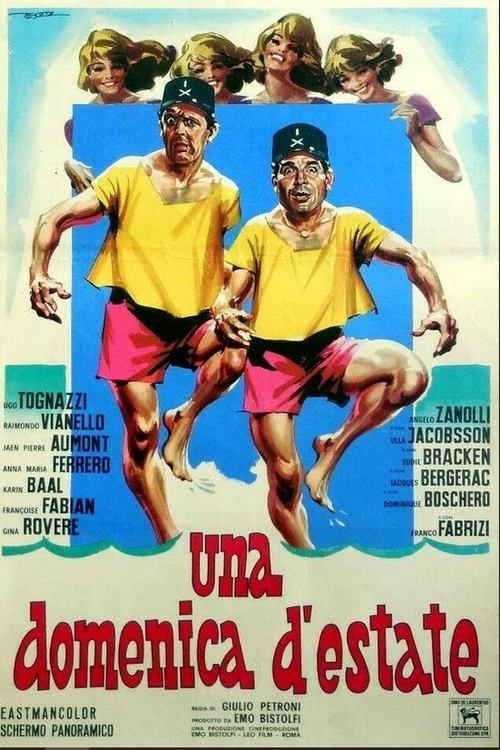
Summer Sunday at a small beach house at the coast of Rome. Many people and stories: women's basketball team, two sports-obsessed soldiers, two men with their girlfriends and the priest with a big secret, an elderly couple with their pregnant granddaughter, and engagemented couple wanting to have sex for the first time.
Beach House

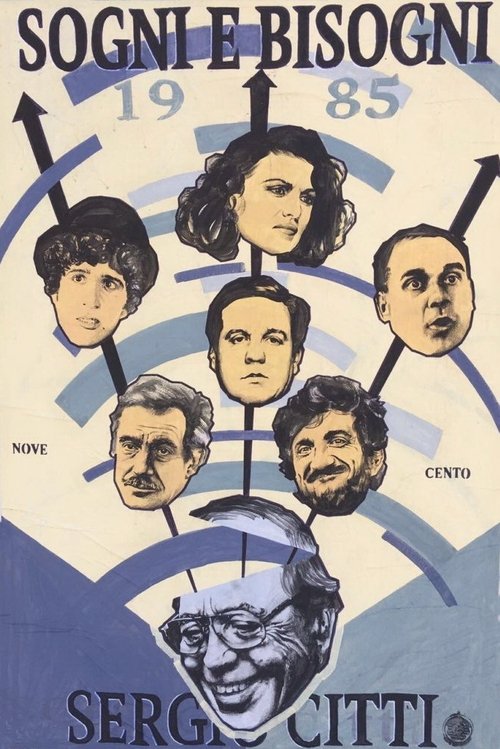
A TV series composed of eleven episodes and a conclusion, it aired in six one-hour programs starting on October 6, 1985. Lasting about half an hour each, the episodes are separated by intermissions starring three characters: Good, Evil, and Destiny. LA MORTE PORTA CONSIGLIO: At her father's deathbed, a daughter asks the man to tell her the winning Lotto numbers once he makes it to the after-life. But the man is offended by the modest funeral he receives and has fun playing pranks on his daughter. IL FATTACCIO: a doorman is paid to show an apartment in which something gruesome happened. Determined to keep the extra work, he invents increasingly grisly stories to keep interested buyers away. LADRI: two thieves in a working-class neighborhood have tragicomic adventures. L’IMBIANCONE: a very shy man enters a shoe store to buy a pair of shoes and seduce the female shop owner.
Sogni e bisogni

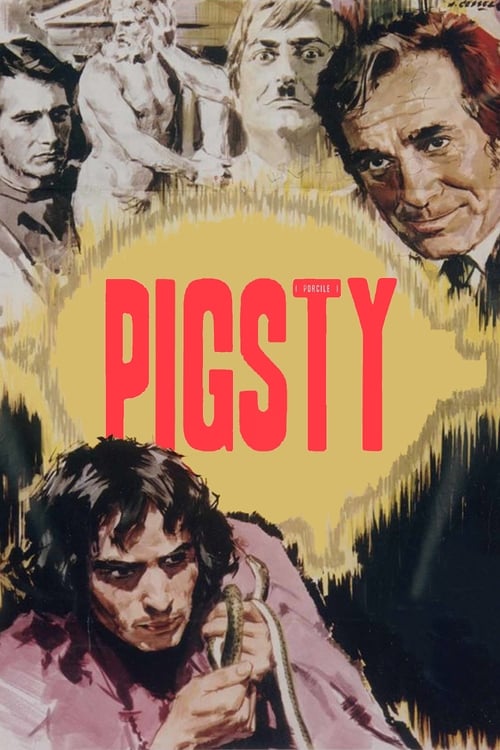
Two dramatic stories. In an undetermined past, a young cannibal (who killed his own father) is condemned to be torn to pieces by some wild beasts. In the second story, Julian, the young son of a post-war German industrialist, is on the way to lie down with his farm's pigs, because he doesn't like human relationships.
Pigsty

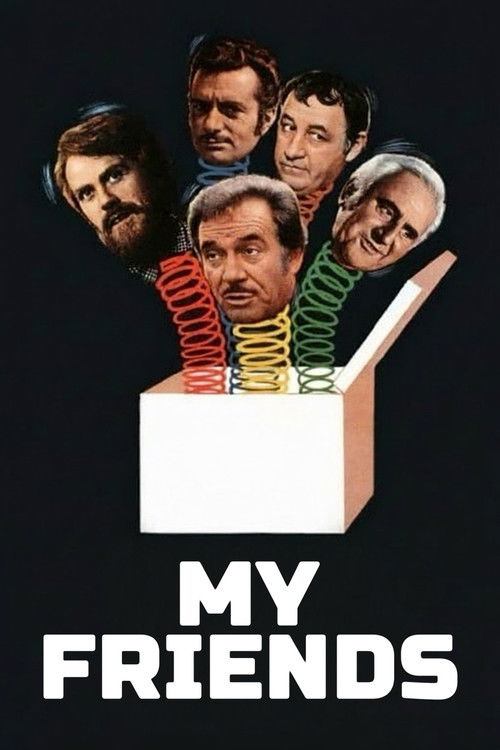
Four inseparable friends try to face their midlife crisis with daytrips and pranks at the expense of their families and the people around them.
My Friends

Four friends gather at a villa with the intention of eating themselves to death.
La Grande Bouffe

An episodic satire of the political and social status of Italy in the seventies, through the shows of one day of a television channel.
Goodnight, Ladies and Gentlemen

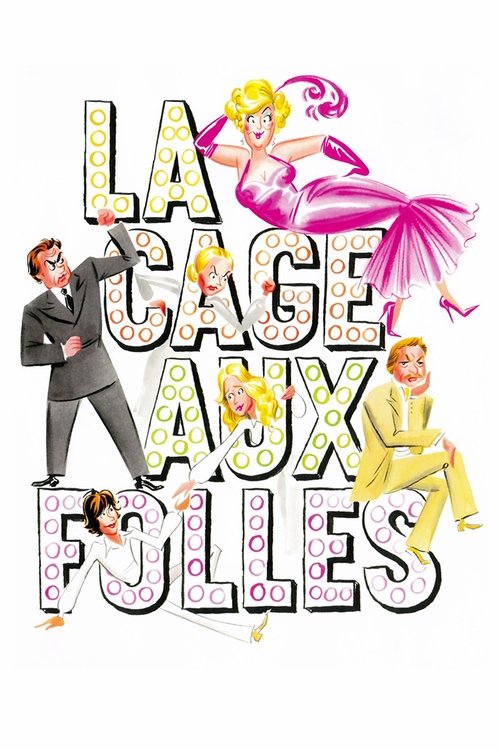
Two gay men living in St. Tropez have their lives turned upside down when the son of one of the men announces he is getting married. They try to conceal their lifestyle and their ownership of the drag club downstairs when the fiancée and her parents come for dinner.
La Cage aux Folles

An Italian documentary about Italian cinema.
We Are Cinema

Mario, a rich and eccentric war hero befriends Marco, a loner with a sailboat, and takes him home to meet his estranged wife Cleofe and sexually repressed sister in law Matilde. Mario confesses his love for Matilde and so ensues a love triangle.
The Bishop's Bedroom

Eight Italian politicians from the communist party gather on a terrace in Rome for a get-together. They discuss about their past, present and future.
The Terrace

The myths of the sixties are satirized in 20 episodes.