Vincent Pérazio
Directing
Biography
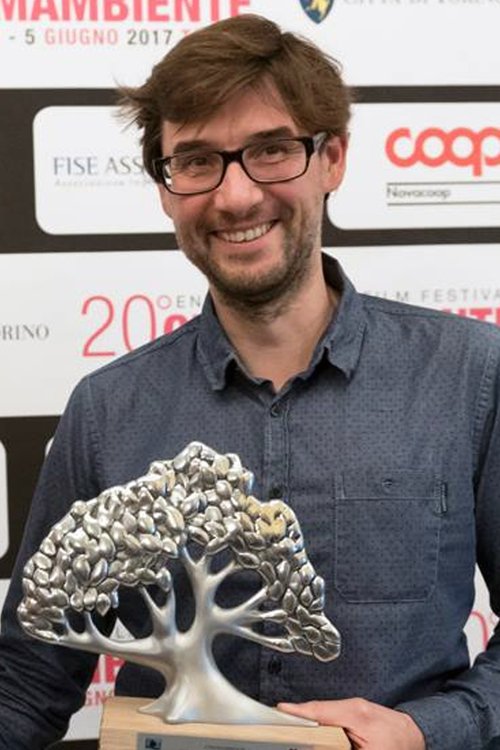
Vincent Pérazio is a French director, screenwriter, and author specializing in documentaries, particularly scientific, environmental, and heritage documentaries. He has made a name for himself with numerous television documentaries, addressing diverse themes such as underwater exploration, environmental issues, and ancient history. He has directed numerous television films, including "Oceans, the Plastic Mystery" (2016), "Under the Pole" (2020), "Of Vines and Men" (2000), and "Thomas Pesquet: Objective France" (2023). His work explores diverse themes such as biodiversity, underwater exploration, environmental history, and contemporary ecological issues. He strives to make complex subjects accessible and raise public awareness about the preservation of the planet, regularly collaborating with experts, scientists, and committed figures. His filmography demonstrates a constant commitment to popularizing science and the discovery of natural and cultural heritage.
Known For

A look at relevant scientific issues
Science grand format

99% of the plastic that should be floating in the oceans is missing. Even accounting for the plastic that washes up on beaches or is trapped in arctic ice, millions of tonnes has simply disappeared. As most plastic never deteriorates, it simply breaks down into smaller and smaller particles that are invisible to the human eye, what happens to this missing ocean plastic is a mystery. In this investigation, scientists embark in search of the micro-plastics. Small, mostly invisible, toxic, they are home to the new ecosystem: the plastisphere. But where are they? Ingested by organisms? Buried under the ocean floor? Degraded by bacteria? And what is the impact of them entering the food chain?
Oceans The Mystery of the Missing Plastic

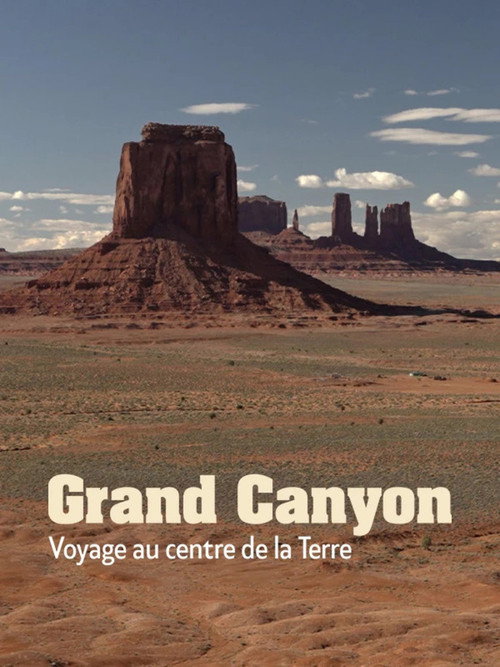
The Grand Canyon is a breathtaking natural monument. It's one of the planet’s best-known landscapes, yet we often forget that it tells two billion years of the Earth's history. Geologists Karl Karlström and Laurie Crossey are the leading experts on this. Over the course of 8 days, they descend the Colorado river and tackle hundreds of rapids to unveil the mysteries held in the Grand Canyon, and the place that humans occupy within it.
Great natural monuments - Grand Canyon

French astronaut Thomas Pesquet recently returned from his expedition to the ISS space station - a veritable laboratory of the future where researchers from all over the world work together. During scientific experiments in space, he investigated how long-term missions, such as to Mars, could become possible.
Thomas Pesquet : Objectif Mars

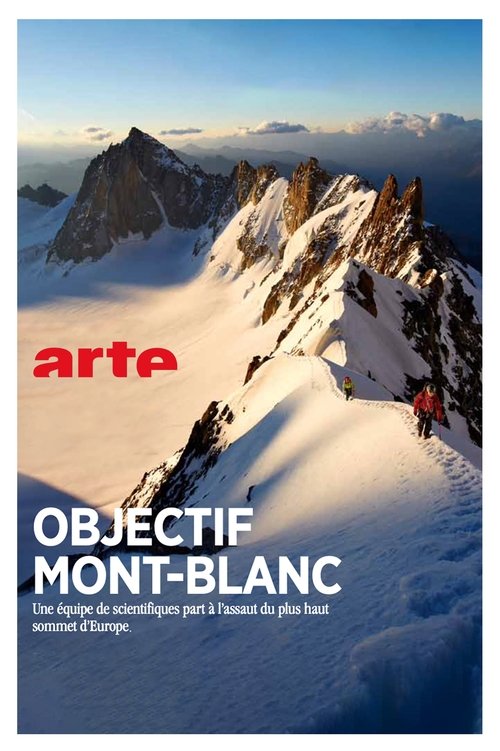
A climatologist, a physicist, and a volcanologist set out to conquer the highest peak in the Alps. Through exceptional images, the film recounts their odyssey and reveals the immense wealth of this natural laboratory. Straddling France, Italy, and Switzerland, the Mont Blanc massif was formed 240 million years ago. Four times the size of Paris, it covers 400 km2. Its summit, the highest in Western Europe, rises to 4,810 meters. Three scientists begin its ascent: Martine Rebetez, a Swiss climatologist; Étienne Klein, a philosopher and physicist at the French Atomic Energy Commission; and Jacques-Marie Bardintzeff, a geologist and volcanologist. Advancing in two roped teams, they are accompanied by Jean-Franck Charlet and François-Régis Thévenet, mountain guides, as well as physiologist Hugo Nespoulet.
Objectif Mont Blanc, sur les traces d'un géant

No description available.
Apollo 11 : Retour vers la lune

No description available.
L’Odyssée des animaux

No description available.
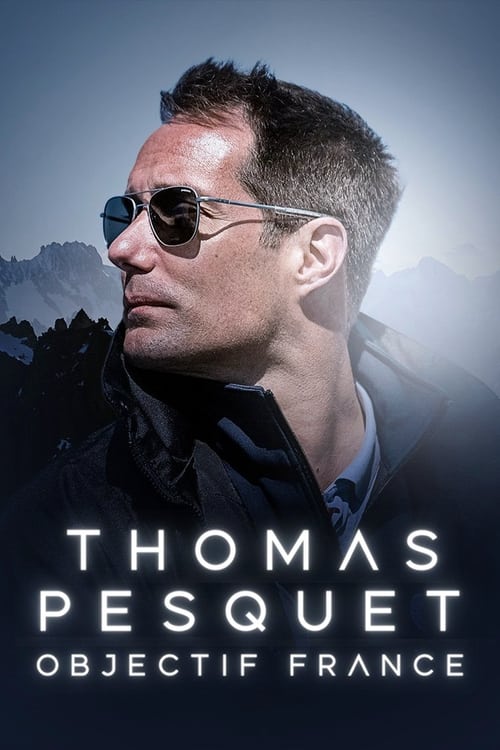
Thomas Pesquet : Objectif France

The return of numerous displaced wild animal species to Europe has been observed since the 1950s. Now scientists have decided to accelerate this development even further. The aim: to create new wild regions. The method: "rewilding", which is essentially based on reintroducing large animals such as bison or bears to Europe.
L'Europe à la reconquête de la biodiversité

Dive into a world of ice and freezing waters to discover a little-known yet iconic marine mammal, the Beluga. Today, this fascinating white Whale that lives in Arctic and sub-Arctic waters is once again in decline, especially in the St. Lawrence River. Is it due to the loss of sea ice? The growth of ocean shipping? Noise? Contamination? Genetics? Alongside world-renowned researchers, this documentary in 4K takes us on a major scientific quest that sheds new light on Beluga populations which are fighting for their survival. Over four seasons, we share the daily life of an international group of scientists who study this extraordinary species in its native habitat to better comprehend their existence and understand why they are endangered.
The Mystery of the Belugas

No description available.
Le retour de la nature sauvage

No description available.
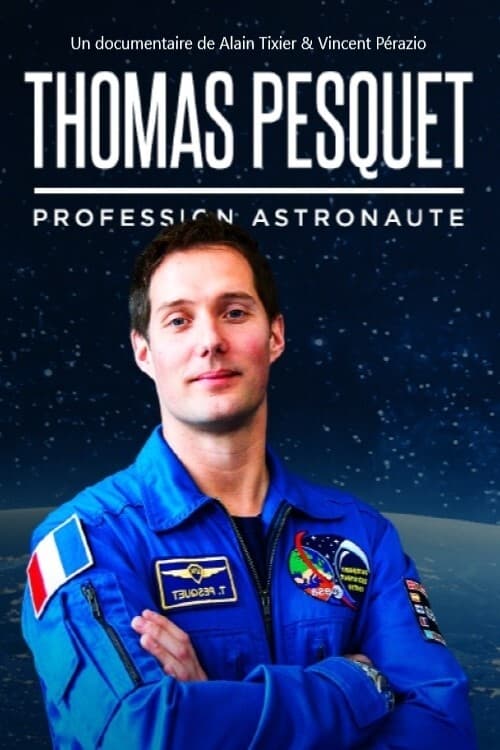
Thomas Pesquet : profession astronaute

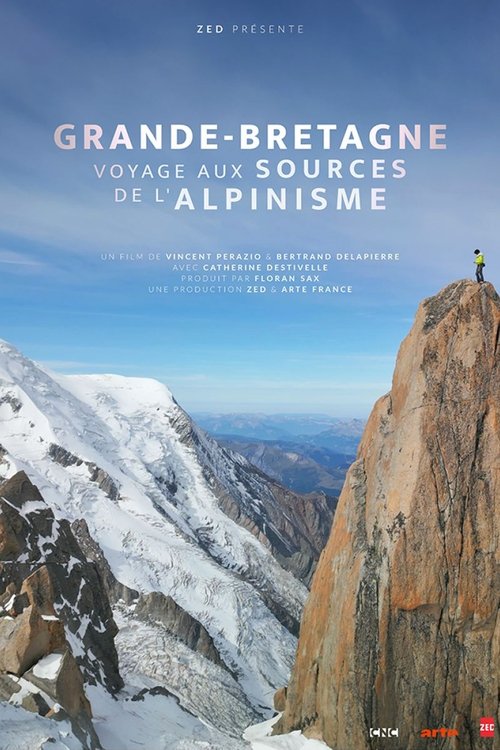
Breathtaking climbing sequences. As a guide, none other than "The Rock Queen" Catherine Destivelle. Climbing companions of the caliber of Chris Bonington or Tom Livingstone, one of the greatest Himalayan climbers today... for the production of "Great Britain, Journey to the Sources of Mountaineering," Vincent Perazio and Bertrand Delapierre have proven themselves equal to a complex but fascinating subject: the British origins of mountaineering. A journey through time. Since the second half of the 19th century and the beginnings of the British writer Albert F. Mummery, who would become the first sport mountaineer, notably in the Alps and the Caucasus.
Great Britain, Journey To The Sources of Mountaineering

From the Mediterranean to the Atlantic, scientists are reconstructing lost geographies. Prehistorians are examining the resources drawn from the coastline. Others are taking a fresh look at what we thought we knew: our maritime presence is much stronger than expected. All are gradually unveiling the bond that has long united man and the sea.
Sapiens & the Sea

No description available.
On a dormi sous la mer

No description available.