Helmut Griem
Acting
Biography
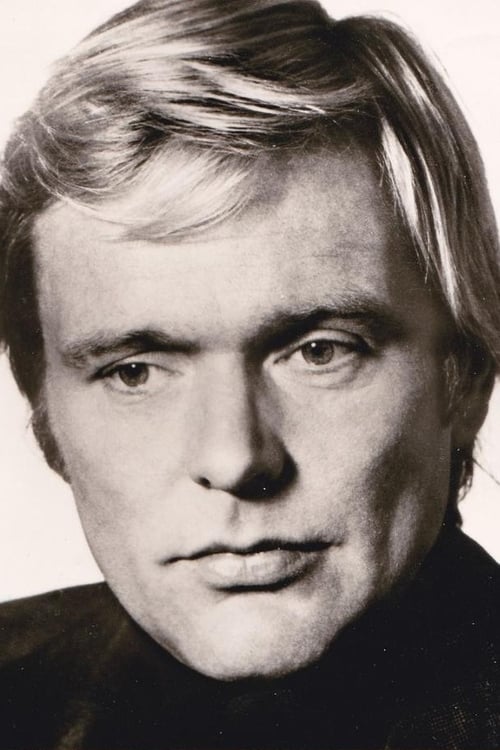
From Wikipedia, the free encyclopedia Helmut Griem (born April 6, 1932 in Hamburg – November 19, 2004 in Munich) was a German actor. Griem was primarily a German-speaking stage actor, appearing at the Thalia Theater in Hamburg, the Deutsches Schauspielhaus in Hamburg, the Burgtheater in Vienna, the Staatliches Schauspielbühnen in Berlin, in the Munich Kammerspiele, and finally in the Staatstheater am Gärtnerplatz, also in Munich. Among his many film and TV appearances (a quite memorable one being NBC's mini-series Peter the Great, portraying the formidable Tsar's lifelong friend and "right hand" Alexander Menshikov, alongside Maximilian Schell), the Oscar-winning film Cabaret (1972), in which he played the rich "Baron Maximilian von Heune" is probably the best-known; other internationally-known performances include his work in The Damned, The McKenzie Break, and Ludwig. Griem starred in the television mini-series "The Devil's Lieutenant" directed by John Goldschmidt, adapted by Jack Rosenthal and based on the novel by M Fagyas, for Channel 4 and ZDF. Despite his success in film, the theatre remained at the heart of Griem's work, and he performed in many classic roles from both the German and English-language repertoire. Later in his career Griem turned to theatre direction, including Long Day's Journey Into Night by Eugene O'Neill. Before his death, Griem had planned to direct the Botho Strauss play Die eine and die andere (This One and The Other). Griem twice won the Bambi Award: in 1961 and in 1976. Description above from the Wikipedia article Helmut Griem, licensed under CC-BY-SA, full list of contributors on Wikipedia.

Known For

A British television anthology of stories, often with sinister and wryly comedic undertones, and a twist at the end. With early episodes written and presented by Roald Dahl, the series featured a plethora of big name guest stars.
Tales of the Unexpected

The Bambi, often called the Bambi Award and stylised as BAMBI, is a German award presented annually by Hubert Burda Media to recognize excellence in international media and television to personalities in the media, arts, culture, sports, and other fields "with vision and creativity who affected and inspired the German public that year", both domestic and foreign. First held in 1948, it is the oldest media award in Germany. The trophy is named after Felix Salten's book Bambi, A Life in the Woods and its statuettes are in the shape of the novel's titular fawn character. They were originally made of porcelain until 1958, when the organizers switched to using gold, with the casting done by the art casting workshop of Ernst Strassacker in Süßen.
Bambi

The series is about a cruise ship that travels to places around the world.
Das Traumschiff

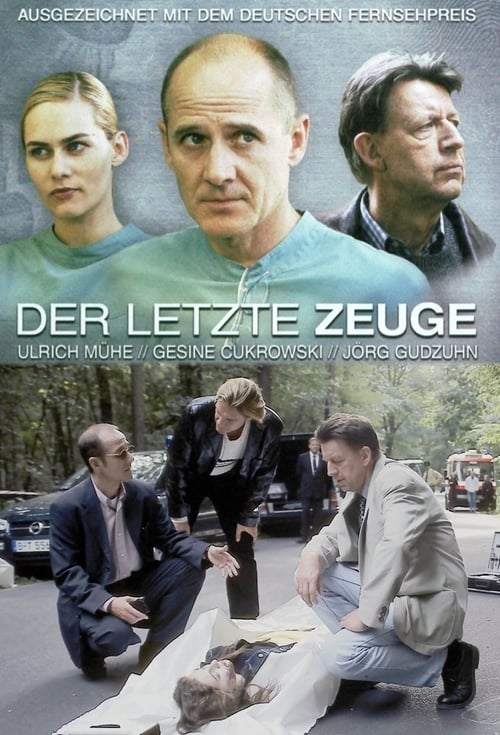
No description available.
Der letzte Zeuge

SK Kölsch is a German television series.
SK Kölsch

In late 1920s Berlin, Franz Biberkopf is released from prison and vows to go straight. However, he soon finds himself embroiled in the city’s criminal underworld.
Berlin Alexanderplatz

Inside the Kit Kat Club of 1931 Berlin, starry-eyed singer Sally Bowles and an impish emcee sound the clarion call to decadent fun, while outside a certain political party grows into a brutal force.
Cabaret
Anwalt Abel is a German television film series, broadcast on ZDF between 1988 and 2002. 20 television films were produced, based on the detective novels of Fred Breinersdorfer.
Anwalt Abel

Jack Costello is a retired cop and now private detective who lives in Miami, who handles a myriad of cases for unusual clients. At his side are old police buddy Sam Bosley and cartoonist-turned-amateur sleuth Jean Philippe Dumas, who is using Costello as an influence and has nicknamed the burly detective "Extralarge." In the second series, Costello faces other dangerous cases, again with Bosley and Archibald, the son of an old friend, who Costello amusingly nicknames "Dumas."
Detective Extralarge

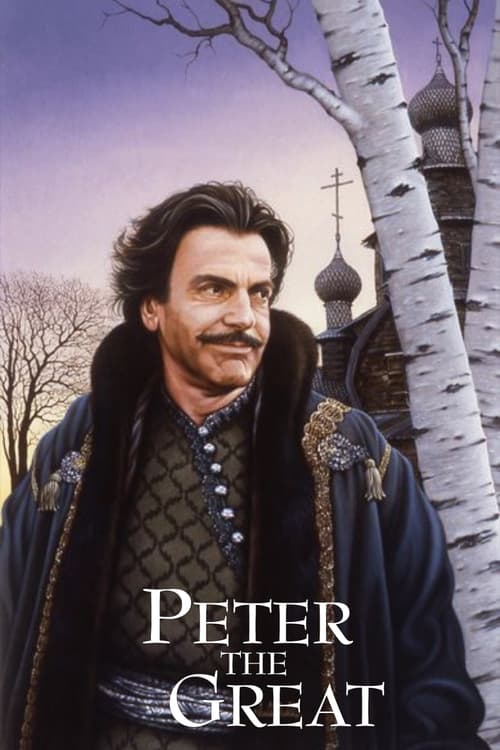
Peter the Great is a 1986 NBC television mini-series starring Maximilian Schell as Russian emperor Peter the Great, and based on the biography by Robert K. Massie. It won three Primetime Emmy Awards, including the award for Outstanding Miniseries.
Peter the Great

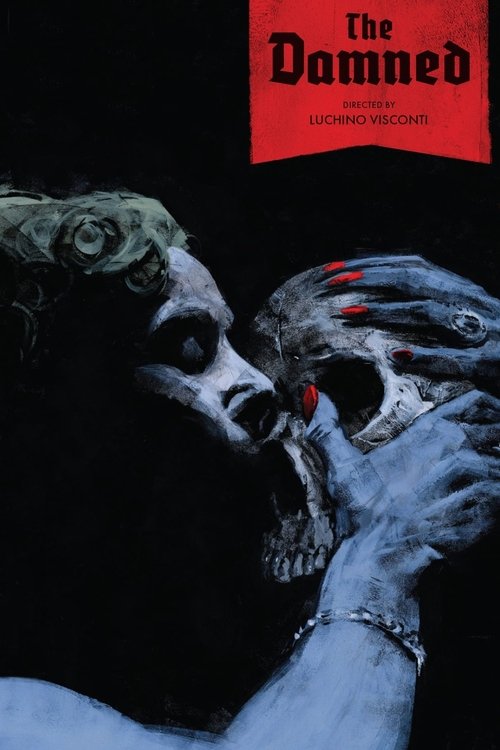
In the early days of Nazi Germany, a powerful noble family must adjust to life under the new dictatorship regime.
The Damned

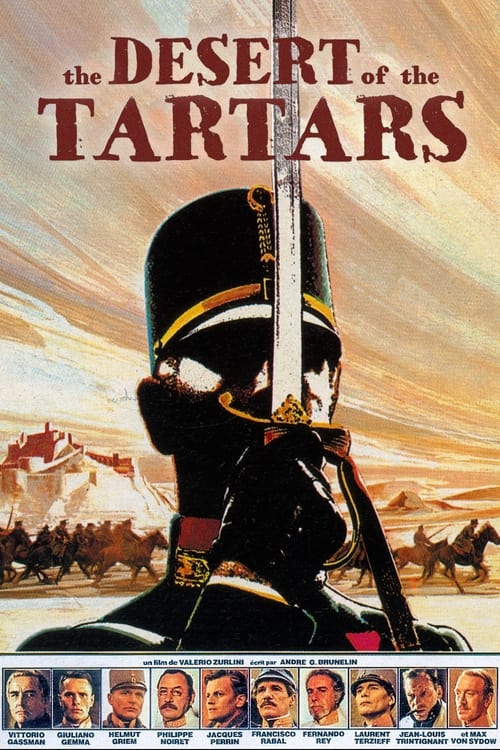
Lieutenant Giovanni Drogo is assigned to the old Bastiani border fortress where he expects an imminent attack by nomadic fearsome Tartars.
The Desert of the Tartars

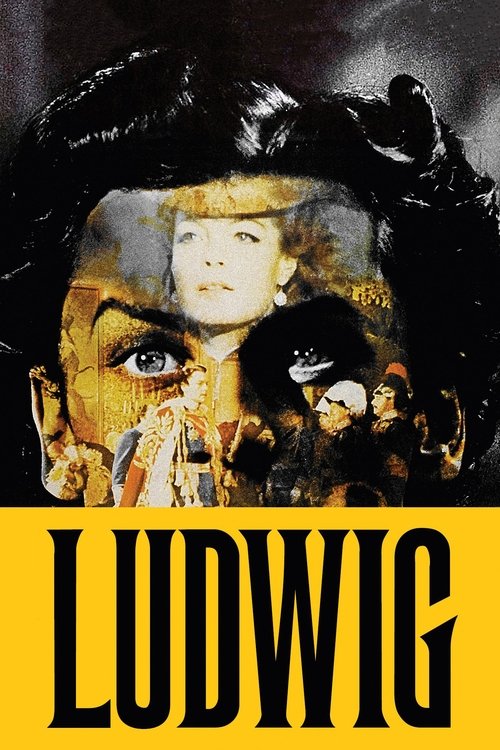
Historical evocation of Ludwig, king of Bavaria, from his crowning in 1864 until his death in 1886, as a romantic hero. Fan of Richard Wagner, betrayed by him, in love with his cousin Elisabeth of Austria, abandoned by her, tormented by his homosexuality, he will little by little slip towards madness.
Ludwig

Historical evocation of Ludwig, king of Bavaria, from his crowning in 1864 until his death in 1886, as a romantic hero. Fan of Richard Wagner, betrayed by him, in love with his cousin Elisabeth of Austria, abandoned by her, tormented by his homosexuality, he will little by little slip towards madness.
Ludwig

Charlemagne, le prince à cheval is a 1993 television miniseries about the life of Charlemagne. It consists of five episodes and covers the period from the death of his father, Pepin the Short in AD 768 until Charlemagne's corronation as the first Holy Roman Emperor on Christmas Day, AD 800. However, there is a minor chronological anachronism: in an earlier episode, we see Widukind, the king of the Saxons surrender and convert to Christianity, which didn't happen until AD 803. This program was directed by Clive Donner and based primarily on the contemporary biography of Charlemagne written by Einhard, who knew Charlemagne personally.
Charlemagne, le prince à cheval

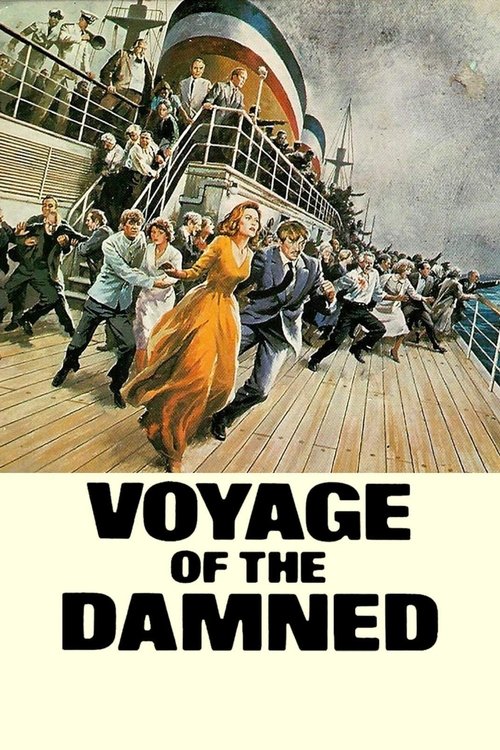
A luxury liner carries Jewish refugees from Hitler's Germany in a desperate fight for survival.
Voyage of the Damned

The young, sickly girl Bernadette comes from a poverty-stricken family. When the Virgin Mary appears to her in a cavern near Lourdes, no one takes the girl seriously, even when she digs up a wellspring at the Virgin's instructions The local authorities even try to hush up the entire incident. In vain, however, because when Empress Eugénie requests water from the spring for her sickly son, they are forced to acquiesce. And even the local priest is finally convinced. While taking his tuberculosis-stricken fiancé Claire to a sanatorium, the young doctor Henri Guillaumet meets Bernadette. The water from Lourdes' spring heals Claire's disease overnight, but the scientist in Henri doubts the miracle and wants to expose Bernadette as a liar. It is not until Henri again meets Bernadette, who has in the meantime become a nun and works as a nurse, that he finds a way to balance belief and modern science. And his love for Claire is strengthened as well.
Lourdes

Starting in late May 1944, during the German retreat on the Eastern Front, Captain Stransky (Helmut Griem) orders Sergeant Steiner (Richard Burton) to blow up a railway tunnel to prevent Russian forces from using it. Steiner's platoon fails in its mission by coming up against a Russian tank. Steiner then takes a furlough to Paris just as the Allies launch their invasion of Normandy.
Breakthrough

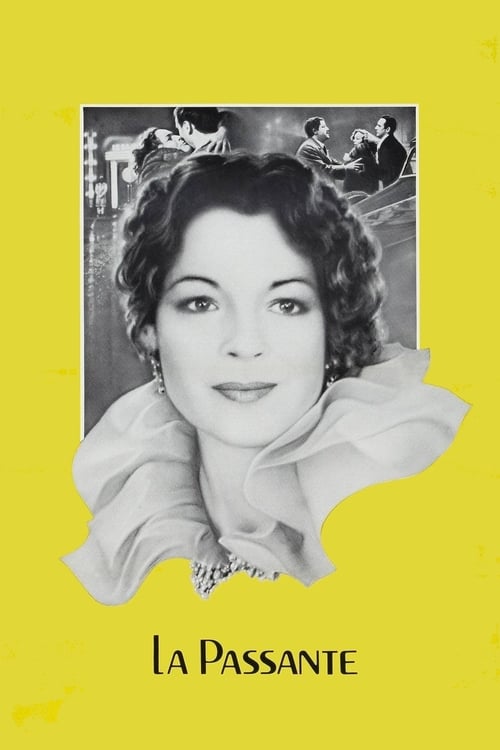
Max Baumstein is a reputable businessman who founded an international organization fighting against violations of human rights. Why would he commit an act that apparently negates the principles he has striven for so long to uphold? As he is tried for first-degree murder for killing a Paraguayan ambassador in cold blood, he reveals a secret about himself that he kept hidden from his wife Lina. His act is the conclusion of a struggle that started many decades earlier in his childhood...
The Passerby

Hans Castorp, fresh from university and about to become a civil engineer, comes to the Sanatorium Berghof in the Swiss Alps to visit his cousin Joachim, an army officer, who is recovering there from tuberculosis. Intending to remain at the Berghof for three weeks, Hans is gradually contaminated by the morbid atmosphere pervading the place. Wishing very much to be considered a patient like the others, he achieves his ends and stays in the sanatorium for ...seven years. During this time, he has enough time to take part in the furious philosophical debates pitting against each other Settembrini, a secular humanist, and Naphta, a totalitarian Jesuit. And to fall in love with the beautiful but enigmatic Clawdia Chauchat. When he is finally discharged in 1914 - along with all the other patients - it is only to plunge into the horrors of World War I.