Acting
Karin, Magali and Luna are three call girls, who decide to apply some marketing knowledge on the world's oldest profession.
Júlia and Pedro suffer from the cruelty of their grandmother, Bia Falcão. Júlia runs the luxurious Belíssima factory and falls in love with Nikos, a friend of her sister-in-law Vitória.
Os Ossos do Barão is a Brazilian telenovela produced by SBT and originally broadcast from April 28 to September 8, 1997. It is an adaptation of Jorge Andrade's 1963 play of the same name, adapted for television by Walter George Durst, with collaboration from Duca Rachid, Mário Teixeira, and Marcos Lazarini. The telenovela stars Ana Paula Arósio, Tarcísio Filho, Juca de Oliveira, Othon Bastos, and Leonardo Villar. Set in São Paulo in 1948, the story follows Egisto Ghirotto, the wealthy son of Italian immigrants who dreams of gaining social prestige by marrying his son, Martino, to Isabel, the great-granddaughter of the late Baron of Jaraguá. Their romance sparks a bitter conflict between a rising immigrant family and a declining aristocratic dynasty, exposing themes of class, ambition, tradition, and the social transformation of Brazil.
The turmoils of a messy entertainment television host, his production team, and his dysfunctional family.
No description available.
The father of a family of lower middle class of São Paulo dies. But he did not realize this and starts to watch the reactions of his children and the collapse of the fragile family structure. Based on a novel of Mário Bortolotto.
Godofredo suffers a terrible blow when he comes back home earlier than usual and finds his wife in the arms of his partner. He sends his wife away to a coast town and dares his rival to a duel. But he begins to miss his wife and the company of his friend.
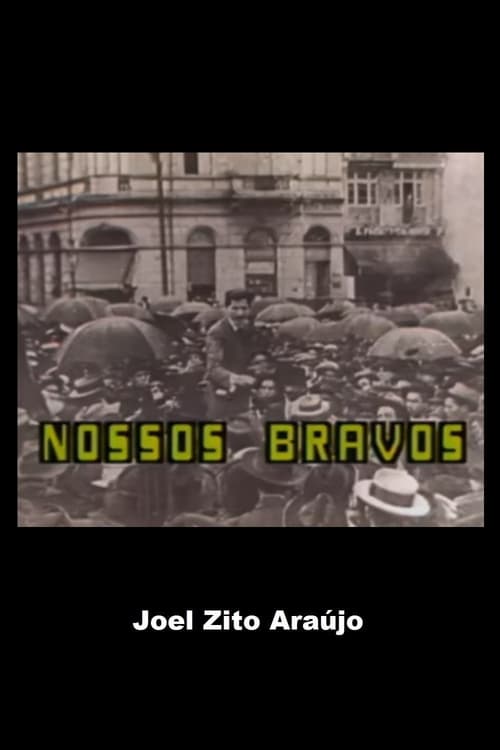
Docudrama on labor mobilizations in the beginning of the 20th century in Brazil, led by union organizations with anarcho-socialist influence. Using fictional resources and historical archives, the film reconstructs an important part of the memory of Brazilian unionism and its biggest strikes, establishing a dialogue between different working generations.
Released from the Mental Health Wing of São Paulo State Penitentiary after forty years, the sadistic undertaker Zé do Caixão is back on the streets, haunted by ghostly visions and spirits of past victims but still set upon the goal that sent him to prison in the first place: finding a woman who can give him the perfect child.
Year 2006. There are riots in São Paulo. In the middle of the violent situation, widow Lucia is trying to get her young son Rafael from prison.
Documentary about the daily life and struggle of workers from the 1930s generation in Brazil. Told through the memories of a feminist and four union members, the film shows the different faces of the workers' organization experience at that time, from Vargas' influence to communism, culminating in the common trait of their relationship with the workers' bases.
Some brazilian chicks are kidnapped by girl dealers and carried away on a small airplane to take them to the amazon jungle. What follows is catch as catch can between two groups of gangs... but the girls have fun anyway...