FEEL IT.STREAM
Bill Hayes

Bill Hayes

Acting

Biography

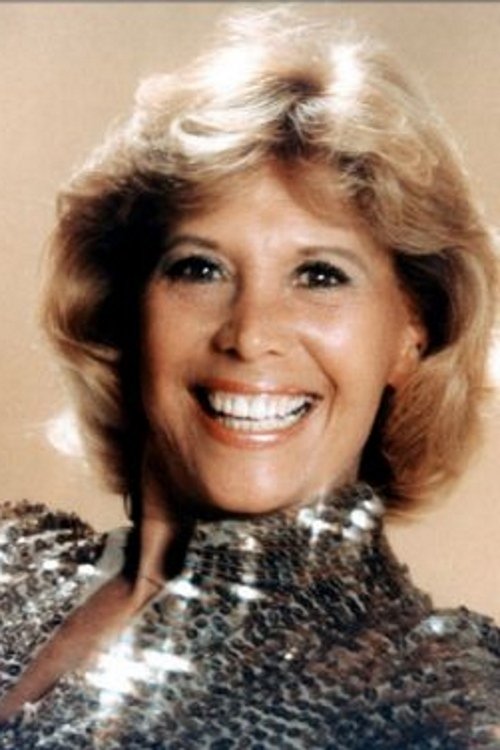
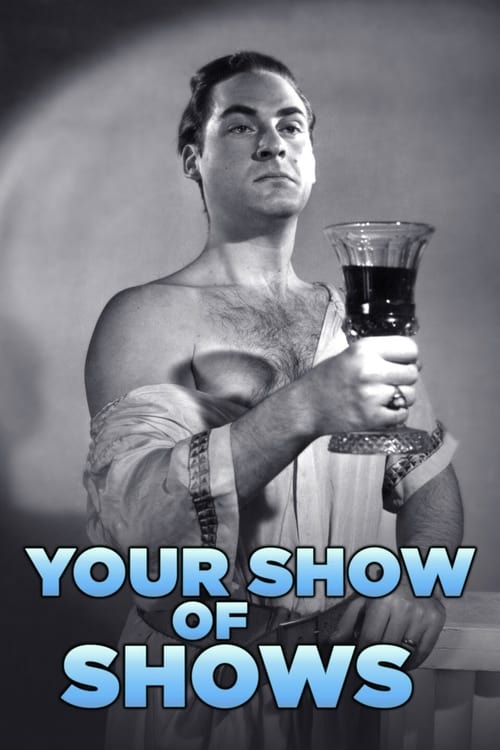
William "Bill" Foster Hayes III (born June 5, 1925) was an American actor and a Billboard Hot 100 #1 recording artist. Following a successful career as a musician which began in the late 1940s, he began to focus on dramatic acting parts in the late 1960s, which led him to be cast in a role that gained him additional fame to a younger generation. This new chapter in his career began in 1970 when he originated the character of Doug Williams on NBC's Days of Our Lives, which he continues to play regularly to date on the serial. Hayes was a singer on the Sid Caesar and Imogene Coca variety show Your Show of Shows in the early 1950s. During the Davy Crockett craze in 1955, three recorded versions of the Ballad of Davy Crockett were in the top 30. Hayes' version was the most popular: It was #1 on the Billboard Hot 100 for five weeks, sold over two million copies, and was awarded a gold disc. He also starred on Broadway in Rodgers and Hammerstein's Me and Juliet (1953). He had other small hits in the 1950s including "The Berry Tree" and covers of "High Noon" and "Wringle, Wrangle"; the latter was his only other Hot 100 hit, reaching #33 in 1957. On Days of Our Lives, Hayes was introduced as a convict who was also a lounge singer.[citation needed] The character of Doug returned in 1986 and 1987 as well as 1993 and 1996. Most recently, he has been on the show since 1999. His character was killed off in the spring of 2004 by Dr. Marlena Evans. In an elaborate plot hatched by head writer James E. Reilly, Doug turned up alive on a tropical island and went home to his wife.[citation needed] In 2017, World by the Tail, a documentary about Bill Hayes's life, was released and made available for his fans to watch online.[3] On June 27, 2017, while present in the show's audience, Hayes was featured in an impromptu interview on a web special for The Tonight Show Starring Jimmy Fallon; in his heyday, he had been a guest on the Johnny Carson-hosted version of the show.
Known For

The Bob Hope Show
7.0

The Bob Hope Show hosted by Bob Hope, debuted on April 9, 1950. During the 1952-1953 season, NBC rotated with other variety shows in a Sunday night block known as "The Colgate Comedy Hour" (Sept. 1950 to Dec. 1955). Also known as, "The Chevy Show with Bob Hope." When the first special debuted in October of 1950 it was the most expensive television program made up to that point - costing an astronomical $1,500 a minute to produce. Bob Hope had his own television show and radio show at the same time. For the next three seasons, The Bob Hope Show was broadcast once a month on Tuesday nights, giving Milton Berle a week off. Bob ended his radio show in April, 1956. Bob Hope also had another show by a similar name, "The Bob Hope Show (All Star Revue)". In addition, he performed in "Specials" for many years. It is the longest running variety program in television's history with a record of 45 years of televised entertainment.

The Bob Hope Show

1950Series
The Bell Telephone Hour
8.0

“The Bell Telephone Hour” was a musical variety show that aired on “NBC” TV from 12 January 1959 to 14 June 1968 that showcased the best in Broadway, Classical, Concert, Jazz and Popular music each week. The series had its’ own house band appropriately named the “Bell Telephone Orchestra”. The show also had its’ own theme song being the “Bell Waltz” composed by “Donald Voorhees” who was also the show's Orchestra conductor. Some of the greatest violinists of the 1960’s performed on this show that aired in the old “Black & White” format. Some of these great violinists included “Erica Mornin”, “Isaac Stern", "Michael Rabin", "Ruggiero Ricci", "Yehudi Menuhin" and "Zino Francesacatti". From time to time some of the great singers and bandleaders of the 1960’s would perform on the show as well. Some of these were “Bing Crosby”, “Gordon MacRae”, “John Gary”, “Leslie Uggams”, “Mary Martin”, “Nelson Eddy”, “Patti Page” and “Roy Rogers”. The TV show followed on the heels of its’ predecessor with the same name on “NBC” radio that aired from 29 April 1940 to 1958 on Monday nights at 8 PM. The name of the show was derived from its’ Major sponsor “Bell Telephone Laboratories”. The TV version began airing on Friday nights at 8:30 PM once a month. It later was given it’s same time slot now airing every other week alternating with another show on the other weeks such as News shows and specials. The show time slot changed quite often over the years. In September 1960 it aired at 9 PM and in September 1961 it moved to 9:30 PM. In October 1963 it moved to Tuesday nights at 10 PM, September 1965 it moved to Sunday night at 6:30 PM and in September 1967 it made its' final move back to Friday night at 10 PM.

The Bell Telephone Hour

1959Series
Never Can Say Good-bye

Have you ever met someone and suddenly felt love or hate? Did you wonder why? What if you had forgotten the reason? Would you want to remember if it could save you life? Elizabeth was asked by her mentor to teach a writing course at a small college. Since she never forgets a kindness, she reluctantly agrees. Arriving in town, she instantly regrets her decision. She wants to run, but she is honor bound to stay. Even as the ghost of a small child begs her to forgive, the memories of another time arouse feelings of hatred that she doesn't understand and cannot control. When she meets Shane, all of their lives are thrown onto a dangerous collision course from which they can neither run, nor can they hide. The question is, "Can they overcome their tragic past or will they be doomed to repeat it?" Love can be a blessing or the curse that destroys a town.

Never Can Say Good-bye

2018Movie