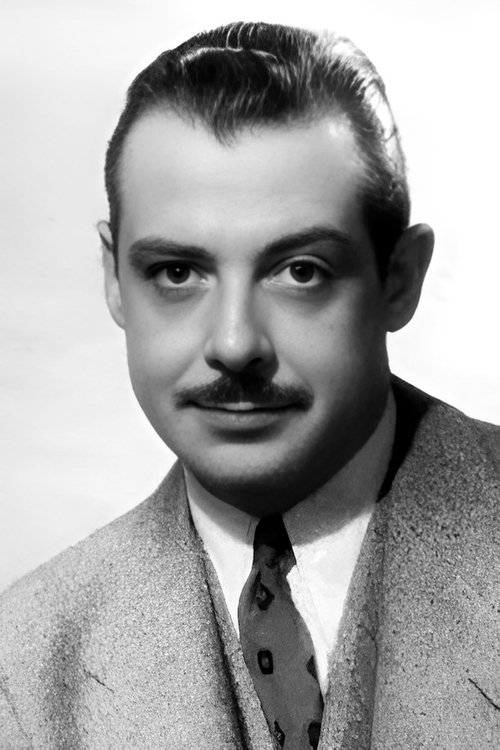
Fernand Gravey
Acting
Biography
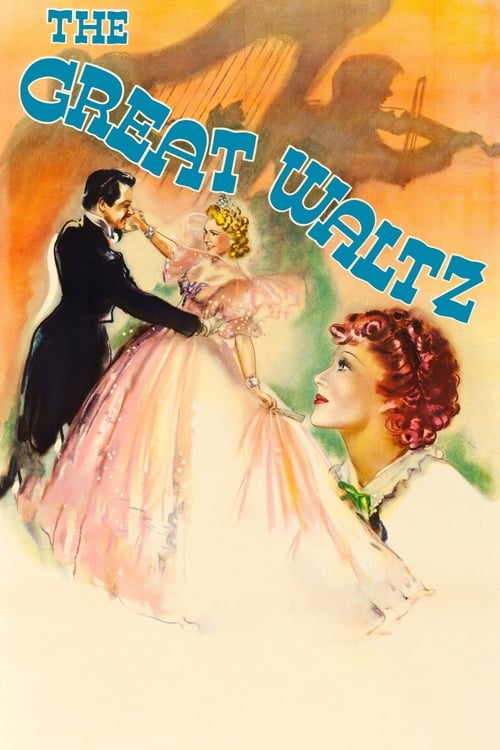
Fernand Gravey (25 December 1905 in Ixelles (Belgium) – 2 November 1970 in Paris, France), also known as Fernand Gravet in the United States, was the son of actors Georges Mertens and Fernande Depernay, who appeared in silent films produced by pioneer Belge Cinéma Film (a subsidiary of Pathé). Gravey started performing at age five under his father's direction. Before World War I, he received an education in Britain and could speak both French and English fluently, something which became useful in his movie roles. During the war, Gravey served in the British Merchant Marine Corp. In 1936, he married the French actress Jane Renouardt, who was 15 years his senior. They remained together until his death on 2 November 1970 of a heart-attack. Jane died on 3 February 1972. They had no children. Gravey performed in four films in 1913 and 1914 (as Fernand Mertens), but his first film of importance was L'Amour Chante, released in 1930. In 1933, he made Bitter Sweet, his first English language movie, which became more famous in its 1940 incarnation with Jeanette MacDonald and Nelson Eddy. In 1937, after several more French and British movies, Gravey went to Hollywood, where the spelling of his last name was altered to Gravet, and he became the focus of a rather extensive Hollywood publicity campaign (instructing moviegoers to pronounce his name properly: "Rhymes with Gravy"). Unfortunately for Gravey, he was offered only standard parts, the type of Gallic-lover roles that Louis Jourdan played in the 1950s and 1960s. The first two films he made in Hollywood were for Warner Brothers: The King and the Chorus Girl (1937), with Joan Blondell and Jane Wyman, and Fools for Scandal (1938), with Carole Lombard and Ralph Bellamy. Gravey then signed with Metro-Goldwyn-Mayer and was cast as Johann Strauss in the expensive biopic The Great Waltz, with Luise Rainer and Miliza Korjus. MGM next planned to star Gravey in a film version of Rafael Sabatini's adventure novel Scaramouche, but instead he returned to France just before the Nazi occupation began. Although he had agreed to appear in German-approved French films, Gravey was an underminer of the invaders as a member of the French Secret Army and the Foreign Legion. At the end of the war, Gravey was considered a war hero, and continued to be featured in French productions such as La Ronde (with Danielle Darrieux), and Royal Affairs in Versailles (1954). Among his last English language performances were How to Steal a Million (1966), Guns for San Sebastian (1968) and The Madwoman of Chaillot (1969), in which he played the police inspector. Source: Article "Fernand Gravey" from Wikipedia in English, licensed under CC-BY-SA 3.0.

Known For

No description available.
Discorama

No description available.
Cinépanorama

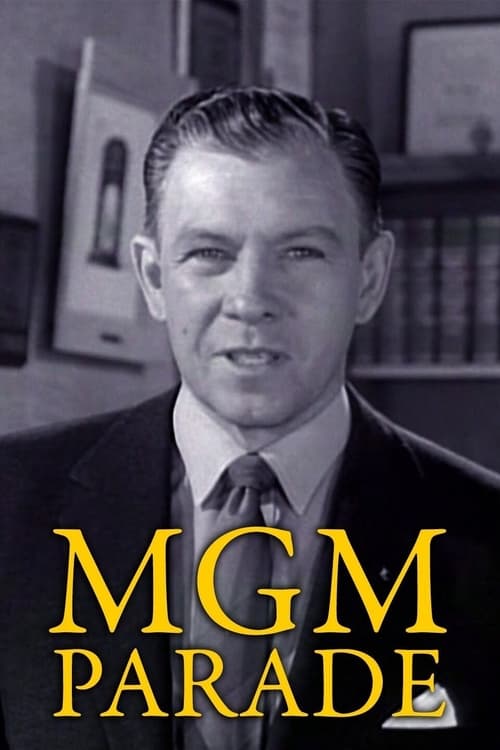
The original concept of the show was to allow the viewer to see the inner workings of a movie studio and featured interviews with MGM stars and explanations of how movies were made. Later, the format changed to show edited versions of MGM films.
MGM Parade

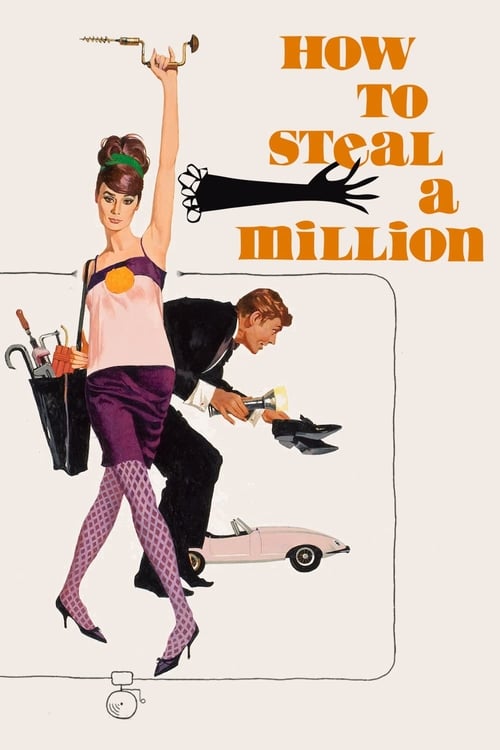
A woman must steal a statue from a Paris museum to help conceal her father's art forgeries.
How to Steal a Million

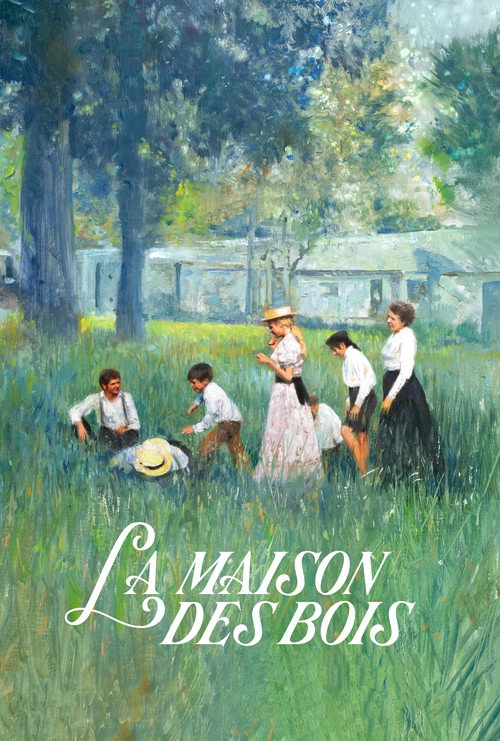
During World War One, in a small rural French village far away from the front, a gamekeeper and his wife take in children displaced by the war.
La Maison des bois

Gene Kelly and Fred Astaire present more golden moments from the MGM film library, this time including comedy and drama as well as classic musical numbers.
That's Entertainment, Part II

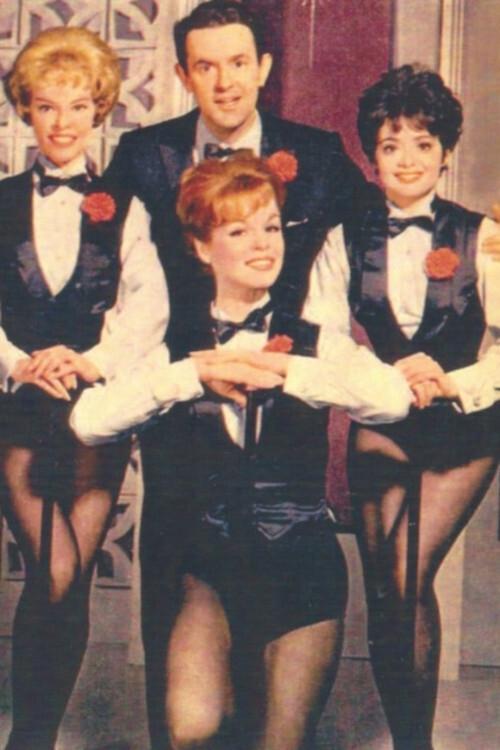
Harry's Girls is an American situation comedy which appeared on NBC from September 13, 1963, to January 3, 1964. The series stars Larry Blyden portraying Henry Burns, the leader of a vaudeville troupe consisting of three young women. The co-stars were Dawn Nickerson as Lois, Susan Silo as Rusty, and Diahn Williams as Terry.
Harry's Girls

An eccentric Parisian woman's optimistic perception of life begins to sound more rational than the traditional beliefs of others. The story is set in a 20th-century society endangered by power and greed and imagines the rebellion of the "little people" against corrupt and soulless authority.
The Madwoman of Chaillot

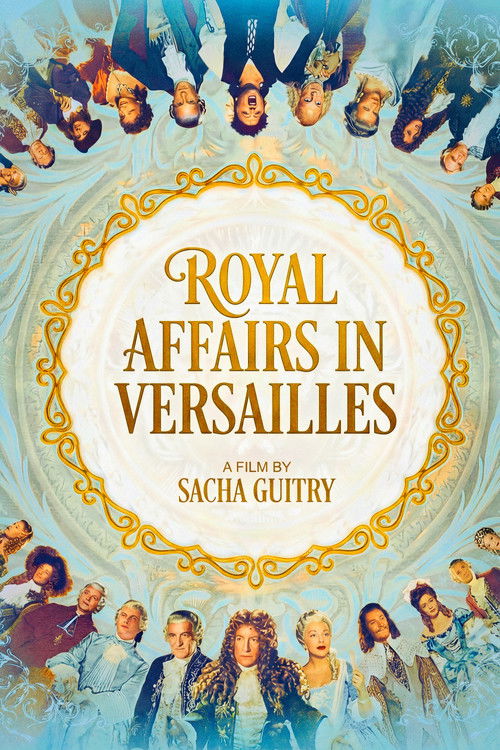
Witty narration follows the history of Versailles Palace; founded by Louis XIII, enlarged by autocratic Louis XIV, whose personal affairs and amours, and those of his two successors, are followed in more detail to the start of the Revolution, after which the story is brought rapidly up to date. A huge cast plays mainly historical persons who appear briefly.
Royal Affairs in Versailles

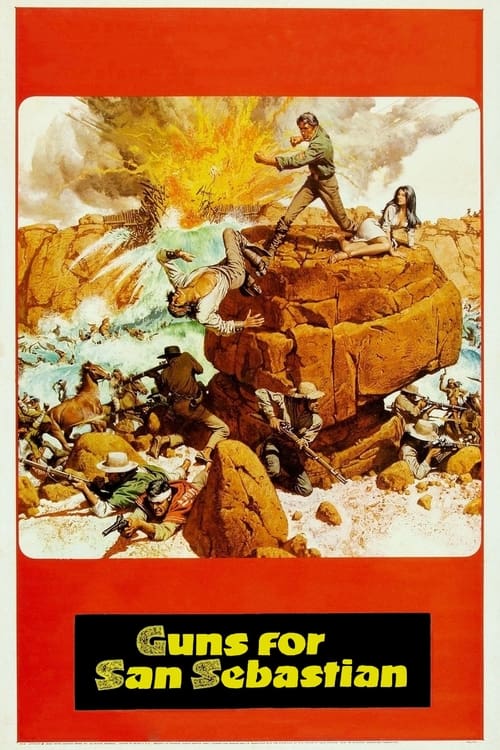
Leon Alastray is an outlaw who has been given sanctuary by Father John, whom he then escorts to the village of San Sebastian. The village is deserted, with its cowardly residents hiding in the hills from Indians, who regularly attack the village and steal all their supplies. When Father John is murdered, the villagers mistakenly think the outlaw is the priest. Alastray at first tells them he is not a priest, but they don't believe it, and an apparent miracle seems to prove they are correct. Eventually, he assists them in regaining their confidence and defending themselves.
Guns for San Sebastian

An all-knowing interlocutor guides us through a series of affairs in Vienna, 1900. A soldier meets an eager young lady of the evening. Later he has an affair with a young lady, who becomes a maid and does similarly with the young man of the house. The young man seduces a married woman. On and on, spinning on the gay carousel of life.
La Ronde

Frank, a hobo, ends up in a garage-truck stop in the middle of nowhere. Nick Marino, its older, kind and naive owner, is married to Cora, a sexy and mercenary woman half his age. Frank, although not a fan of hard work, accepts Nick's offer to work for him. Of course, it is not for Nick's sake that the young man becomes his attendant, but for the love of Cora under whose spell he has fallen at once. It does not take long before Cora, who despises her husband, asks her lover to help her get rid of him. Frank is reluctant at first but ...
The Last Turning

This short shows how Hollywood gets ready for the world premiere of an "important" movie. The film celebrated here is Marie Antoinette (1938), which had its premiere at the Carthay Circle Theatre. We see the street leading to the theatre transformed to suggest a garden that might be seen in a French palace. This includes the placement of trees and other foliage, as well as large statues along the route. Grandstands are set up so fans can see their favorite stars as they arrive for the premiere. Finally, the proverbial "galaxy of stars" arrives in their limousines. Fanny Brice and Pete Smith make remarks at the microphone set up on the carpet outside the theatre.
Hollywood Goes to Town

A single mother raises her son in impossible circumstances first in Leningrad, then Krakow, and then France, and is over-ambitious about him but never gives in.
Promise at Dawn

Flubs and bloopers that occurred on the set of some of the major Warner Bros. pictures of 1938.
Breakdowns of 1938

A brilliant swindler, Olivier Parker, hires a small-time pipe salesman, Amédée, to swindle a naive provincial, Ferdinand Galiveau, a chicken merchant. Renamed Teddy Morton and now a jockey, Amédée must ride a mare on which Ferdinand, advised by Parker, must bet. Absolutely convinced of his mystification, Parker bets on an oddball who, of course, loses, while at the last minute Galiveau, having bet on an outsider, wins a fortune. All Parker has to do is find another sucker.
Slightly Ahead

Isabel is a beautiful aspiring singer with great aspirations but persistent bad luck convicted of a crime she did not commit. Serving time in prison she is released under parole and lands a singing gig at a dive in Barcelona where she meets Sandro "The Greek" and his partner lover Gloria. The couple is posing as entertainment promoters but they are really running a prostitution ring based in Beirut. They offer Isabel a two-year contract to perform in "night clubs" in the Near and Mideast even after they learn that she cannot travel abroad due to her legal status. Upon arrival in Beirut, Isabel and the other girls are sped away to a luxurious villa where they discover the real intentions of the pseudo-promoters. They are expected to sing and dance but also to engage in sexual activities with the rich clients that patronize the place. Isabel pretends to go along with the situation but she has a plan to get away
The Woman from Beirut

Poor New York shop girl Nadina receives the unexpected news that she is next in line to be queen of an Eastern European country. On her arrival in Ruritania, a revolution is in progress, and only minutes before her coronation, Nadina is forced into exile. She flees to Paris with her nurse, and then travels on to Switzerland. There Nadina encounters the Ruritanian revolutionary leader Carl, recuperating from the trials of revolution, and the couple unexpectedly fall in love. When the revolution collapses in Ruritania, they return and marry, thus forming a constitutional monarchy supported by all the people.
The Queen's Affair

Composer Johann Strauss risks his marriage over his infatuation with a beautiful singer.
The Great Waltz

A destitute, bored monarch falls in love with a chorus girl.