Mel Welles
Acting
Biography
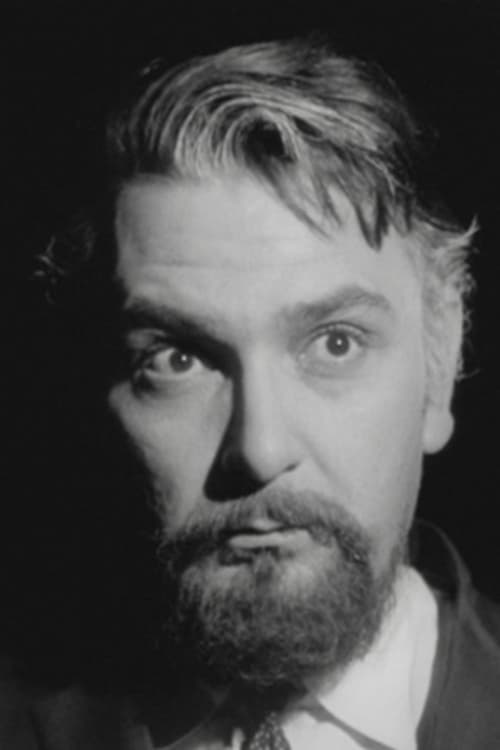
From Wikipedia, the free encyclopedia Mel Welles (February 17, 1924 - August 18, 2005) was an American film actor. His best-remembered role may be that of hapless flower shop owner Gravis Mushnik in the 1960 low-budget Roger Corman dark comedy, The Little Shop of Horrors (which featured Jack Nicholson as a masochistic dental patient). Not much is known of Welles' early life, except that he was born Ira Meltcher in New York City. He graduated from Mt. Carmel High School, in 1940. He went on to receive a Bachelor of Arts degree from Penn State University, a Master of Arts degree from West Virginia University, and a Ph.D. in psychology from Columbia University. Welles held a number of jobs during his lifetime; at one time or another he worked as a clinical psychologist, radio DJ, television actor, writer and film director. He did some stage work before traveling to Hollywood, where in 1953 he appeared in his first film, Appointment in Honduras. His favorite role (The Little Shop of Horrors) was also his last in the U.S. for many years. In the early 1960s, he left the United States to act, produce and direct primarily in European film productions including the cult horror films Maneater of Hydra (1967) and Lady Frankenstein (1971). His fluency in five languages proved to be most helpful. He also served as a film consultant. Later he returned to the U.S., appearing in a number of films, doing voice work, and teaching voice acting. Probably his most widely seen work in the late 1970's was his English adaptation of the Japanese television show, "Spectreman" which was seen on UHF and cable across the United States. While he shares writing credit with two other people, it's clear that most of the English voice work, and the offbeat humor, is his. In 1998, Welles took to the stage in a community theater production of Little Shop of Horrors (musical) as Mushnik, the role he created in the original Roger Corman film. Welles had never performed in the musical and was happy to be asked to do the role, which he described as a "mitzvah" for Scotts Valley Performing Arts. Jonathan Haze, who played Seymour in the original film, attended the opening, and Welles also received a visit from Martin P. Robinson, the designer of the Audrey II plant puppets used in the off-Broadway production (Robinson is also famous for his puppetry on Sesame Street). Welles was working on a horror screenplay, tentatively titled House of a Hundred Horrors, at the time of his death. Description above from the Wikipedia article Mel Welles, licensed under CC-BY-SA, full list of contributors on Wikipedia.
Known For

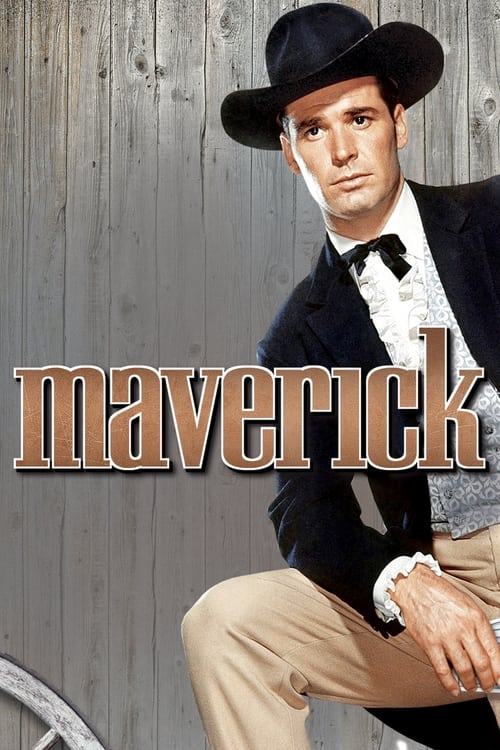
The Maverick boys - Bret, Bart, Beau and Brent - are a clan of well-dressed dandies, gamblers who'd much rather make their money playing cards than messing up their fine clothing with actual work. Sly and clever, none of the Mavericks are much for acts of derring do, but they can be courageous when the situation calls for it. Most often, however, they live by their wits and considerable charm.
Maverick

Have Gun – Will Travel is an American Western television series that aired on CBS from 1957 through 1963. It was rated number three or number four in the Nielsen ratings every year of its first four seasons. It was one of the few television shows to spawn a successful radio version. The radio series debuted November 23, 1958. The television show is presently shown on the Encore-Western channel. Have Gun – Will Travel was created by Sam Rolfe and Herb Meadow and produced by Frank Pierson, Don Ingalls, Robert Sparks, and Julian Claman. There were 225 episodes of the TV series, 24 written by Gene Roddenberry. Other contributors included Bruce Geller, Harry Julian Fink, Don Brinkley and Irving Wallace. Andrew McLaglen directed 101 episodes and 19 were directed by series star Richard Boone.
Have Gun, Will Travel

Cheyenne Bodie was a big man, a former army scout who went west after the American Civil War and drifted from job to job, here a cowboy, there a lawman, and always a larger-than-life hero. CHEYENNE is an American western television series of 108 black-and-white episodes broadcast on ABC from 1955 to 1963. The show was the first hour-long western, and in fact the first hour-long dramatic series of any kind, with continuing characters, to last more than one season. It was also the first series to be made by a major Hollywood film studio which did not derive from its established film properties, and the first of a long chain of Warner Brothers original series produced by William T. Orr.
Cheyenne

The Lone Ranger is an American western television series that ran from 1949 to 1957, starring Clayton Moore with Jay Silverheels as Tonto. The live-action series initially featured Gerald Mohr as the episode narrator. Fred Foy served as both narrator and announcer of the radio series from 1948 to its finish and became announcer of the television version when story narration was dropped there. This was by far the highest-rated television program on the ABC network in the early 1950s and its first true "hit".
The Lone Ranger

A television anthology series hosted by Alfred Hitchcock featuring dramas, thrillers, and mysteries.
Alfred Hitchcock Presents

This show started in New York City, with Broadway actors and actresses. It then moved to Hollywood, California, where Hollywood actors and actresses headed the cast.
The Ford Television Theatre

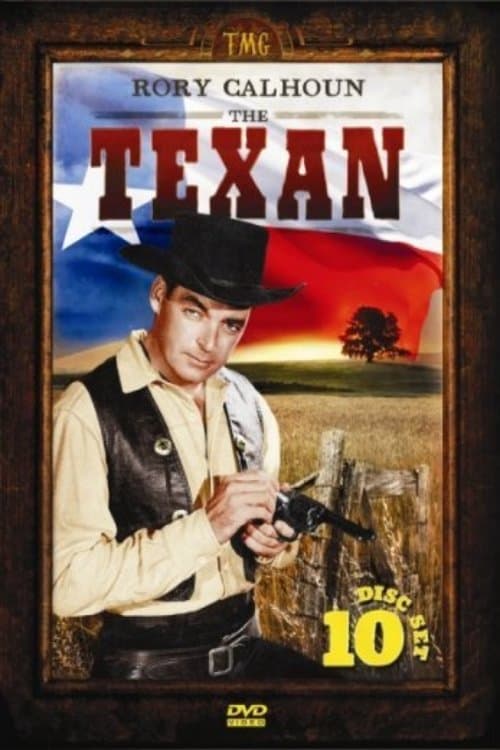
The Texan was a Western television series starring popular B movie actor Rory Calhoun, which aired on the CBS television network from 1958 to 1960.
The Texan

Westinghouse Desilu Playhouse is an American television anthology series produced by Desilu Productions. The show ran on CBS television between 1958 and 1960. Two of its 48 episodes served as pilots for the 1950s television series The Twilight Zone and The Untouchables.
Westinghouse Desilu Playhouse

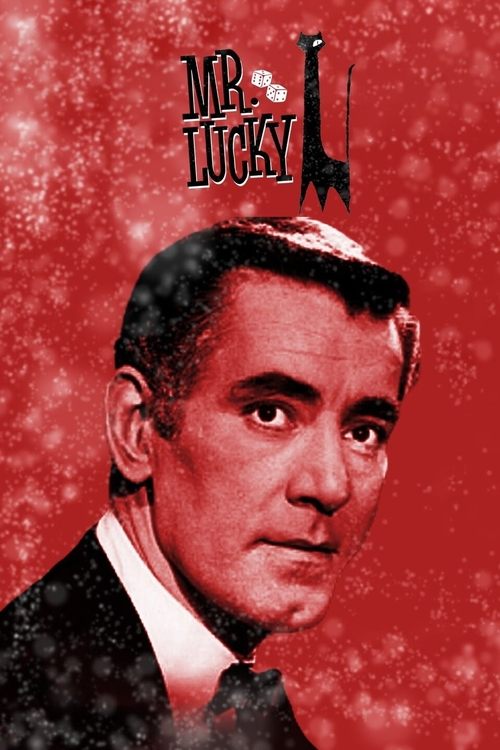
Mr. Lucky is a CBS adventure/drama television series that aired from October 24, 1959, to June 18, 1960, with repeats until September 3. Blake Edwards developed the program as a retooling of his Willie Dante character from Four Star Playhouse, where the role was played by studio boss Dick Powell. In the 1960–1961 season, Howard Duff assumed the role of Willie Dante in the NBC adventure/drama series Dante. Mr. Edwards directed and co-wrote the first episode of Mr. Lucky, and the credits of the first eighteen episodes included "Entire production supervised by Blake Edwards." Jack Arnold produced the show and directed fifteen of the thirty-four episodes. Henry Mancini's smooth theme music for the show reached Number 21 in the US singles charts. He released two successful LP's based on the show, Mr. Lucky and Mr. Lucky Goes Latin.
Mr. Lucky

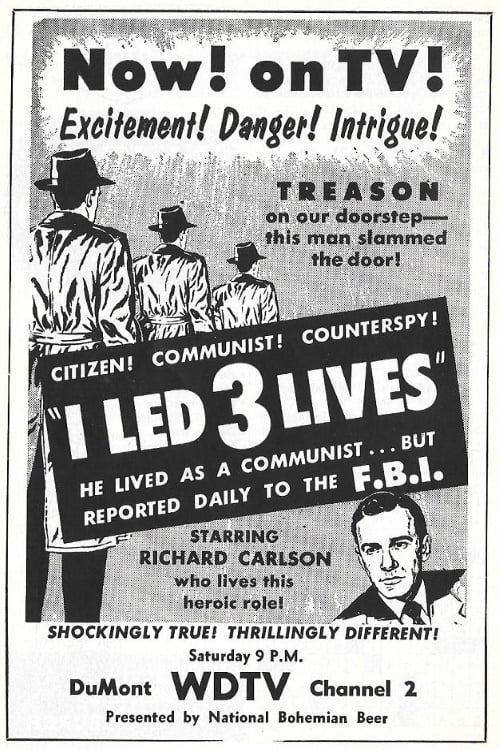
I Led Three Lives is an American drama series which was syndicated by Ziv Television Programs from October 1, 1953 to January 1, 1956. The series stars Richard Carlson. The show was a companion piece of sorts to the radio drama I Was a Communist for the FBI, which dealt with a similar subject and was also syndicated by Ziv from 1952 to 1954.
I Led Three Lives

The Walter Winchell File is the title of a television crime drama series that initially aired from 1957 to 1958, dramatizing cases from the New York City Police Department that were covered in the New York Daily Mirror. The series featured columnist and announcer Walter Winchell, John Larch, George Cisar, Robert Anderson, Robert Brubaker, Dolores Donlon, and Gene Barry, a year before he was cast in the lead of NBC's Bat Masterson. Thirty-nine episodes were produced; the first twenty-six aired on ABC during the 1957-1958 season, and the final thirteen were seen in syndication in 1959. Among the guest stars was the child actor Dennis Holmes, who played 7-year-old Allie Marisch in the 1957 episode "Thou Shalt Not Kill."
The Walter Winchell File

Private Secretary is an American sitcom that aired from February 1, 1953 to September 10, 1957 on CBS, alternating with The Jack Benny Program on Sundays at 7:30pm EST. The series stars Ann Sothern as Susan Camille "Susie" MacNamara, devoted secretary to handsome talent agent Peter Sands, played by Don Porter.
Private Secretary

The friendship of a group of young friends struggling with teen sex, drugs, and work is jeopardized by a romantic interest which may turn pals into bitter rivals.
The Last American Virgin

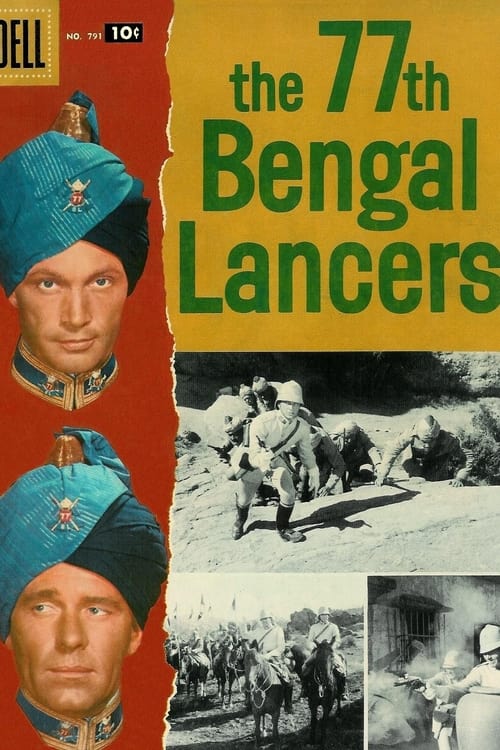
Tales of the 77th Bengal Lancers is a television series broadcast in the United States by NBC during its 1956-57 season. In a period in which much of the programming on U.S. television consisted of Westerns, Tales of the 77th Bengal Lancers could best be described as an "Eastern". It consisted of the adventures of a fictional regiment of the famed real-life cavalry of the British Indian Army. The leading characters were the 77th's officers: the commander, Colonel Standish and two of his lieutenants, William Storm and Michael Rhodes. Rhodes was portrayed as a Canadian, purportedly because the actor portraying him, a native of New Jersey, could not be coached to produce a credible British accent.
Tales of the 77th Bengal Lancers

After a stagecoach holdup, Frank Slayton's notorious gang leave Ben Warren for dead and head off with his fiancée. Warren follows, and although none of the townspeople he comes across are prepared to help, he recruits two others who have sworn revenge on the ruthless Slayton.
Gun Fury

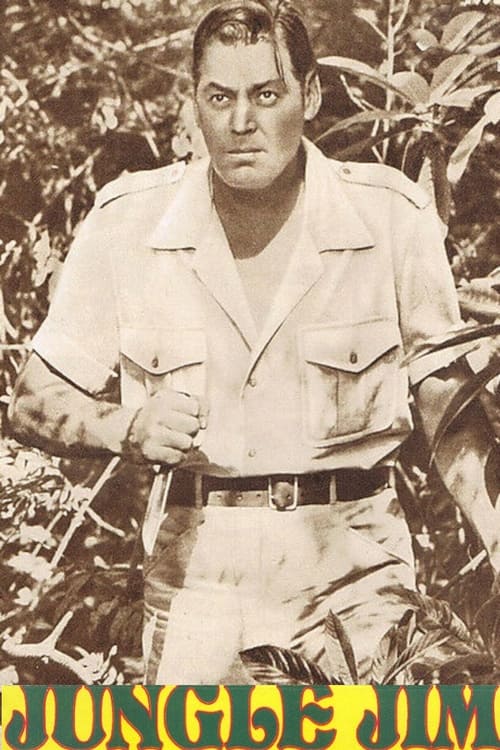
Jungle Jim is a 26-episode syndicated adventure television series which aired from 1955 till 1956, starring Johnny Weismuller, as Jim "Jungle Jim" Bradley, a hunter, guide, and explorer in, primarily, Africa. The program should not be confused with Ramar of the Jungle, but is based on the Jungle Jim comic strip created by Alex Raymond and Don Moore. Starring with Weismuller were Martin Huston as Jungle Jim's teenage son, Skipper; Dean Fredericks as Haseem, the Hindu manservant, and Neal, a chimpanzee from the World Jungle Compound, as Tamba. Paul Cavanagh played Commissioner Morrison in nine episodes. Produced by Harold Greene, the series was filmed by Screen Gems, a subsidiary of Columbia Pictures. The program aired in 158 American media markets and in thirty-eight other nations.Earl Bellamy directed the first four episodes of the new series. The series capitalized on the popularity of Weismuller, who had just completed his last film of Tarzan, the jungle character created by Edgar Rice Burroughs. Jungle Jim was a low-budget offering that relied heavily on stock footage and was not renewed beyond its original episodes.
Jungle Jim

Ryevsk, Russia, 1870. Tensions abound in the Karamazov family. Fyodor is a wealthy libertine who holds his purse strings tightly. His four grown sons include Dmitri, the eldest, an elegant officer, always broke and at odds with his father, betrothed to Katya, herself lovely and rich. The other brothers include a sterile aesthete, a factotum who is a bastard, and a monk. Family tensions erupt when Dmitri falls in love with one of his father's mistresses, the coquette Grushenka. Two brothers see Dmitri's jealousy of their father as an opportunity to inherit sooner. Acts of violence lead to the story's conclusion: trials of honor, conscience, forgiveness, and redemption.
The Brothers Karamazov

High-tech robots equipped with state-of-the-art security devices have been recruited as the new mechanical "night watchmen" for the Park Plaza Mall. When a jolting bolt of lightning short-circuits the main computer control, the robots turn into "killbots" on the loose after unsuspecting shoppers!
Chopping Mall

A Greek artisan is commissioned to cast the cup of Christ in silver and sculpt around its rim the faces of the disciples and Jesus himself. He travels to Jerusalem and eventually to Rome to complete the task. Meanwhile, a nefarious interloper is trying to convince the crowds that he is the new Messiah by using nothing more than cheap parlor tricks.
The Silver Chalice

Seymour works in a skid row florist shop and is in love with his beautiful co-worker, Audrey. He creates a new plant that not only talks but cannot survive without human flesh and blood.