Lighting
Jung-ae volunteers at a juvenile prison when she graduates from college; but the violent boys threaten her safety. Her boyfriend visits and begs Jung-ae to quit. She considers but feels compelled to continue; until the day when an escapee puts her methods at risk. Will she get to the escaped boy in time? Will his negative attitude convince her to quit, or will she affect him positively? And will there ever be happiness at the prison?
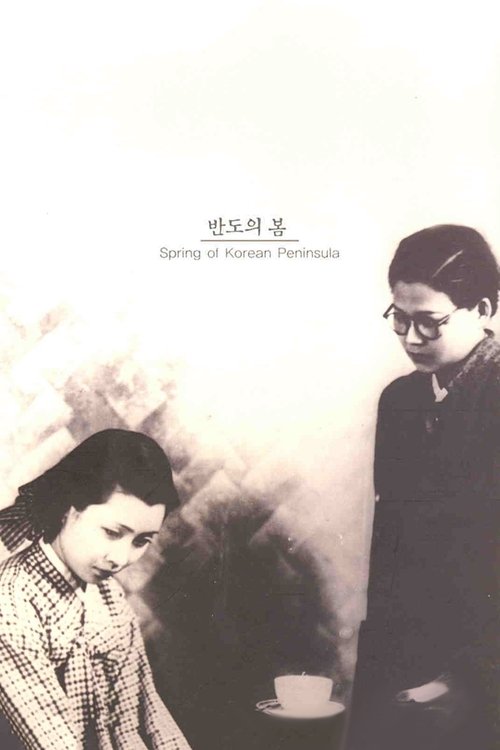
A young filmmaker and his crew struggle to bring the famous Korean story of Chunghyang to the big screen. Torn between two very different women and facing financial ruin, the director makes a rash and foolish choice in order to realize his dreams.
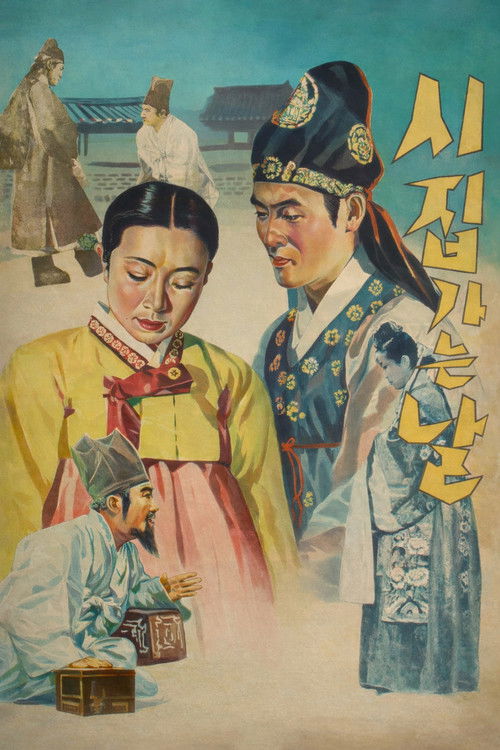
Master Maeng is very proud that an influential family will soon be his esteemed in-laws when his loving daughter, Mi-yeon, marries their son. A few days before the wedding Maeng hears a rumor that his future son-in-law has a cripple leg. Regretting that he can't give his lovely daughter to a cripple, he decides to marry his maid to him instead. Unexpectedly the future son-in-law shows up at the wedding hall and he is not a cripple, but a healthy and handsome youth. Feeling embarrassed, there is no way but to wed the maid to him. The Wedding Day is a recreation of A Happy Day of Jinsa Maeng, a comical play by Oh Yeong Jin. The first Korean film to win an international film award, the Best Comedy Award at the 1957 edition of the Asian Film Festival (now Asia Pacific Film Festival).
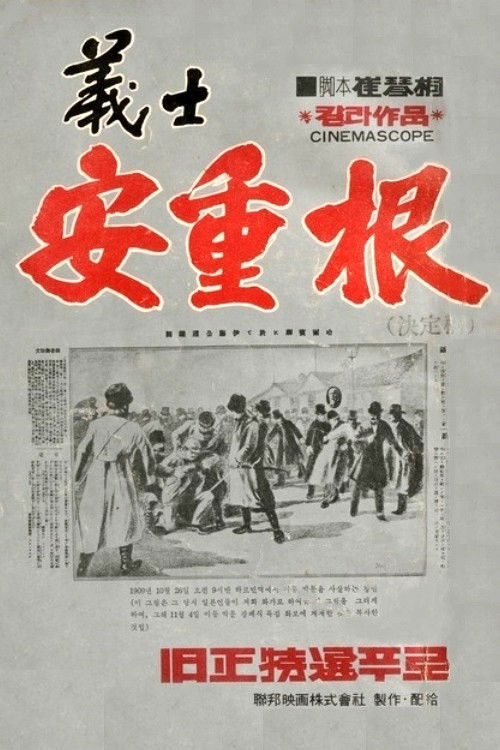
Biographical film about guerrilla resistance leader An Jung-geun, who assassinated former Japanese resident general Ito Hirobumi (signer of the "Treaty of the Protectorate of Japan over Korea", 1905) in Harbin on October 29, 1909.
No description available.
Two brothers—Cheol-ho, an accountant with a toothache and a pregnant wife, and Yong-ho, an unemployed ex-soldier wounded in battle—navigate life in post-war Korea.
During the country's occupation Choi was only allowed to make Japan-friendly films, but the plot of Hurrah! For Freedom is distinctly different, telling the story of a Korean resistance fighter in 1945.
Electrician Dol-soi who was from an orphanage loved Soon-yi who was a daughter of the pub in town. Soon-yi, however, loved handsome electrician Eun-ki and refused Dol-soi's proposal. One day, an awful electrician Ba-woo tried to rape Soon-yi in a dark place. But, Dol-soi rescued her. As usual, Soon-yi loved Eun-ki. Frustrated Dol-soi left the town alone.
A pro-Japanese film showing documentary footage of a dance troupe made up of Koreans comforting Koreans and their families during conscription on the Japanese mainland.
On the eighth of April of King Gyoeng-deok's 10th year of the reign of the Unified Silla Period, Guseulagi, a daughter of Yu Jong, joins the king's parade to Bulguksa Temple, where she meets a stonemason named Asadal from Buyeo. Having a crush on him, she visits Sakyamuni Pagoda, a masonic site; only to find that Asadal had broken down from exhaustion. While she takes care of him, her love for him grows. But Asadal misses his wife who is waiting for him in Buyeo. Meanwhile, Geum Seong who has a crush on Guseulagi, asks his father, Geum Ji, to propose on behalf of him. But Yu Jong is so dissatisfied with Geum Ji because he is a treacherous subject, that he turns down the proposal, instead of hurrying up his daughter's marriage with Gyeongsin, a faithful subject. Asanyeo who has been waiting for her husband Asadal in Buyeo goes to Bulguksa Temple after her father-in-law had died.
A Japanese-speaking family in occupied Korea deal with the war.
After facing hard times, an orphan Korean boy gets adopted to Japanese society. He meets several Japanese people who are kind to him, and grows up wanting to repay his debt to Japan, by becoming a kamikaze pilot.
Two Korean conscripts undergo Imperial Japanese Army training, much to the pleasure of their families.
The heroine, a girl of marriageable age named Yu, married a thirteen-year-old fiancé, but he died three years later. Twenty years later, Yu adopts a child from a relative named Dong-gil. Dong-gil's siblings, wishing to inherit his legacy, spread rumors that Yu is having an affair with the village teacher.
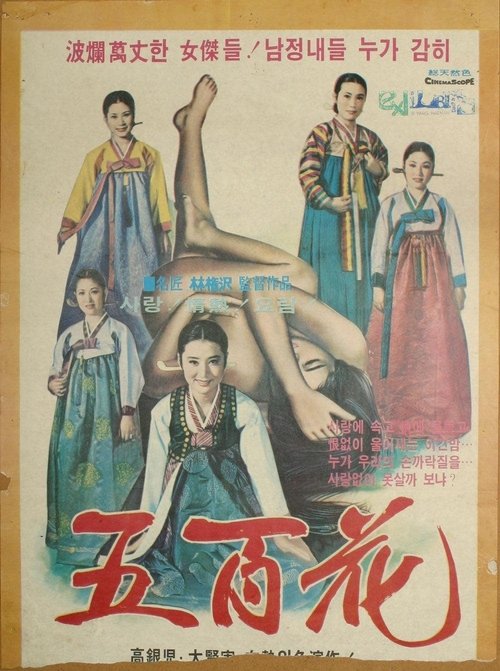
A patriot Park No-Hun is dispatched by Shanghai Provisional Government for Independence to assassinate members of the House of Council. In this situation Young-Kuk, brother of Hyeon-Ju who is a kisaeng of Myeong Wol Kwan, is jailed and Choi Chil-Yong, an inspector of Japanese Higher Police Department, is in agony of difficulties between Korea and Japan. Shin Yun-Il, a member of the council falls in love with a kisaeng whose name is Jeong-Mi. All of these are going their way under the influence of phases of the times such as carrying out colonial policies and each of them is linked complicatedly and causes troubles. After all their efforts concentrated on Independence of Korea, and Park No-Hun carried out his mission with help of 5 kisaengs of Myeong Wol Kwan. Finally he leaves for Shanghai with them.
The border smuggler leader Lee Geum-ryong had a sweetheart Kim So-young, who was only looking for a chance to escape. Geum-ryong's subordinate, Jeon Taek-i, is in love with So-yeong, but helps So-yeong to escape from the smuggling lair. Geumryong's gang pursues and a fight breaks out, and Jeon-taek uses all his might to defeat the gang and crosses the border with So-yeong.
Three men who have been taken to the compulsory labour under the Japanese colonialism turn back to their hometown, a fishing village. They break the injustice and corrupt customs and rebuild the devastated village with the help of the village girls.