FEEL IT.STREAM
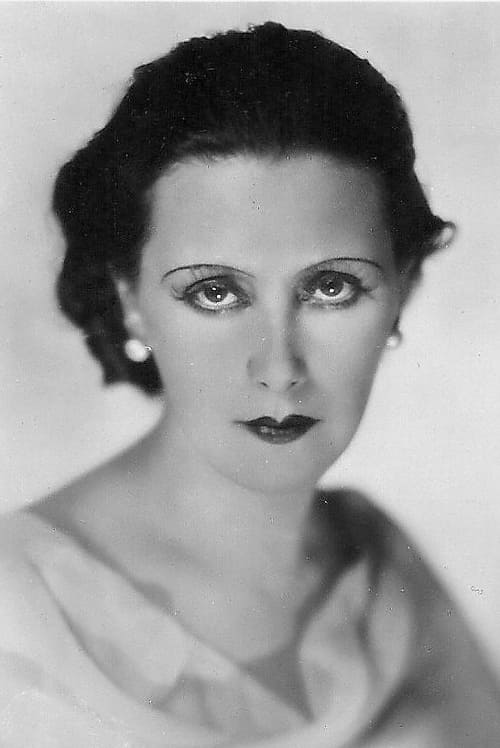
Lil Dagover

Lil Dagover

Acting

Biography

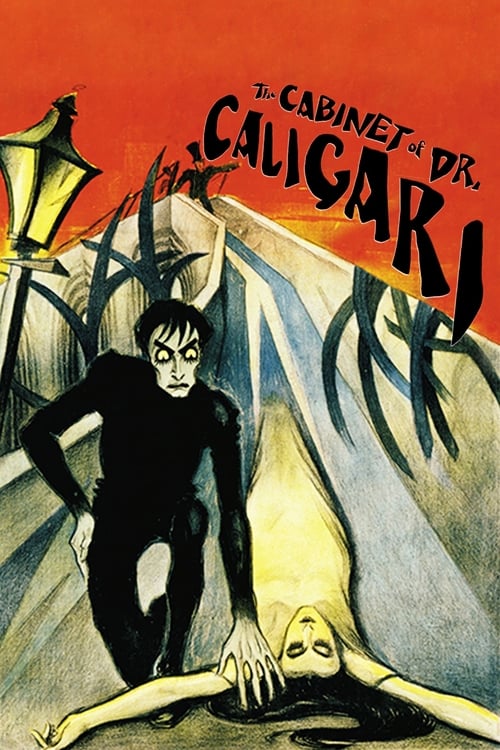
A prominent German film actress born on 30 September 1887 at Madiven, Java, the daughter of a forest ranger in the service of the Dutch authorities. Sent at the age of ten to Baden-Baden to study, she later entered the cinema thanks to her marriage in 1917 to the actor Fritz Dagover who was 25 years her senior. They divorced in 1919 but not before he had introduced her to director Robert Wiene and other notables of German cinema. She made her screen debut in Fritz Lang's Harakiri (1919). Immediately after she appeared in Wiene's classic expressionist film, "The Cabinet of Dr. Caligari" (aka The Cabinet of Dr. Caligari (1920)). Apart from three trips -- one to Sweden in 1927, another to France in 1928-9 and one to Hollywood in 1931 -- most of Lil Dagover's career and fate was linked to that of the German cinema, where her role was usually that of the frail, menaced heroine. She continued to star in a great number of films during the Nazi era. Among her best performances were her roles in Congress Dances (1931), in Gerhard Lamprecht's The Higher Command (1935) and in Veit Harlan's The Kreutzer Sonata (1937). She also acted in the Deutsches Theatre Berlin, the Salzburg Festival, at forces shows and at war theaters. At one time, she was reported to have been a close friend of Adolf Hitler. In 1944, she received the War Merits Cross. Dagover continued her career in post-war Germany, playing many supporting parts until the late 1970s.

Known For

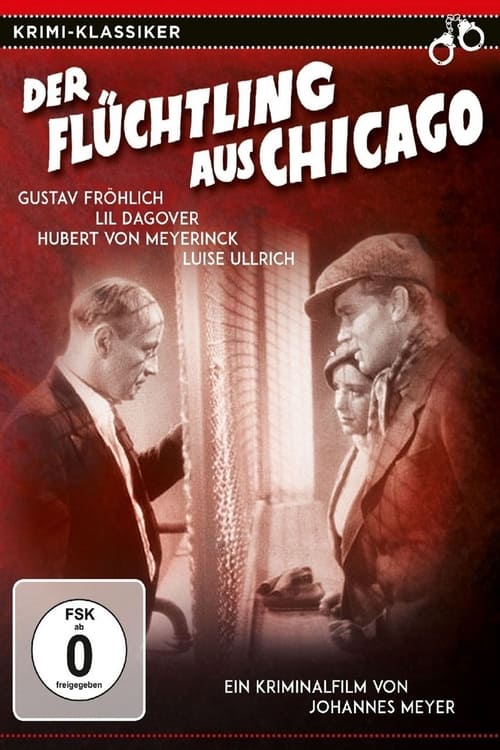
The Fugitive from Chicago
5.8

Werner Dux, heir of the big car company "Dux-Werke", is a gambler who has just been arrested in Chicago for shooting a cardsharper. While in jail, he learns from his friend Michael Nissen that his father has died recently. That means that the Dux-Werke are without a leader at the moment, for Werner's cousin Steffie, who is his co-heiress, is still too young to run the firm. In this situation, Werner convinces his friend Michael, who is an engineer by profession, to take over the firm as long as he is in jail and to pose as him. Michael agrees and is able to bring the firm up again. He even arranges a reliability test for motorcycles via Istanbul, Rome and Barcelona, which creates a big Turkish order for the company. When the real Werner escapes from jail and arrives in Germany, it looks as if the whole story is up to bust. But Werner needs money, so he convinces Michael to go on as before and hand over all profits of the firm to him.

The Fugitive from Chicago

1934Movie
Otto – The Series
8.0

“Otto – The Series” is an unusual comedy format from the early 1990s centred on Otto Waalkes, blending classic crime entertainment with Otto’s distinctive brand of humour. Rather than telling a continuous story, the series combines newly shot sketches featuring Otto with scenes from old Edgar Wallace films. These original sequences were re-dubbed, completely transforming their content. Dialogue that was once serious turns into absurd wordplay, and the originally suspenseful plots are deliberately played for laughs. In this way, Otto effectively “smuggles” himself into the dark world of the Wallace films, turning it into a parody driven by nonsense, running gags, and his characteristic humour. The result is an idiosyncratic mix of crime and comedy, whose particular charm lies above all in its playful use of the original material.

Otto – The Series

1995Series