Alfred Paget
Acting
Biography
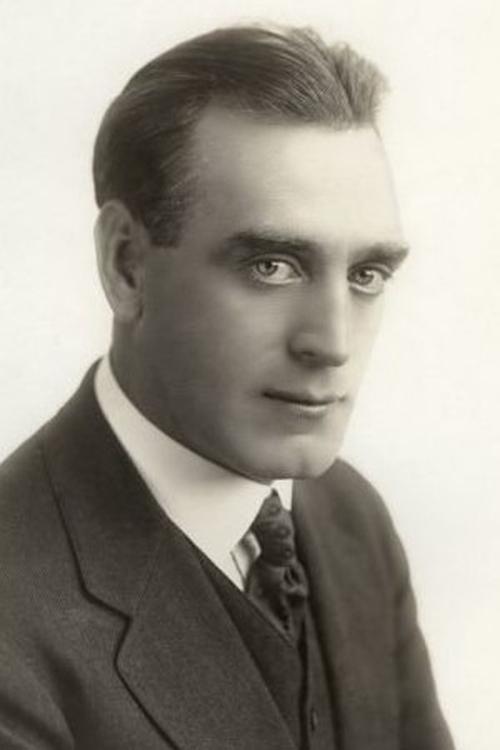
Alfred Paget (1880–1925) was an English silent film actor. He appeared in 239 films between 1908 and 1918. Paget was married to Leila Halstead. In the summer of 1919, he contracted a form of malarial fever, and died in Winnipeg on 8 October 1919.
Known For

The story of a poor young woman, separated by prejudice from her husband and baby, is interwoven with tales of intolerance from throughout history.
Intolerance: Love's Struggle Throughout the Ages

A young man and a young woman, each unlucky in love, determine never to marry. But Cupid (and two separate bands of misinformed revelers) has other ideas.
The Newlyweds

When the double wedding takes two daughters away from the old man at once, the youngest, now the only one left, in outraged spirit promises never to leave her father, but soon she too is departing for a new home. Then comes a cold hard fact of life. The son-in-law claims his right to make a home alone for his wife. In his bitterness and anger, the father denies them both the house. Several years later the lonely old man meets at the gate a babe in arms. When he learns whose baby it is, heart hunger craves another sight, and sought, brings with it the only natural result.
My Baby

A man recognizes the thief who had previously robbed him as one of the men involved in an unrelated mob shootout.
The Musketeers of Pig Alley

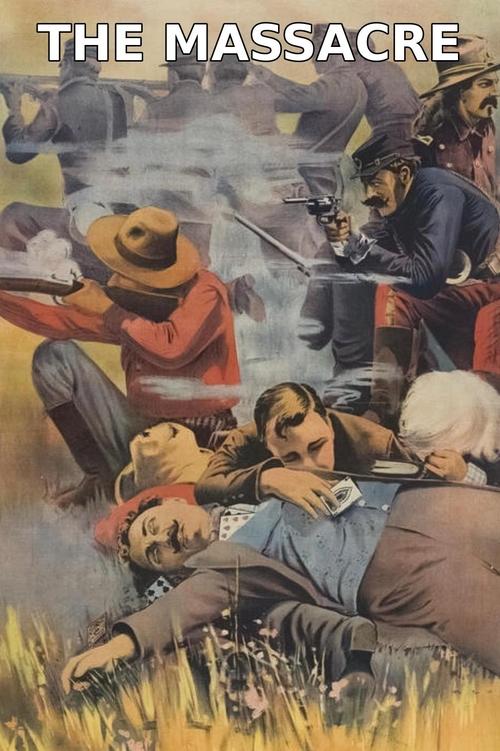
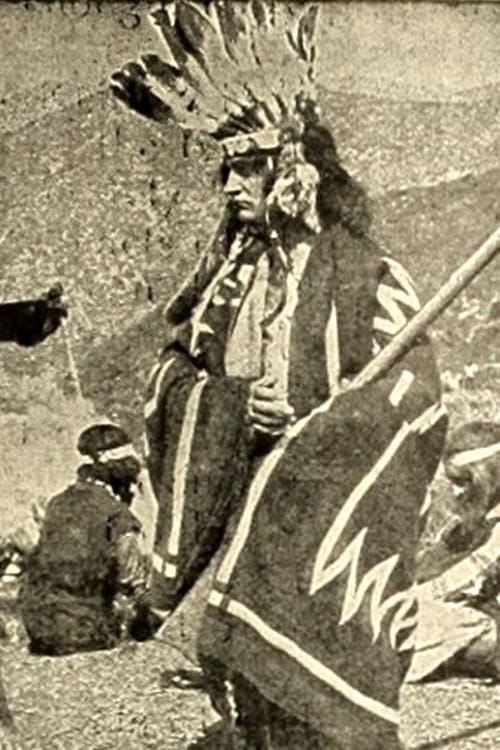
The story of the massacre of an Indian village, and the ensuing retaliation.
The Massacre

A young woman who is engaged to a millionaire she doesn't love meets and falls in love with a rough sailor.
The Primal Call

Located in the south of France, a woman, who, after the death of her husband, is forced to assume the management of the Gambling Casino, of which he was proprietor. She places her daughter in a convent and keeps her in ignorance of her occupation. Twelve years later the mother becomes engaged to a young nobleman. The young man, however, by accident, meets the daughter, now seventeen years old, and falls in love with her, not knowing her identity. The mother realizing the truth of the situation, sacrifices her own love for the young man for her daughter's happiness.
Madame Rex

Nine-year-old Nedda is a direct descendant of the Trevors, a family that can trace its roots back to the reign of King Charles I. Alas, the Trevors suffer severe financial reverses, and Nedda is yanked from the luxury of her ancestral home in Britain to be raised on New York's Lower East Side. Ten years later, the grown-up Nedda stands accused of the murder of her mother.
Heredity

A Confederate officer is called off to war. He leaves his wife and daughter in the care of George, his faithful Negro servant. After the officer is killed in battle, George continues in his caring duties, faithful to his trust.
His Trust

Nora, the waif, is forced to attend school. She warms to her teacher for the way that he defends her against the taunts of some of the students, but when she's made to wear a dunce cap, she flees the schoolhouse in shame. Unsupervised by her alcoholic father, Nora becomes a determined truant, wandering the town during school hours. There she catches the attention of a huckster, who convinces her that they will run away and be married. The schoolmaster, meanwhile, preoccupied by Nora's absence, leaves his other students to go find her. He encounters her at a crossroads, being spirited away by the huckster, and calls the man's bluff by saying that he'll find them a minister.
The School Teacher and the Waif

To fulfill a dying mother's bequest for her daughter, the town pastor purchases the daughter a stylish hat, and gossip spreads through the town.
The New York Hat

Two young girls are sent away to live with their uncle, which sets off a chain of events resulting in an Indian attack on the town.
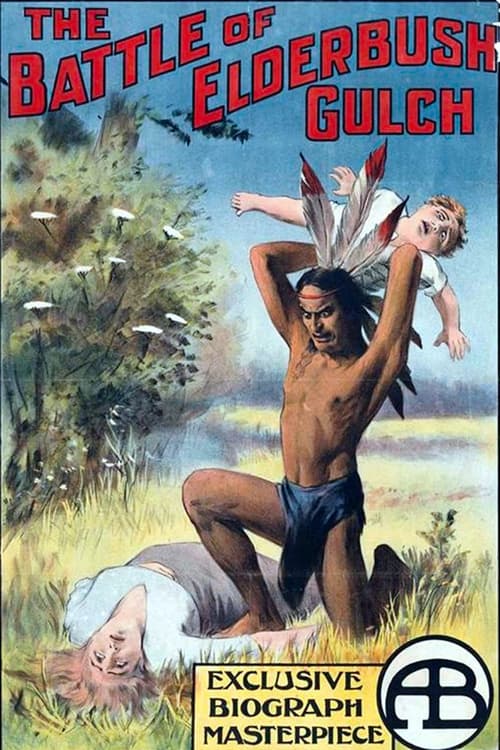
The Battle at Elderbush Gulch

After the relatively low box office takings of 'Intolerance', D. W. Griffith would revisit his epic film three years later by releasing two of the film's interlocking stories as standalone features, with some new additional footage. The first of the two was 'The Fall of Babylon', which depicts the conflict between Prince Belshazzar of Babylon and Cyrus the Great of Persia.
The Fall of Babylon

John Bradley is a trusted clerk with an oil company. Enjoying a fair salary, he is comfortably fixed in a modest little village home with his wife and two small children. Starting from home in the morning he is accompanied by the two little ones, who always looked forward to each morning's scamper in the hills with pleasurable anticipation. He is met at the office door by the manager and handed a large sum of money with instructions to carry it to the bank. This is witnessed by a well-known gambler of the town, who being in hard link, resolves to get that money by hook or crook. Making a short cut across the little town, he manages to intercept John on his way to the bank, and in the course of their conversation invites him to have a drink, as it is half an hour before the bank opens. The invitation is accepted and while in the saloon the gambler tries to inveigle John into a game, but here his will serves him and he resists the fascination.
Unexpected Help

A Greek woman marries a struggling sculptor. When he can't support her and their baby, she offers to sell herself as a slave to allow them to buy food.
The Slave

In the span of five years, pioneering director D.W. Griffith delivered some 450 films for the Biograph Company at a rate of two or three films per week. One and two reels in length, these works showed the filmmaker inventing, borrowing, and perfecting techniques he later used to memorable effect in "The Birth of a Nation," "Intolerance," "Way Down East" and "Orphans of the Storm." Including Lillian and Dorothy Gish, Mary Pickford, Mack Sennett, Lionel Barrymore, Henry Walthall, and Mae Marsh. Among the 22 titles included on this landmark release are such widely recognized masterworks as "The Musketeers of Pig Alley," "The Battle at Elderbush Gulch," "The New York Hat," and "A Corner in Wheat."
D.W. Griffith - Years of Discovery 1909-1913

Stella Benton, a young society girl who has lost her beautiful voice through the death of her father, goes to live with her brother Charles, in the lumber camp. Charles Benton is having a struggle to make both ends meet, and when his cook quits, he makes his sister do the work for the hundred men in the lumber camp. Jack Fyfe, a neighboring lumber man, meets Stella and gradually falls in love with her, but love is not reciprocated. Seeing that she is being overworked, Fyfe offers to marry her, in spite of the fact that she does not love him. A child is born of this loveless marriage, and the couple are reasonably happy, until Walter Monahan, a wealthy lumberman, begins to make love to Stella.
Big Timber

In Bagdad, Princess Badr al-Budur, the daughter of the Sultan, falls in love with Aladdin, the son of a poor tailor, and rejects the suit of evil alchemist al-Talib, her father's choice. Al-Talib consults his Evil Spirit, who advises him to find the magic lamp hidden in an underground cave. Unable to get it himself, al-Talib hires Aladdin, who secures the lamp but keeps it when he realizes al-Talib's wickedness. With wealth obtained through wishes, Aladdin courts the princess. After the lamp changes hands between al-Talib and Aladdin, al-Talib steals it and abducts the princess to the desert. Aladdin follows with only a gourd of water. Suffering from thirst and exhaustion, Aladdin nearly succumbs, but the horsemen of the Sultan, who learned of his daughter's abduction, ride up and rescue Aladdin.
Aladdin and the Wonderful Lamp

In the Kingdom of Never-Never Land there live a great Lord and Lady, each presiding over their own domain. This great Lord goes for a stroll through his estate and coming to the border of his own land he is struck by the entrancing beauty of the contiguous estate, so like his own, that the inclination to intrude is irresistible. His peregrination is halted by the appearance of the great Lady, who is indeed as fair as the flowers that clothe her land. He introduces himself and invites her to stroll with him in his gardens. She is in like manner entranced by the beauty of his possessions. How alike in beauty are they; a veritable fairyland. If they were only one, for it seems they should be. This thought is mutual, and the Lord proposes a way, a marriage, and so a betrothal of convenience ensues. They know nothing of love and so are content in the anticipation of being Lord and Lady of all Never-Never Land.
Love Among the Roses

A young woman is quite taken with a man she met; in fact, he is her “ideal”. However, after her new suitor refuses to get mixed up in a street brawl, the young woman views him as a coward. Nearby, a violent convict has escaped from prison. While the couple takes a ride in the woman’s automobile, the criminal ambushes a guard, taking the officer’s clothing and gun. The young woman still argues her suitor is a coward, drops him off, and drives off alone. She is then carjacked by the on-the-lam criminal. The young man witnesses the ambush and sets out to rescue his lover.