Acting
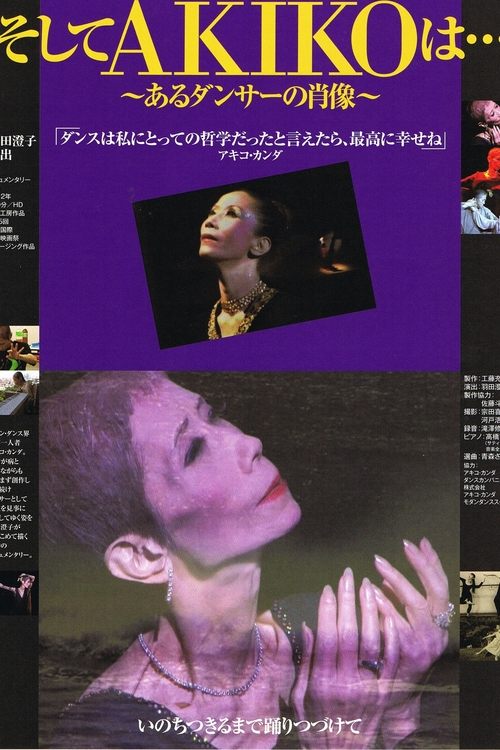
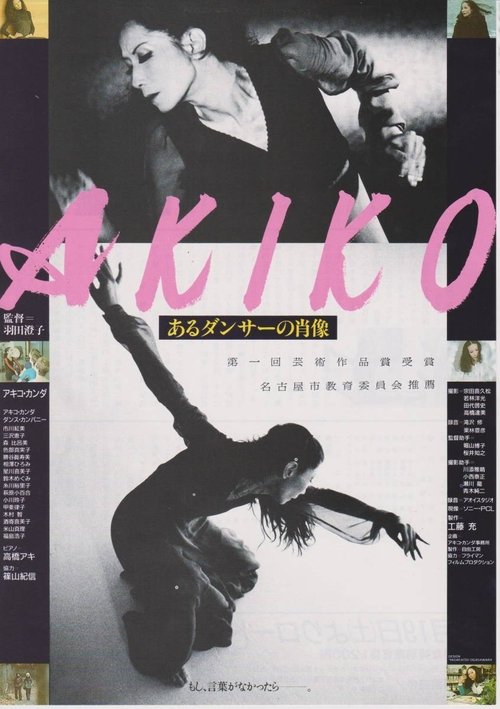
Sumiko Haneda returns to film what will be the final bits of Akiko Kanda's life, documenting Kanda's will to dance as she struggles with terminal cancer.
“I have three tasks in my life: to dance, to teach dance, and to create dance,” says the pioneering Japanese performer Akiko Kanda in this intimate portrait of creativity and individuality, After seeing a Martha Graham performance in college, Kanda left her family behind in Japan and arrived in New York City, where she studied under the legendary Graham and became a principal dancer with the troupe. Following the wiry artist as she moves from practice floor to performance hall, and from the cramped single-room apartment she lives in to a trip home to see her aging mother, director Sumiko Haneda reveals a woman who has rebelled against traditional ideals of marriage and motherhood, and who nearly single-handedly brought modern dance to Japan-and kept it alive. “When I die,” Kanda tells the director, “I will be content if I can just say, ‘I danced.'”
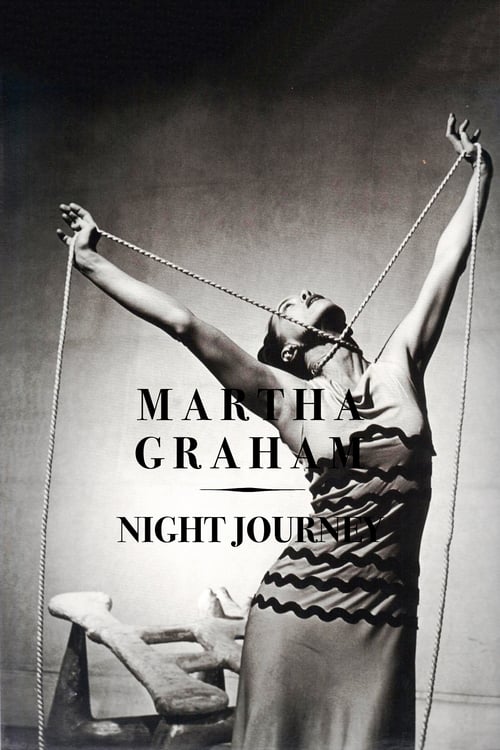
Night Journey, the dance, had its premiere only two and a half years after Appalachian Spring, and it is a close cousin. It too has a stream-of-consciousness narration: Jocasta, as she is about to kill herself, remembering what has happened to her. It too contains soul-delving solos, broken up by ensemble dances. Here, however, the ensemble is a darker element. As the story was taken from Greek tragedy, so the corps is the equivalent of Greek tragedy’s chorus. They tell us how to feel: afraid mostly. In this piece Graham pushed her habitual economy to its limits.
This musical play is based on the first act of Goethe's Faust. The angel Mephistopheles is condemned to fall from heaven after committing a sin. He is told that he can only return to heaven if he can bring a human being on the path of salvation. Mephistopheles refuses, believing that man is inherently evil. Vowing to drag a human down to hell along with him, he descends onto Earth and sets his sights on a man named Faust, an aged professor with no will to live.