FEEL IT.STREAM
Edgard Varèse

Edgard Varèse

Sound

Biography

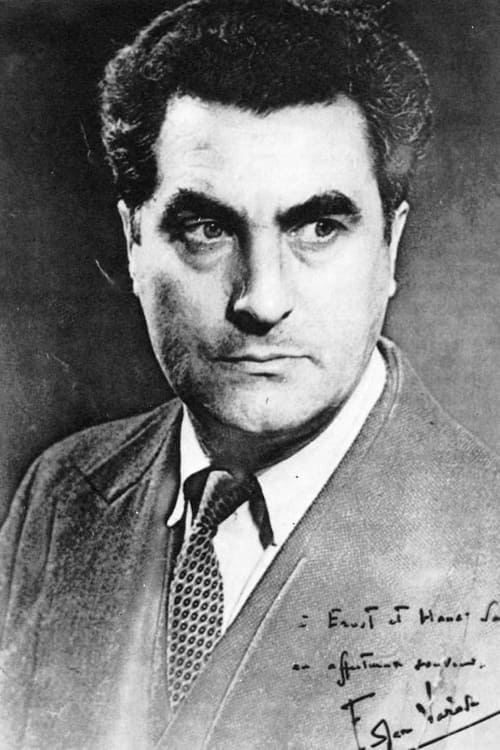
Edgard Varèse or Edgar Varèse (both spellings were used by the composer himself at different times in his life) was a French naturalized American composer, born December 22, 1883 in Paris and died November 6, 1965 in New York. Initially trained at the Schola Cantorum and the Paris Conservatory, Varèse found with more independent artists, such as Debussy and Busoni, the necessary encouragement for his personal expression. Indeed, well before 1914, Varèse considered abandoning classical composition methods, the tempered system and traditional musical instruments to use “the sound material itself”. This ideal led him to destroy his first scores as far as Americas — where he already used the frequency and intensity modulated sounds of a siren — and to encourage research in the field of acoustics, from the dynamophone to the productions of Léon Theremin and Maurice Martenot. Varèse abandons the orchestra from Arcana, for more reduced and individualized instrumental ensembles. However, the absence of technical means, a recording studio or a laboratory silenced him for the duration of the Second World War and until the mid-1950s, when studio recording techniques were developed. essays by Pierre Schaeffer and Pierre Henry. Varèse was then able to produce a work such as the Poème électronique, for the Universal Exhibition in Brussels in 1958. Maintaining close relations with important representatives of the scientific community of his time, Varèse's interest in science is reflected in the titles he gives to his works, evoking mathematics (Intégrales), metallurgy (Densité 21 ,5), crystallography (Hyperprism), botany (Octandre), chemistry (Ionization) and even alchemy (Arcana). At first, Varèse's work seemed very abstract. However, his music has a great power of incantation, as soon as the human voice intervenes (Offerings, Ecuatorial, Nocturnal). The scandal of the creation of Déserts, on December 2, 1954 in Paris, revealed him for a new generation of classical (including Iannis Xenakis and Bruno Maderna) and popular (like Frank Zappa) composers who recognized in him much more than a "precursor", a model to follow and one of the great innovators of the 20th century along with Stravinsky, Bartók, Henry Cowell and Anton Webern.
Known For

Zappa
7.3

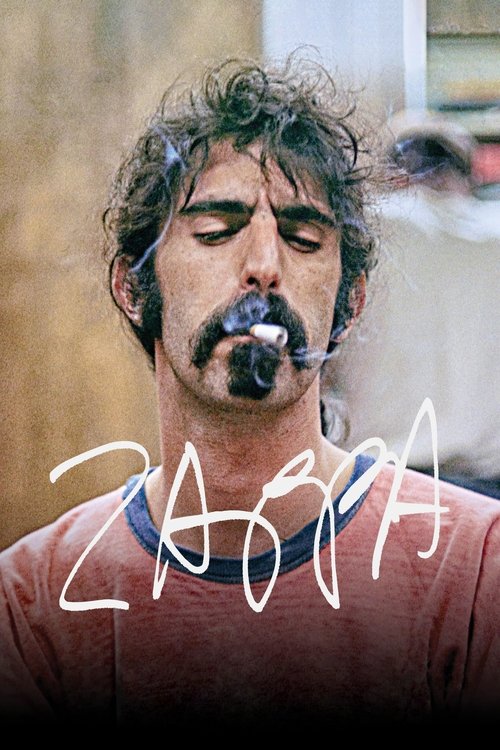
With the help of more than 10,000 dedicated Zappa fans, this is the long-awaited definitive documentary project of Alex Winter documenting the life and career of enigmatic groundbreaking rock star Frank Zappa. Alex also utilizes in this picture thousands of hours of painstakingly digitized videos, photos, audio, writing, and everything in between from Zappa's private archives. These chronicles have never been brought to a public audience before, until now.

Zappa

2020
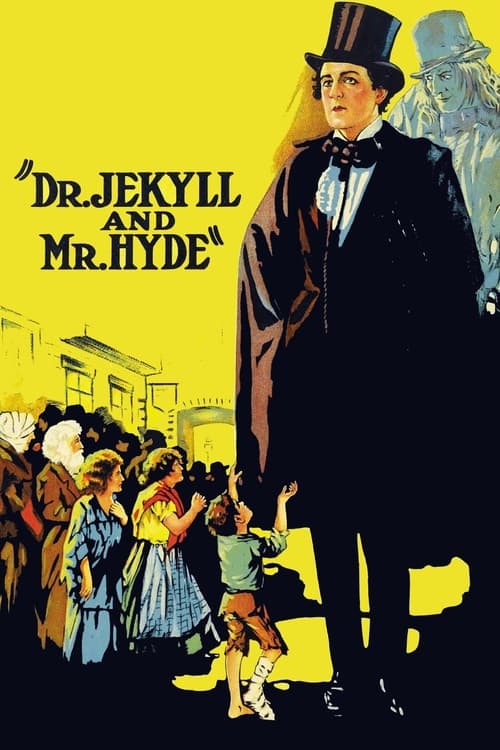
Dr. Jekyll and Mr. Hyde
6.7

A doctor's research into the roots of evil turns him into a hideous depraved fiend.

Dr. Jekyll and Mr. Hyde

1920
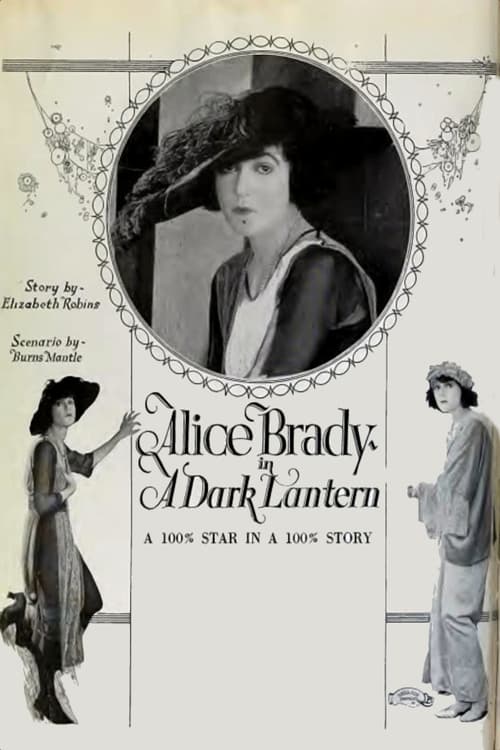
A Dark Lantern
7.0

Although loved by a respectable doctor, a society-girl is fascinated by a prince and follows him to Rome. When he reveals himself in his true colours, she has a nervous breakdown and her faithful doctor restores her to health - and to himself.

A Dark Lantern

1920
No image
N/A

Frank Zappa: The Present-Day Composer Refuses To Die is a 2000 documentary about Frank Zappa.

Frank Zappa: The Present-Day Composer Refuses To Die

2000
A Medida do Tempo
10.0

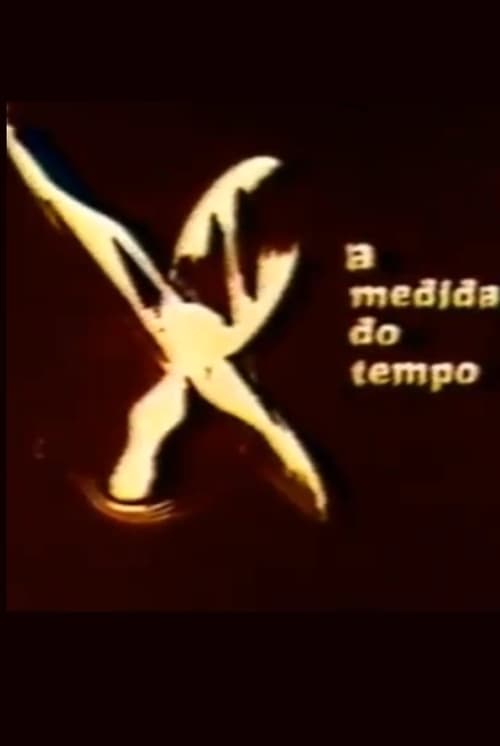
Animations (only parts in nuclei in the film) and images, many of them archival and foreign, illustrate that the notion of time is associated with movement and its measurement is performed by the rotation of the Earth around its axis and the Sun. The angle of inclination of the Earth in this last movement also marks the climatic seasons. From the need for greater accuracy in measuring time, gnomons and solar quadrants arose, for whose reading the duodecimal numbering is used. Based on this numbering, time zones and mechanical measuring devices were established, illustrated by the clock mechanism with a church bell. The evolution of astronomy determines the creation of more accurate electronic devices for the evaluation of time, such as the meridian telescope, the Markowitz chamber, the electronic oscillators and the telescope, with which astronomers work at the National Observatory.

A Medida do Tempo

1958
No image
N/A

Poème Électronique is an 8-minute piece of electronic music by composer Edgard Varèse, written for the Philips Pavilion at the 1958 Brussels World’s Fair. The Philips corporation commissioned Le Corbusier to design the pavilion, which was intended as a showcase of their engineering progress. The pavilion was shaped like a stomach, with a narrow entrance and exit on either side of a large central space. As the audience entered and exited the pavilion, the electronic composition Concret PH by Iannis Xenakis (who also acted as Le Corbusier's architectural assistant for the pavilion's design) was heard. Poème électronique was synchronized to a film of black and white photographs selected by Le Corbusier which touched on vague themes of human existence.

Electronic Poem

1958
Third Interpolation
N/A

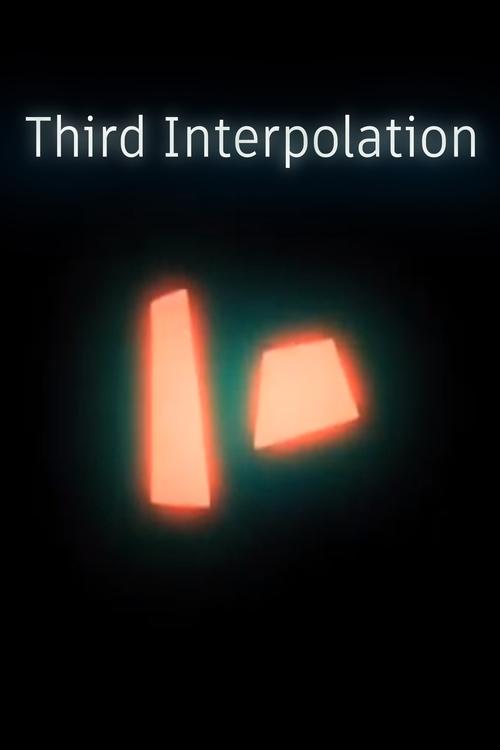
Shapes projected onto an abstract environment. The movement and scale of the forms in the film is a beautiful equivalent of the dynamics of the soundtrack

Third Interpolation

1999
No image
7.0

Frank Zappa: Phase Two is a 2002 documentary about Frank Zappa. It features a lot of footage from Scheffer's previous film, but new material from Malcolm McNab's private achive.

Frank Zappa: Phase II - The Big Note

2002
No image
10.0

Based on two poems by Rafael Alberti, Garabatos (“Scribbles”) is a reflection on childhood, education and the demise of innocence. Music by Pierre Henry, Pierre Schaeffer and Edgard Varèse.

Garabatos

1964
Déserts
6.0

Déserts was created to accompany a live performance of the work of avant-garde composer Edgard Varèse (1885-1965). The Ensemble Modern, a contemporary music group based in Frankfurt, commissioned Viola to create a visual score for Varèse's Déserts after discovering notes by the composer referring to an unrealized image component of his composition. The resulting film/videotape was produced with the European television stations ZDF/Arte. In October 1994 Viola's Déserts premiered in a live performance in Vienna with conductor Peter Eötvös and the Ensemble Modern.

Déserts

1994
La Troisième Veille
N/A

No description available.

La Troisième Veille

2025
ANTÓNIO MARIA LISBOA
N/A

No description available.

ANTÓNIO MARIA LISBOA

2025