Oskar Fischinger
Directing
Biography
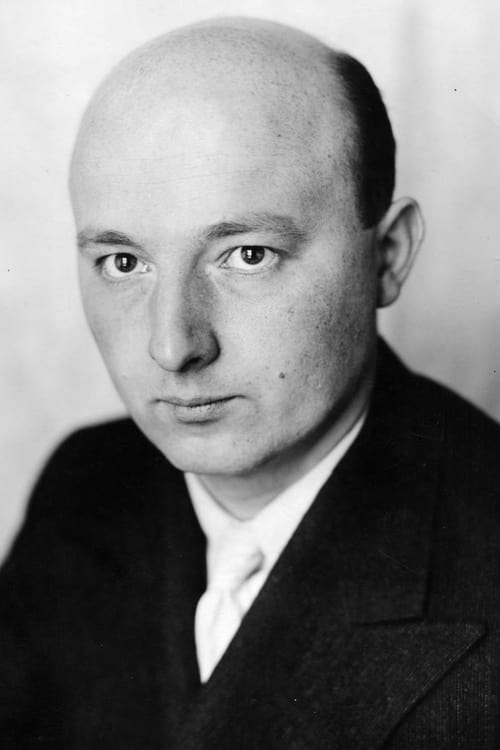
Oskar Wilhelm Fischinger (22 June 1900 – 31 January 1967) was a German-American abstract animator, filmmaker, and painter, notable for creating abstract musical animation many decades before the appearance of computer graphics and music videos. He created special effects for Fritz Lang's 1929 Woman In The Moon, one of the first sci-fi rocket movies. He made over 50 short films, and painted around 800 canvases, many of which are in museums, galleries and collections worldwide. Among his film works is Motion Painting No. 1 (1947), which is now listed on the National Film Registry of the U.S. Library of Congress. Description above from the Wikipedia article Oskar Fischinger, licensed under CC-BY-SA, full list of contributors on Wikipedia.
Known For

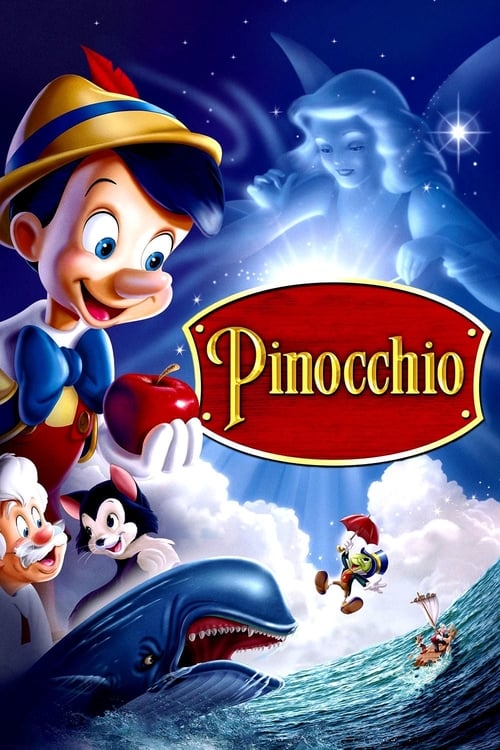
When the gentle woodcarver Geppetto builds a marionette to be his substitute son, a benevolent fairy brings the toy to life. The puppet, named Pinocchio, is not yet a human boy. He must earn the right to be real by proving that he is brave, truthful, and unselfish.
Pinocchio

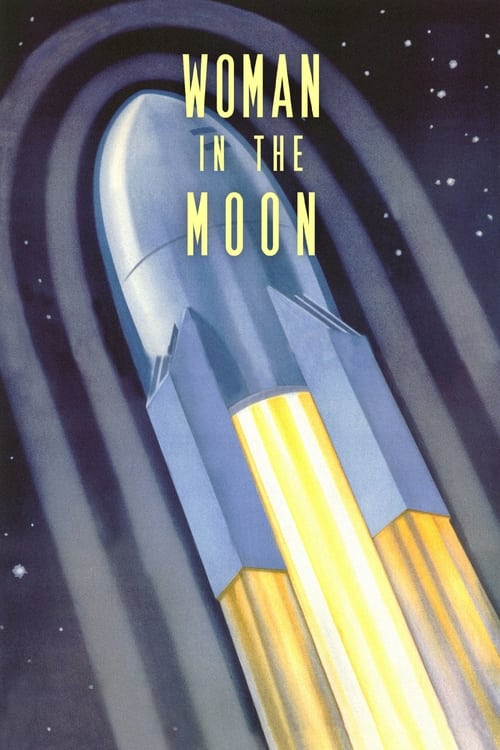
A scientist discovers that there's gold on the moon. He builds a rocket to fly there, but there's too much rivalry among the crew to have a successful expedition.
Woman in the Moon

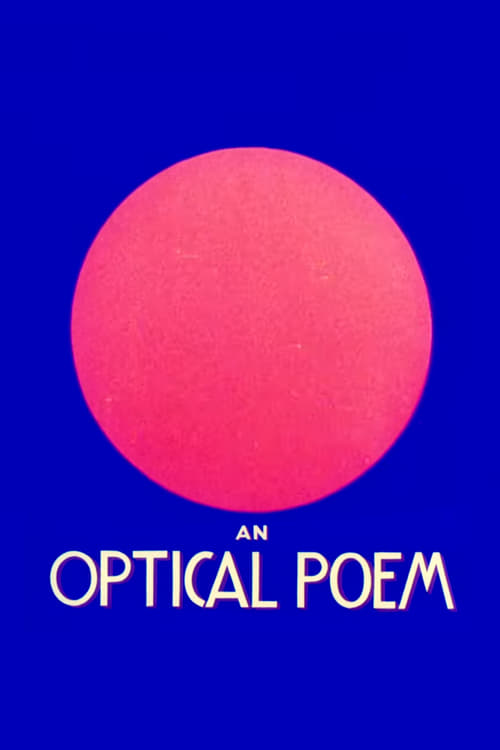
A dance of shapes. A title card tells us this is an experiment in conveying the mental images of music in a visual form. Liszt's "Second Hungarian Rhapsody" is the music. The shapes, all two-dimensional, are circles primarily, with some squares and rectangles, and a few triangles. The shapes move rhythmically to the music: receding from view or moving across the screen. Red circles on a blue background; light blue squares; white rectangles. Then, a red background of many circles with a few in the foreground. Red gives way to blue then to white. Shapes reappear as Liszt's themes re-occur. Then, with a few staccato notes and images, it's over.
An Optical Poem

What remains, unedited, of the first episode of a serial by several hands, subject to a form of supervision-control by Fischinger. It opens with an extremely happy image (a "creative hand" which subsequently returns from time to time) — with shading and movements which appear to have been achieved by the use of the Rotoscope — characters who evoke the commedia dell’arte, in a somewhat joyless tone, but visually dramatic and with echoes of "caligarism". Enno Patalas would like to visit the other surviving episodes, better to understand the spirit of the operation conceived by Louis Seel, designer emeritus and the inspiration of the project. Preserved by the Academy Film Archive in 2000.
Münchener Bilderbogen: Pierette Nr. 1

In 1927, motivated by a longing for freedom, Fischinger set off on a walking trip from Munich to Berlin. Covering the distance in nearly four weeks, he captured the country’s hidden beauty. His voyage serves as a symbolical transition and underlines a belief that people are the same everywhere.
Walking from Munich to Berlin

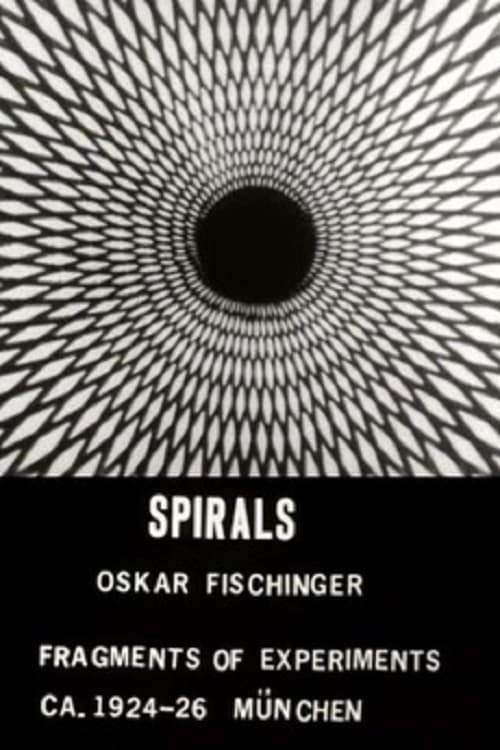
In 'Spirals' Oskar Fischinger designed visual patterns of extreme complexity which often develop in overlapping cycles, yet he interrupts these patterns with radical editing of single frames of contrasting imagery. 'Spirals' exists as a fragmentary unfinished experimental film. Preserved by the Academy Film Archive in 2001.
Spirals
One of Oskar Fischinger's earliest films, Seelische Konstruktionen (as it is known in German), clearly points the way to the masterpieces of musically-blended experimental animation he would conceive in the decades to come. The sense of masterful timing and rhythm, the easy and natural -- though patently Fischinger-esque -- character traits of the subjects, and the smooth precision of both line and movement are all present already. Unique is the black-silhouetted, semi-cartoon characters (not nearly as rigidly self-contained as Lotte Reiniger's cut-out forms) which seem to adhere to no physical limitations whatsoever. Morphing into shapes, structures, objects, patterns, and even one another, as though they were made of pure mercury and set to music. As for the "story", it's rather non-sensical, and certainly silly, but also has a slightly dark and devious tinge to it as well; men becoming monsters, uncontrollable shape-shifting and the constant, almost desperate movement.
Spiritual Constructions

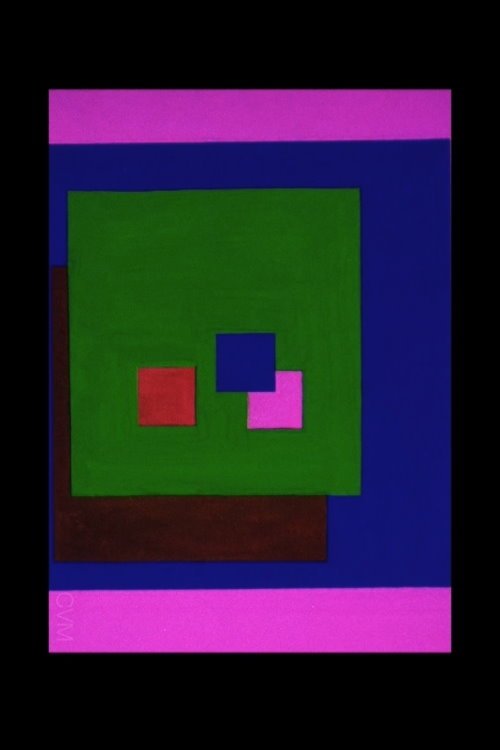
In the 1936 short Allegretto, diamond and oval shapes in primary colors perform a sensual, upbeat ballet to the music of composer Ralph Rainger. The geometric dance is set against a background of expanding circles that suggest radio waves. [Early Version and Late Version preserved by the Academy Film Archive in 1999].
Allegretto

An experiment in color and rhythm with no music. An unfinished film that was later edited into Radio Dynamics.
Color Rhythm

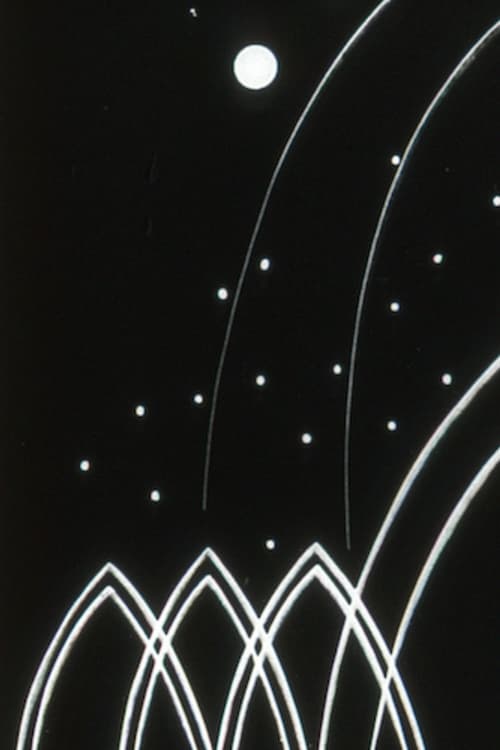
The first Studies were synchronized with records (Fischinger made a total of 13 Studies all without sound). It was only with the introduction of sound, beginning with Study No 6 that the films did full justice to this musical principle. The play of the white lines, the arcs, and the upside-down U’s running hither and thither like ballet dancers was brought into perfect synchronization with the music, and thus the films offered an abstract illustration of the melodies. Study No 6 is certainly the best of his films in terms of forms. - Hans Scheugl and Ernst Schmidt, Jr. Preserved by the Academy Film Archive in 2001.
Study No. 6

The black and white, live-action Swiss Trip, scored with Bach's 3rd Brandenburg Concerto (like Motion Painting No. 1), is kind of a nature or travel film cut via noticeable (in-camera?) edits that give the impression the film is constantly blinking and foreshadow techniques Stan Brakhage would use in the '50s and '60s. Preserved by the Academy Film Archive in 2000.
Swiss Trip (Rivers and Landscapes)

An experimental short from Oskar Fischinger
Study No. 8

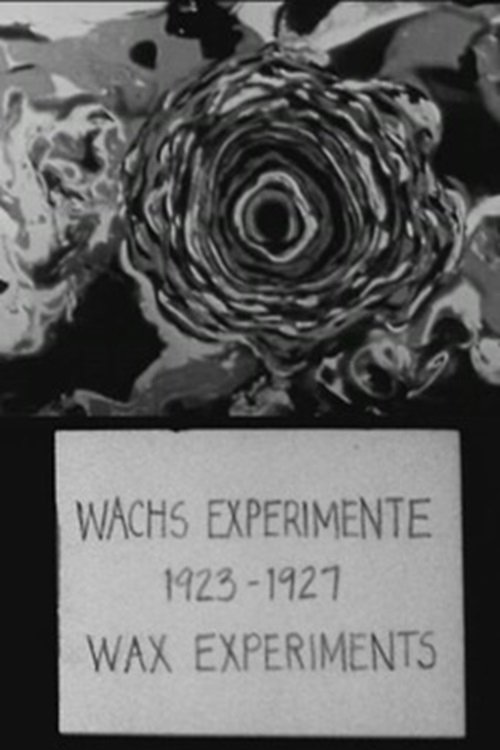
For the production of this film, Oskar Fischinger tinted various layers of hot wax. After cooling, the resulting lump of wax resembled a marble cake. Fischinger then began to cut off slices from the lump, photographing each step.
Wax Experiments

An abstract film in which every motion of coloured shapes is in strict synchronization with music. Preserved by the Academy Film Archive in 2000.
Composition in Blue

Raumlichtkunst (1926/2012) was the name of a series of live multiple projector concerts given by Oskar Fischinger in the 1920s in Germany. It was not performed after that time. In 2012 it was restored and reconstructed from original nitrate materials, by Center for Visual Music in Los Angeles. It now exists as an HD digital, three-projector, looped museum installation for black box galleries, having been on display at Tate Modern, Whitney Museum New York, ACMI Melbourne and other museums worldwide. The three non-synched loops create ever-evolving new combinations of abstract patterns. While the original was accompanied by live percussive music, the reconstruction is exhibited with three different compositions by John Cage and Lou Harrison, and Edgar Varese.
Space Light Art

Fischinger's abstract designs accompanied by Gitta Alpar singing. Preserved by the Academy Film Archive in 2000.
Coloratura

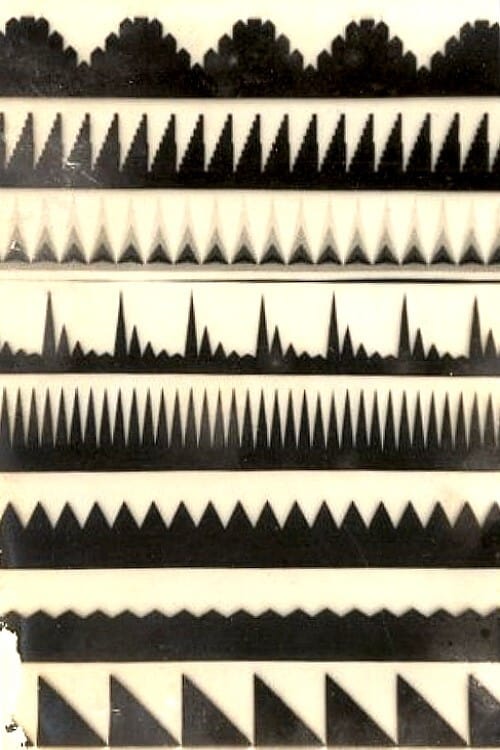
Curious and intrigued by technological advances, Fischinger here also experiments with "synthetic sound" (he would not be the only one: later Norman McLaren played a lot with it). Thus he contructed the optical sound track directly onto the film. But beyond identifying harmonics and noises, he sought to understand to what sound emissions corresponded the geometrical and regular designs which, visibly, appear in their turn synchronously on the screen as true and proper "ornaments" of the sound which is being produced.
Sound Ornaments
An experimental short from Oskar Fischinger
Study No. 9

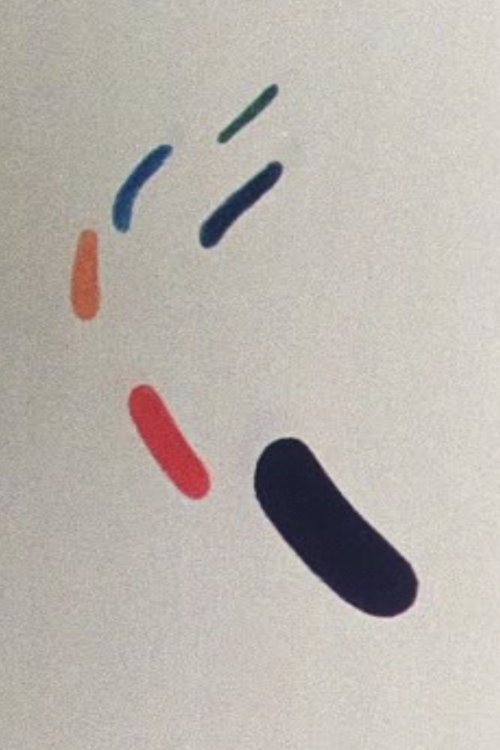
Motion Painting No. 1 is a 1947 experimental short animated film in which film artist Oskar Fischinger put images in motion to the music of Johann Sebastian Bach’s Brandenburg Concerto no. 3, BWV 1048. It is a film of a painting (oil on acrylic glass); Fischinger filmed each brushstroke over the course of 9 months. In 1997, this film was selected for inclusion in the United States National Film Registry by the Library of Congress as being “culturally, historically, or aesthetically significant”. Preserved by the Academy Film Archive in 2000.
Motion Painting No. 1

Fischinger ad for Muratti cigarettes.