Acting
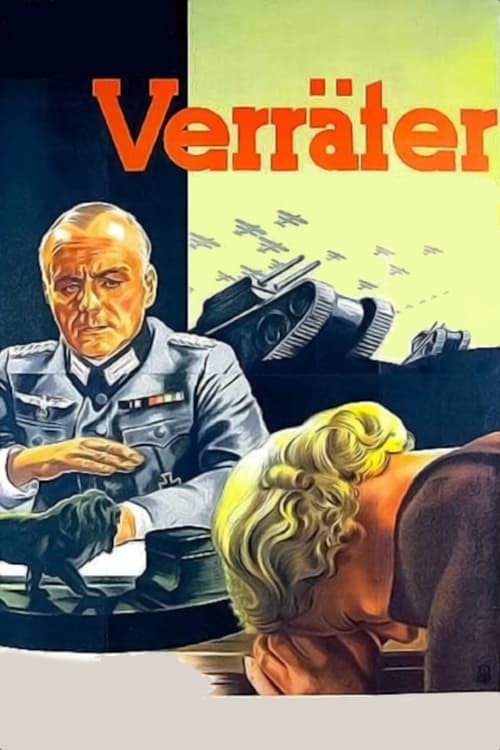
This 1936 film tells the story of the doings of foreign agents in Germany and their allies among the German population. Having placed an ad in a local paper looking for "contact with bigwigs in German industry", enemy agents Morris and Geyer end up making contact with an engineer named Brockau. Brockau has developed an improvement in turning oil into gasoline and that's just what these enemy agents are looking for. Brockau, for his part, needs money, because his girlfriend is a selfish cow who demands more and more toys and trinkets, which has put our naive little nerd deep into debt. Brockau, however, is not the only unwitting maroon to fall into the clutches of the evil agents: the former bank agent Hans Klemm, now doing his service in the Wehrmacht, ends up being contacted by an agent from the other side and ends up getting blackmailed into working for them.
Henny Porten plays the dual role of a rather indecorous Countess and her kitchen maid Karoline Blum, an amateur actress.
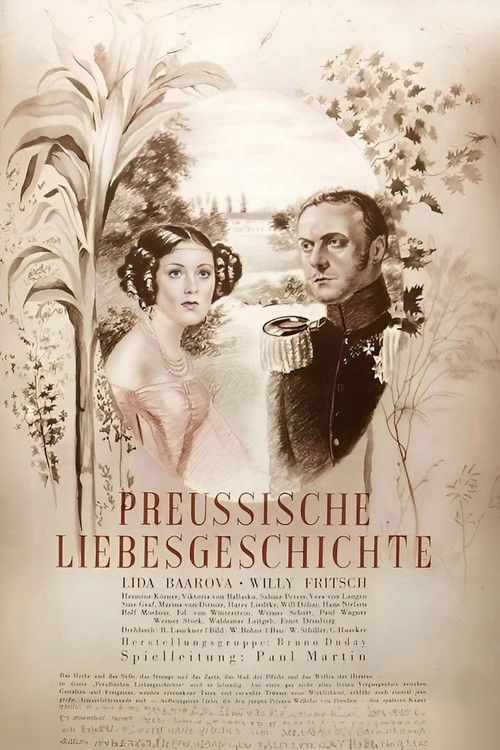
The film depicts the love affair between William I and Elisa Radziwill.
Gerhard Lamprecht sketches a cross-section of Germany's new post-war society, with its winners, social climbers, and losers, represented by the social microcosm of an apartment building. The gossip-mad Frau Mierig from the rear building gives the newly-arrived Frau Kaminski, the janitor's wife, a lively initiation into the tenants and their peculiarities.
A silent movie by Robert Wiene.
The story of Hannele, an unhappy girl who is beaten by her stepfather and tries to commit suicide.
For three difficult orphans living by her aunt the former employee of the family searches a new premouth; he releases with it a result of tumultuous involvements. - Humble-entertaining mistake farce, completely fitted on Hans Moser.
In the spring of 1905, the water conduit project in the Canadian city of Canitoga is set to be completed. For years, the completion had been marred by sabotage. Engineer Oliver Montstuart commands the last blasting operation. But again, the explosive charge is too large and thus, further construction is forestalled again. When Montstuart confronts foreman Westbrook, the foreman threatens him with a knife. In self-defence, Montstuart shoots him. Now, he has to flee.
The stand-alone opera singer Carmen Casini dare not admit to her adult son, the spoiled race car driver Cecil, that she ruined her voice on a stormy day at the racetrack and that her career is thus at an end. Meanwhile, Cecil has fallen in love with the pretty Colette … without suspecting that her father, the wealthy Bartell, was a former lover of his mother and that he’s Cecil’s daddy. Thus, both Carmen and Bartell try to prevent the unfolding love-relationship between brother and sister, because this ain’t the Ozarks, you know! Only after the unhappy Cecil tries to commit suicide after an argument with his mother do Carmen and Bartell realize they still love one another. Suicide attempt be damned; let’s go out on a date! A movie that screams “Fun for the whole family.”
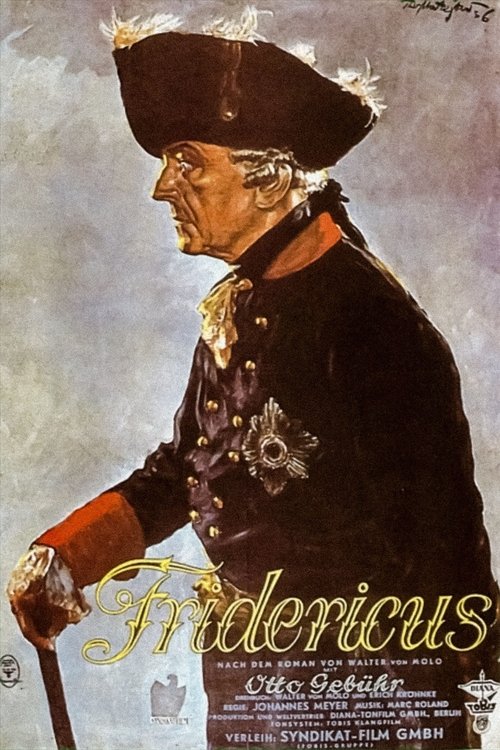
In 18th century Europe, King Friedrich II of Prussia leads his army through the seven-years-war with neighboring states, and after numerous near defeats, eventually brings a victorious army back to Berlin.
Nazi historical drama about Duke Karl Alexander of Württemberg and his treasurer Süß Oppenheimer.
No description available.
A hunter is hired by a count to track down a poacher who has been killing deer on his estate.
Baron von Goret is an impoverished landowner, whose estate is about to go into receivership. And so, for that reason, he wishes to marry off his son Hermann with his well-off girlfriend Helga. But Hermann is in love with the farmer’s daughter Dorothea. He leaves his father’s estate with her and makes his way to Berlin to make a name for himself. He’s not successful in this and, so as not to stand in his way, Dorothea leaves him. Hermann’s aunt brings him back to his father’s estate, where, depressed over losing Dorothea, works tirelessly to clear the estate of all its debts.
The clever Zacharias Bräsig is a good friend to all and tries to help out, where he can. Bräsig also meddles in the relationships of young people, so that by the end of the film, there's a double marriage.
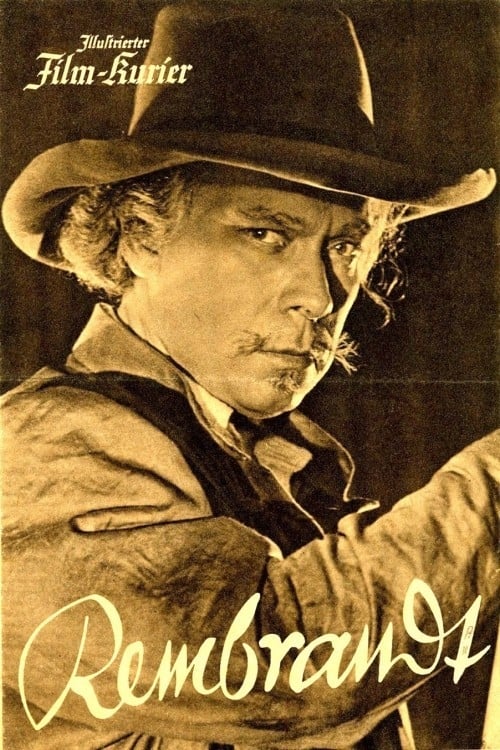
Already a famous painter, Rembrandt van Rijn is commissioned to paint the Amsterdam Archers' Guild. But upon completion of the picture, the men of the guild feel duped, because they don't consider themselves flatteringly depicted in the painting. They therefore decline to pay for the work. During this dispute, the painter finds out his wife is close to death. He finds himself terribly lonely after her passing and suffers from depression until he decides once more to marry.
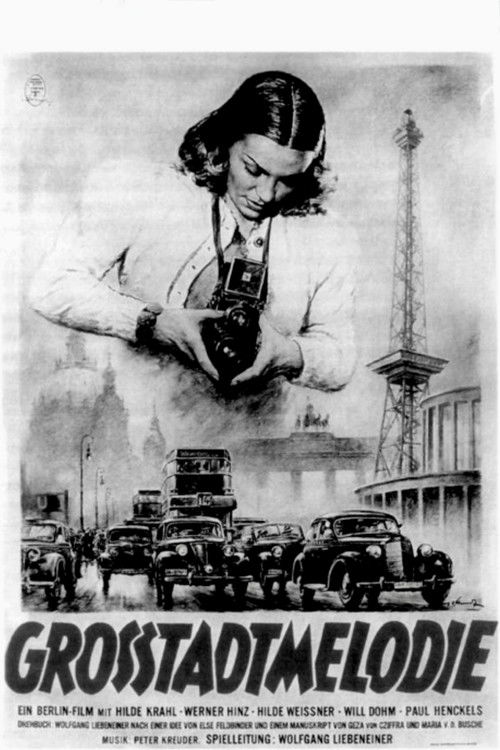
A young woman moves to Berlin to work as a press photographer.