Sound
An enhanced and sentimentalized story of love, honor, rivalry, and retreat. The traditional laws of the patriarchal environment and severe conflicts of the heart. The action takes place in Herzegovina and Stolac, Bosnia. The film depicts the Bosnjak from a German point of view.
No description available.
A married farmer falls under the spell of a slatternly woman from the city, who tries to convince him to drown his wife.
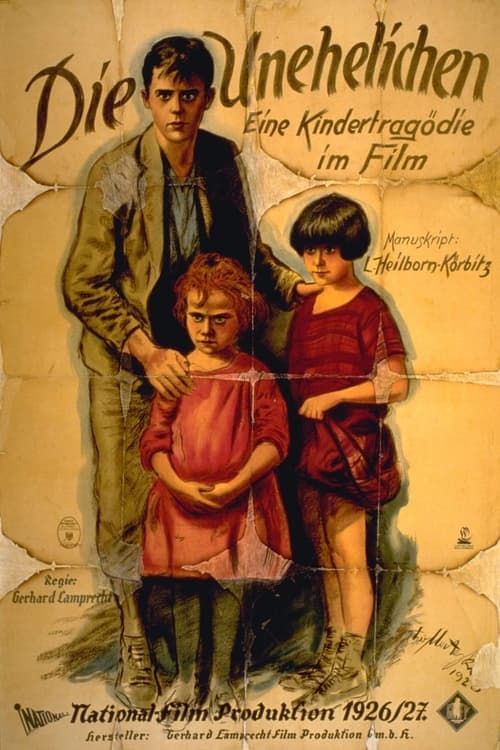
If watching a fellow facing indifference/rejection in the slums of Berlin didn't convey enough pathos, Gerhard Lamprecht gathered much of the same crew from Die Verrufenen and turned his attention to the city's population of unwanted children for the heart-tugging Die Unehelichen, released the following year. The trio of foster children at the center of Die Verrufenen are survivors who use their own resourcefulness to get by when the kids' guardians and the system itself let them down.
Dr. Mabuse and his organization of criminals are in the process of completing their latest scheme, a theft of information that will allow Mabuse to make huge profits on the stock exchange. Afterwards, Mabuse disguises himself and attends the Folies Bergères show, where Cara Carozza, the main attraction of the show, passes him information on Mabuse's next intended victim, the young millionaire Edgar Hull. Mabuse then uses psychic manipulation to lure Hull into a card game where he loses heavily. When Police Commissioner von Wenk begins an investigation of this mysterious crime spree, he has little to go on, and he needs to find someone who can help him.
Ivan Mozzhukhin is a "...hot-headed Caucasian mountaineer leader whose irrational behavior comes to the attention of the Czar . Hoping to use Hajji Murad as a go-between in his plans to conquer the Caucasus mountaineers, the Russian ruler finds that the hero is not so easily manipulated. Rescuing the beautiful Saira from the Czar's clutches, Hajji Murad leads the mountain people's revolt against the despotic regent." Needless to say, the film ends in tragedy.
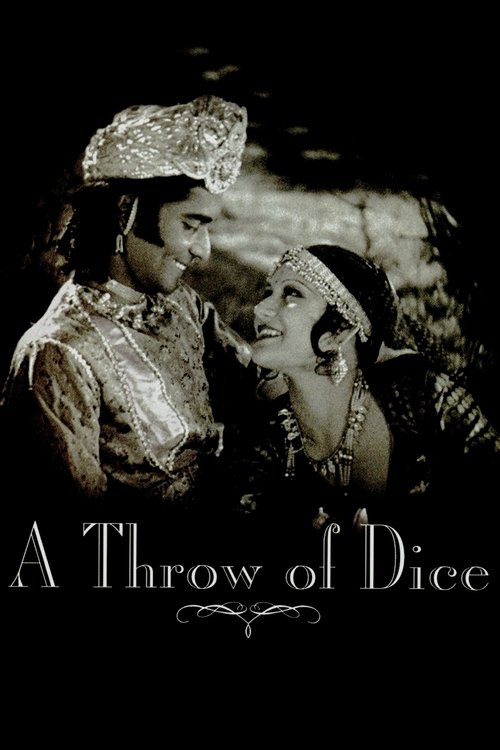
Two neighboring kings addicted to gambling, Ranjit and his cousin Sohat, vie for the same beautiful young woman, Sunita, daughter of the hermit Kanwa.
A scientist discovers that there's gold on the moon. He builds a rocket to fly there, but there's too much rivalry among the crew to have a successful expedition.
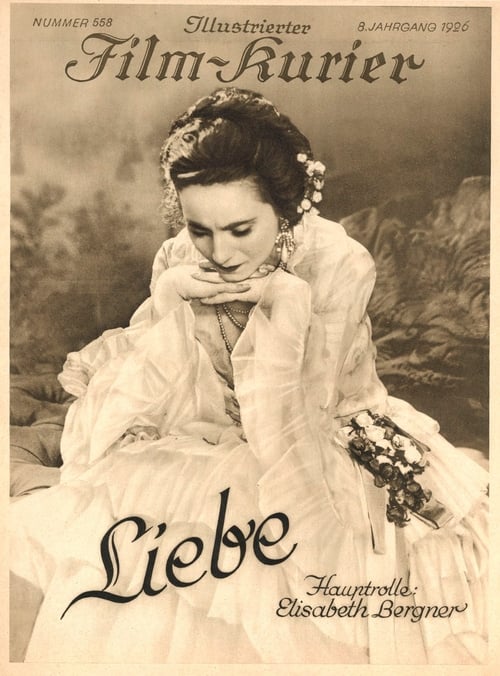
Based on Honore de Balzac’s story of Madame de Langeais. Costume drama about the infamous loves of the countess.
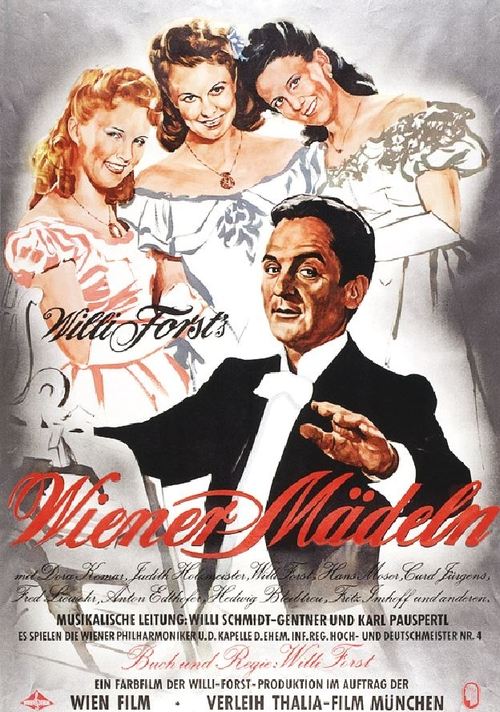
Begun in 1944/45, finished and released in 1949, this is a biography of the composer Carl Michael Ziehrer, who overcomes hypersensitivity in competitive situations which leads initially to failures in both career and romance.
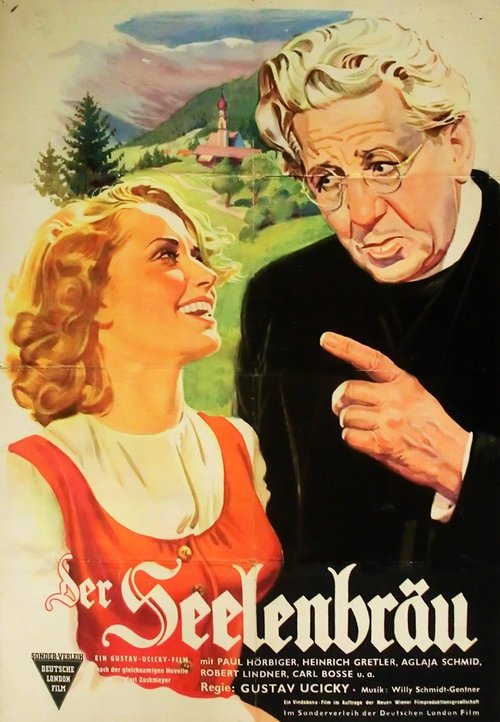
In Alt-Köstendorf in the Salzburg region, the dean, known as Seelenbräu, and the brewer Hochleithner, known in the village as Leibesbräu, are fighting for supremacy. As their nicknames suggest, Leibesbräu is primarily concerned with the physical well-being of the villagers, while Seelenbräu cares deeply about the faith of his congregation. This leads to repeated clashes between the two men, who could perhaps be described as stubborn. When Hochleitner's niece Clementine leaves the convent and wants to stay at home, a new dispute flares up between Seelenbräu and Leibesbräu.
When two Russian captains of cavalry came to a German post station one of them recalls what happened long time ago. He begins to tell the story: Ten years ago a comrade of them made a resting at the post station and fell in love with the station master's daughter. He promised everything to her and finally convinced her to come with him to St. Petersburg. When both arrived there she had to realize that her captain never had the intention to marry her.
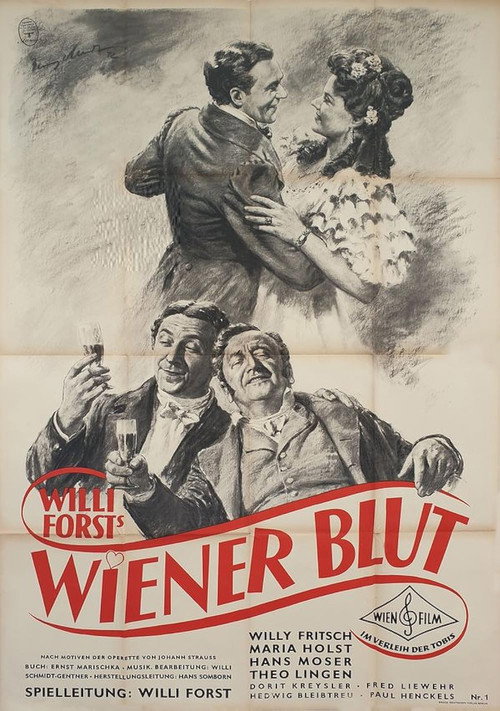
Young Count Georg Wolkersheim is sent to the Congress of Vienna to represent the interests of his country, Reuss-Schleiz-Greiz. Tensions arise between the count, his wife Melanie, and their two chamberlains, and when the four attend a court ball, Melanie leaves Georg, assumes the identity of a famous actress, and attracts the affections of Crown Prince Ludwig of Bavaria.
A German scientist murders his fiancée during World War II when he learns that she has been selling the results of his secret research to the enemy.
Czechoslovakian opera star Jarmila Novotná plays the title role in the Austrian tunefest "Frasquita". Based on a Franz Lehár operetta, the story is the usual frothy nonsense. Dolly (Charlott Daudert) is engaged to marry Harald (Hans Heinz-Bollmann), but she's really in love with Hippolit (Heinz Rühmann). Harald is likewise enamored of another, namely Frasquita (Jarmila Novotná).
Vienna 1910 is a 1943 German biographical film directed by Emerich Walter Emo and starring Rudolf Forster, Heinrich George and Lil Dagover. It is based on the life of Mayor of Vienna Karl Lueger. Its antisemitic content led to it being banned by the Allied Occupation forces following the Second World War.
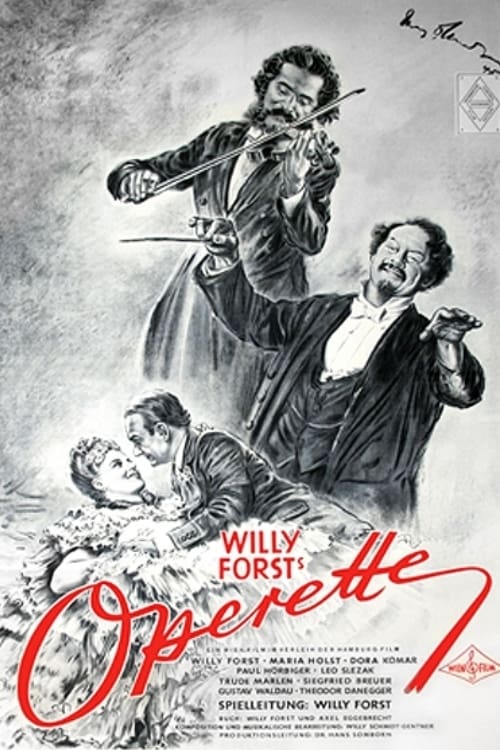
A musician is offered a job in Vienna as stage director, but his disagreements with the aristocratic opera manager end in abrupt firing in spite of a mutual attraction. He's quickly engaged by another theatre and becomes famous for his lavish stage productions and fine acting, which begins their golden age with Suppé and Strauss.
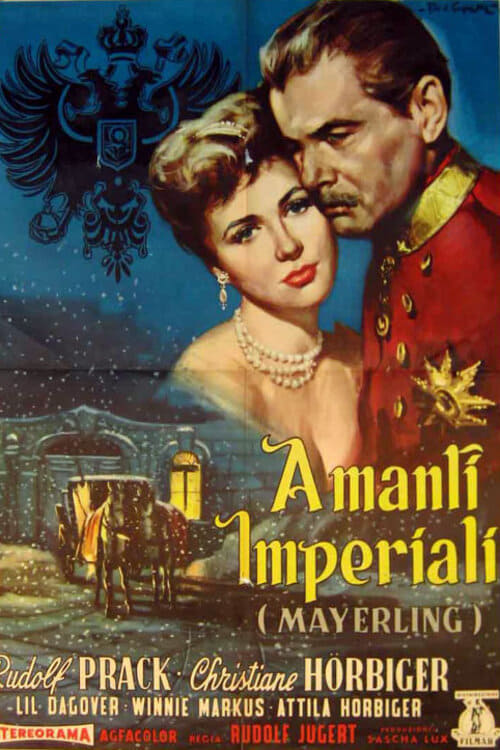
The sensitive Austrian Crown Prince Rudolf is suffering from his marriage, dictated by his father, Emperor Franz Joseph, and the strict court etiquette. He meets a kindred spirit in the very young Baroness Mary Vetsera.
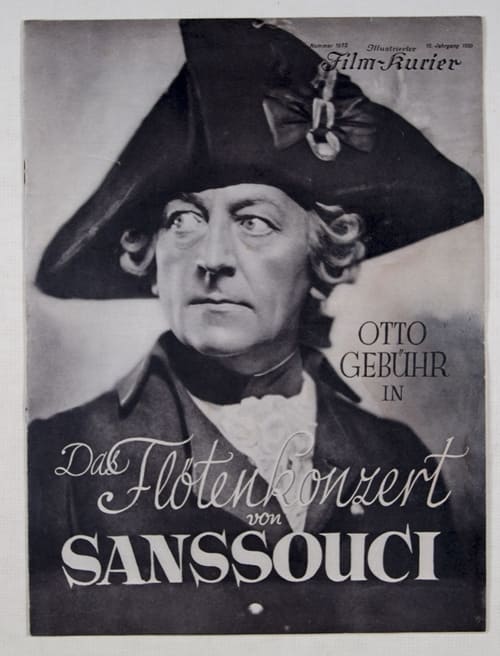
In 1756, a masked ball was officially celebrated in the Dresden Palais of the Saxon Minister Heinrich von Brühl. Unofficially, however, talks are taking place with the envoys of Austria, Russia and France with the aim of conspiring against the Prussian King Frederick II. The Prussian envoy, Major von Lindeneck, succeeded in bringing a copy of the concluded secret treaty to the Prussian king. Friedrich consults with his generals, who urge caution. Friedrich is stunned by the reaction and now develops a counter-plan. To do this, he sends von Lindeneck back to Dresden. However, the latter is not very enthusiastic about this, as he thinks he has reason to doubt his wife Blanche's marital fidelity, and he now has to leave her alone.