Hans Albers
Acting
Biography
From Wikipedia, the free encyclopedia Hans Philipp August Albers (September 22, 1891 – July 24, 1960) was a German actor and singer. He was the single biggest male movie star in Germany between 1930 and 1945 and one of the most popular German actors of the twentieth century. Description above from the Wikipedia article Hans Albers, licensed under CC-BY-SA, full list of contributors on Wikipedia.

Known For

Prim professor Immanuel Rath finds some of his students ogling racy photos of cabaret performer Lola Lola and visits a local club, The Blue Angel, in an attempt to catch them there. Seeing Lola perform, the teacher is filled with lust, eventually resigning his position at the school to marry the young woman. However, his marriage to a coquette -- whose job is to entice men -- proves to be more difficult than Rath imagined.
The Blue Angel

Two dubious characters disguise themselves as Holmes and Watson to gain attention and end up chasing counterfeiters and stolen stamps.
The Man Who Was Sherlock Holmes

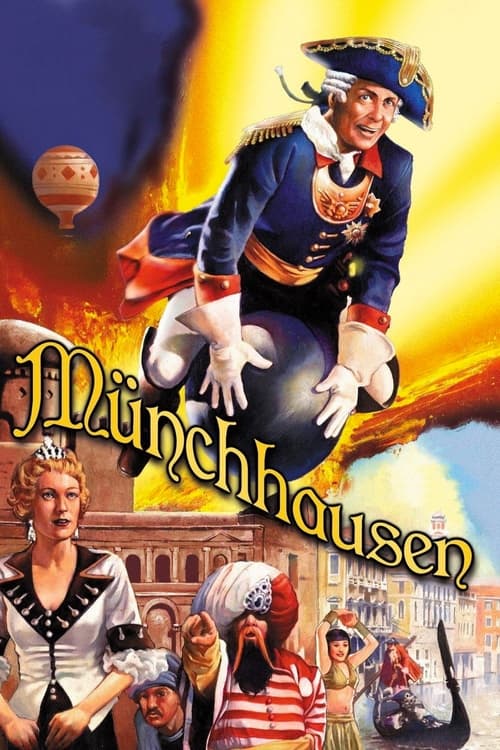
Legendary, immortal nobleman Baron Munchausen regales a lovestruck woman with tales of his amazing adventures.
Münchhausen

Starring Betty Amann in her most famous leading role, Joe May's Asphalt is a luxuriously produced German Expressionist classic where tragic liaisons and fatal encounters are shaped alongside the constant roar of Berlin traffic.
Asphalt

Two acrobats compete for their beautiful female partner, until one of them decides to leave the circus.
Variety

Film journalist and critic Rüdiger Suchsland examines German cinema from 1933, when the Nazis came into power, until 1945, when the Third Reich collapsed. (A sequel to From Caligari to Hitler, 2015.)
Hitler's Hollywood

Otto Friedrich Dennert is a celebrated veteran of the Essen police force. While investigating a series of killings of women he reaches retirement age. The case is taken over by a new team, including Dennert's son Harry. Convinced that they have arrested the wrong person, Dennert begins investigating by himself with assistance from the criminal underworld.
The Copper

F.P.1 is a huge airplane landing dock in the Atlantic where pilots making the transatlantic flight can stop. Yet a saboteur tries to sink the technical wonder in this classic German science fiction film from 1932. The film was also created with English and French speaking actors at the same time.
F.P.1 Doesn't Answer

After many years on the oceans, sailor Hannes Wedderkamp has finally returned to Hamburg. On St. Pauli, Hannes sings songs from the sea in the hippodrome of his best friend Pitter Breuer on the Reeperbahn with the "Quetschkommode" songs and cares for the audience.
Auf der Reeperbahn nachts um halb eins

Lilian Harvey plays Eva, a young girl taking some time in a health spa and spending her evenings in the town's vaudeville theatre enamoured by a heavily made-up clown called Quick. Quick takes a shine to her and tries to woo her without make-up and masquerading as the theatre's manager. Unable to resolve her feelings for Quick and the theatre manager, Eva is angered when she finally learns that they are one and the same.
Quick

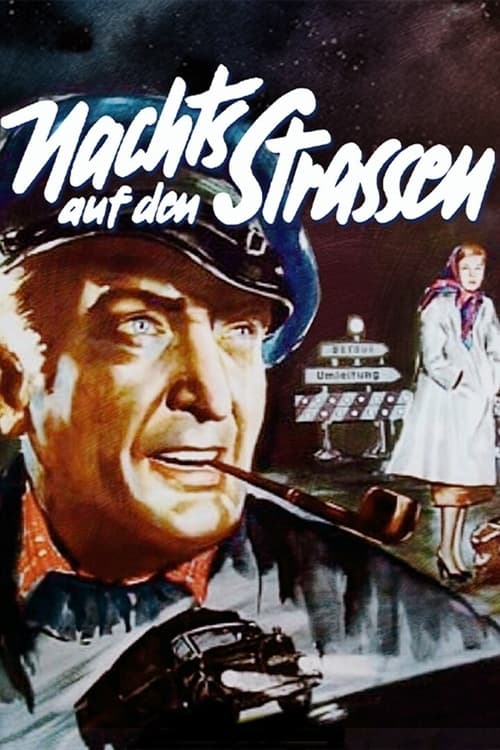
An aging truck driver finds smuggled money and becomes involved with a hijacking crowd.
Nights on the Road

He is considered to be one of the greatest German film stars, Hans Albers, known as "Der blonde Hans", a man made for the cinema. He was an actor, singer, idol of the Germans - and darling of the Nazis. Nevertheless, he could not protect his great love, the Jewess Hansi Burg. In 1938 she had to flee to London from anti-Semitism in Germany. But Albers himself stayed in Germany and continued to film, driven by a desire for a career and the call of money. In 1946, one year after the end of the Second World War, they meet again: Hansi Burg returns to the land of the murderers of her parents in the uniform of the British Army and visits Hans Albers in his villa on Lake Starnberg. He lives there with another woman. The rival has to go, then there is a tense debate. For a day and a night, the blonde Hans has to face uncomfortable questions and even more uncomfortable truths.
Die Liebe des Hans Albers

No description available.
The Fallen

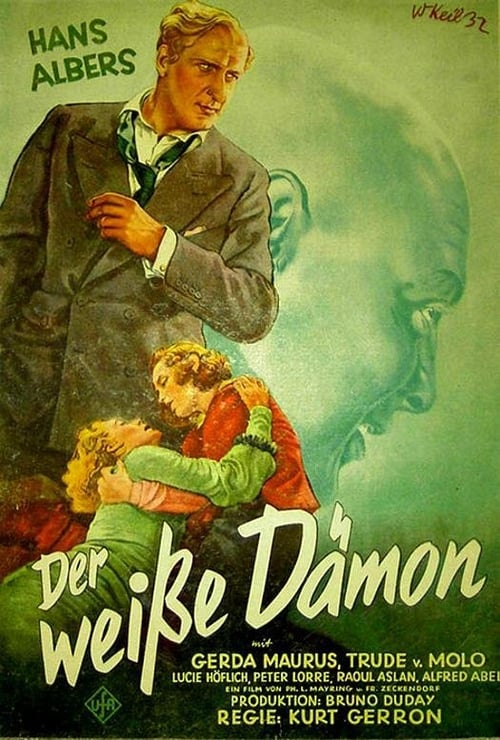
When Albers takes his drug-addicted opera star sister Gerda to a sanitarium, they both become targets of slimy dope peddler Peter Lorre, who fears that Gerda will blow the whistle on him. Lorre kidnaps the woman, leading Albers on a frantic chase.
The White Demon

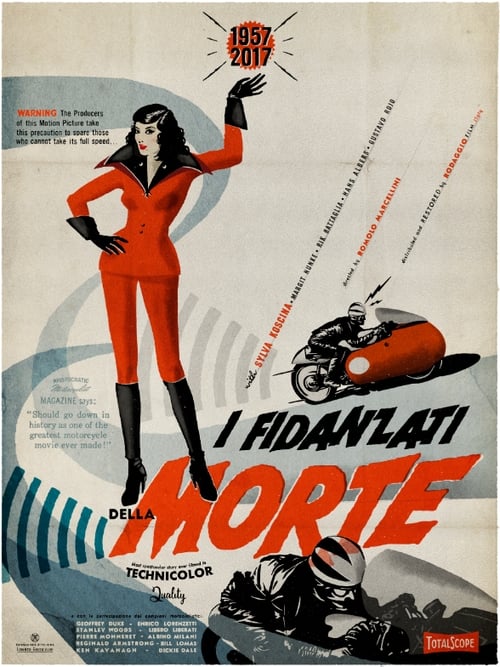
A tale of love, rivalry and passion set in the 50s, in the madcap world of motorcycle speed races, shot on the occasion of the main competitions of that time, such as Monza’s Moto GP and the last edition of the legendary Milano-Taranto race. With also very rare footage of the Moto Guzzi wind tunnel and factories. The film features, alongside popular actors Rik Battaglia and Sylva Koscina, many of the most important champions of those years: Geoffrey Duke, Libero Liberati, Bill Lomas, Enrico Lorenzetti, Reg Armstrong, Stanley Woods, Ken Cavanagh, Dickie Dale, Thomas Campbell, Pierre Monneret, Albino Milani, Walter Zeller, Bruno Francisci, all of them riding amazing Moto Guzzi, Gilera, Mondial and Norton bikes with the so charming and dangerous dustbin fairings that were going to be banned in 1958.
Engaged to Death

An Italian engineer who had made a strategically important invention to ward off enemy aircraft is killed in a robbery. As the plans have presumably fallen into the hands of spies, secret service captain Bergall is given the task of recovering the papers. Bergall initially adopts a false name and appears as Mr. Gran, whom nobody knows. Under this name, he rents a room in the Hotel Danieli in Venice and makes the acquaintance of the shipowner's daughter Viola Dolleen. With her help, he is able to eliminate Captain Gordon, who is also interested in the plans. When Gran learns that the plans are now in the possession of the art dealer Tschernikoff, who wants to sell them to Gordon, he immediately travels to Rome, visits the art dealer Titian and pretends to be Gordon. In the art dealer's remote villa, events come thick and fast...
A Certain Mr. Gran

Old Karl Knesebeck has long been head waiter and rules his waiters with an iron fist at the hotel. When the business passes into the hands of the heirs after the owner's death, he's in a difficult position. The unscrupulous Alwin makes advances toward Niddy, the owner's daughter, whose well-being Knesebeck watches over like a father. Alwin demotes the old man to toilet attendant – a tragedy that Knesebeck tries to salvage, especially since Niddy is about to marry Alwin and another man would actually be better for her...
The Last Man

Singing sailor Hannes, who now entertains the crowd at St. Pauli's Hippodrome after years at sea, promises his dying brother that he will take care of his ex-girlfriend Gisa. Taking Gisa to Hamburg to live with him, Hannes quickly falls in love with her, but soon has to face Gisa's affection for another man, Willem.
Port of Freedom

National-Socialist propaganda film that serves to memorialize one of the early representatives of colonialism: the German philologist Carl Peters. He is, at the end of the 1900′s, a noted advocate of the establishment of a German colony. Without support from Germany, he struggles on his own account against the English in East Africa. Later he is named Reichskommissar and promotes the expansion of a German colony. But Jewish and Social-Democrat opponents order him back to Germany and force him to resign.
Carl Peters

"Ten on Every Finger" (German: "An jedem Finger zehn") is a 1954 West German musical comedy film directed by Erik Ode. The story centers on a revue dancer named Margit Rameau, played by Germaine Damar, who falls in love with composer Bert Martin, portrayed by Erich Auer, but their romance is hindered by misunderstandings and busy schedules until they reunite during a local revue performance. The film is structured as a musical revue featuring numerous guest stars performing as themselves, including Josephine Baker in her final on-screen film role, Hans Albers, and Kenneth Spencer