Acting
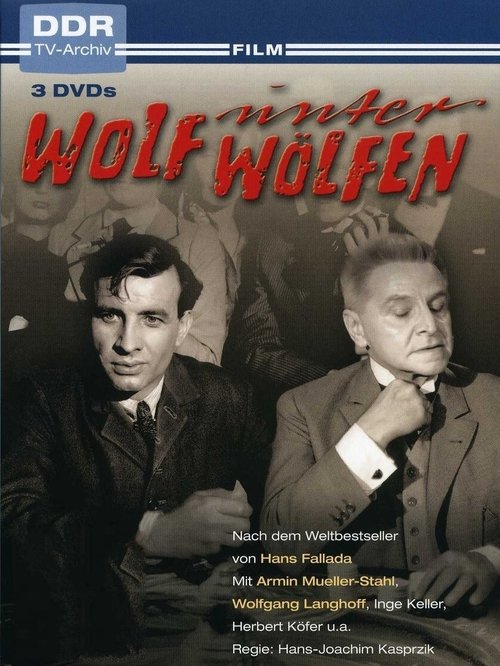
The living conditions during the period of inflation in the early 1920s are depicted in a fascinating way. Behind a shiny façade, ordinary people struggle for bare survival. Opposite them stand landowners and former military personnel with their complacency, ignorance, and emptiness! The title character, Wolfgang Pagel—a cadet officer, unemployed and a gambler out of desperation—loses everything on the night before his wedding and sets out in search of money in the inflation-ridden Berlin of the 1920s.
No description available.
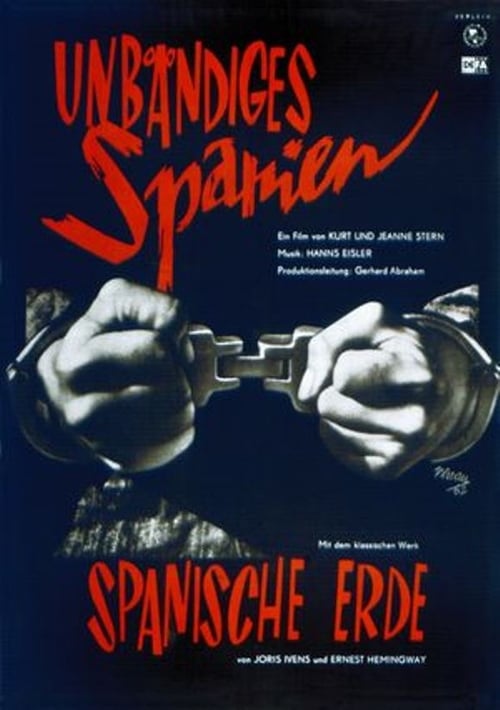
Documentary film about the Spanish Civil War.
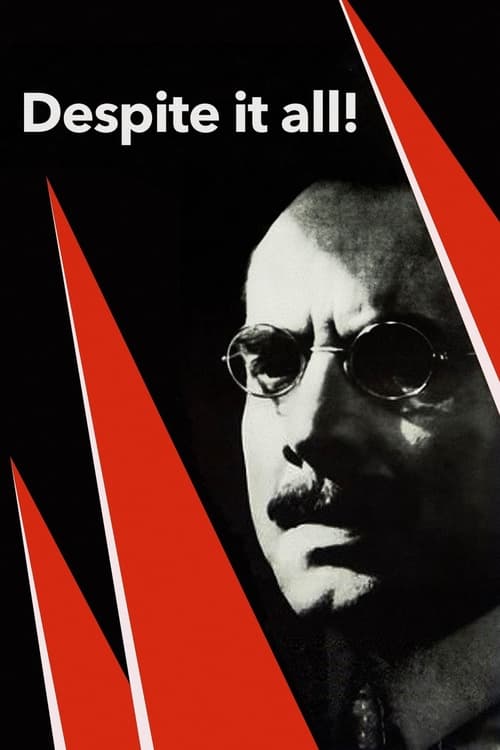
October 1918: Karl Liebknecht is released from prison and Berlin workers celebrate his release. Although WWI is almost over, the German Kaiserreich in vain sends its last reserves to the slaughter. The working class is in a rebellious mood; the uprising of Kiel’s sailors against war and militarism sets off a call for revolution led by Liebknecht. On November 9, Liebknecht declares the Free Socialist Republic of Germany. But pro-Kaiser military and right wing Social Democrats oppose him.
A radio signal attracts a team of astronauts to a mysterious planet. Once there, they are warmly welcomed by an alien race, but are soon suspicious of what is really occurring on this strange land.
A man escapes and kills a guardian.
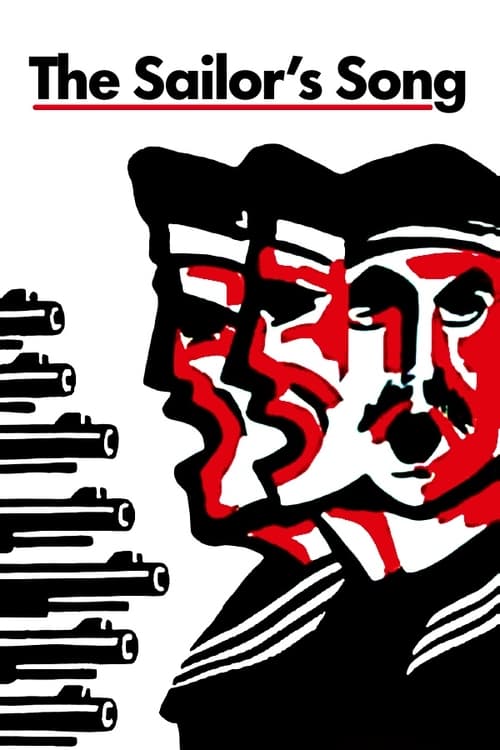
A film about the historical uprising of the seamen in Kiel: During the Russian October Revolution of 1917, German and Russian soldiers start to solidarize with each other. By disarming the officers, machinist Henne Lonke and stoker Jens Kasten prevent the attack on a Russian freighter. When German admiralty gives out orders for operation "Nibelungen", which would lead the German fleet into a suicidal attack against England and quell the revolutionary spirit, seamen and soldiers from different political backgrounds unite in protest.
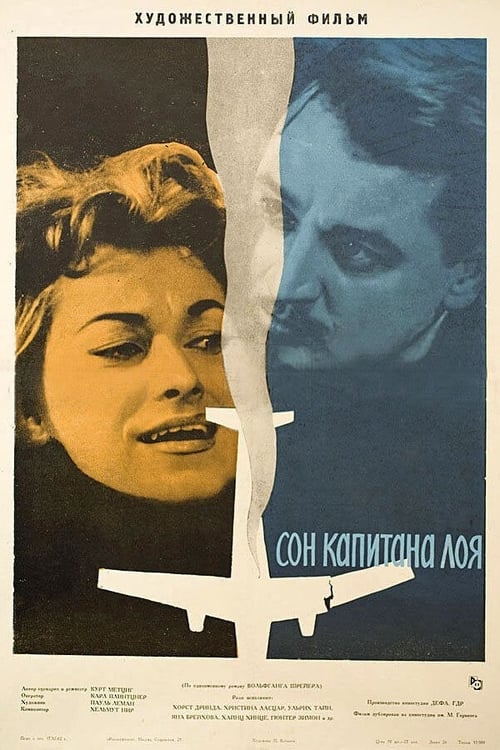
An American military plane takes six people, who have taken part in a NATO maneuver, from Tripoli to Oslo. Among them are the British Captain Loy and the United States Air Force Corporal Doris Graves. During the flight, the two become closer, and they regret that the trip will end that evening. But everything turns out differently. The flight captain has received orders to pick up an agent at a German NATO airport, who is to be dropped off again on a Soviet island …
Victory and demise of the first proletarian dictatorship in the history of mankind, about the struggling, bleeding workers of Paris who enthusiastically defend their historical initiative. The little Cabet family from Rue Pigalle and their friends let the spectator participate in the action.
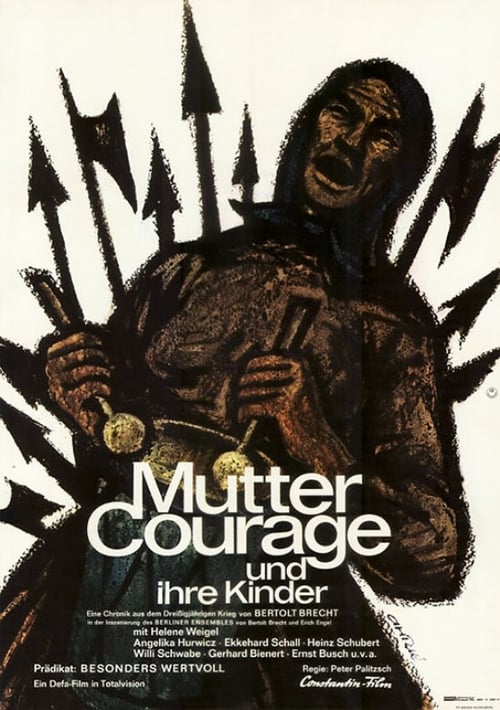
During the Thirty Years' War, the camp-follower Anna Fierling, called "Mother Courage", travels the length and breadth of Europe with her covered wagon. She does not care if it's Catholics or Protestants she trades with as long as business thrives. She loses her three children as a result of the war: bold and spirited Eilif, sincere and upright Swiss Cheese and mute Katrin, who saves the children of Halle by beating a drum on a farmstead roof In wartime, the Fierling children's virtues prove to be deadly. Yet, Mother Courage, remains incorrigible. She will not have anyone "spoil the war" for her and so sets out once more after the soldiers with her wagon.
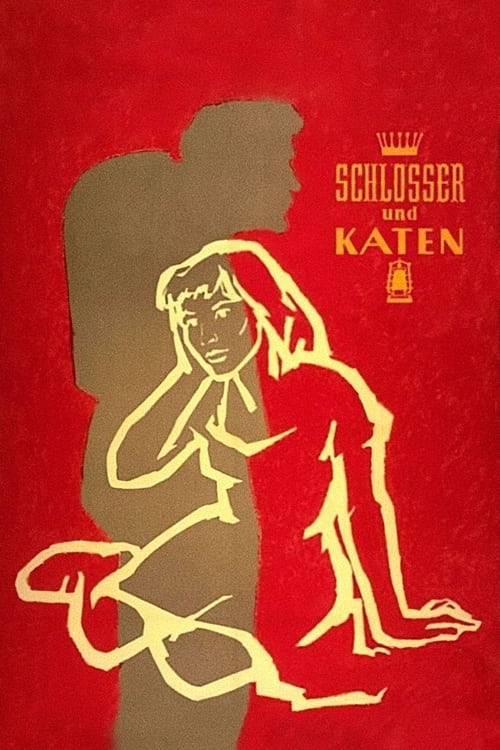
Lifelong hard work for the count makes the servant Anton a cripple. Everybody calls him Crooked Anton. When, after the end of the war, the land of the count gets divided amongst the farmers, Anton receives a piece and hopes to be able to work freely. But an old debt and intrigue keep Anton and his family from finding peace. The farmers of the village begin to discover their own power when Annegret, Anton's daughter, leaves. Is a new beginning possible for Anton? This film paints an impressive panorama of the development of a minor village in Mecklenburg from the end of the war to the uprising of 17 June 1953.
Galileo Galilei seeks evidence to support the Copernican model of the universe, but the new theory contradicts Church dogma. Based on the design of a telescope sold in Holland, he constructs a telescope for astronomers, which he uses to substantiate his hypotheses..
Private detective Fritsch from Munich had received a lucrative assignment: he was to obtain proof of inheritance for a Mr. Seligmann from Canada; this would bring the client a sum of five million dollars. He is therefore looking for an old document that was hidden in a valuable painting that disappeared decades ago. The starting point is a trail that leads to a town in Poland. The painting in question is said to have disappeared there in the final years of the Second World War. But the object of desire cannot be found here, and a new clue points to a grave in Frankenthal in the German state of Rhineland-Palatinate. Fretsch then found out that the painting must probably be in the villa of a personality with significant influence in the economy and politics of West Germany. Fretsch manages to get in touch with the wife of the presumed new owner of the painting and to find out the secret of his rise to multimillionaire status. But the people concerned use their resources to counterattack.
Reporters tell lies about East Germany.
Historical television comedy around Friedrich Alfred Krupp, whose connection to the imperial court and the influence of Kaiser Wilhelm II. to the Krupp family. Not yet 50 years old, the "cannon king" dies in 1902. The emperor holds a memorial speech sown with threats against the "inner enemies". Telltale secret files emerge, strange amorous adventures are in the game.
The play tells the story of the chronic drunkard and landowner Puntila. When he is drunk, he is virtually free of himself; he develops immense strength in these phases and can really be a human being. Then he wants to fraternize with his chauffeur Matti, wants to give him a forest and a sawmill, and even wants to give him his daughter as his wife. Puntila could accomplish many, many more good deeds in his frenzy, but when he returns to a sober state, Puntila reveals himself to be the "black sheep" of his capitalist class and an insignificant person. His classmate reads him the riot act and shows him the limits of this species, which Puntila can never break. GDR television showed the play in a production by the Berliner Ensemble.
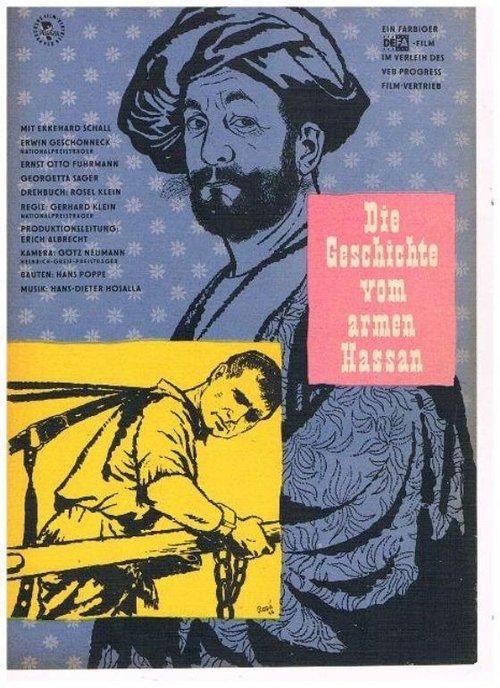
The land in poor Hassan's Central Asian homeland is stony and lacks water. Every day, he gazes longingly at the well in the garden of the rich merchant Machmud, which is full to the brim. One day, Hassan's parrot sits on the edge of the well and is attacked by Machmud's guard dog. To save his only friend, Hassan has to kill the dog. The cadi then sentences him to take the place of the guard dog, chained up. When a horse is stolen, he also has to do its work. The slave girl Fatima is his only ray of hope. But even she cannot persuade him to flee, as his place seems predestined by Allah. Only an overheard deal between the merchant and the cadi makes Hassan realize that the world order is dictated by the rich.
Hitler's seizure of power in 1933 and his rule in the years that followed are transferred to the North American criminal world of the 1930s in a parable. Gangster boss Ui needs the protection of the ruling class to achieve his goals and offers his help to their representatives. They initially hesitate, but join forces after Ui violently gains their respect. His victory is perfect and the people fall silent before the revolvers of their "protectors". Ui takes the raised hands as a sign of approval... Bertolt Brecht wrote the play in 1941 in a Finnish asylum - the premiere only took place in Stuttgart after his death in November 1958. It has been staged at the Berliner Ensemble since 1959 - Ekkehard Schall has played Ui over 500 times since then. On January 13, 1974, the play was shown for the last time, recorded in color by GDR television.