Camera
Artur Becker, who, as a young communist during the Weimar Republic, faced his first major test during the Kapp Putsch, fought against Franco’s coup plotters during the Spanish Civil War, was seriously wounded, and arrested. After a failed escape attempt and numerous interrogations by Spanish and German coup plotters, he was eventually shot.
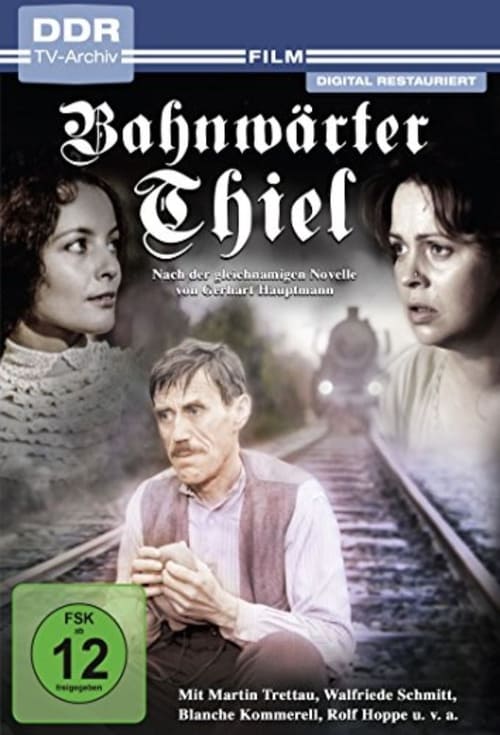
The film tells the tragic fate of railroad guard Thiel at the end of the 19th century. Thiel, who spends his days in the dull, monotonous fulfillment of his duties, has lost his gentle, quiet wife Minna. He remarries out of concern for his young son Tobias. His second wife Lene, with whom he also has a child, is superior to him in vitality and has a rough passion. He discovers that his child from his first marriage is being discriminated against and tormented by her - Thiel withdraws more and more into himself and becomes lonely. When Tobias is killed in an accident, he blames Lene, and disaster is inevitable...
Prague 1913: The family of newspaper publisher Alexander Reither, traditionally reunited for a New Year’s dinner, moves along convoluted and secretive paths in everyday life. Granddaughter Wally is impressed by the opaque businessman Marko Gelusich. Her cousin Adrienne meets the young socialist Joseph Prokop at an illegal anarchist meeting. On a business trip to Vienna, Alexander Reither falls in love with Irene v. Claudi. Adrienne wants to move completely into Joseph Prokop’s proletarian world, but her mother Kalivoda makes her a painful announcement. Joseph already has a girl. Alexander finds Irene v. Claudi in Budapest. They spend happy days in Vienna. In Prague, the printing workers go on strike. Adrienne fights alongside the workers and Robert Kalivoda. She experiences class struggle with her cousin Guido Frank. Alexander tries to introduce Irene to the family.
No description available.
A humorous and satirical comedy, which places a man from the year 2222 one day in the (then) present day life in GDR, East Germany under Communist regime. Using a crystal for mind reading he uncovers some improprieties and moral weaknesses in the "Beautiful future" professed by VEB ("Volkseigener Betrieb" – "State Owned Holdings").
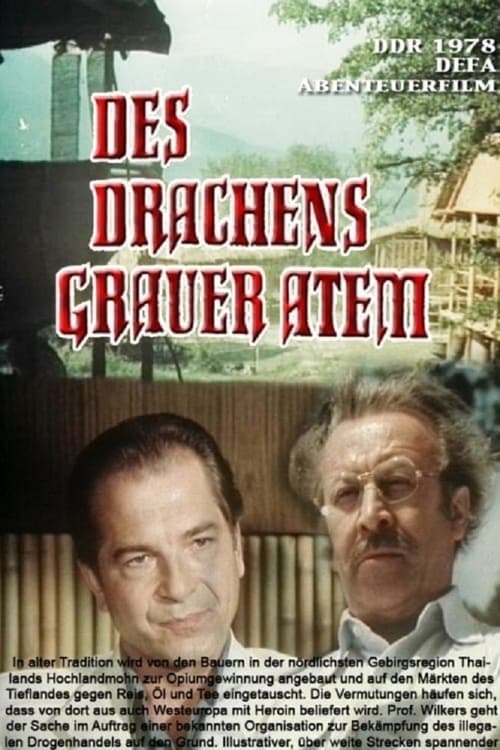
Professor Wilkers saw the trip to Thailand as a welcome change. But already in Bangkok, the starting point of his research into the origin of the drugs whose abuse he is trying to combat as a member of an international commission, he encounters extreme contradictions. The Swiss doctor is tempted to solve them, as the claims of the rich silk manufacturer Tracy Blake sound truthful and bitter, yet extremely strange. Leo Wilkers decides to embark on a life-threatening venture: He moves into the mountains near the border with Burma. Up there, in the village of Muong Nan, whose headman is at the same time in prison in Bangkok worrying about who in the capital might be interested in his arrest, Wilkers learns about the necessity of poppy cultivation in these areas.
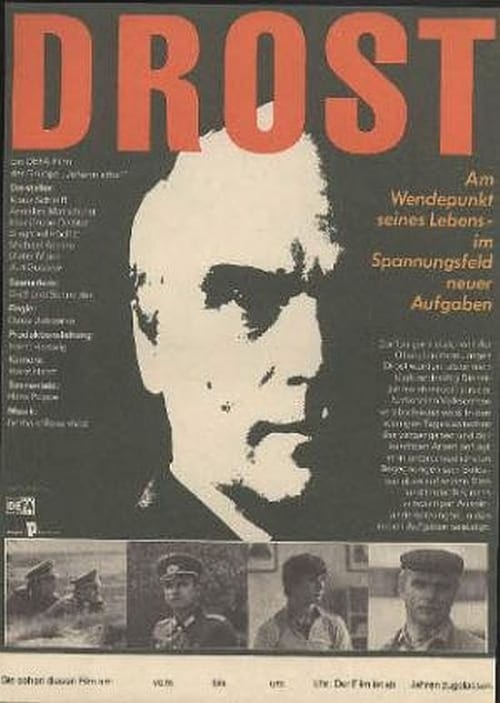
After 35 years of military service, Officer Jürgen Drost takes on the job of mayor in the small village where he lived with his mother after World War II. The transition to civilian life comes as more of a shock than he expected, causing him to rethink many aspects of his life.
Professor Gotthold Kittguß leads a secluded life, which is primarily determined by his books. His housekeeper, the widow Müller, takes care of all the practicalities of life. One day, a strange boy appears at his house to deliver a call for help from his 17-year-old godchild Rosemarie, who is the daughter of a deceased pastor friend and lives with the Schliekers, her so-called foster parents, in the small village of Usadel. The Schliekers manage Rosemarie's inheritance, but are anxious to take possession of the farm. They treat Rosemarie like their maid and allow her to live in undignified conditions. After a moment's hesitation, Professor Kittguß sets off for Usadel to help his godchild. But he doesn't receive a warm welcome there and is even locked up in a cellar. Rosemarie frees him and takes him to a secret hiding place in a nearby fisherman's hut.
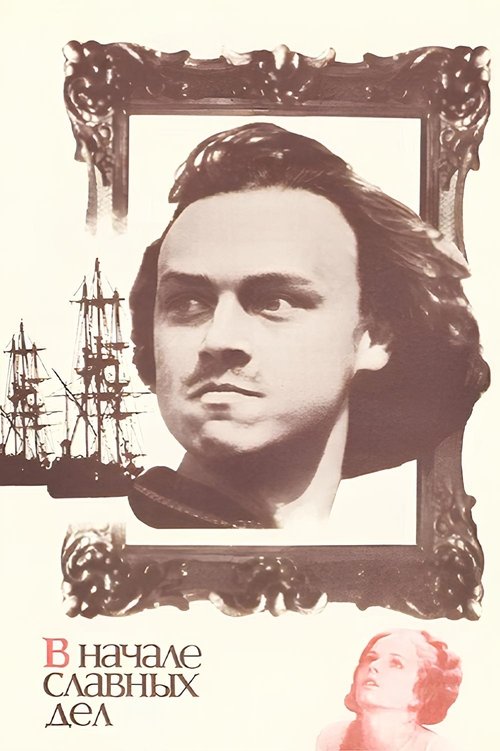
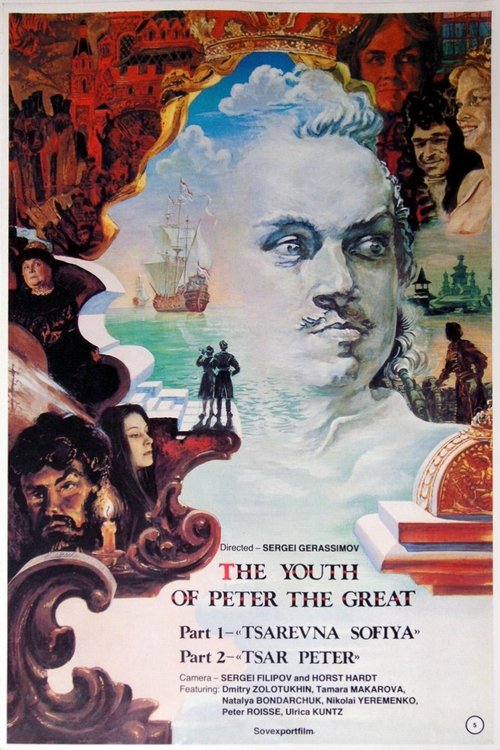
The years of the tsar’s adolescence and youth were permeated with deadly danger coming from some of the Boyars, the rebellious Streltsy and Tsarevna Sophia who aspired for power. But already at that early time Peter demonstrates a profound, bright intellect, a strong will and the sense of purpose, which help him disarm both his open and secret enemies.
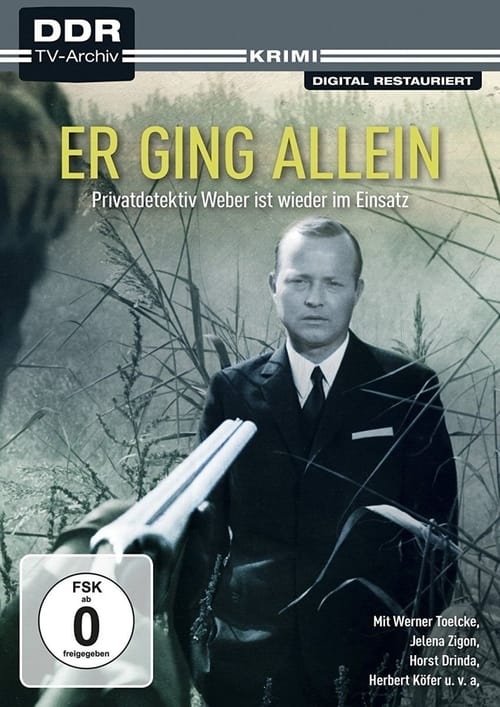
A small town in West Germany. Material for an exhibition with documents from the Nazi era was stolen from Herbert Geerts, only the negatives of the photos did not fall into the hands of the perpetrator. Geerts is found murdered and the group of people who were incriminated by the documents are suspects. Detective Weber takes on the case, which turns out to be "a case of fireworks", and follows the trail of a Nazi criminal...
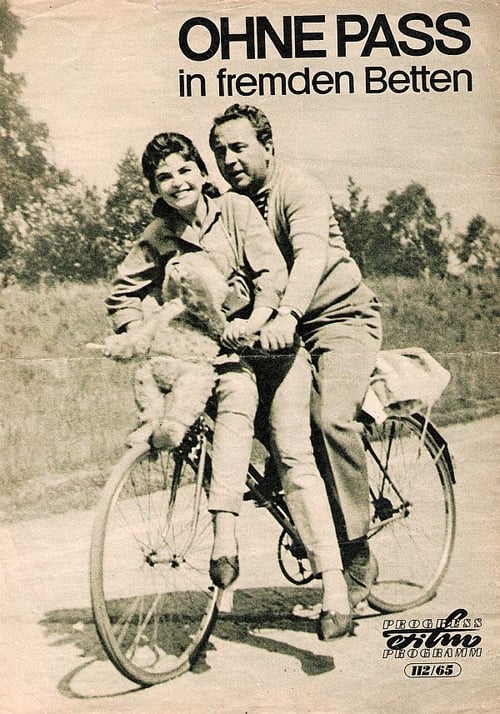
Czech tourist Jelinek decides to take a ride on the "Ferris wheel" in Berlin, and as a result he lags behind the train and is left without his belongings and documents.
Eleven years old Lutt Matten lives near Baltic Sea and has only one dream - to go deep sea fishing independently and catch some eels.
The film describes the activity of an ABV of the People's Police in its section in East Berlin. A mixture of “positive” characters from the beginning, the extensively staged “owl”, who is introduced as a criminal and over the course of time, especially due to the influence of the ABV, develops into a good citizen, and incorrigible characters, with whom the ABV fails with its extensive attempts at rehabilitation and who are arrested after having committed again offenses.
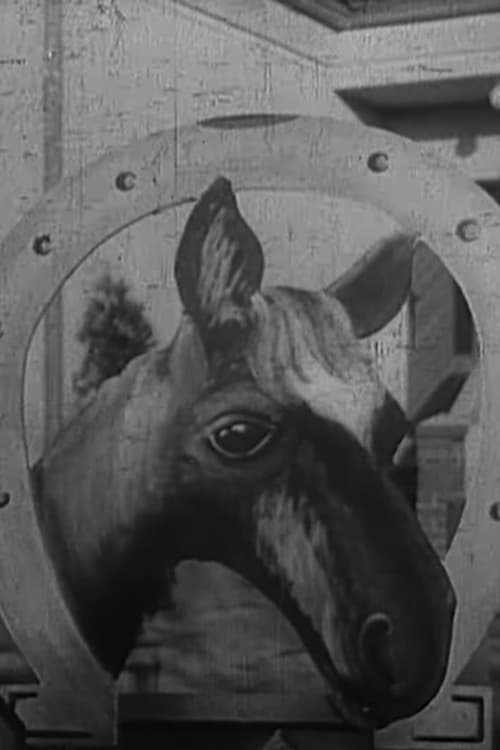
Psichinski rings Mr. Semmler's doorbell and alerts him to strange noises in the attic. Together they sneak upstairs and discover a full-grown horse, which they report to the police officer. He triggers the alarm. The fire department and several workmen marvel at the event and ponder how it could have gotten there in its full size. The return transport requires structural measures and reconstruction work. After completion, Psischinski's house resembles a "jewel box". Later, the policeman asks Psischinski how he "managed" the matter and learns that he had brought a foal there 1½ years ago in order to draw the attention of the public, especially the tradesmen, at the appropriate time so that work that was difficult to carry out could finally be completed. Shaking his head, the official, who also owns a house, leaves the property with the comment: "You should have a horse!"
Trini avenges the torture of his uncle by a landowner’s son. Trini and his fellow peons destroy the landowner’s home and overpower his guards with the help of Emiliano Zapata. Zapata is killed in a conspiracy before Trini can warn him.
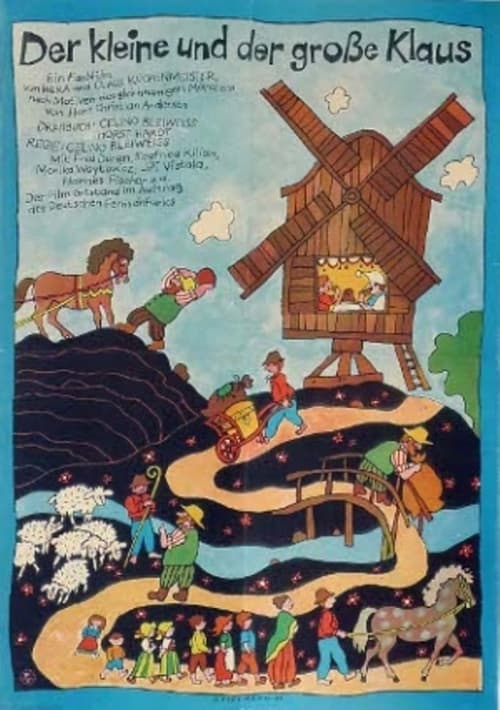
The clever but poor farmer Klaus infuriates the rich big Klaus with his mischief. But little Klaus always manages to get out of the most difficult situations and emerge victorious in the end. But one day, big Klaus has a fit and wants to drown little Klaus. Now he once again has to rely on his intuition and his wit ...
Inge Karsten receives an unexpected visit from her former student friend Margit from the West. She is even more surprised to hear that she is married to her stepbrother Herbert, who was long thought to be missing and whom she had almost forgotten. He last lived in Canada. This presents Inge's husband Horst, who has an important job as a military pilot, with a conflict of conscience. The situation is even more serious than it seems at first glance. In truth, Margit is an agent and the whole story is a staged game by the West German secret service...