Su Yu-hsin
Directing
Known For
In Blast Furnace No. 2, the artist combines spectacular satellite footage with archive material and interview excerpts and explores the themes of steel production, globalization, and the cosmic origin of the metal iron kaleidoscopically from an earth-historical, social-historical, and ecological perspective.
Blast Furnace No. 2
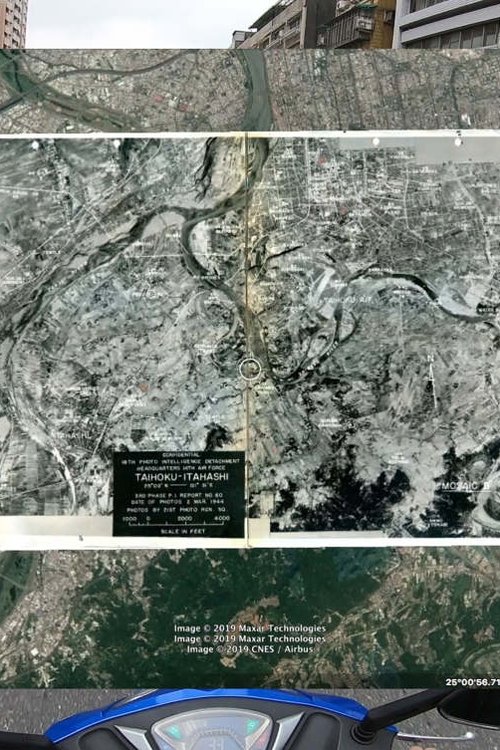
Maps are controlled by nation-states: who creates them, what they will look like, how they will be read, and how they will be shared. water sleep II Akaike river under Xizang Road (2019) is an essay film which the artist guide us to find the lost river in historical maps. Taipei/Taihoku City Planning Map with Bird’s-eye View (1935) and Taihoku Aerial Map, American Army 14th Air Force (1944) represent the colonial history of Taiwan. The process provides another reading through decolonizing gaze of maps and turns the focus toward evidence of objective portraits of the landscape.
water sleep II Akaike river under Xizang Road

Mori investigates the confluence of ecologies with place-based affectivities in Yamaguchi Prefecture, Japan. The title of the three chapters,“守(to protect)”、“森(forest)”、“杜(spirit)” are different in shapes and meaning, yet all pronounced as “Mori in Japanese.” Karst cave, groundwater, the soils, villager, burning mountain ritual, scientist, Buyō dancer, majestic oak and forest, the work questions the ways of contemplating nature through rituals and folklores, and how landscapes have been historically constructed. Conceptualizing Dan Graham’s installation “Two-way Mirror Triangular Pavilion with Shoji Screen” as diffractive model of the work, Mori sees landscape as process and inner mechanism, which is defined by our detached vision and interpreted by our bodymind. It is a panorama which continuously changes as we move along any route.
Mori
This film traces Arizona’s desert as it is reshaped into a hub for data centres and semiconductor manufacturing. Moving through altered waterways, the film exposes tensions between technoutopian visions and drought-stricken ecologies. Guided by offscreen voices and Tohono O’odham poet Ofelia Zepeda’s ‘Cloud Song’, ancestral knowledge counters the rise of industrial ‘cloud’ infrastructures.