Carlos Rebolledo
Directing
Biography
Venezuelan Critic, teacher and producer. Graduated from the Institute of Advanced Cinematographic Studies in Paris, in 1962. He directed the Documentary Film Center of the University of Los Andes. Together with Jesús E. Guédez, he started the documentary movement in Venezuela, at the end of the 60s. He directed the documentary short films La casa natal del Libertador (1964), Arquitectura y urbanismo en Caracas (1965), Pozo muerto (1967), and ULA - Universidad de Los Andes / Los Andes y su Universidad (1969), the latter co-directed with Jorge Solé. Venezuela en tres tiempos (Fragmentos del antidesarrollo, 1975), made together with Edmudo Aray, is structured with clippings, still photos and interviews. It is one of his best-known works and denounces the situation in the mining areas. In 1977, together with Thaelman Urgellés, he co-directed his first feature-length fiction film: (Alias) El Rey del Joropo, a film about the famous dancer and criminal from the 1950s, Alfredo Alvarado. In 1985, he made Profession: Living, starring Rubens de Falco, Irene Arcila, Omaira Abinadé and Blanca Baldó.
Known For

A motion picture of the economic and social situation in current Venezuela, through three characters affected one way or another by dependency and neocolonialism.
Venezuela tres tiempos (Fragmentos del anti-desarrollo)

Documentary in four parts on Latin American cinema. First episode: the influences of Cahiers du cinéma, the New Wave, Italian neorealism. In Brazil, Cinema Novo draws inspiration from these models while drawing on the historical and cultural singularity of the country. The documentary was awarded the Prix Makhila d’or at the Festival de Biarritz, France.
Claves, 1: How Tasty Was My Little Frenchman

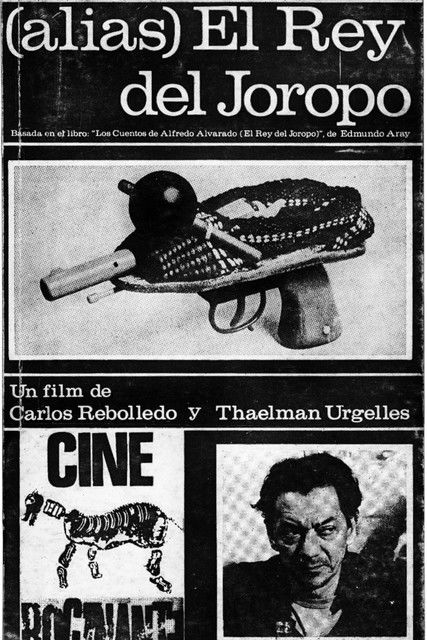
Alfredo Alvarado is a famous dancer and criminal from Venezuela. His horrifying adventures are narrated through a television program. It exposes the contradictions of that context. It is based on the book Los cuentos de Alfredo Alvarado “El Rey del Joropo", by Edmundo Aray.
(Alias) El Rey del Joropo

Documentary in four parts on Latin American cinema. Second episode, evoking the border between fiction and documentary. With his film Tire dié (1960), the Argentinian Fernando Birri proposed this manifesto: to create a realistic and critical national cinema, closer to society without falling into populism.
Claves, 2: We will return younger

Existential confrontations are unleashed while people try to survival within a concret jungle. Such conflict gets worst when the person is near his fifties and finds himself empty-handed, without a real company, full of frustrations that hound him.
Profesión: vivir

Pozo muerto (Dead well), a 1967 documentary film by Carlos Rebolledo, Antonio de la Rosa, and Edmundo Aray, denounces the effects of an oil spill on the fishing communities along Lake Maracaibo in western Venezuela.
Dead well
Documentary film by Jorge Solé and Carlos Rebolledo.